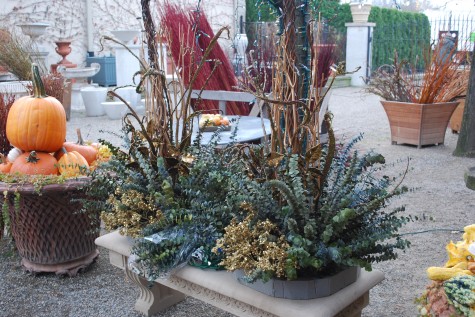
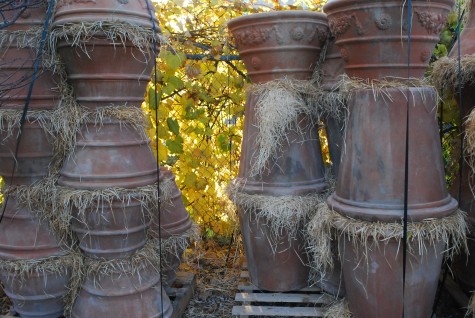
 Our leaves are finally beginning to turn color, and drop. Or drop without having turned color at all, as the case may be. The grape leaves on the fence were beautiful this morning, with the sunlight coming through. Once the leaves have dropped, our landscape is much about the twigs, the trunks, the branches and sticks. This spot will soon be a plane of brown woody vines.
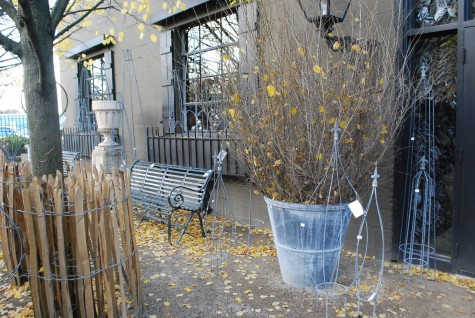
These hackberry tree branches are fairly representative of what there is to see here in late fall. This pot has lots and lots of branches in it, but the effect is delicate and subtle. The color of these branches is what I call winter drab. But not all branches are created equal.
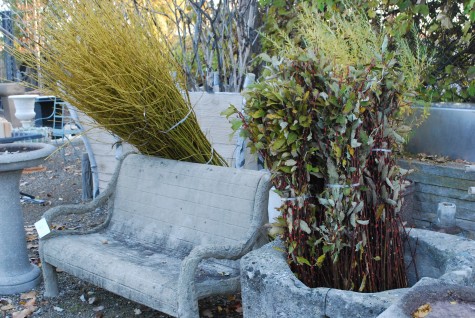
Our shipment of fresh cut twigs arrived yesterday. These are branches of a different sort. The stems have great color, and form. The mainstay of our winter container plantings involve natural branches. Lucky for us, there is a farm that grows shrubs with the specific purpose of harvesting branches. A twig farm. Beautiful branches are on my short list of plants I would be happy to farm. This bale of red bud pussy willow still sports the last of its leaves. This means we have to do a little stripping. Who knows the mechanism, but if a branch is cut, it will take lots more time for the leaves to fall.
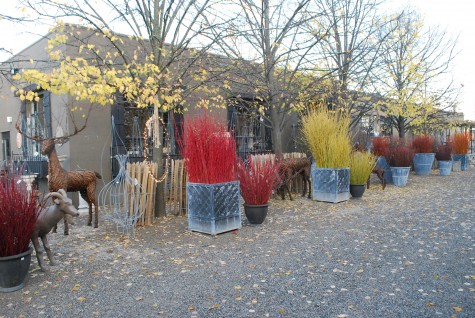
I would grow all manner of Salix-most certainly. Prairie willow. Japanese fan willow. Curly willow. Flame willow. Black willow. Pussy willow. I love the willows. The markedly fasciated fan willow is particularly beautiful. I would grow a whole host of stoloniferous dogwood-there are lots of beautiful varieties. Cornus sericea Cardinal” is a particularly bright red form of the species dogwood.
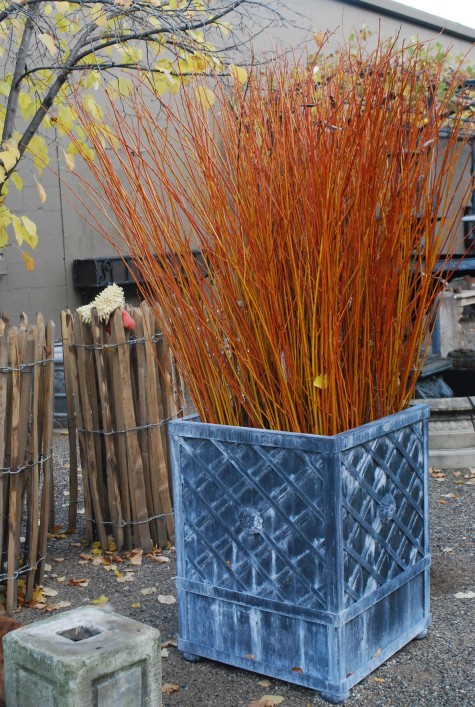
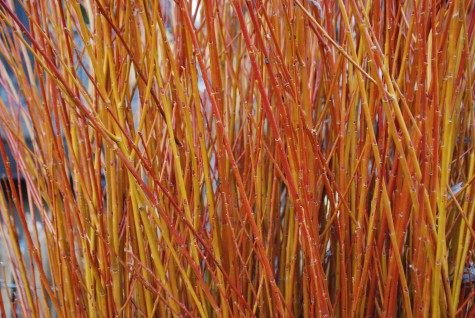
Flame willow branches are a particularly beautiful and vibrant shade of orange. The shrub likes regular moisture, and full sun; it can grow to 20′ tall. Like most shrubby willows, their shape and leaves are not their long suit. But the winter color of their branches is spectacular.
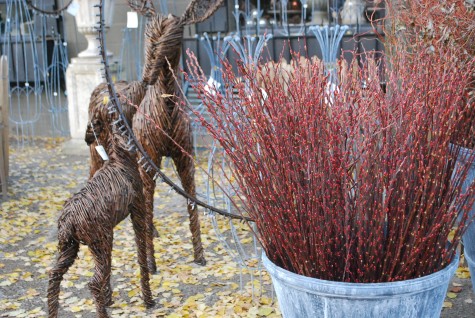 Red bud pussy willow is aptly named. Branches of this willow will frequently root if stuck in soil in the fall. This makes these branches a great choice for a fall, winter-and an early spring container planting. This is one of the few twigs that we purchase both in the fall, and in the spring.
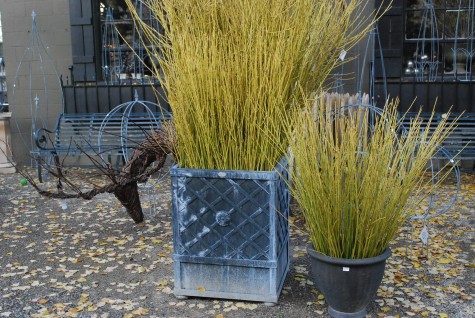
Fresh cut yellow twig dogwood provides lots of color in the late fall and winter. The branches are amazingly easy to bend and twist into shape you choose. The branches make great wreaths; they can easily be formed into topiary shapes. They retain their color remarkably well, as they dry.
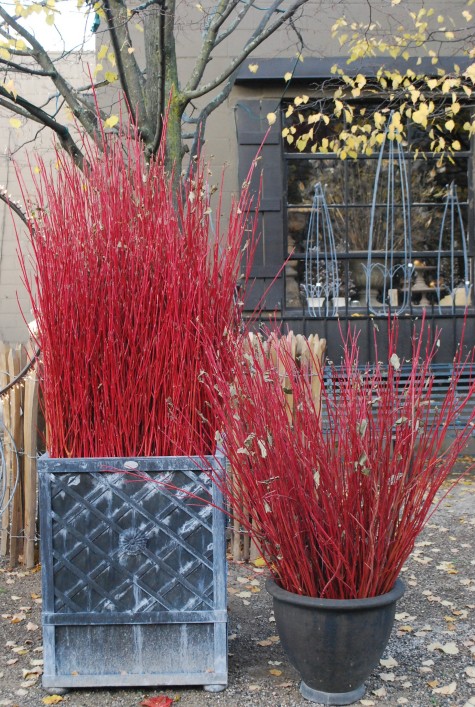 Cardinal red twig is much more vibrant in color than the species. The best color on any dogwood branch is the current season’s growth. Stems that mature take on a brown cast as they age. This brilliant color looks great at the holidays, and throughout our long winter.
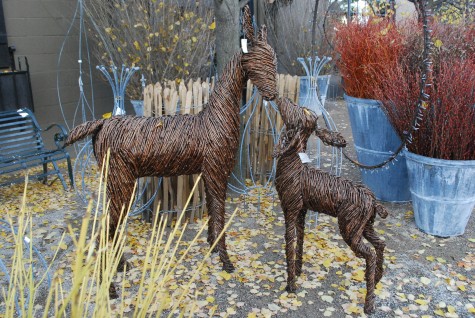 Grapes are a woody vine with long lax branches that can be shaped over forms. We have had on occasion grapevine wreaths, spheres, picture frames and nests-but these deer are the most elegant expression of weaving and sculpting with grapevine I have ever seen. The forms are heavy steel, and each vine is laid in parallel to its neighbor, and then woven into the whole figure. They look great paired with all of the twigs. The people who create these sculptures-artists, each and every one. They weld their frames, and weave the grapevine in a very individual way. This doe and fawn pair is distinctly the creation and look of the person who made them. My next pair will have a different look.
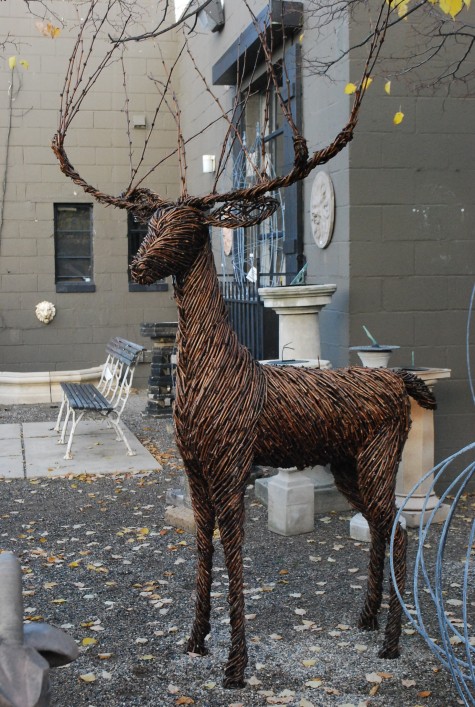 The standing Buck is particularly handsome. Each antler has a steel pin that slides into a steel cylinder embedded behind the ears. The Buck stands almost 7 feet tall. This is my favorite species of deer for the garden!
 I can think of lots of places for the deer. As for the fresh cut twigs-what would you do with them?
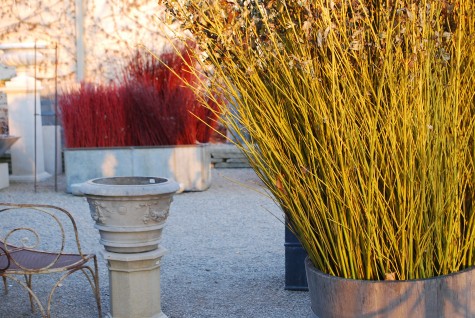
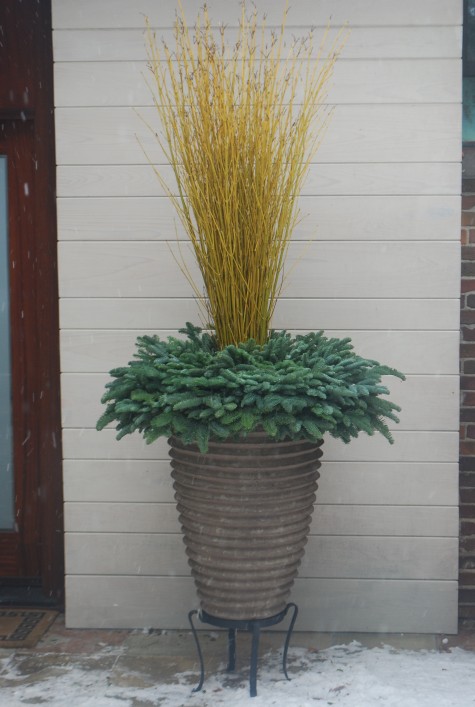

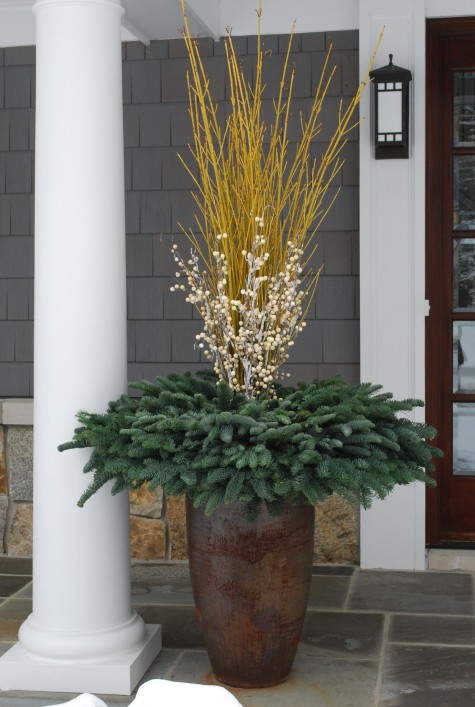
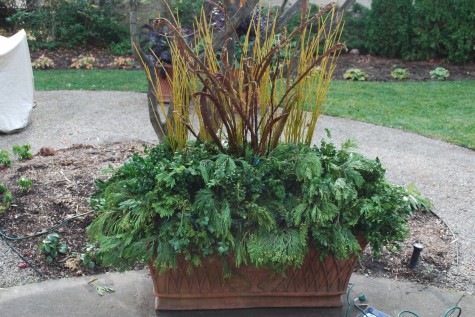

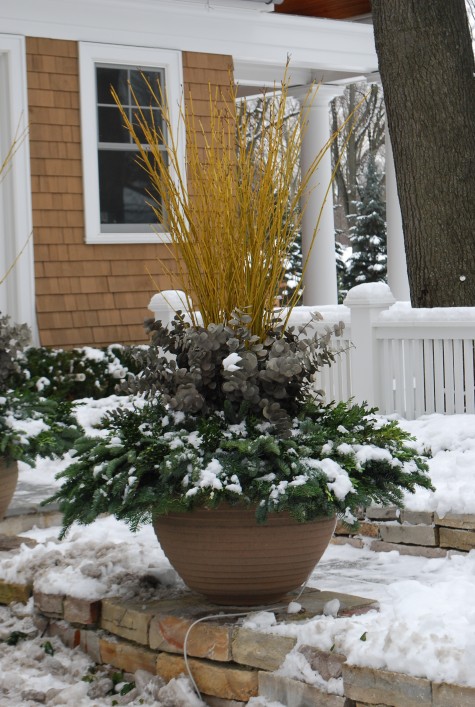

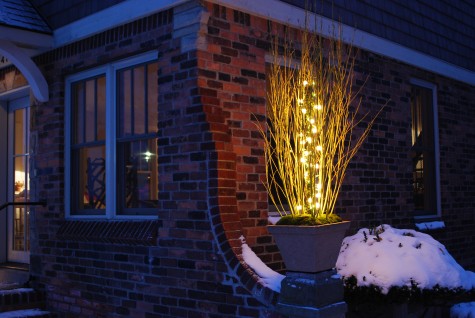

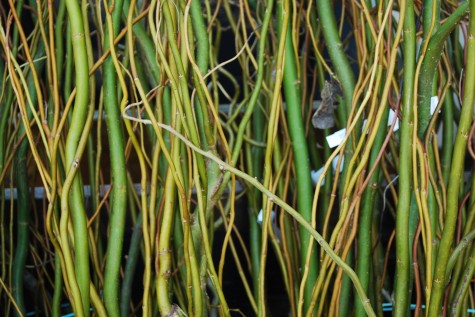
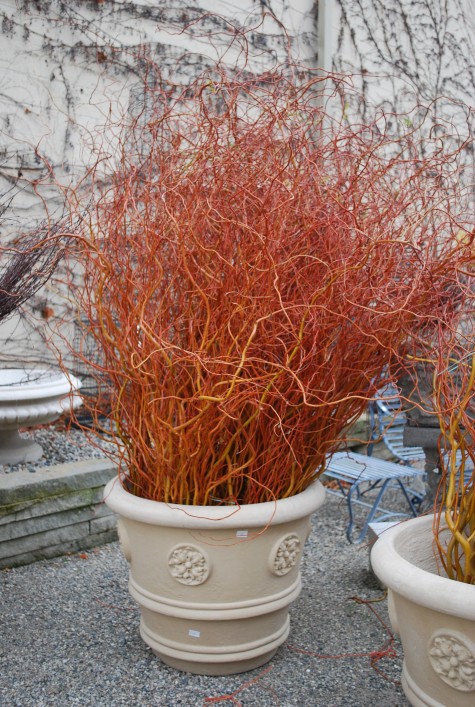
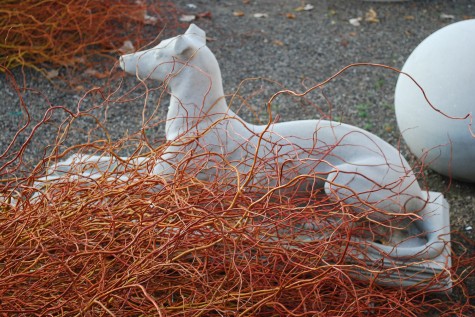 The golden coppery orange is a great foil for the landscape gone to black and white. The fresh branches are limber and pliable. The curly tops can be tied up in a good approximation of a pony tail, or twisted and tied into new shapes not necessarily natural, and perhaps more contemporary.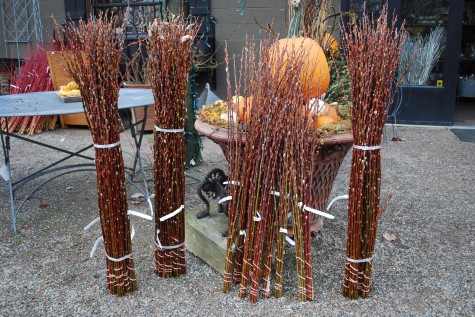
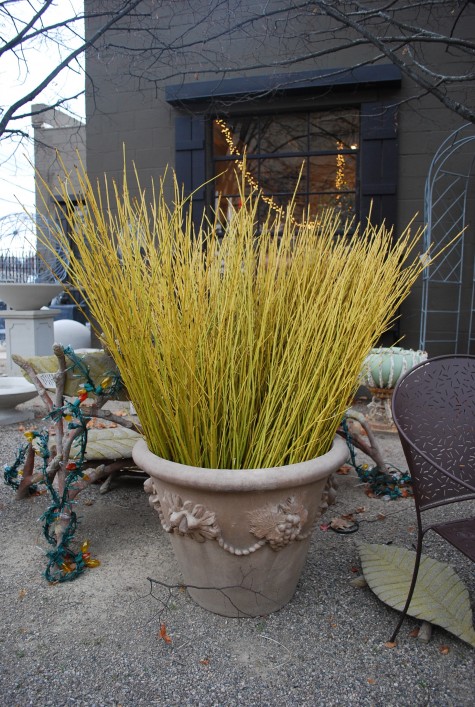 The shrubby dogwoods are every bit as useful as the willows. They also produce the best color on new wood. If you grow these dogwoods in your garden, be sure to prune them down regularly and hard. The old bark of shrubby dogwoods is dull, and invariably scarred by exposure to weather. I rarely see yellow twig dogwood planted any more-plants do go in and out of fashion. This cultivar was specifically bred for color superior to the species- and it delivers.
 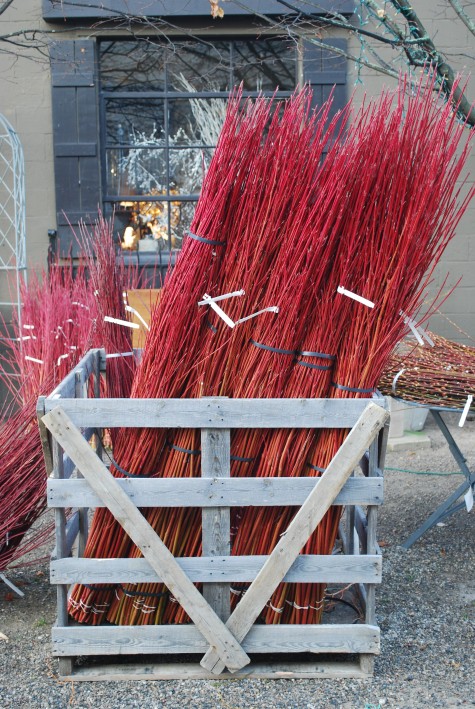 Many cultivars of red twig dogwood are available now. With bark ranging in color from pink-coral to coral, orange red, fire engine scarlet red, and maroon, these twigs make quick work of banishing the winter gardening blues. This cultivar, aptly named “Cardinal” is the brightest red bark I have ever seen. The 1500 stems in this crate makes me wish I could see the entire field from which they were cut-the day the leaves drop. I would bet that view is a perfect gardening moment.
 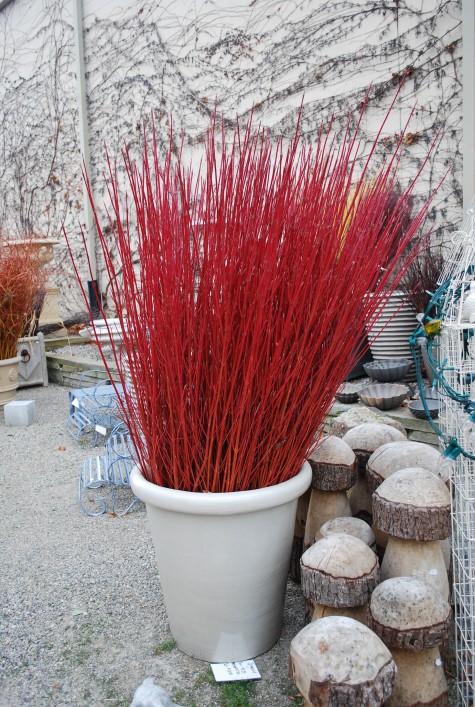 Whatever you might fancy, the dormant garden has plenty to recommend it. The gathering of materials, and the act of decorating for the cold season is an act of Mitchell-esque defiance I can get right behind.