My current garden is all about the snow, and not much else. 16 inches of snow has managed to turn everything in the landscape ground plane into a collection of wind whipped white blobs. On the roads, dirty white. In the shade, blue white. In the sun, blinding white. It’s enough white to keep me blinking. Unlike this once in a blue moon snow fest, white in the garden is a crisp and fresh color choice. The white umbrellas in this picture-refreshingly white. I took this picture on a blisteringly hot and overcast July day. The white umbrellas look as cool as can be. I could imagine how they would reflect the heat once opened. White in the heat of the summer means respite, as white reflects heat.
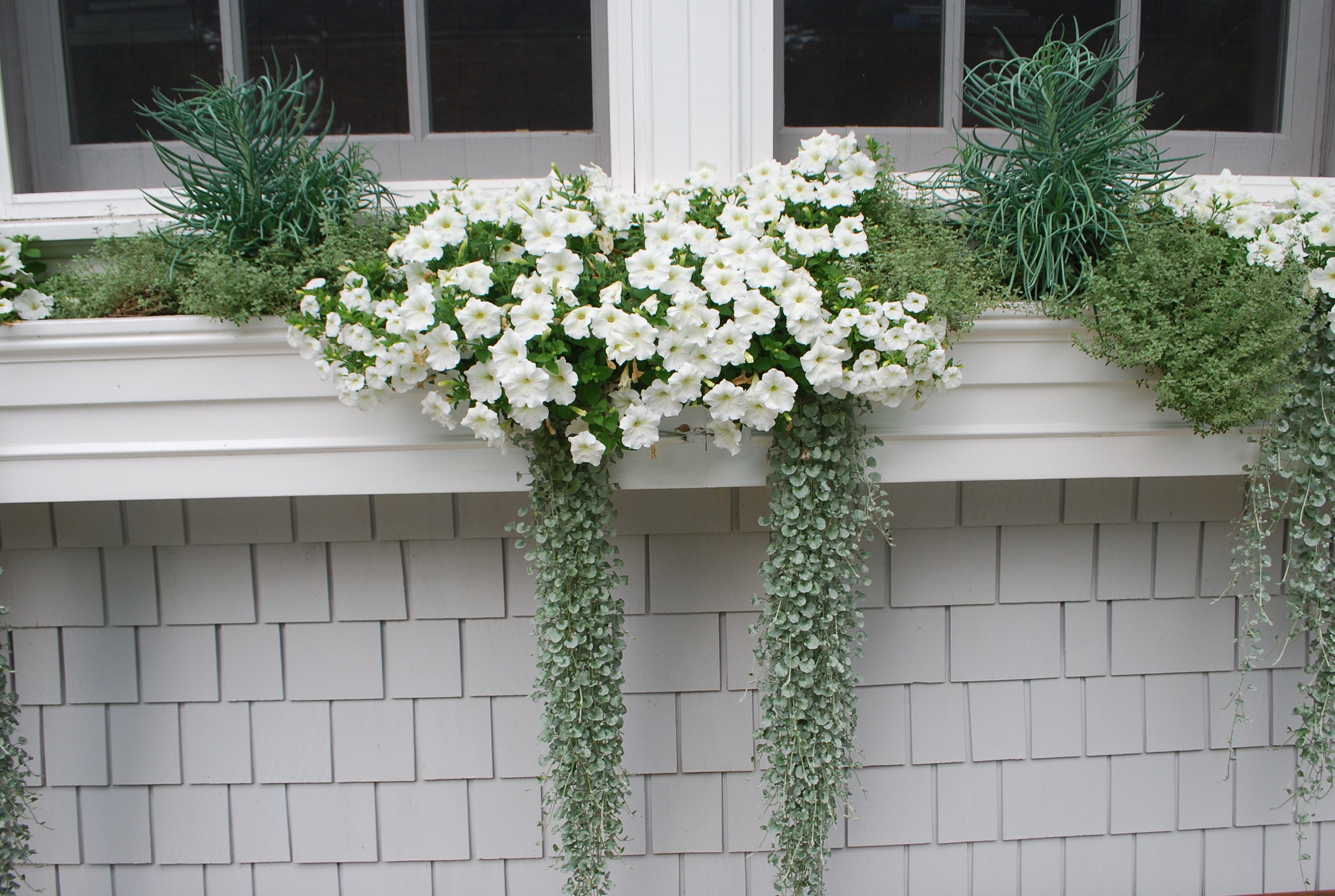 A white house could be coolly contemporary. A whitewashed shingle style house, with white trim, and white window boxes is a traditional architectural expression one might find in any city. A white farm house, or Greek revival house is an architectural classic. The White House-a national treasure. White appeals to many, and looks great in widely divergent circumstances. All white-stark, even chilly. White washed-soft. Paint color books seem to have more versions of white than any other color-funny, that.
 I have several clients who are enthusiastic about any plant, as long as it blooms white. And clients who favor white container plantings. White gardens of necessity feature lots of green. White foliage indicates an absence of chlorophyll. Nearly all white foliaged plants have enough green to permit photosynthesis to some degree. Any white garden is truly a green and white garden. Green and white-a glorious color combination. Some white flowered perennial and annual cultivars are weak growers, but there are enough vigorous white plants to round out a planting palette. In the early spring, white hellebores, snowdrops, crocus, daffodils, and tulips. The white leaved brunnera Jack Frost has a gorgeous white frosted leaf, and amazingly, tolerates a lot of sun. Magnolia Stellata, Magnolia Ivory Prince, Venus dogwood, white crab apple “Snowdrift”-there are so many choices of white flowering spring blooming trees.
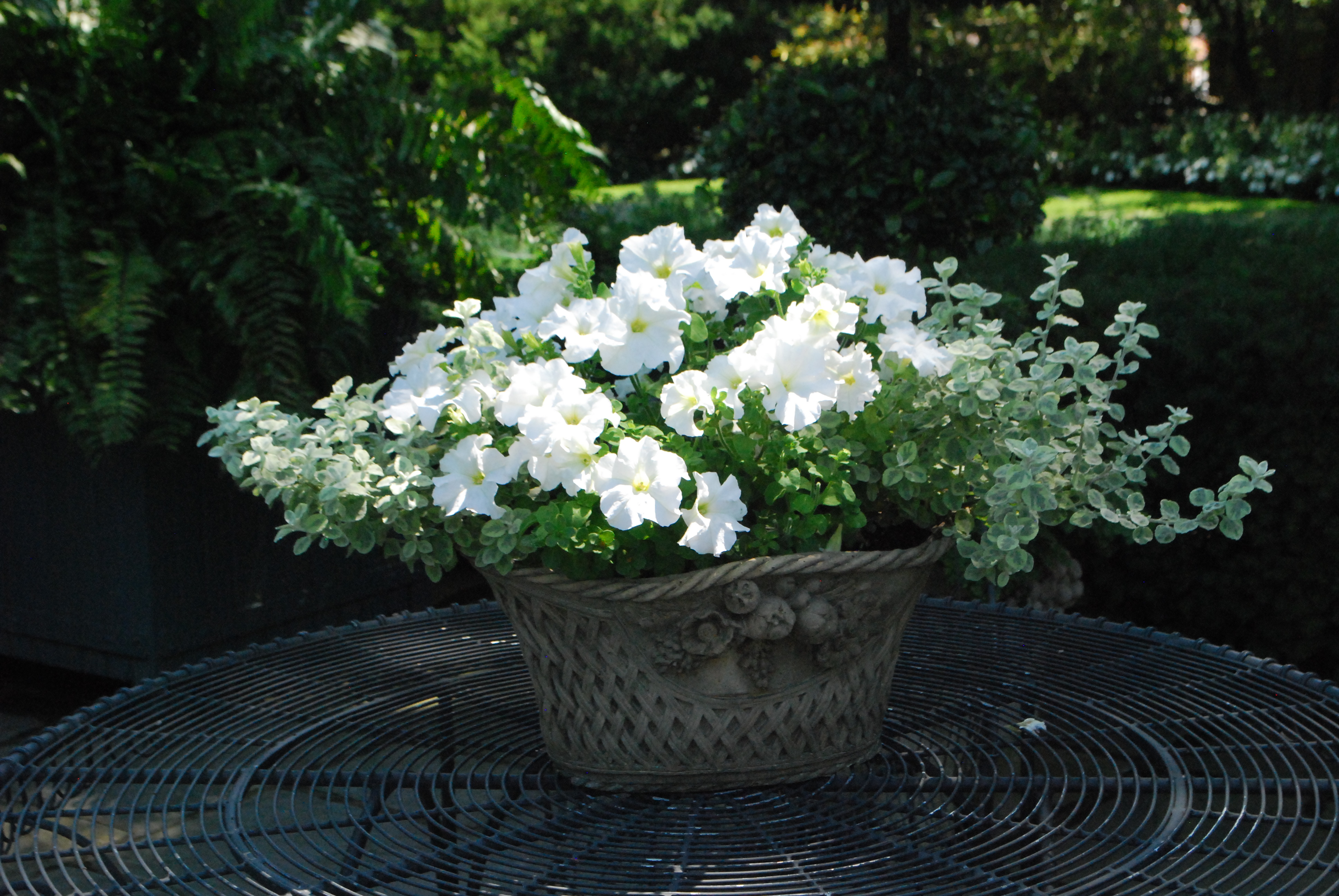 White petunias may be pedestrian, but they deliver. This container gets barely 4 hours of indirect sun a day. I would call that willing. Early season white perennials-I am picky. Geranium lancastriense alba, anemone sylvestris, white variegated thyme, white siberian iris and white foxglove so well for me. Plant choices are entirely based on what does well for me. White poppies-so so.
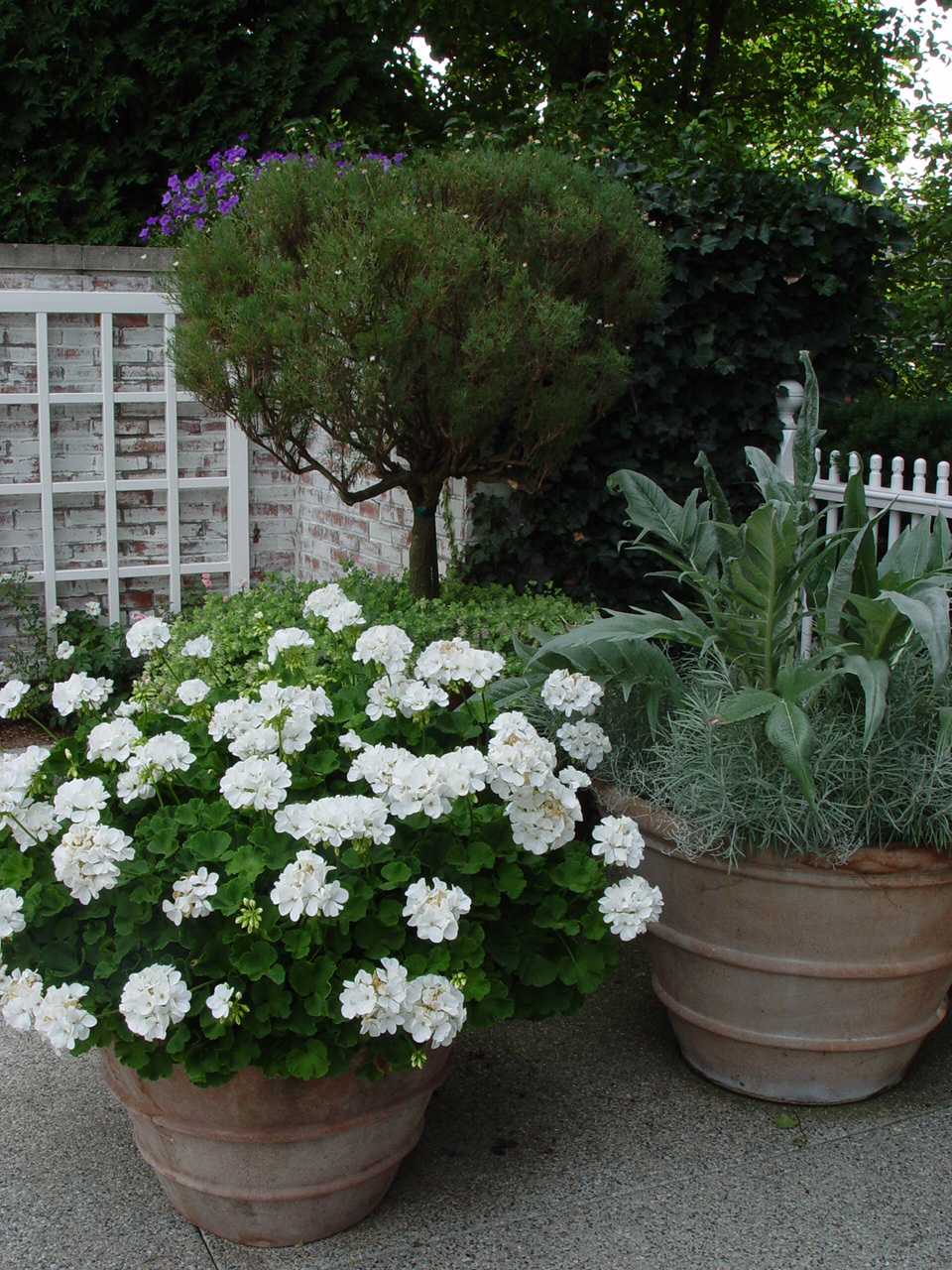 White geraniums are beautiful. That said, geraniums are heavy feeders. They need to be deadheaded. Their blooms are spoiled by rain-they need a daily once over. What you have time for should guide your choices.
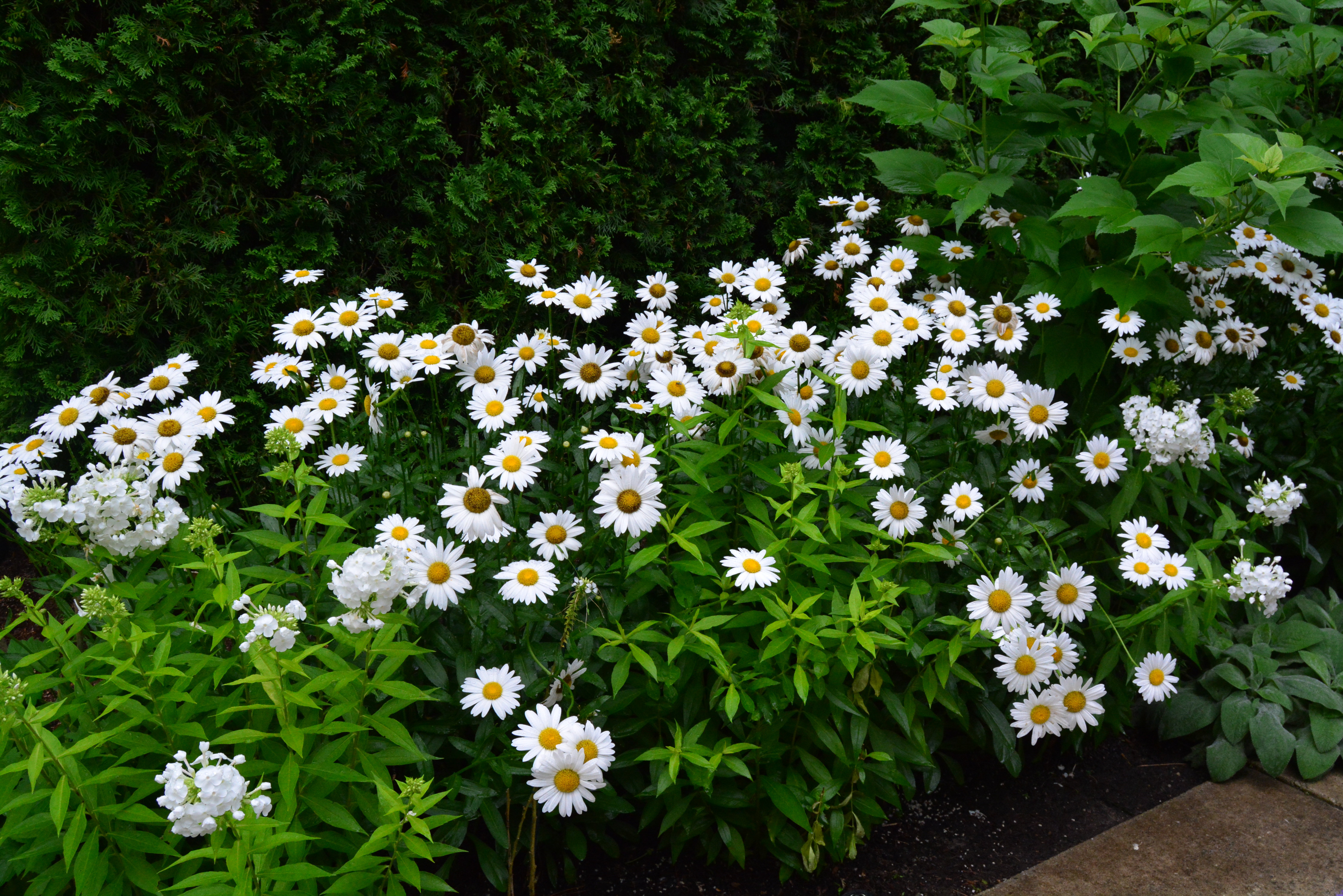
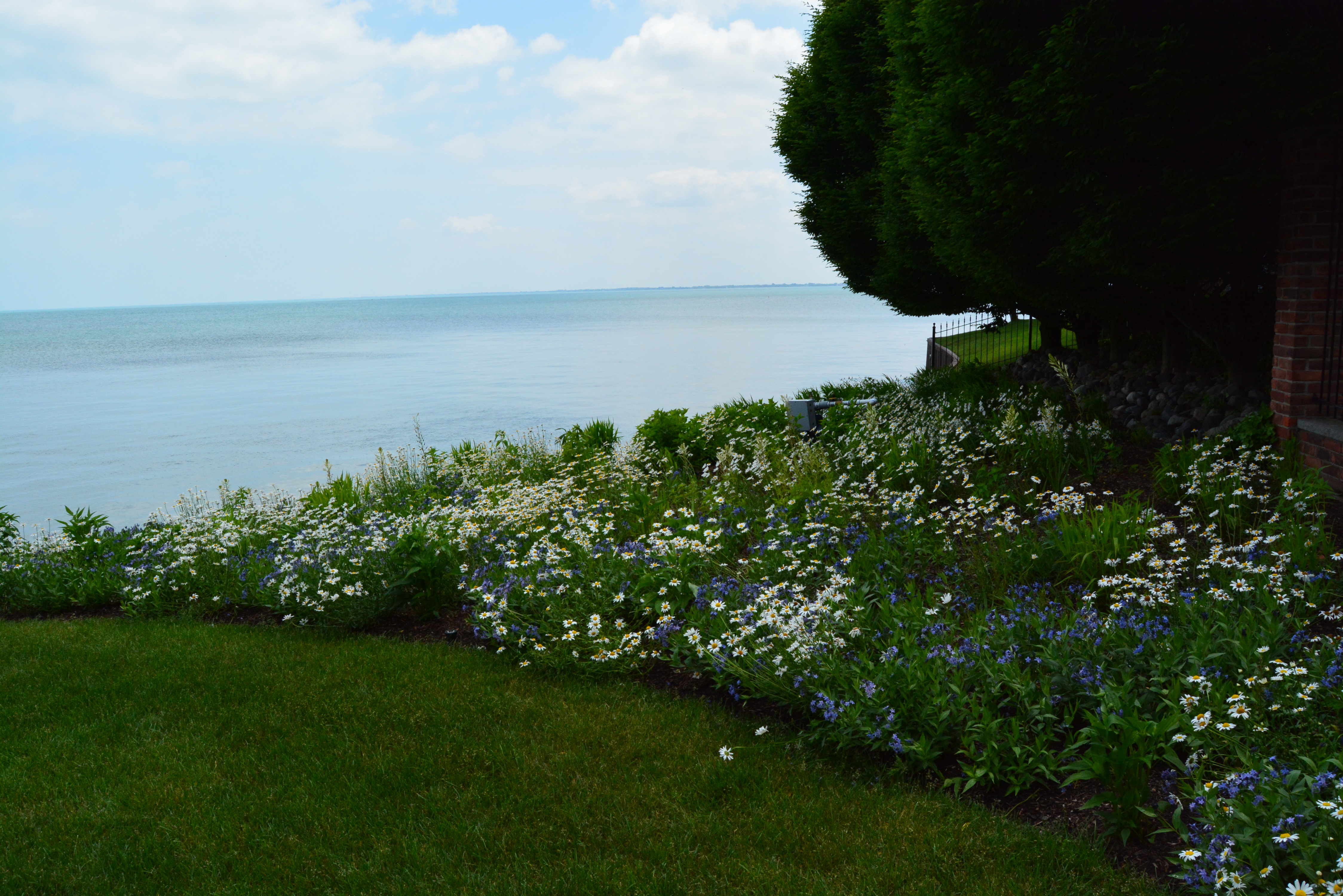 The wilding oxeye daisy, leucanthemum vulgare, is a favorite of mine. I like its messy habit, and I don’t mind the seeding. They are short and sweet. Daisies are a flower form near and dear to my heart. Shasta daisies, and boltonia are also white flowering daisies that are vigorous to boot. White cosmos are so beautiful-as is Queen Anne’s Lace. I welcome gooseneck loosestrife in the garden, as long as it has a little shade and somewhat dry conditions to slow down its spread. Some white flowering plants ask for lots of room-sometimes more room than I have available at home.
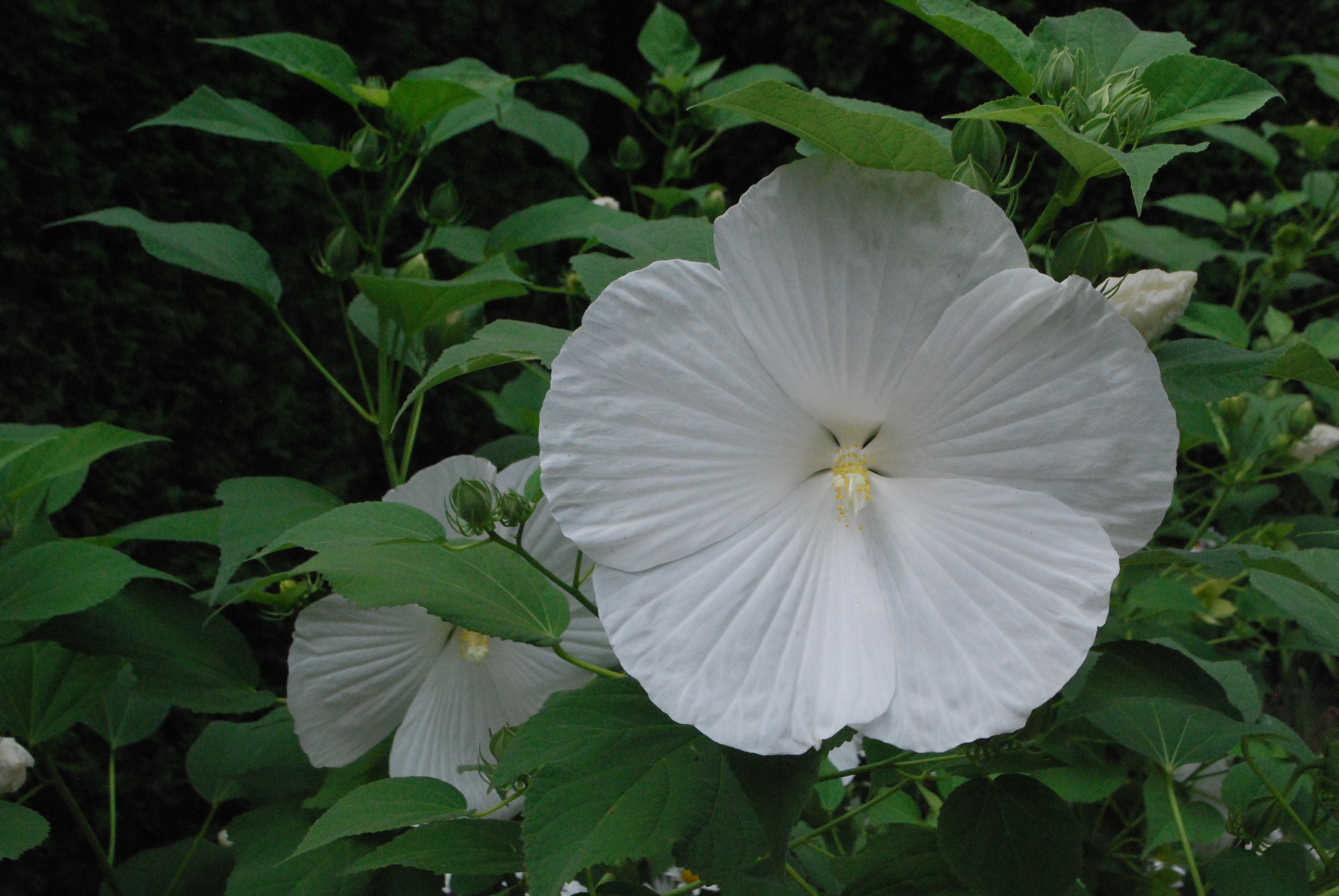 White flowering hardy hibiscus are very well behaved. When they are happy, they form large clumps that bloom late in the year. I have a special affection for late blooming white flowers. My spring season is so busy at work, I barely have time to enjoy my garden at home. My Limelight hydrangeas might be my favorite late blooming white flowered plant. I have 2 blocks of plants that are 12 years old. They never fail to enchant. Late summer and fall perennials – including the hibiscus, white phlox,platycodon, and white Japanese anemone – these are crown growing perennials that are well suited for my garden. I have a small urban property. I limit my spreading white flowering plants to those plants that cover the ground. Sweet woodriff and sagina can spread wherever they want. Campanula carpatica alba is beautiful, but not long lived for me. White peonies-breathtaking in the late May garden.
 I consider the rose Sally Holmes to be a white rose, though the buds are a warm peach. These white flowers provide welcome relief to all of my pink roses. I am partial to single white flowers. The most magnificent of all the white single flowers-a mature sweet autumn clematis vine in full bloom.
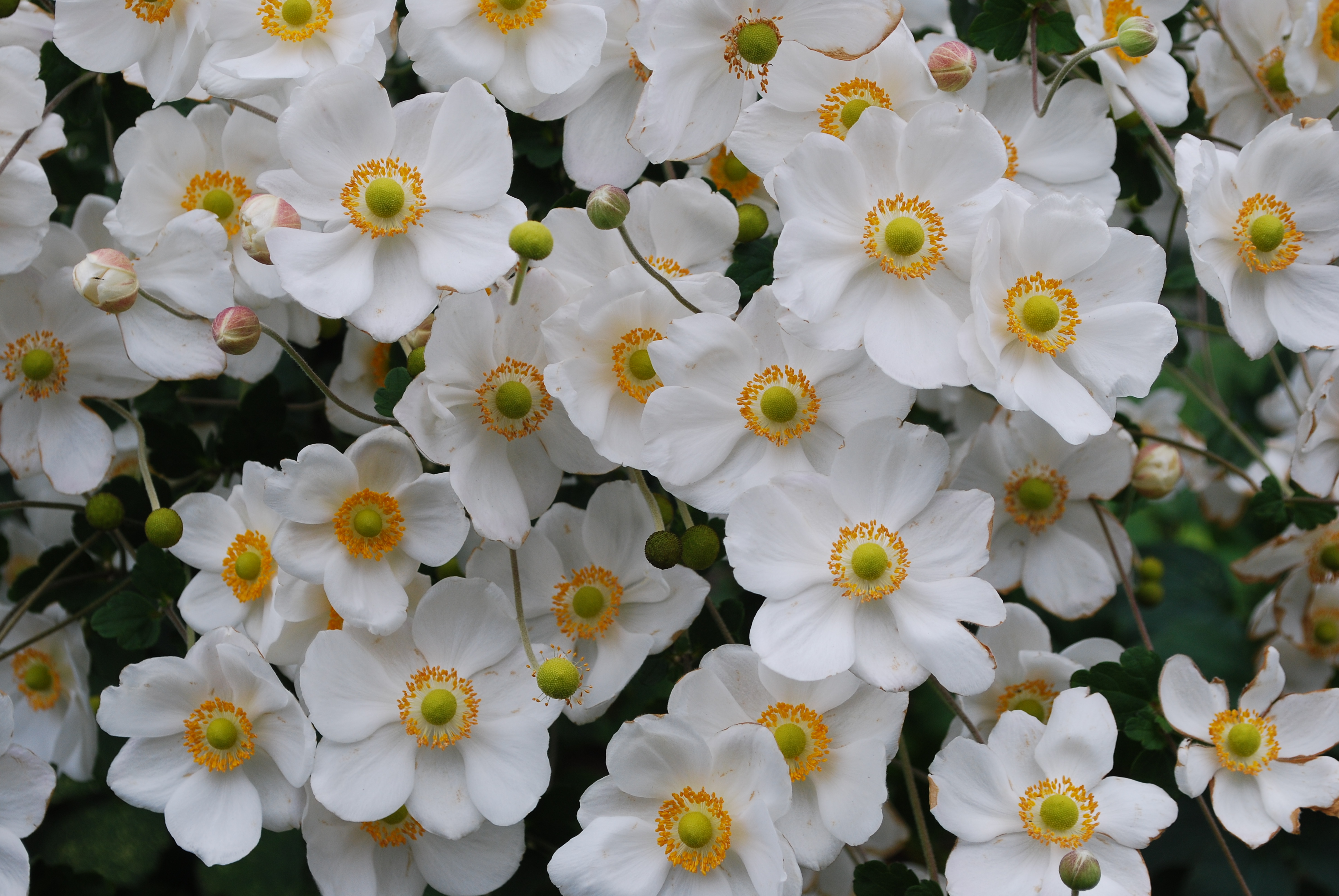 Planted between my roses, the white Japanese anemone, Honorine Jobert. It may be my favorite flower. Some years are better blooming than others, but it is entirely hardy. Along with the asparagus and boltonia, they represent in spite of the roses.
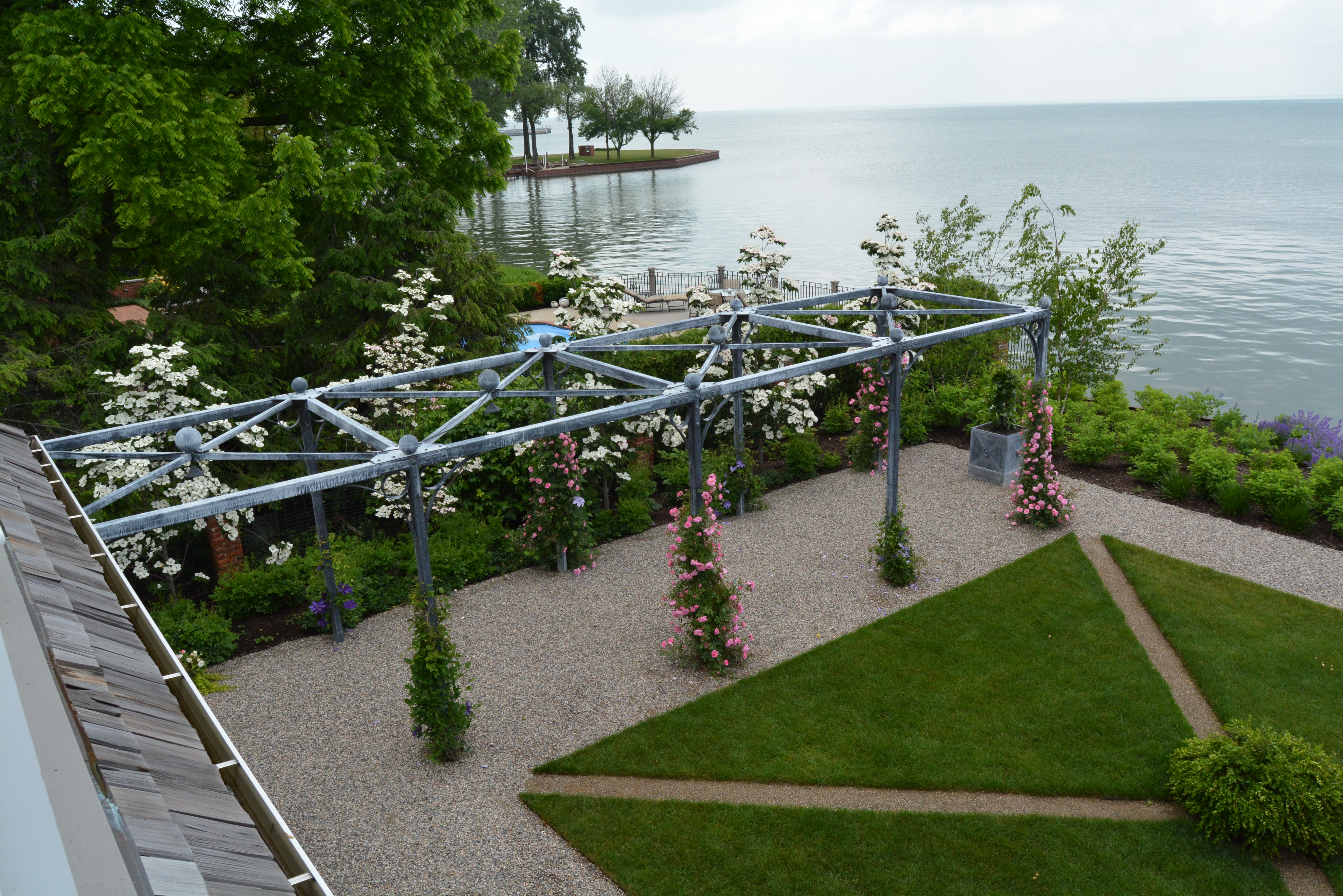 Though I doubt I would ever personally subscribe to an all white garden, I like what white flowers do for a garden. They read from a distance. They are especially beautiful at dusk. They shrug off a wearying heat. White makes every other color so much more vibrant. Cool, crisp, and fresh-that would be white.
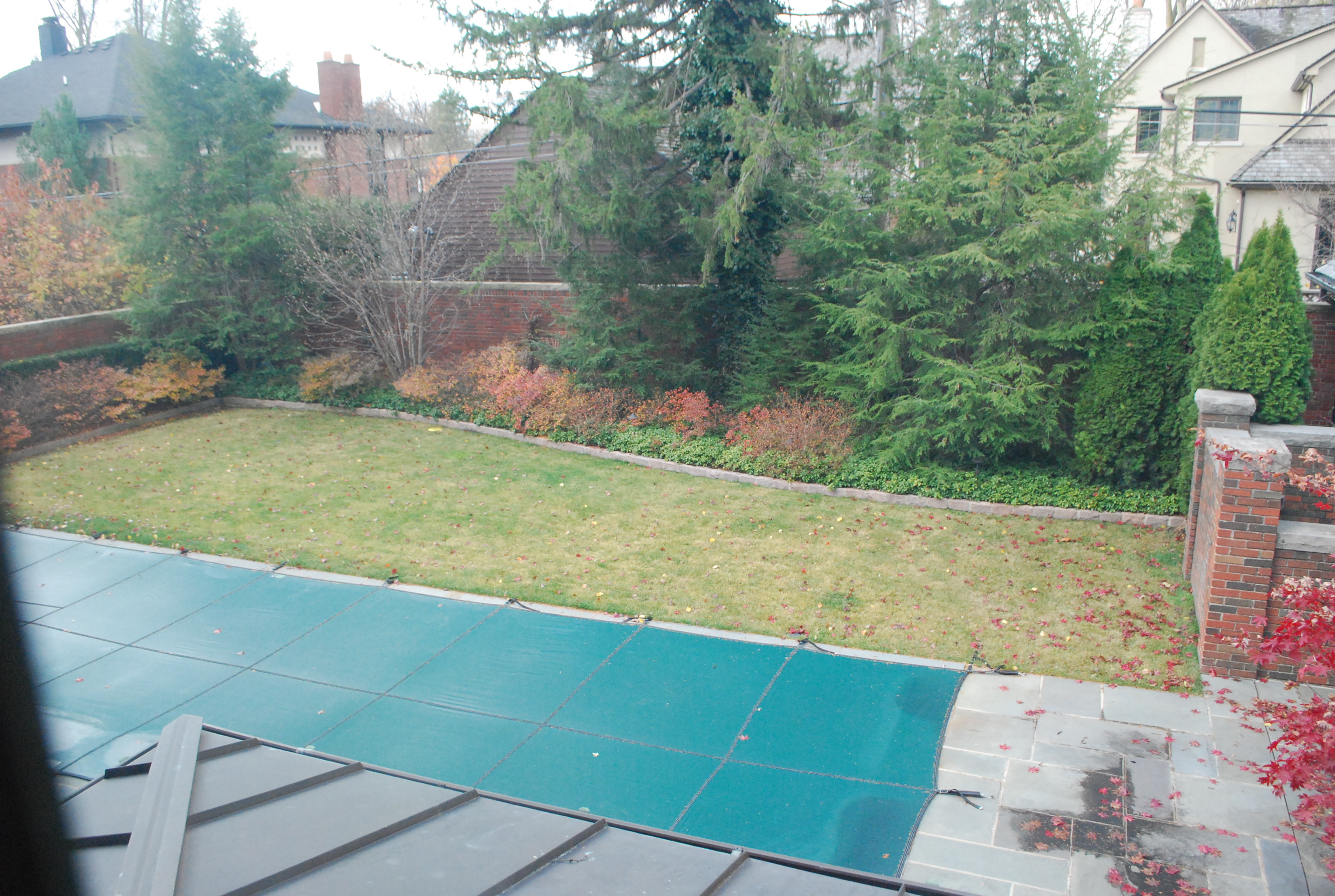





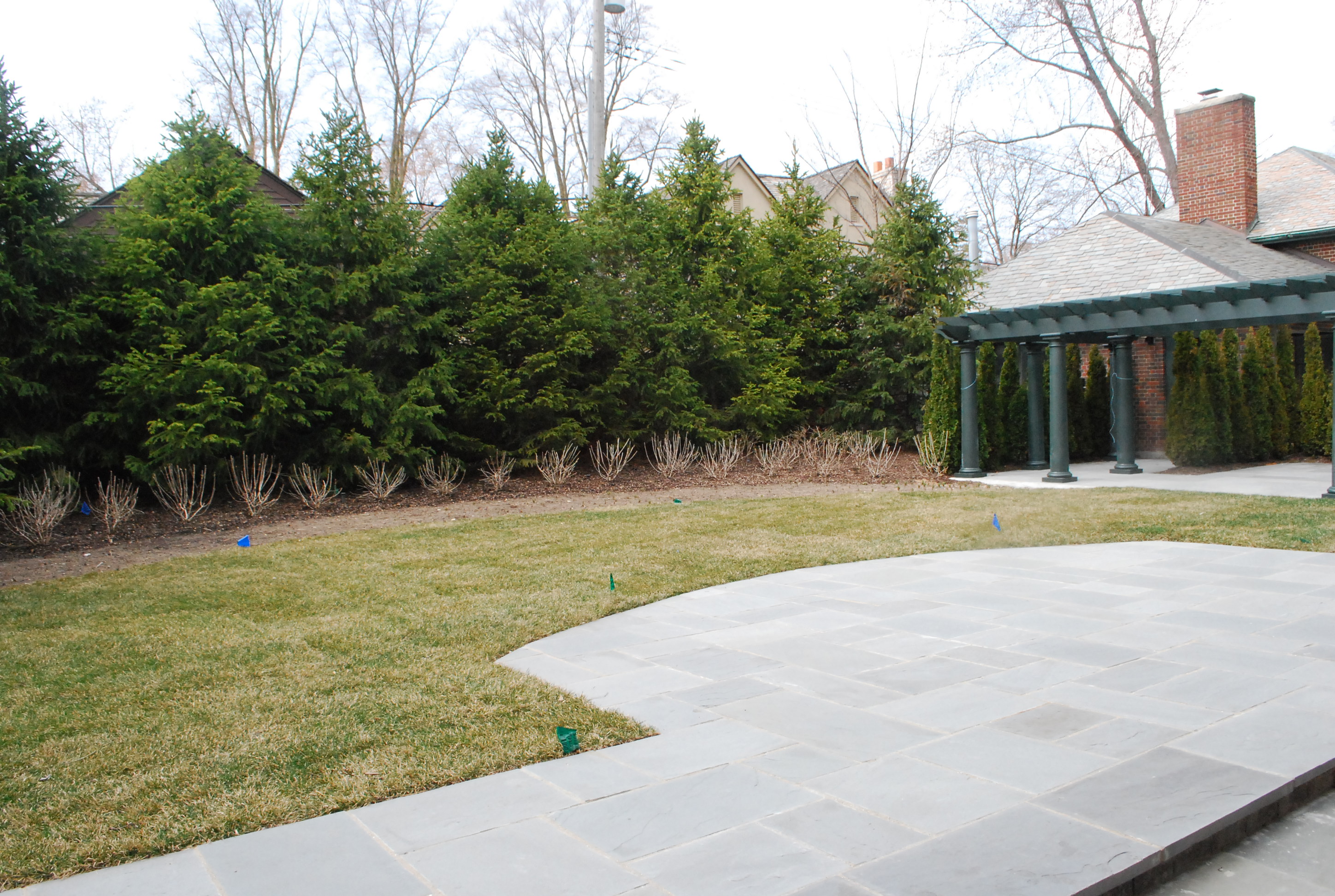
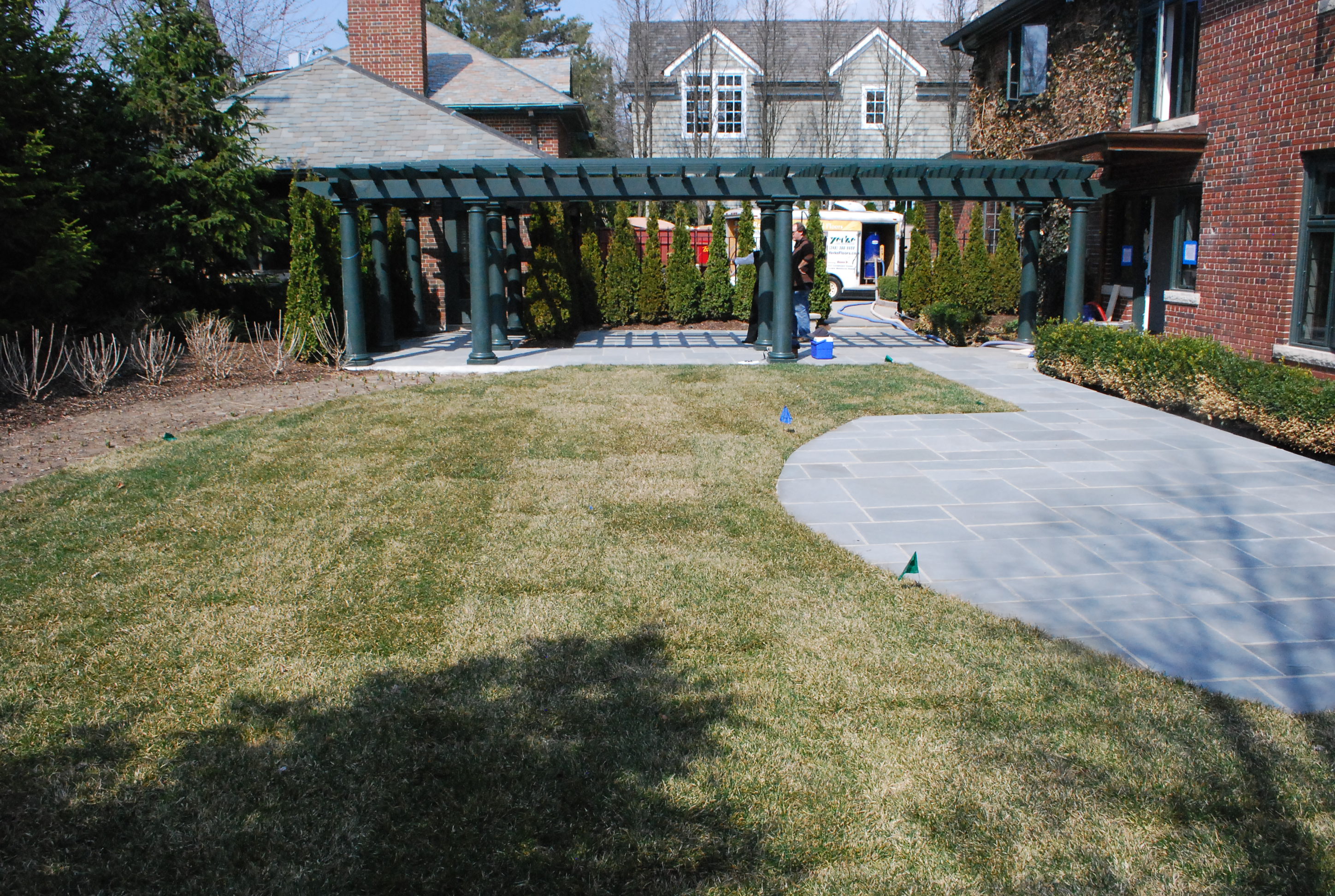

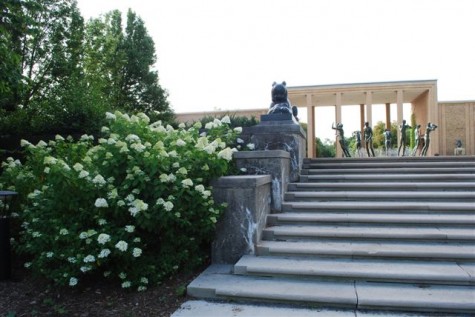 My last visit to the landscape at the Cranbrook Academy of Art was to deliver the flowers and decoration for a wedding and reception there in August of 2007. I had for several years prior donated the summer planting around the Orpheus fountain; this was a job I loved doing. This area adjacent to the stairs had been dirt and more dirt for some years; my client and I split the cost of a planting of a group of Limelight hydrangeas. I am happy to see they seem to be doing fine.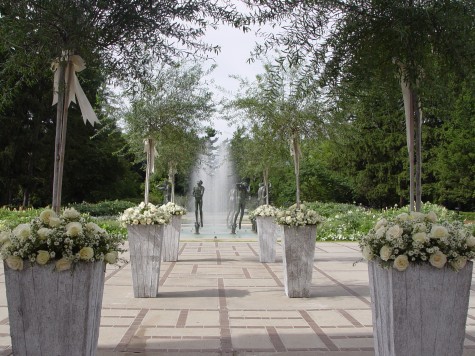
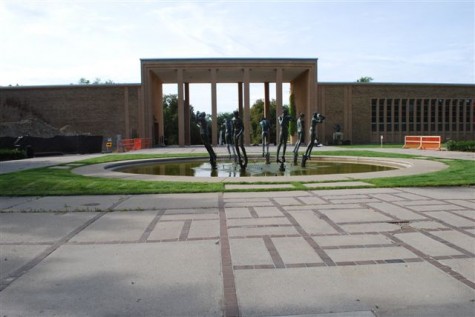 The Art Museum is under extensive renovation, so this year, the garden areas are sodded over. The fountain is closed.
  I try to tread lightly with the landscape where a sculpture is concerned. How easy it is to cross over the line trying to compliment a sculpture, and end up confusing the visual issues. Though I knew it would be closed, I was not prepared for how closed. But seeing it in its gardenless state, no water in the fountain, no sound and sparkle, had its good side. Its always a good idea to consider whether an area is all the better for your not touching it. The simple word for this is “editing”; some days I am better at this than others. Where flowers are concerned, I have a very tough time.
 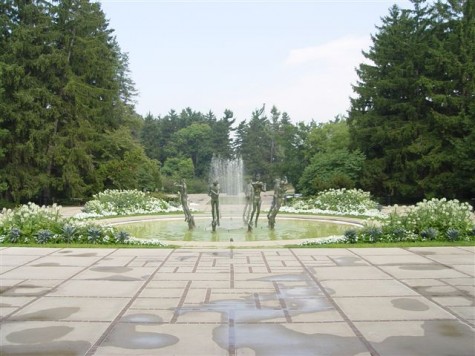 Planting white flowers is a good way to proceed cautiously. Interestingly enough, I was told the traditonal summer planting here involved a short red salvia. I had no problem ditching the red flower thing, but I thought a tall planting would compliment the sculpture and water better. I mitigated the risk with the white palette.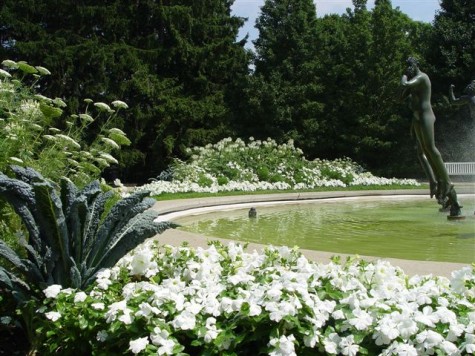
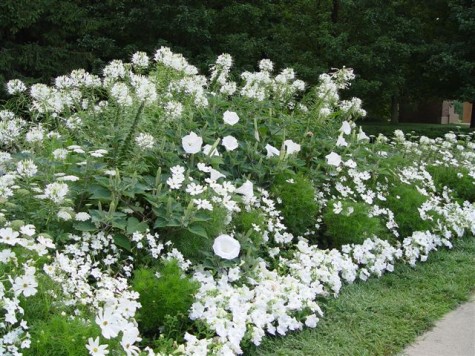 Another year I added an upright white datura, and white sonata cosmos to the mix. The white petunias did a better job of softening the lawn line.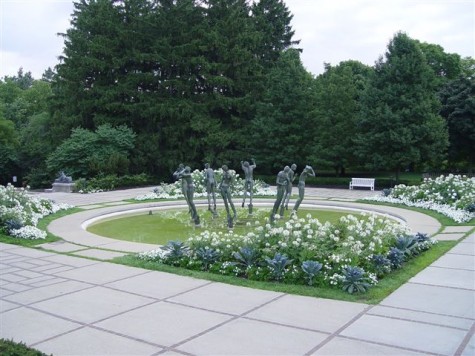
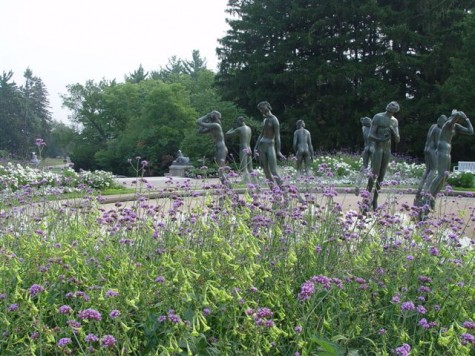 Yet another year, I added some verbena bonariensis, some nicotiana langsdorfii, and some grey cirrus dusty miller to the predominantly white mix. I do so like the cloud effect of the verbena flowers.
 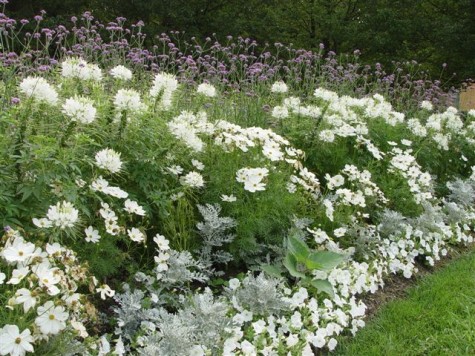 White gardens are however, unforgiving of a lack of maintenance. Dead white flower heads do have a distinctively brown-dead appearance. For this reason, I rarely plant white geraniums unless I am sure there is a maintenance fanatic waiting in the wings-and even then, a heavy rain will spoil the blooms in such a dramatic way. I knew the planting would not be the end of my involvement here.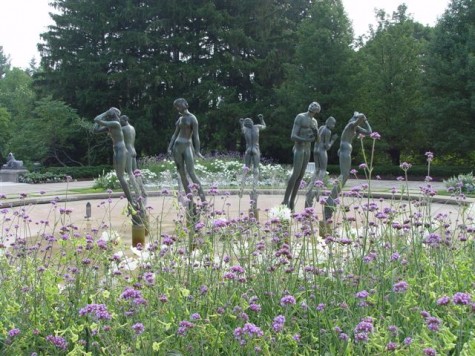
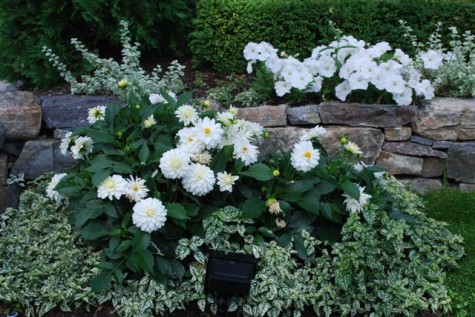
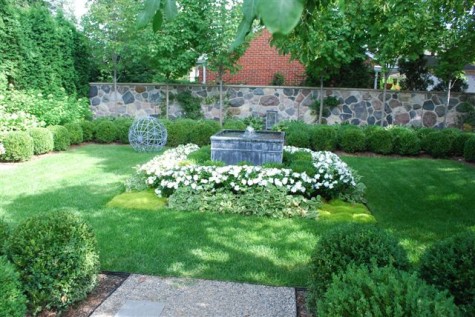
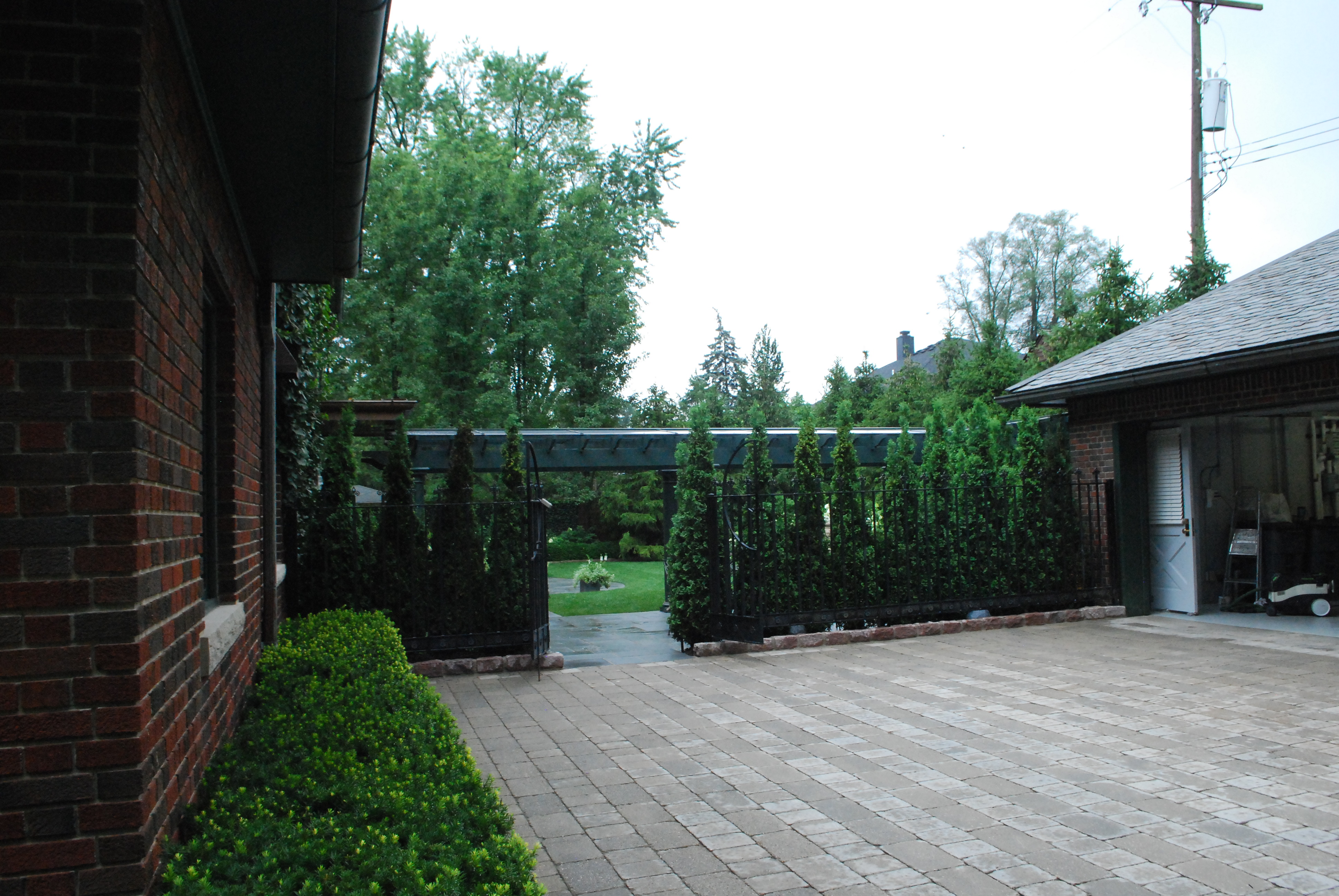
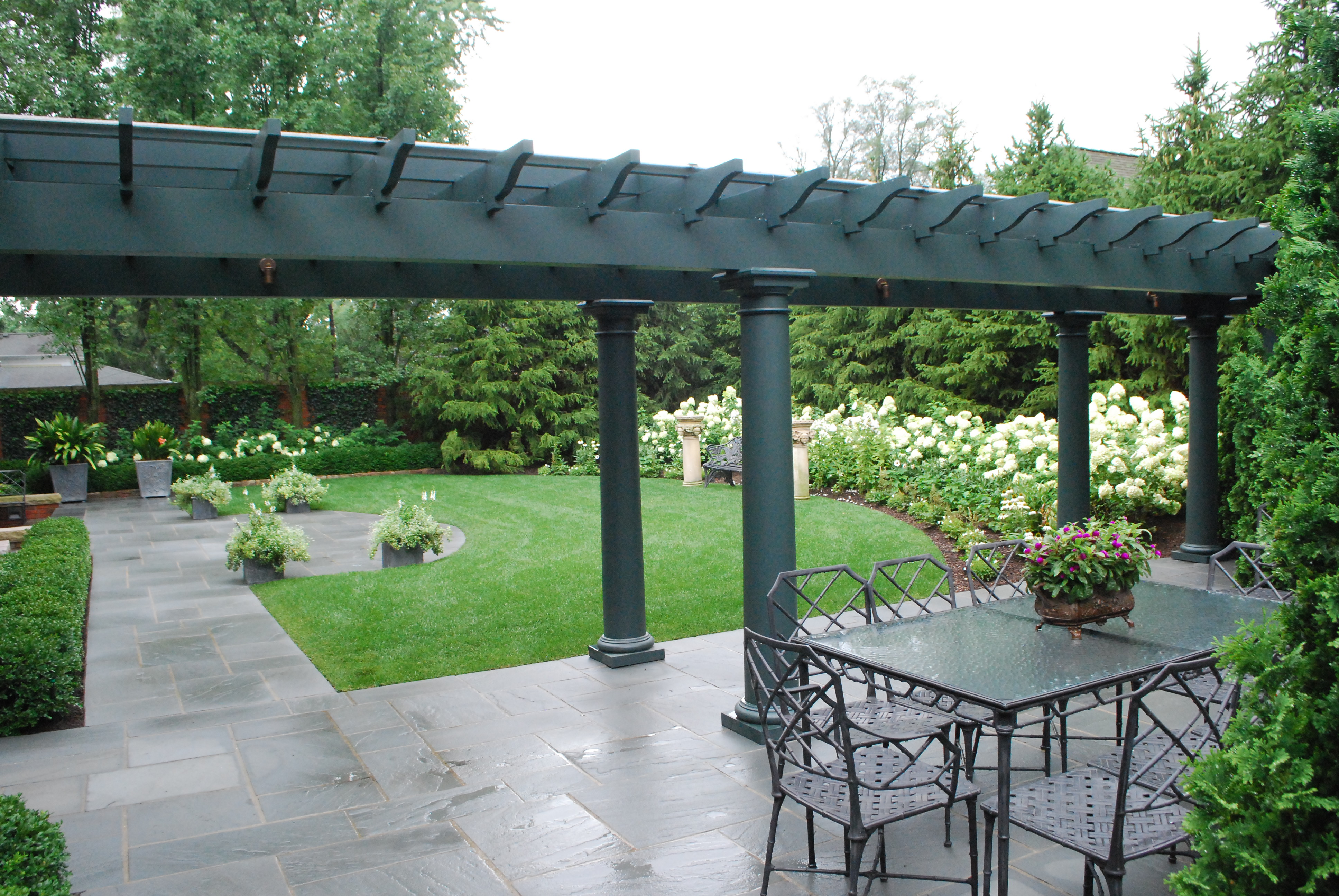
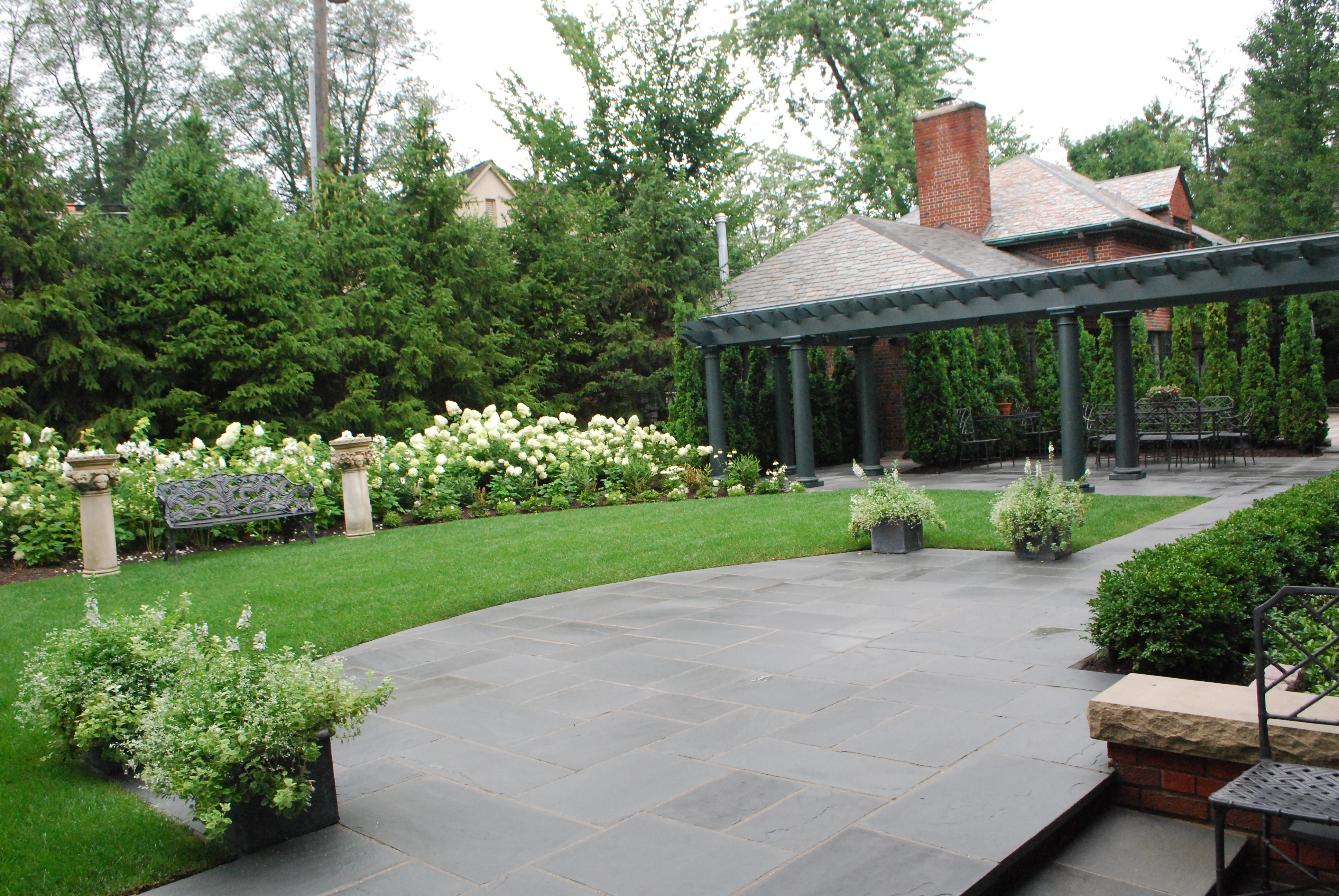
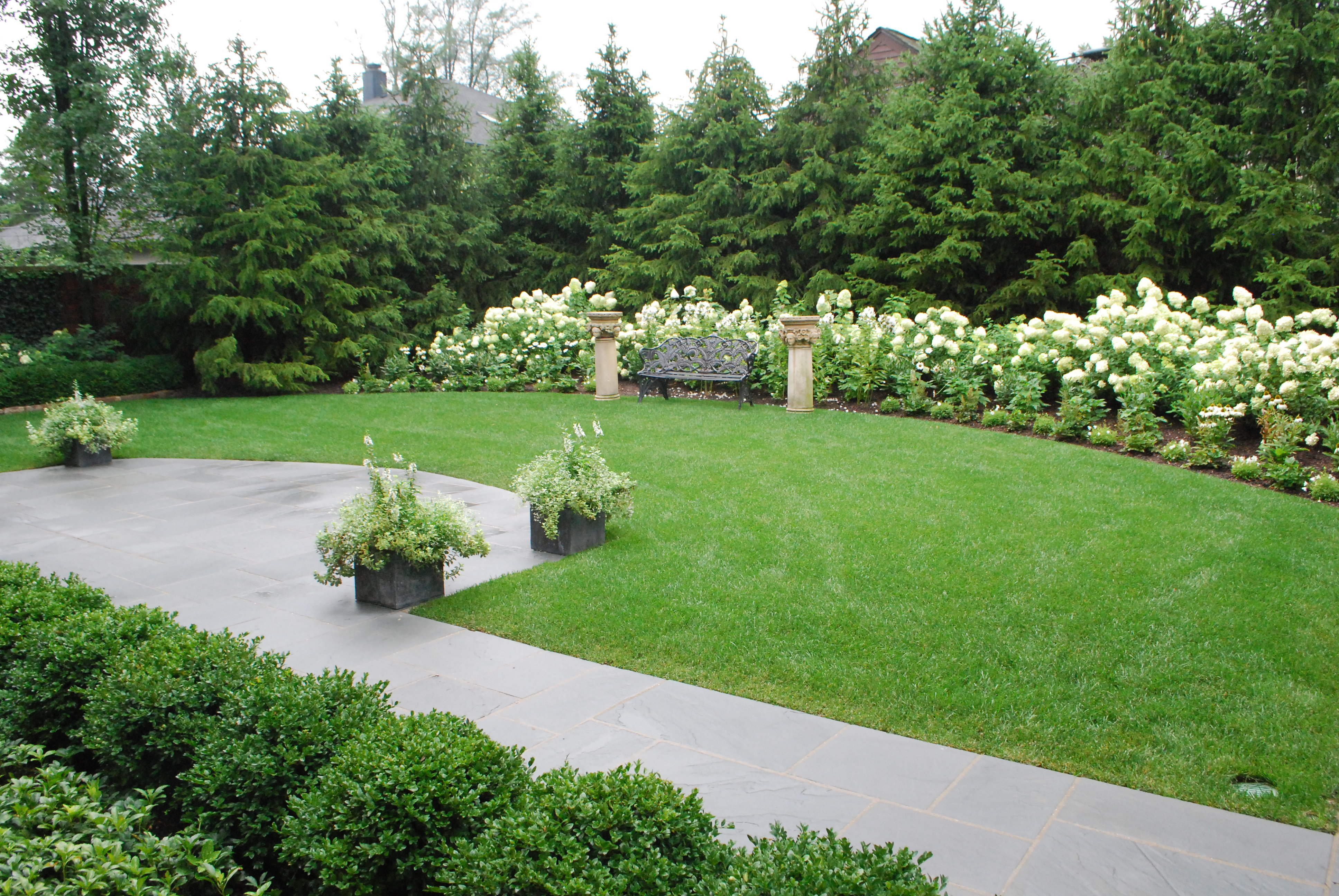
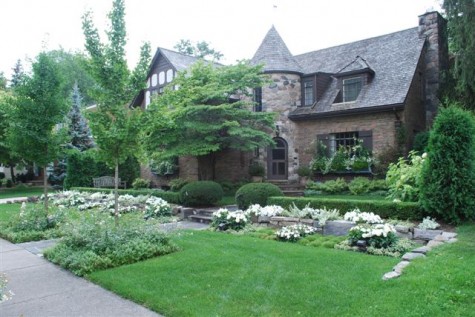 These clients have lived many years in a lovely old Tudor style house built in the 1920’s. However, they both have a love for clean, modern and edited lines. Working with them has produced a garden that has elements both friendly to the architecture of the house, and their point of view. They were both clear that a green and white garden would suit them best.
 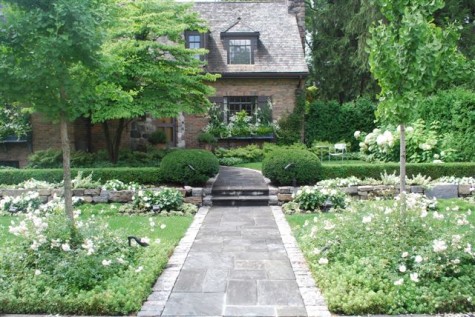 The landscape of the front of the house was already in place when I met them. My input involved the sizes of the flower beds, and the construction and installation of the window boxes. The profusion of flowers is decidedly English in feeling, but the green and white has a crisply contemporary flavor. The strong, dark green horizontal line of the boxwood hedge contrasts and compliments the mass of the oval yews. This element is balanced by the four columnar gingkos that frame the walk at the street. The simple steel windowbox is a focal point at the visual end of the walk.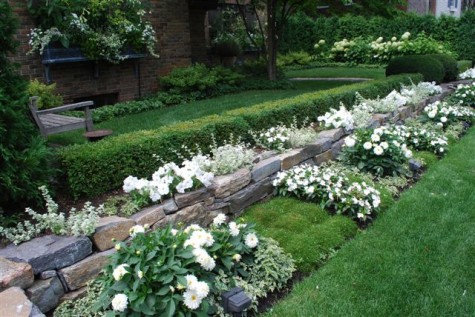
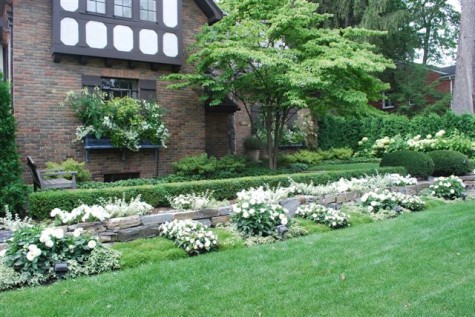 The upper level is planted more freely, with variegated licorice, white petunias and more polka dots. This bedding plant scheme derives more visual interest from its texture and layout than from the plant species.
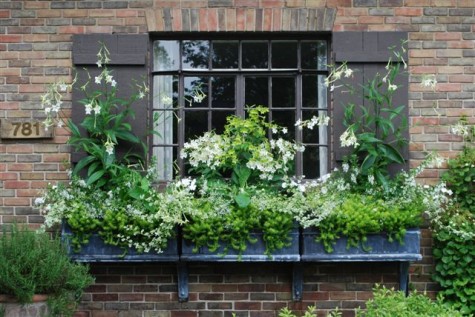 The window boxes are lush with green angelina, euphorbia, and licorice. The angular nicotiana alata white frames the more orderly growing Perfume nicotiana series in white and lime green.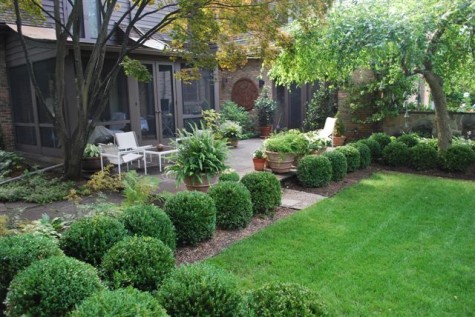
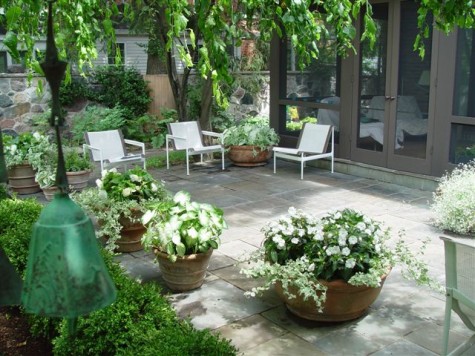
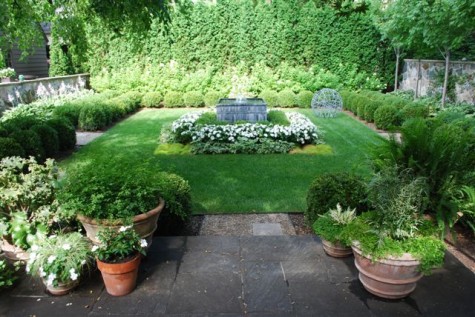 A custom made steel cistern positioned on axis to the porch, and the side walk organizes the space. It was constructed with legs tall enough to hide the fountain pump, but also to provide for the eventual height of the boxwood surrounding it. Bordered in boxwood, a run of limelight hydrangeas provides another level of interest against the green arborvitae wall.