I suppose there are those moments when rain in the garden means trouble. A windy and strong downpour can knock the peonies and the delphiniums to the ground. Heavy rains can weigh down the flower panicles of hydrangeas in full bloom. A tree hydrangea whose flowers are stooped over from heavy rain – I avert my eyes. Why is it that the only time we have silly crazy and pounding rain is when I am trying to get Milo out of the car and in to the house at the end of the day? I do not love being drenched. But in general, I am very grateful for that rain that nurtures my landscape and garden.
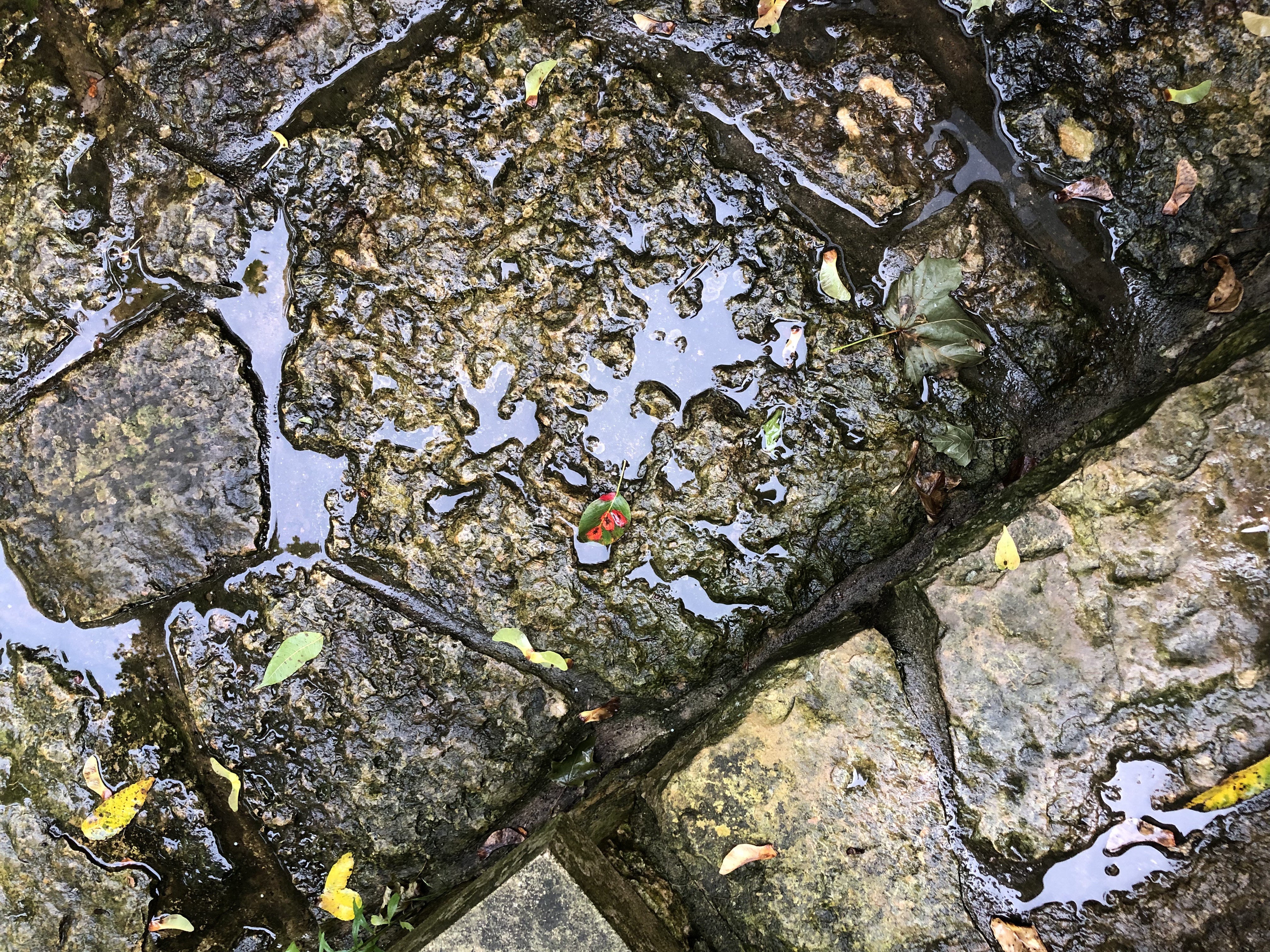
 The garden after a heavy rain has a juicy and saturated look. Even the air seems freshly washed. The lichens on the backs of my chairs are a sure sign that those chairs have been watered. Our rains are more regular come the fall season. Given cooler temperatures, these pots will not require any water from a hose for a few days. What the picture above does not express is the action and sound of that rain, but this does: pouring rain The sound and the action of water in the landscape is a benefit of another sort.
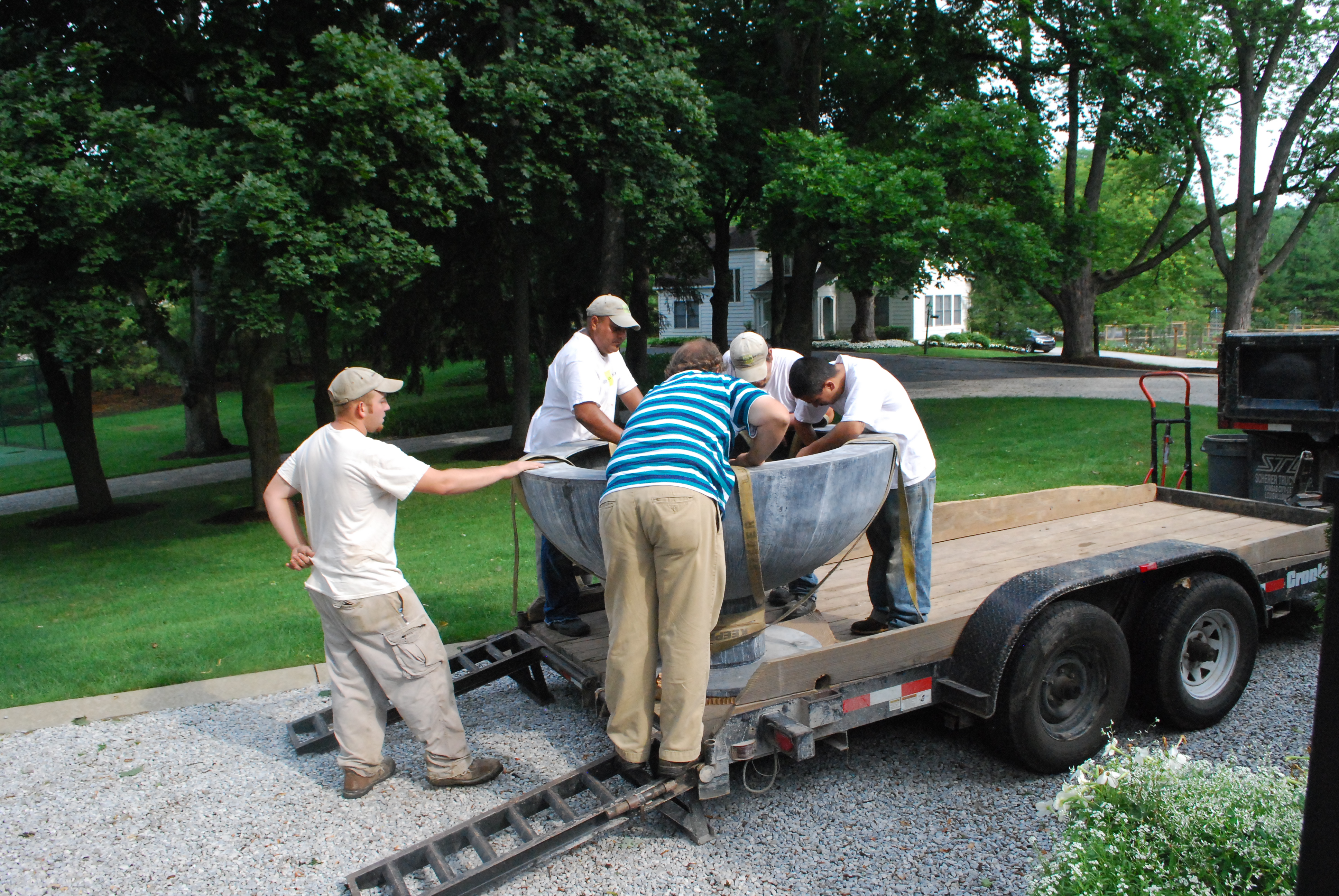
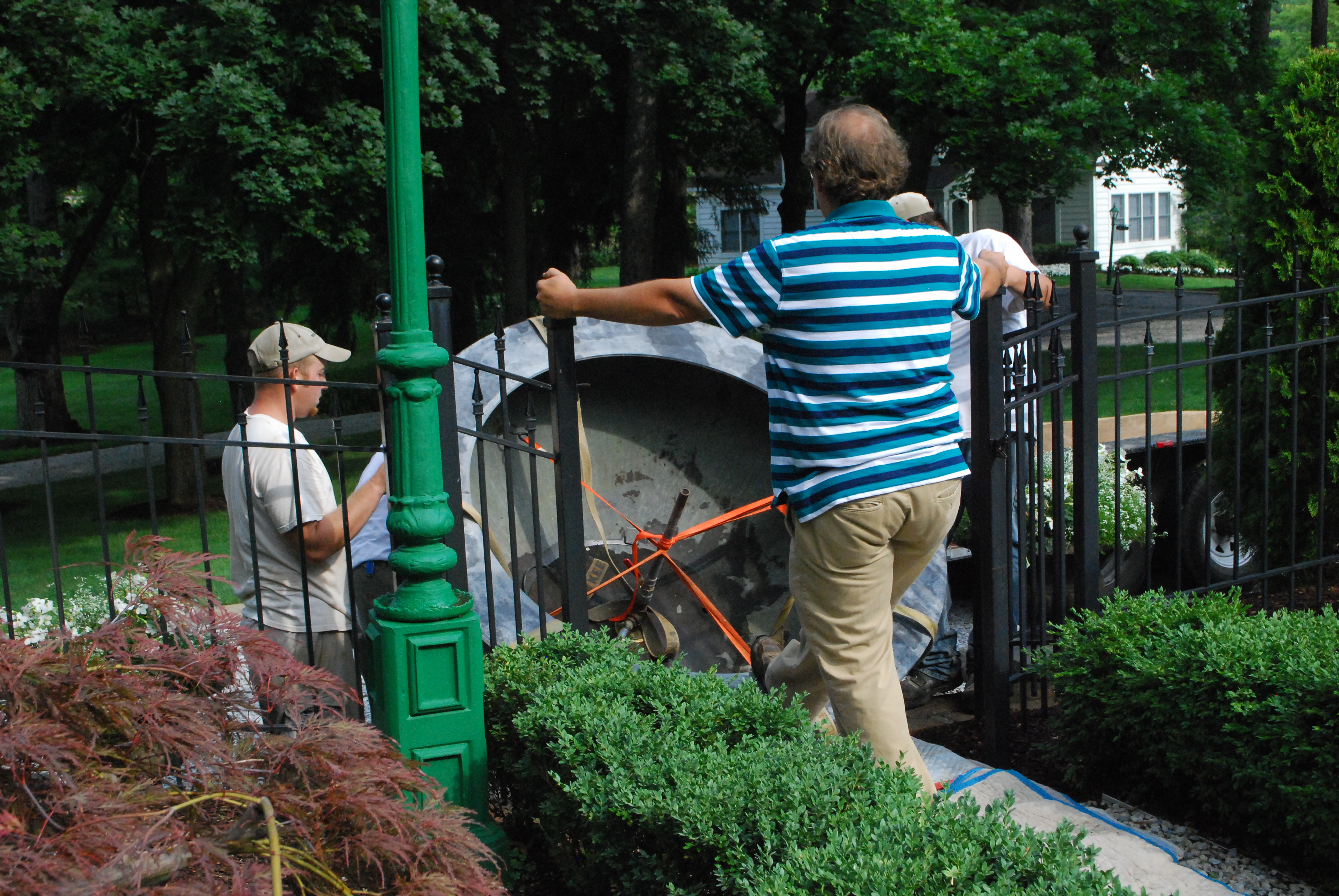
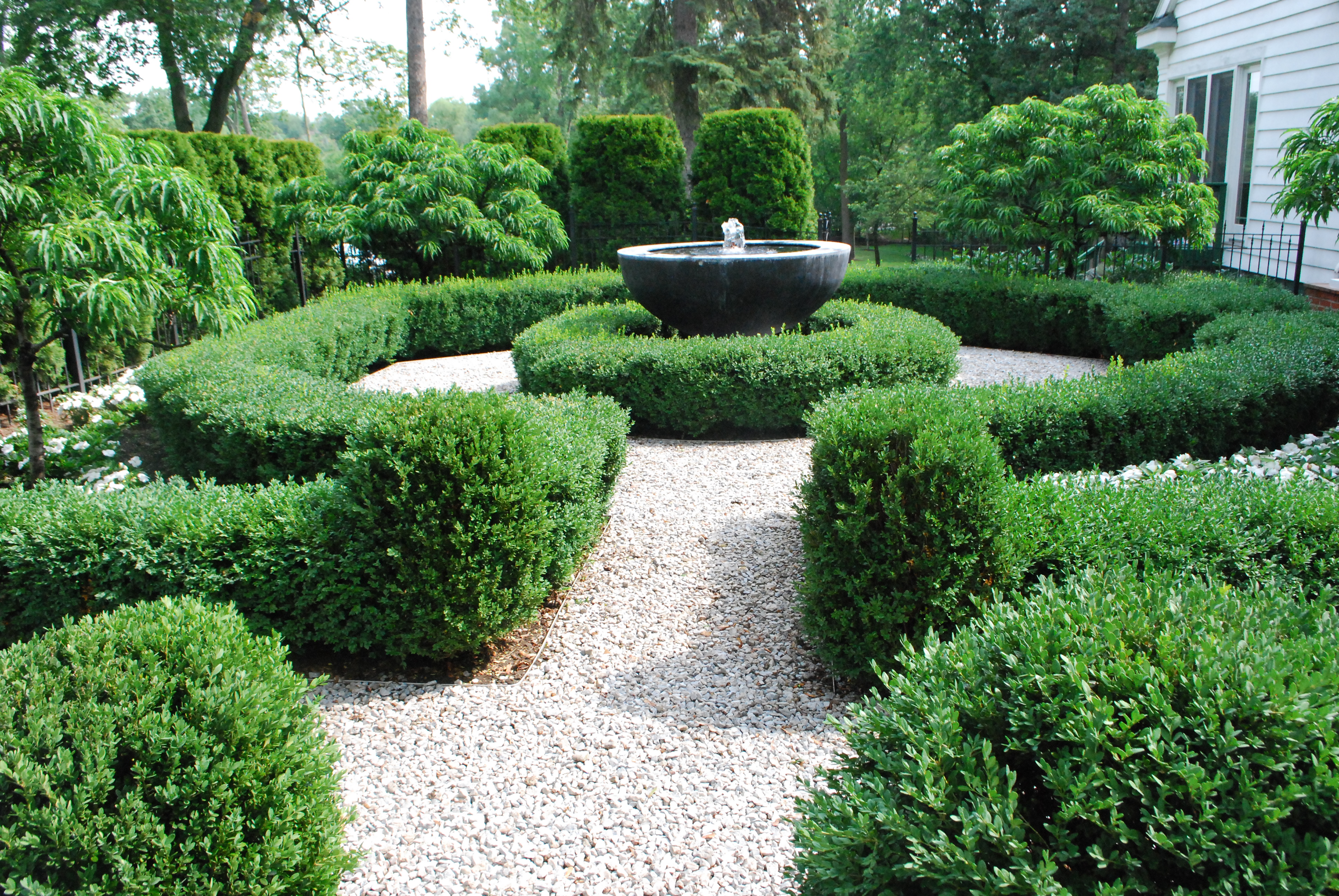
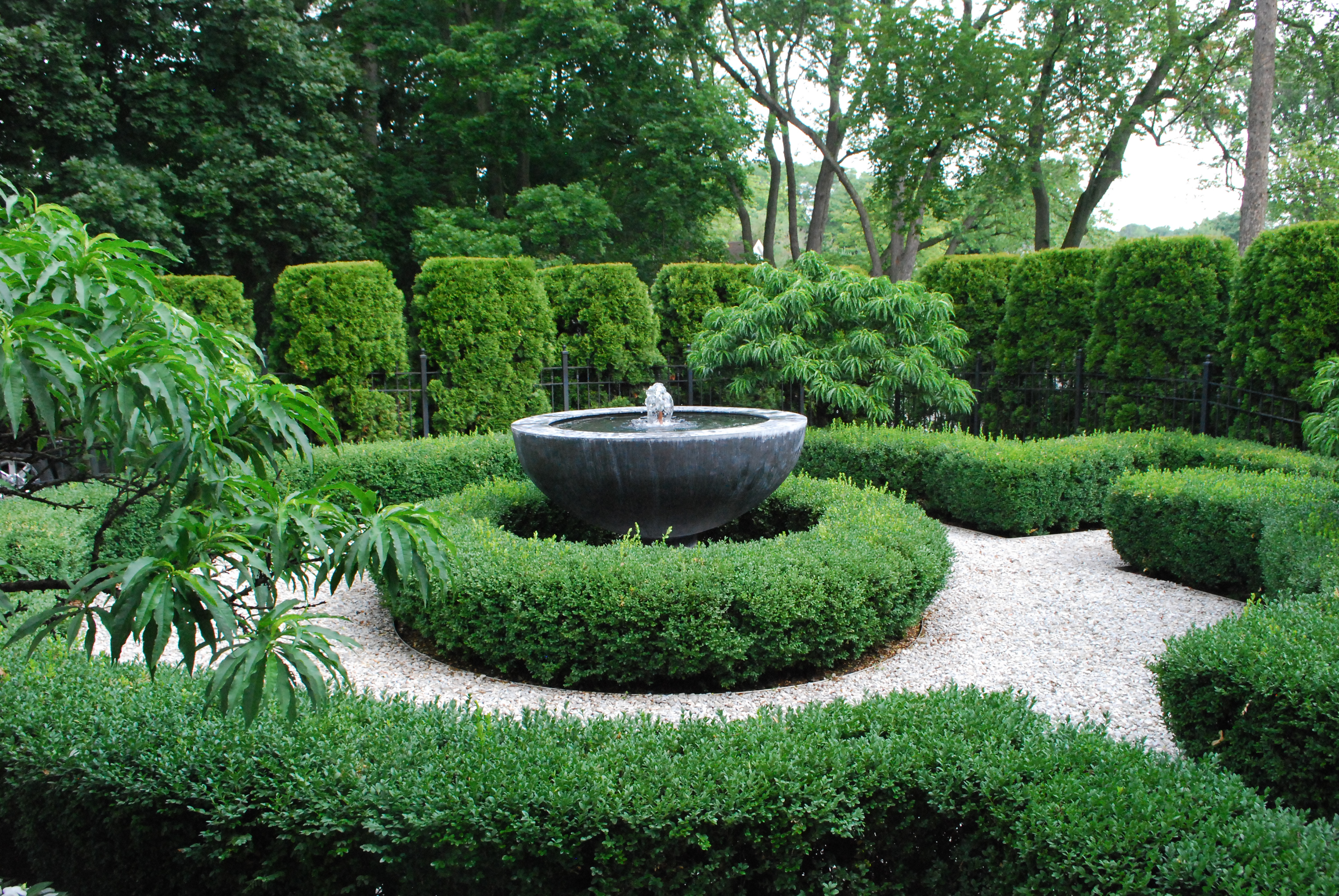
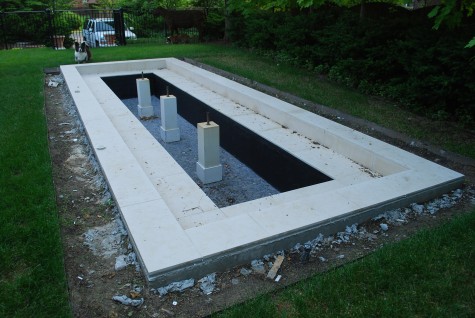
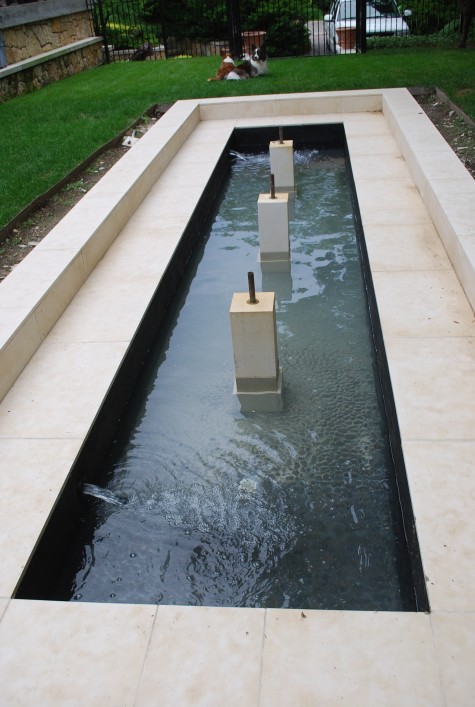
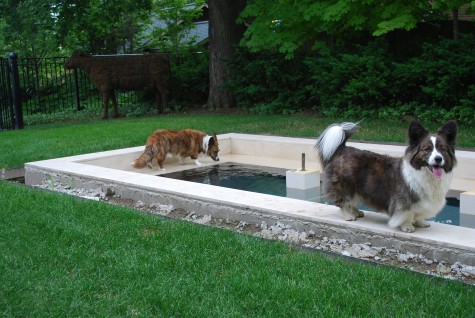
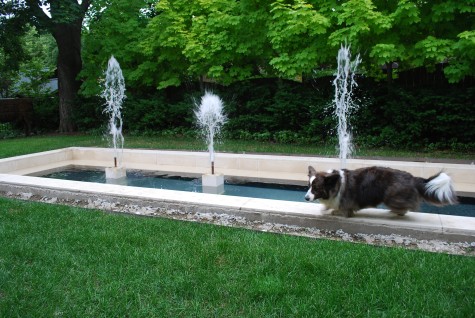
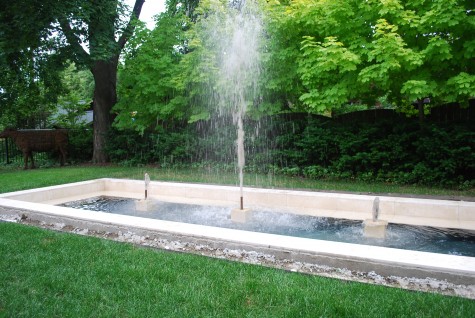
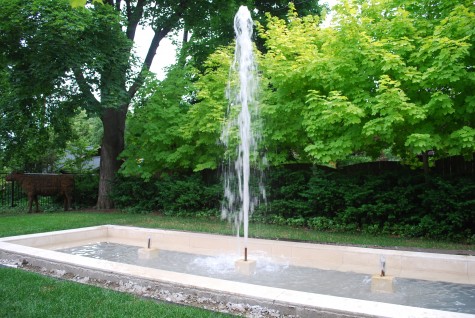
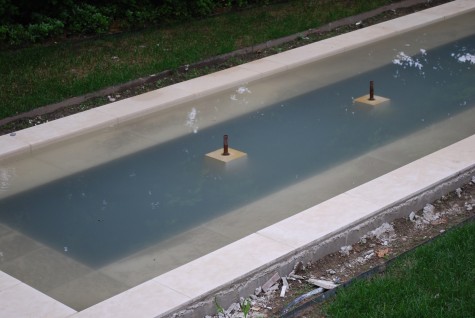
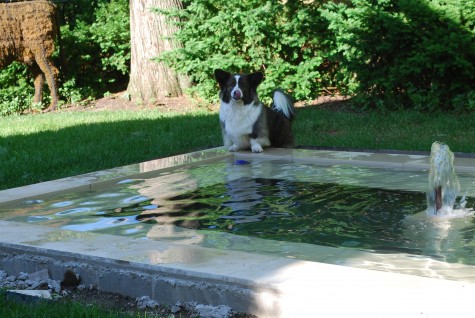
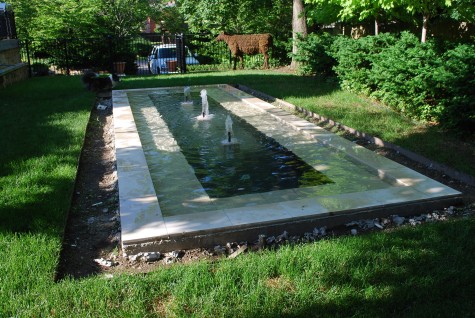
 I may have told this story before, but in my mind, it bears repeating. My last birthday gift from my Mom before she passed was a stack of beach towels. Beach towels? I asked her why. I am embarrassed to say I was irritated by her gift. Mom’s have a different vision – don’t they? She replied that of course I did not have a use for beach towels. I was always working. She thought it might be a good idea for me to go to the beach once in a while. She left me some money when she died. I spent every penny of it on this fountain in my back yard. Every day after work, I go to this particular beach, and think of her. The sound of that water adds the element of music to the garden. The action of the water is both mesmerizing and relaxing. It is no surprise that many people feel that living on a body of water of some sort is a quality of life issue. My garden life is all the better for this body of water.
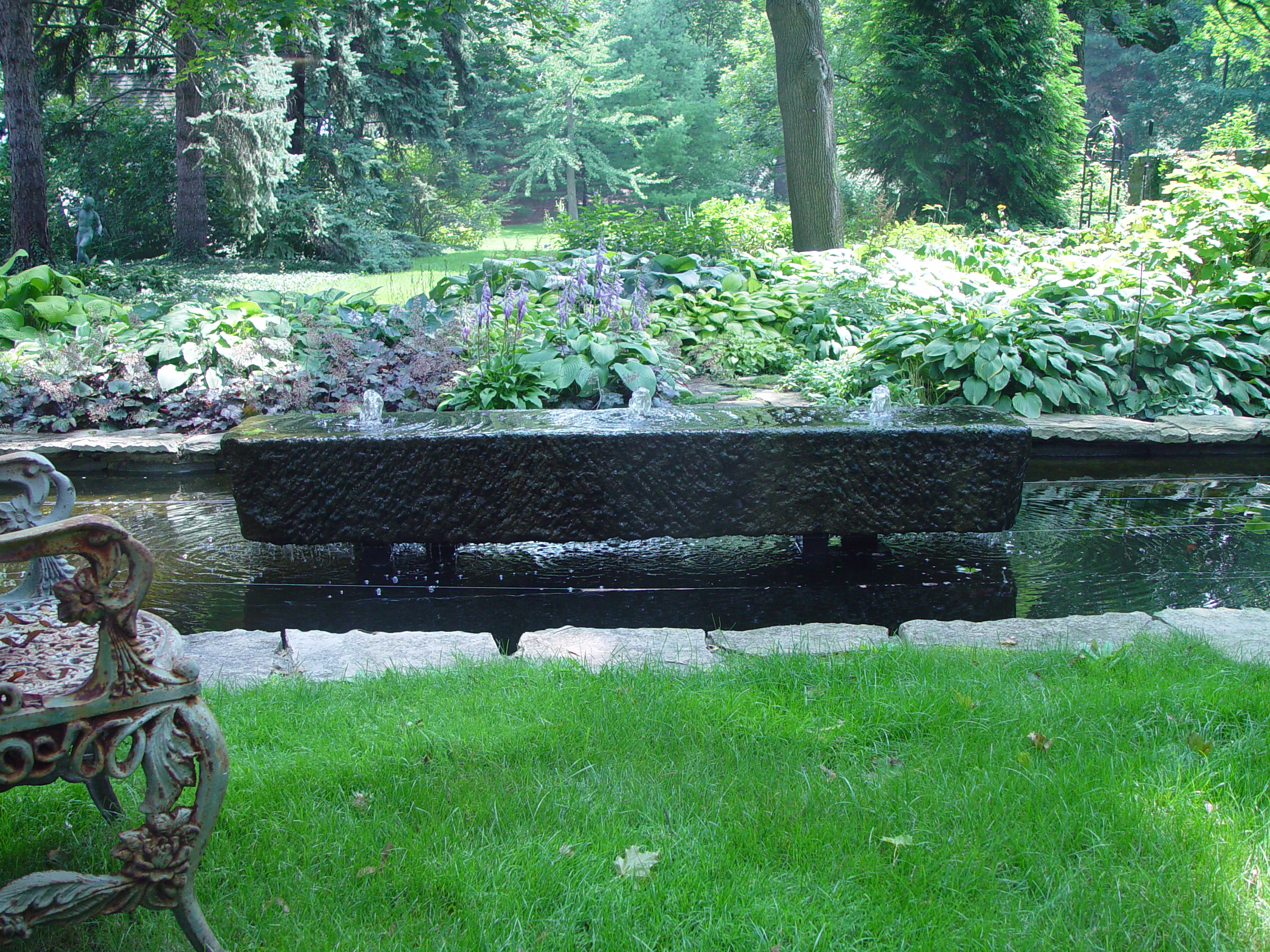 Years ago I had no interest in water in the garden. That was tone deaf. Sounds in the garden are so much a part of the landscape. The birds and bees-and the water. I routinely suggest to clients that a water feature in the garden is a good idea. Big or small – that makes no difference. A representation of water in a garden within earshot endows that garden with a special gift. Call that whatever you like-communing with nature, or enjoying blissfully relaxing white noise.
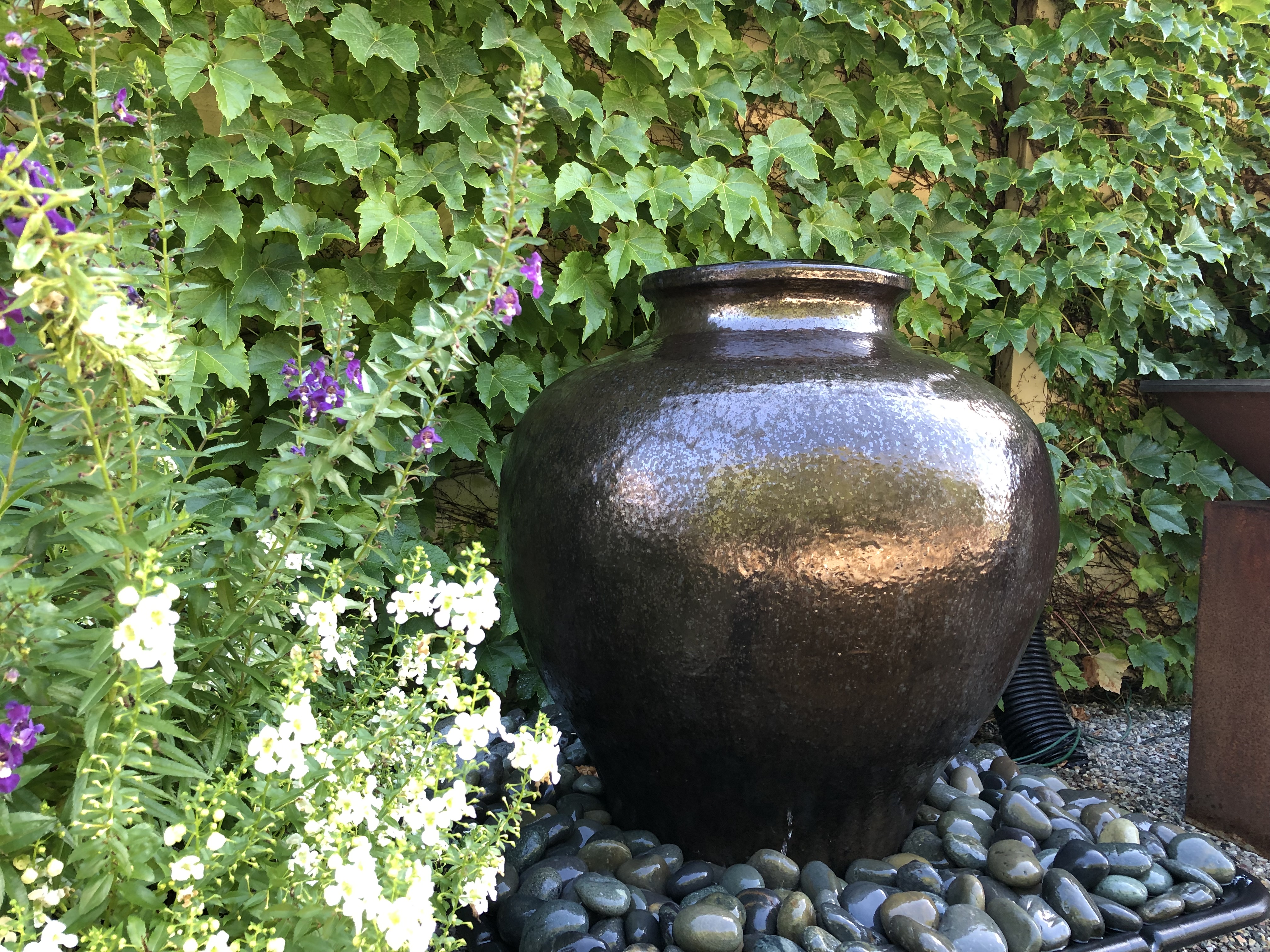 This recirculating fountain jar features a basin that can be installed above or below ground. The pump is in the basin, and is disguised by a layer of rock over a screen. The action of this fountain is very subtle, but unmistakable. Of course there is maintenance involved. The basin needs refilling occasionally, as water is inevitably lost to evaporation. At the end of the season, a trap door in the basin provides access by which the pump can be removed and stored for the winter. This pot is glazed stoneware, so it can be left out for the winter. I might be inclined to put a simple plywood cover over the top to keep snow out of the pot. The fountain jet passes through the drain hole, and is sealed in place, the pot no longer drains.
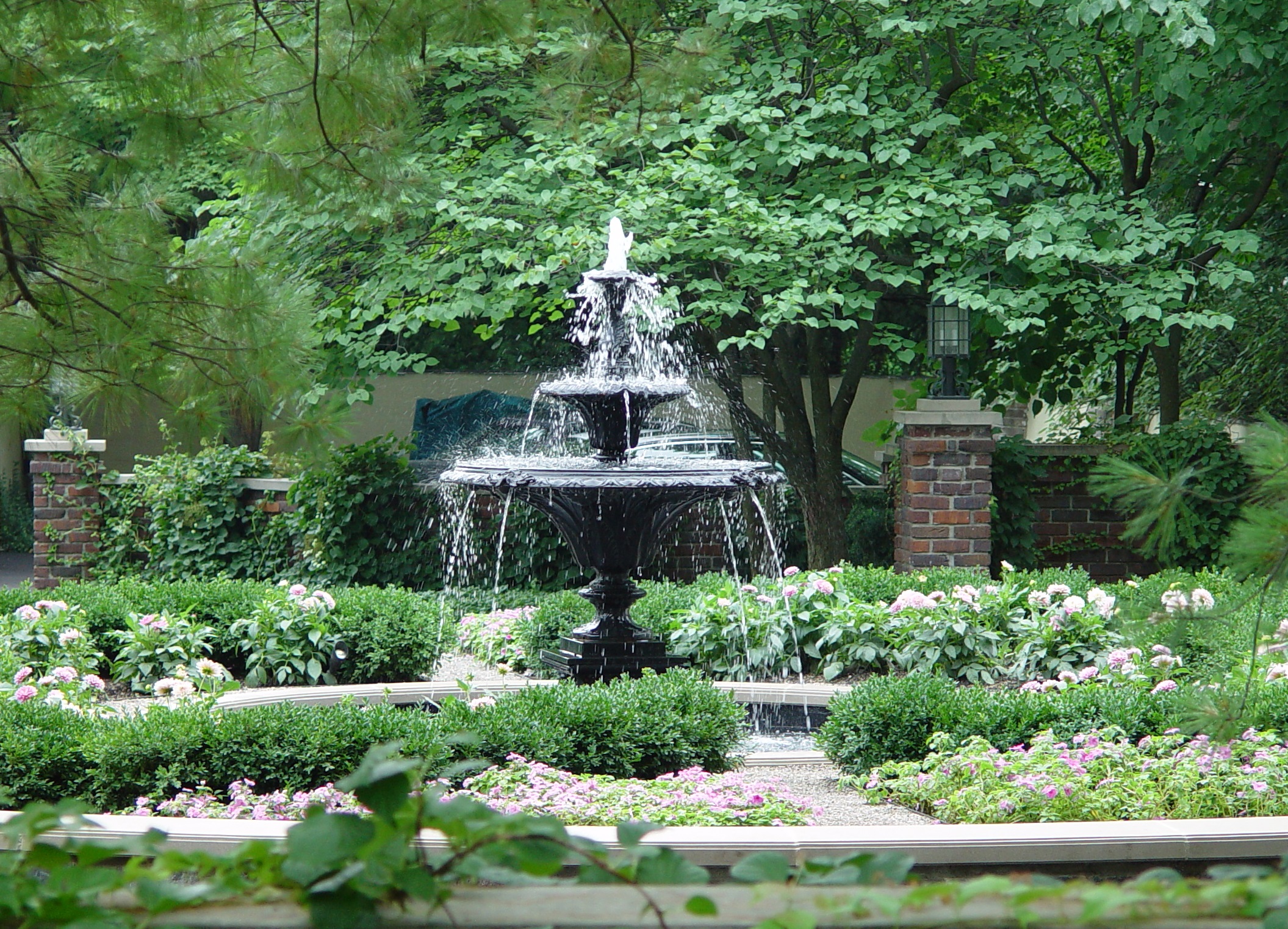 This 3 tiered fountain was forged in cast iron by an English artist Michael Hill. The fountain has been installed in a large pool, which captures the water coming over the edges. This fountain both streams and splashes water. It provides a very lively focal point for this part of the landscape.
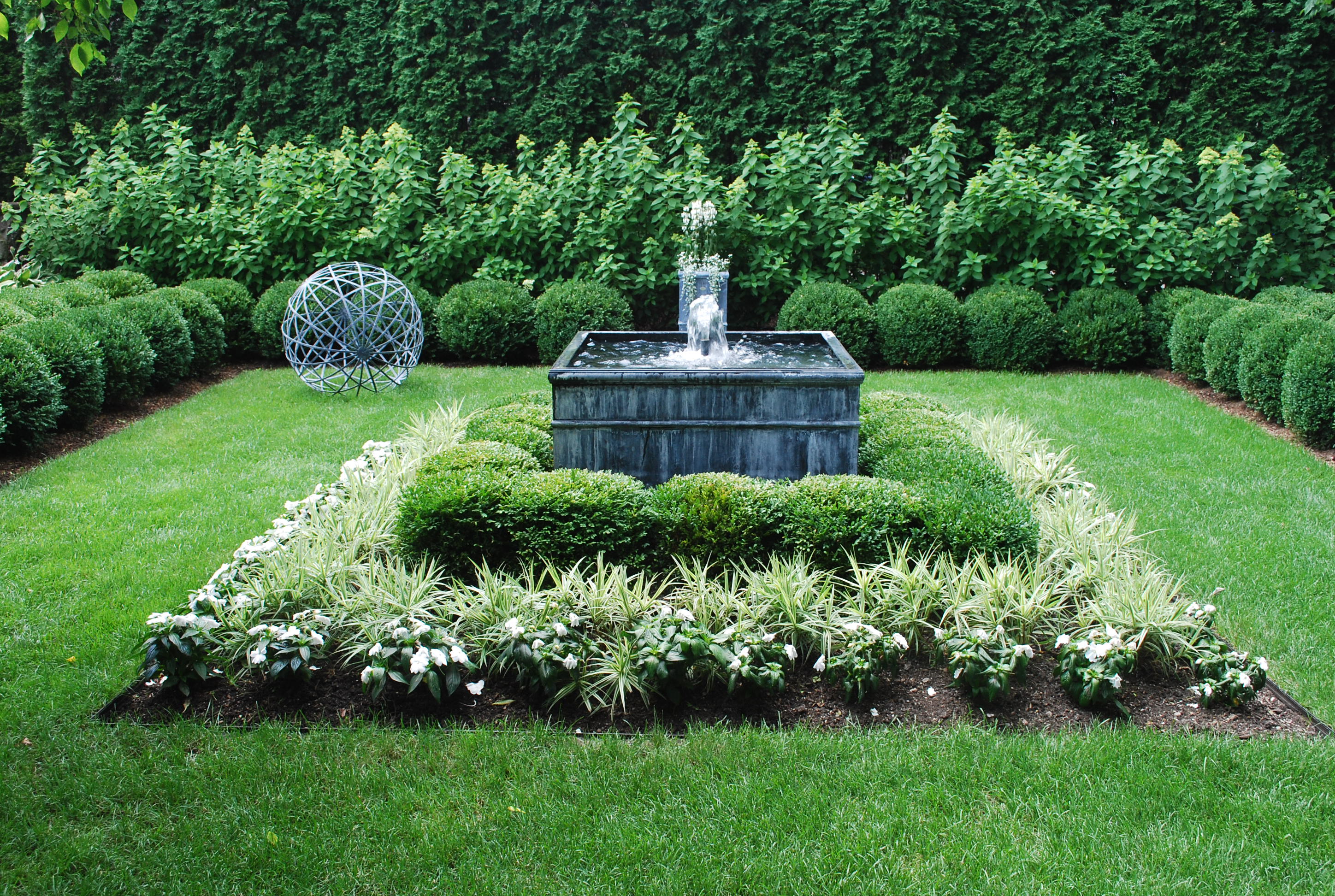 This is the first Hudson fountain cistern the Branch Studio made many years ago. Subsequent to that time, we have fabricated and shipped them all over the country for clients and designers in search of a simple, rugged, and substantial fountain to place in the landscape. They have also made this fountain in custom sizes and versions. One very large fountain that went to California has a 1/2′ thick and 10″ wide steel return-suitable for sitting.
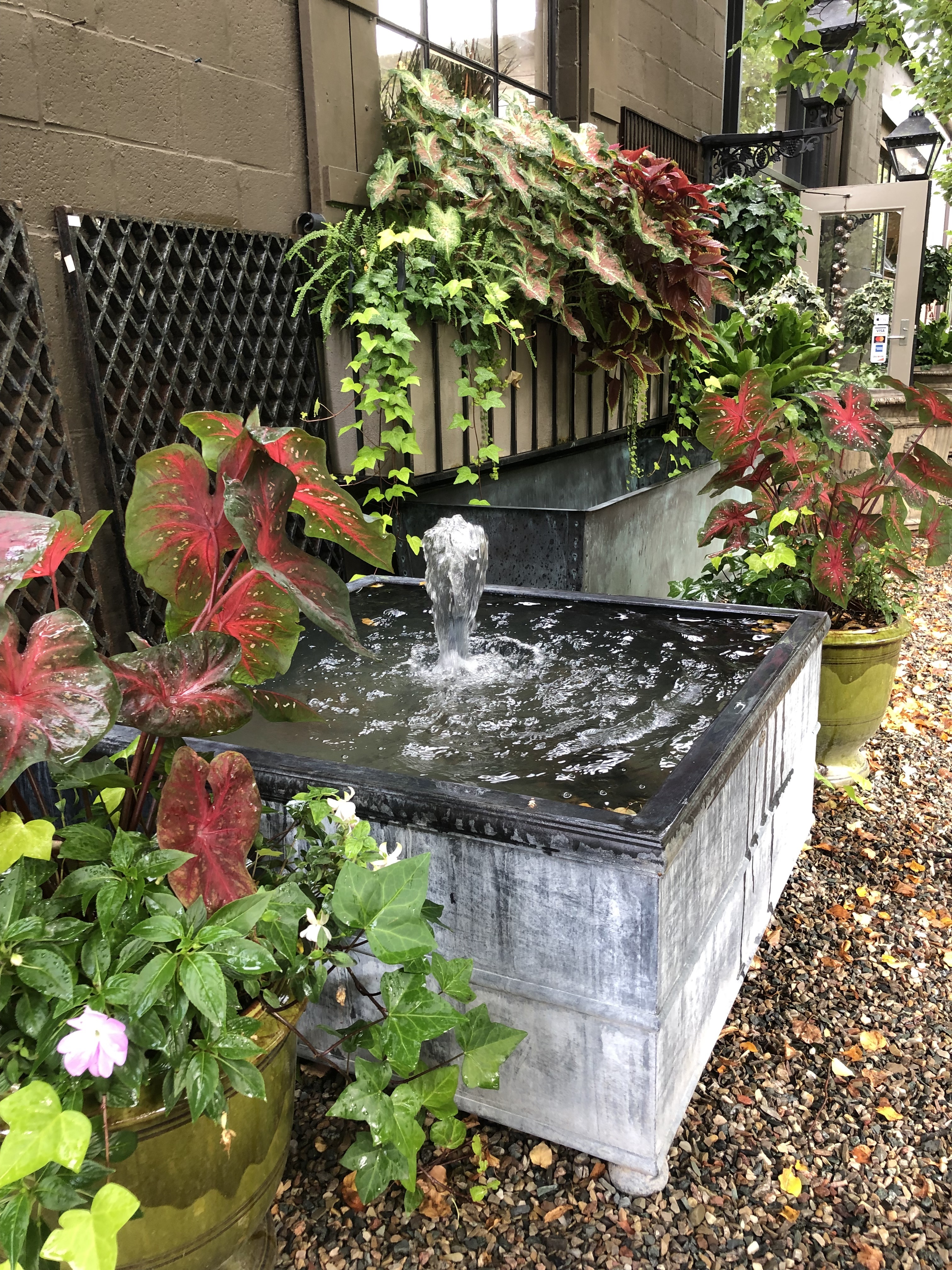 Some 12 years later, we have this Hudson fountain cistern running at the shop. Like the look? See this for the action and sound: Hudson fountain cistern
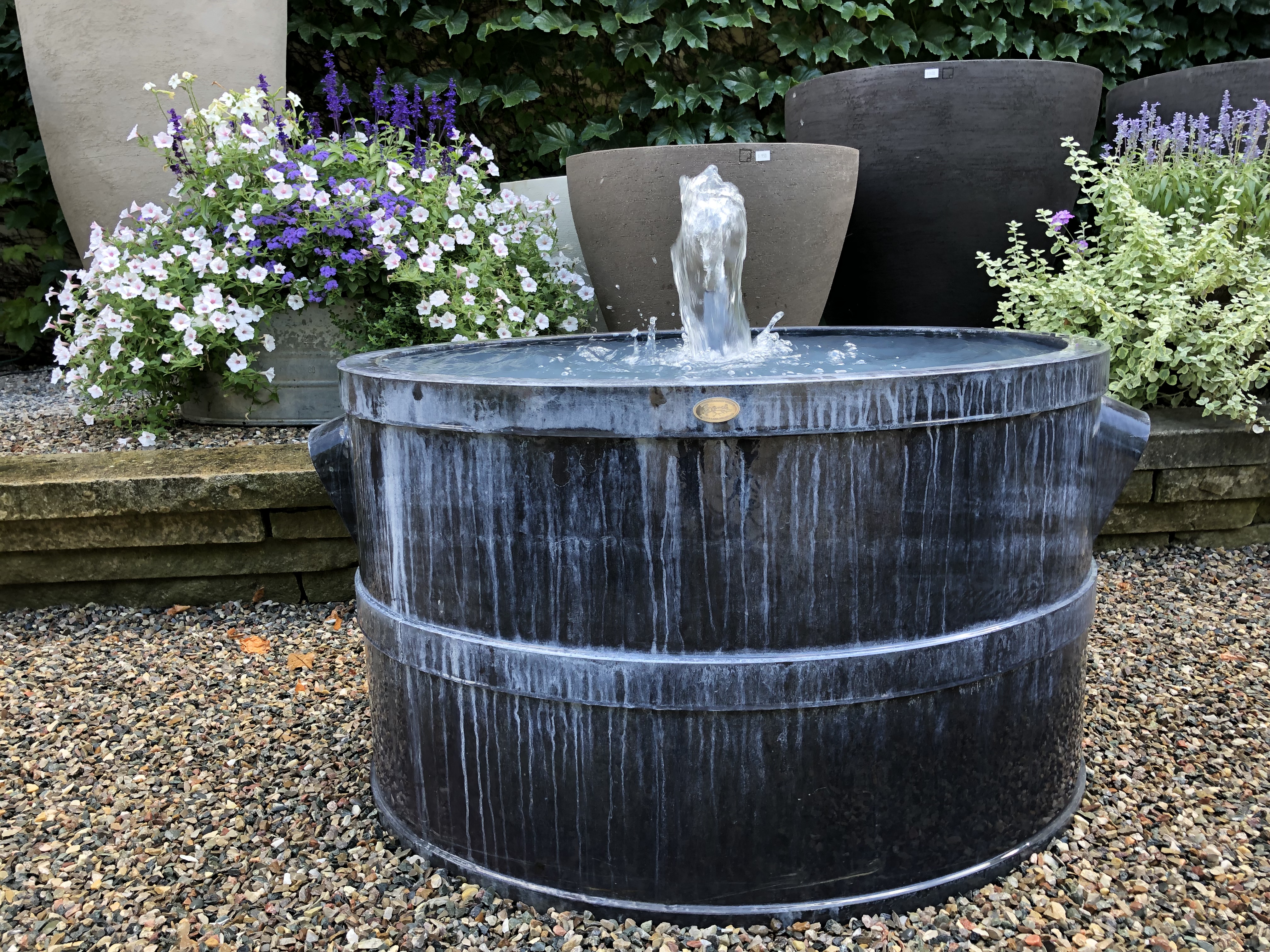 This oval fountain with its angled handles was inspired by a vintage tub Rob brought back from France years ago.
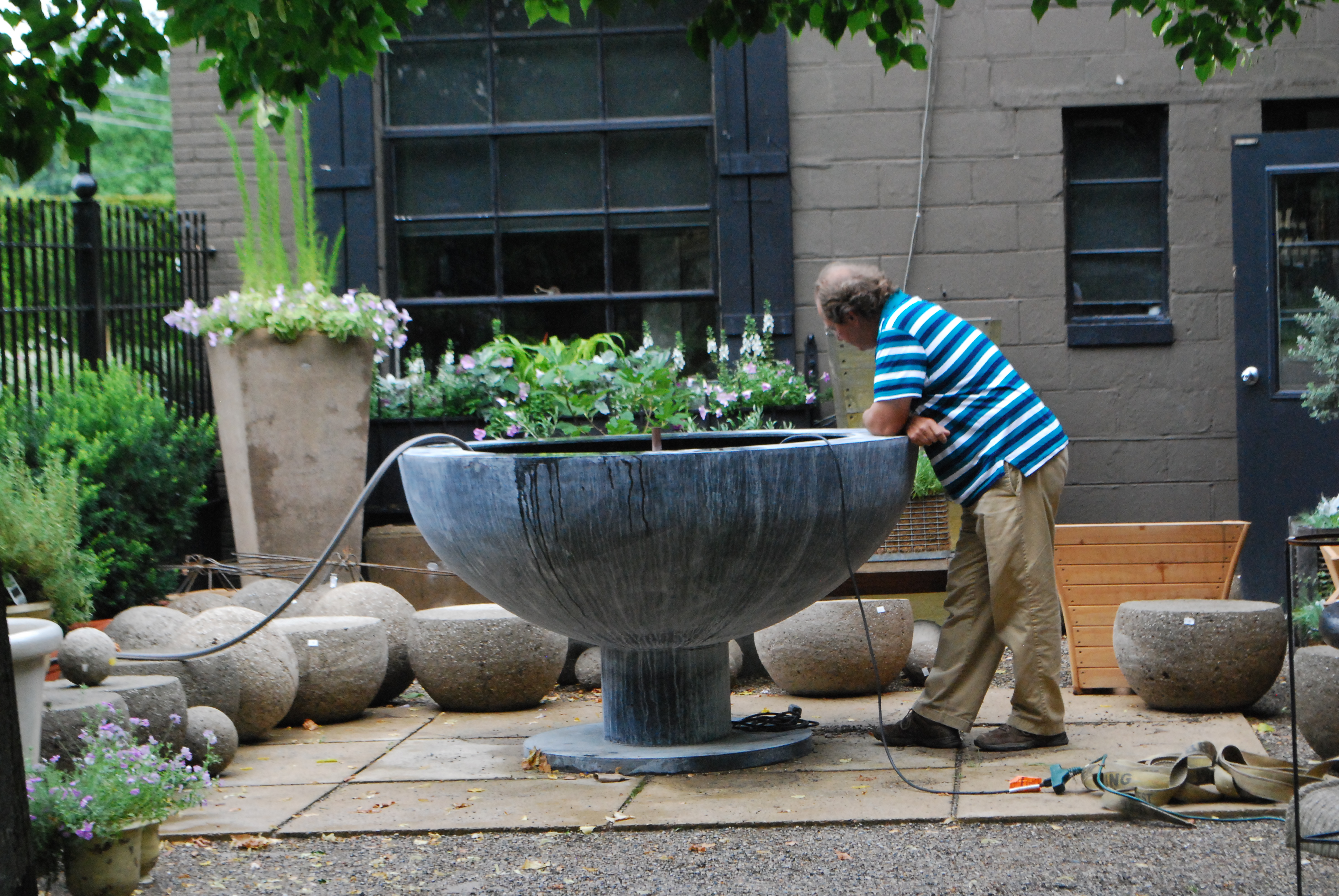
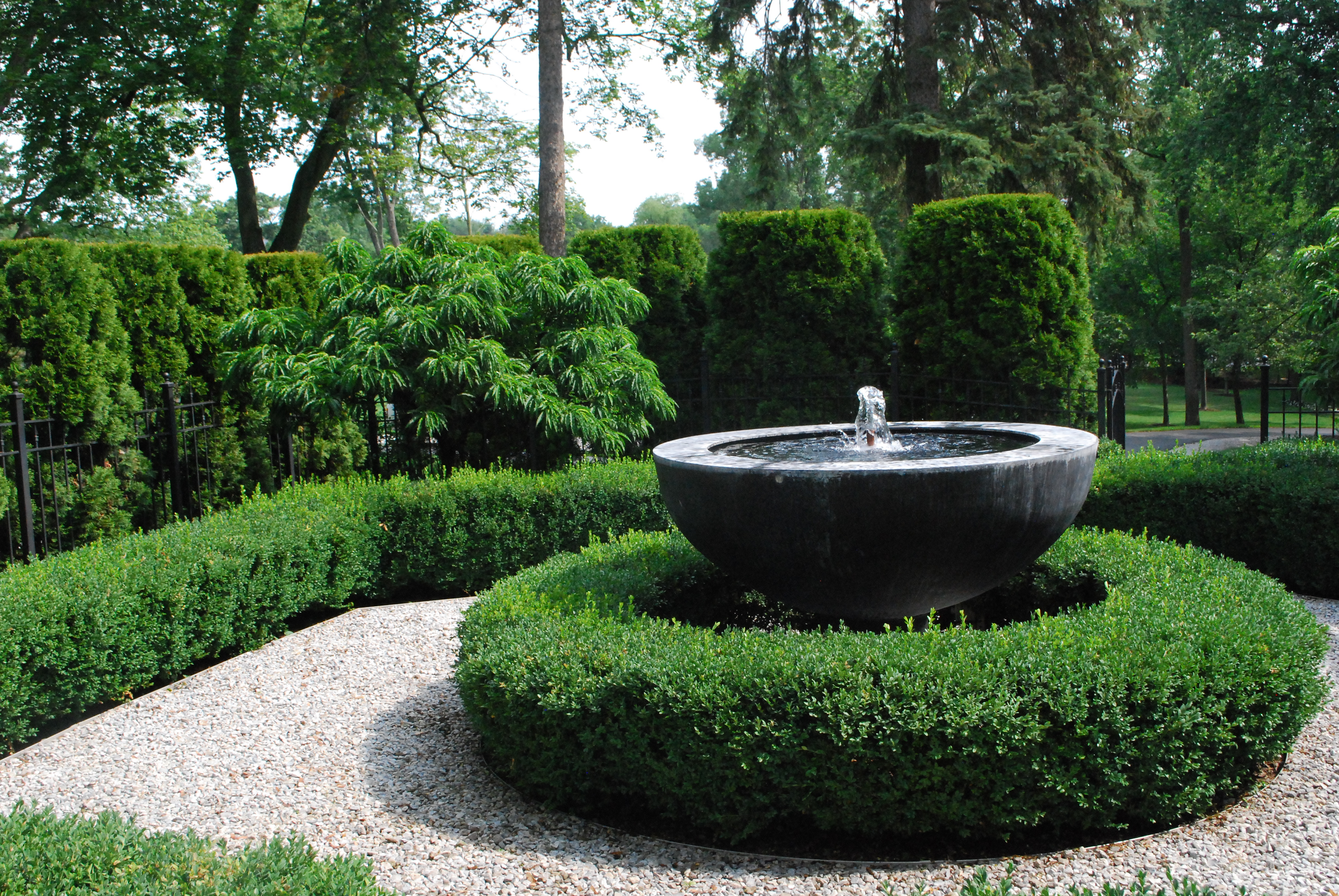
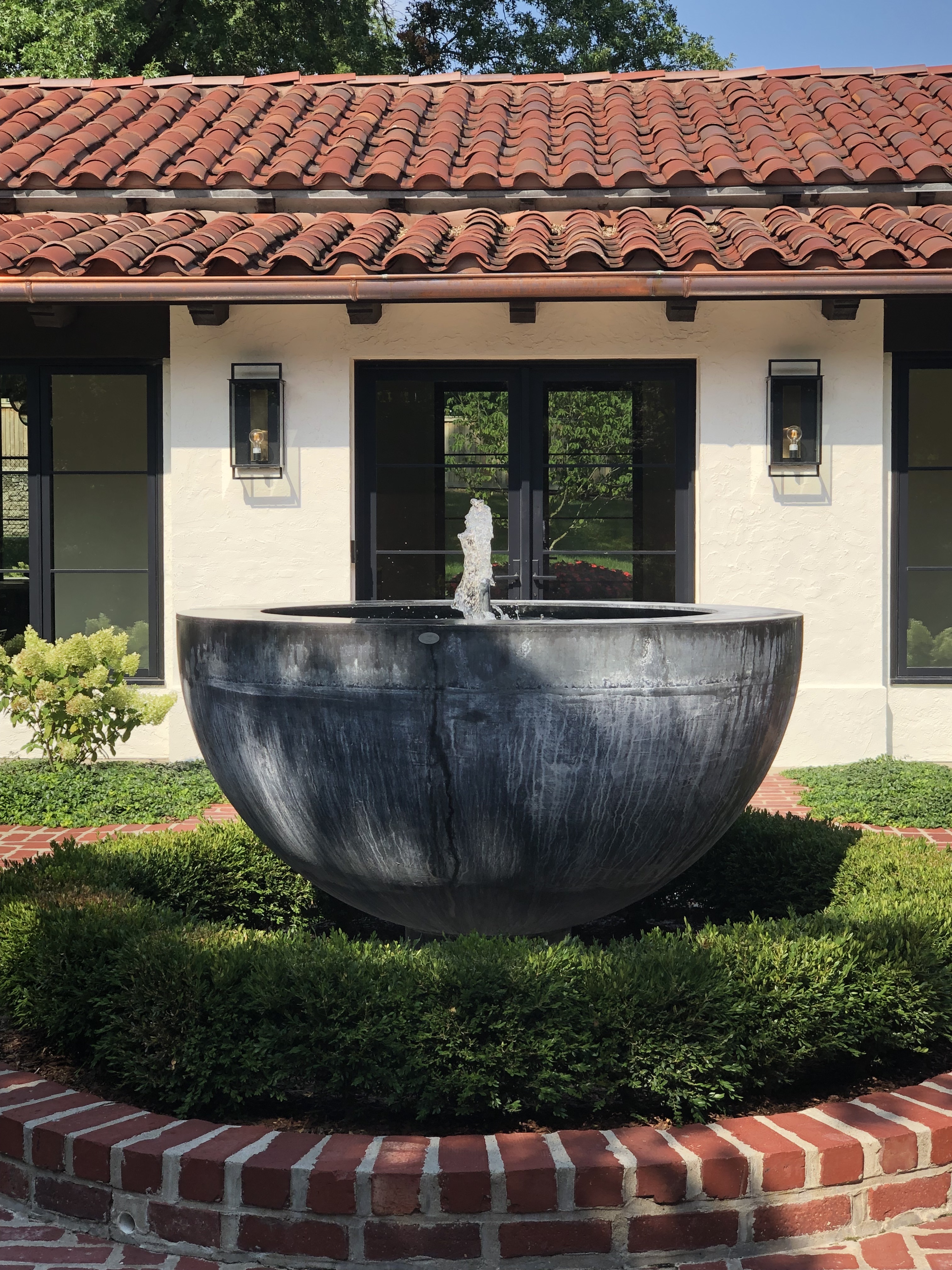 Branch hemispherical fountain purchased and placed in the landscape by the design firm Reed Dillon and Associates.
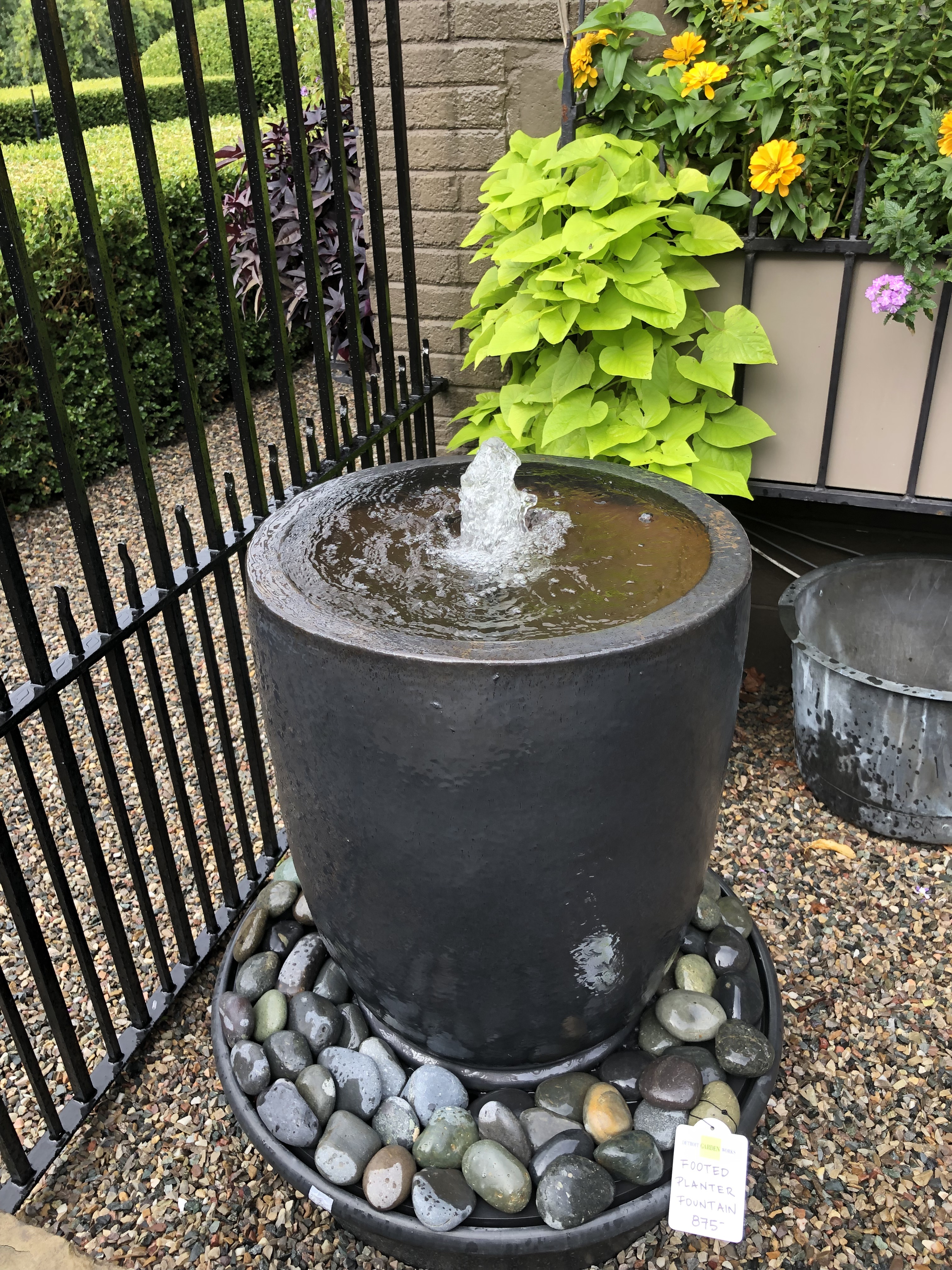 small glazed fountain ensemble
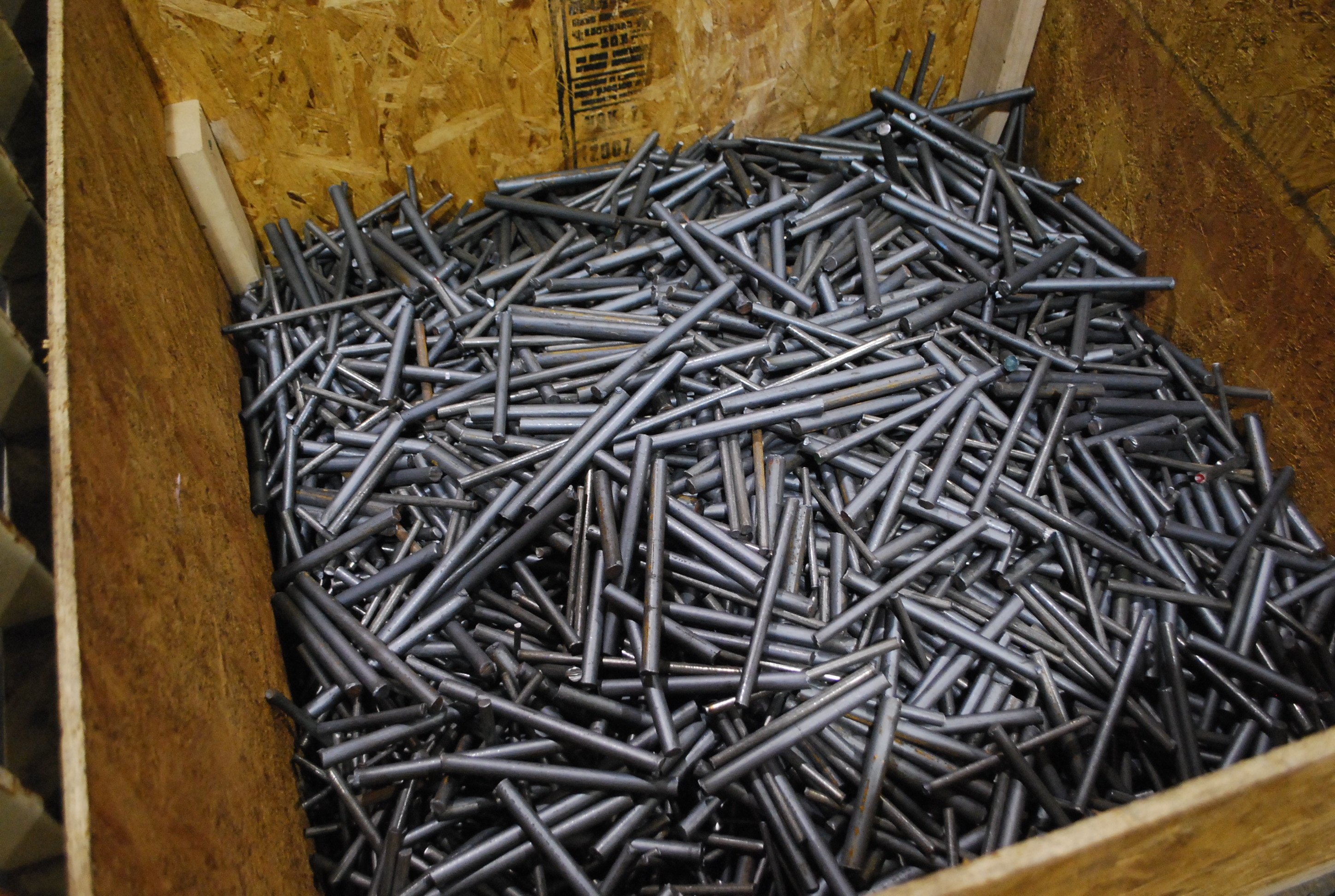
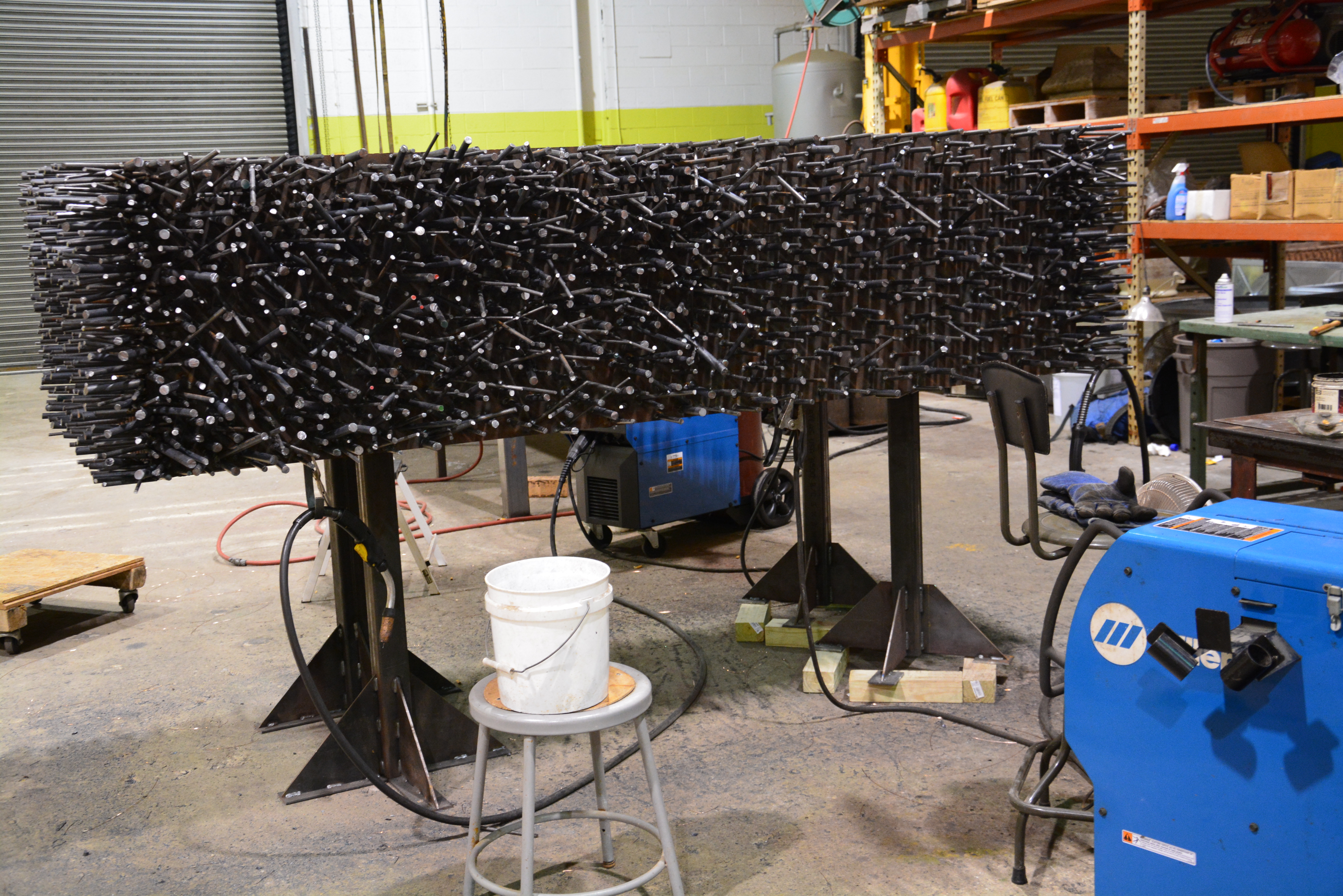
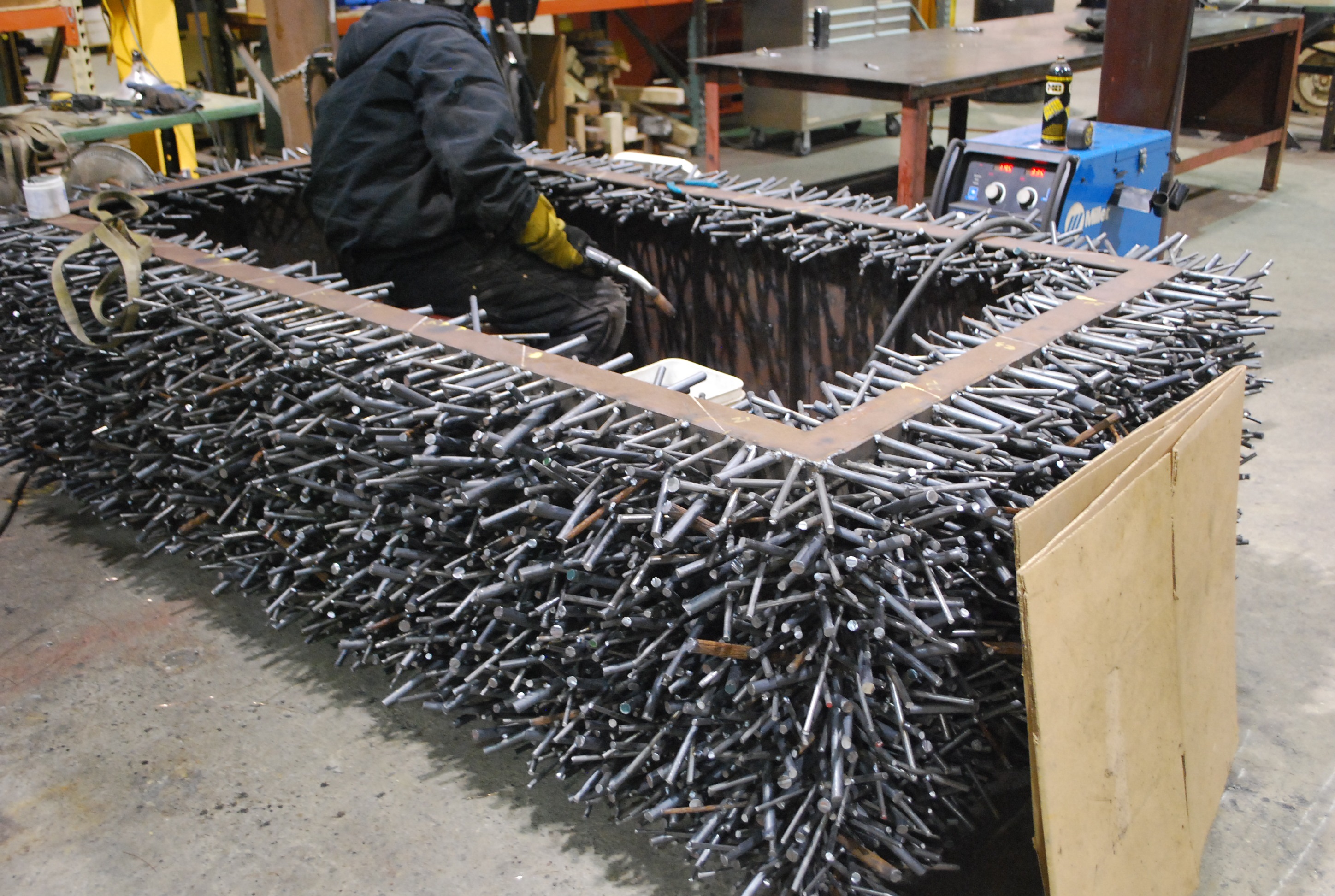
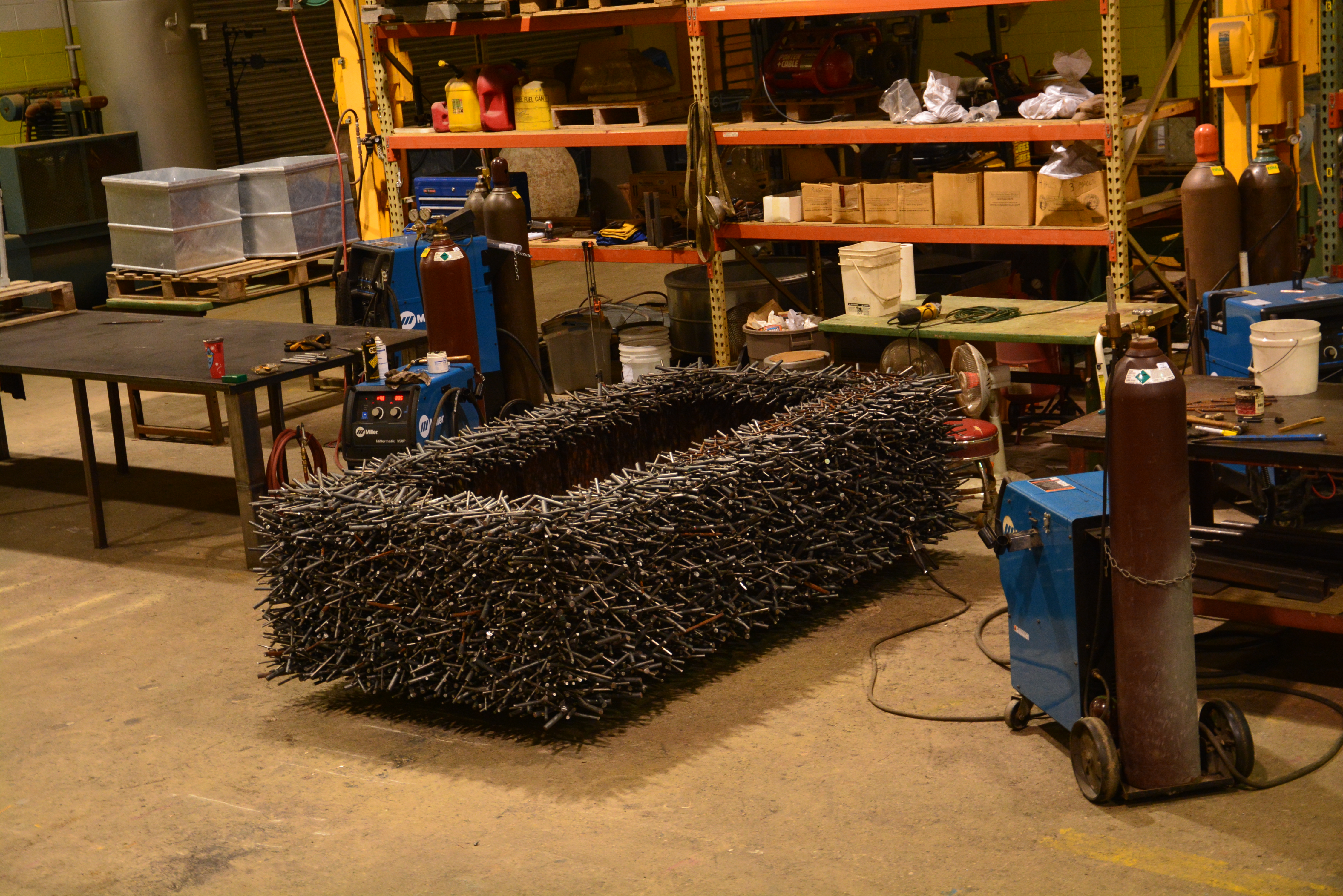
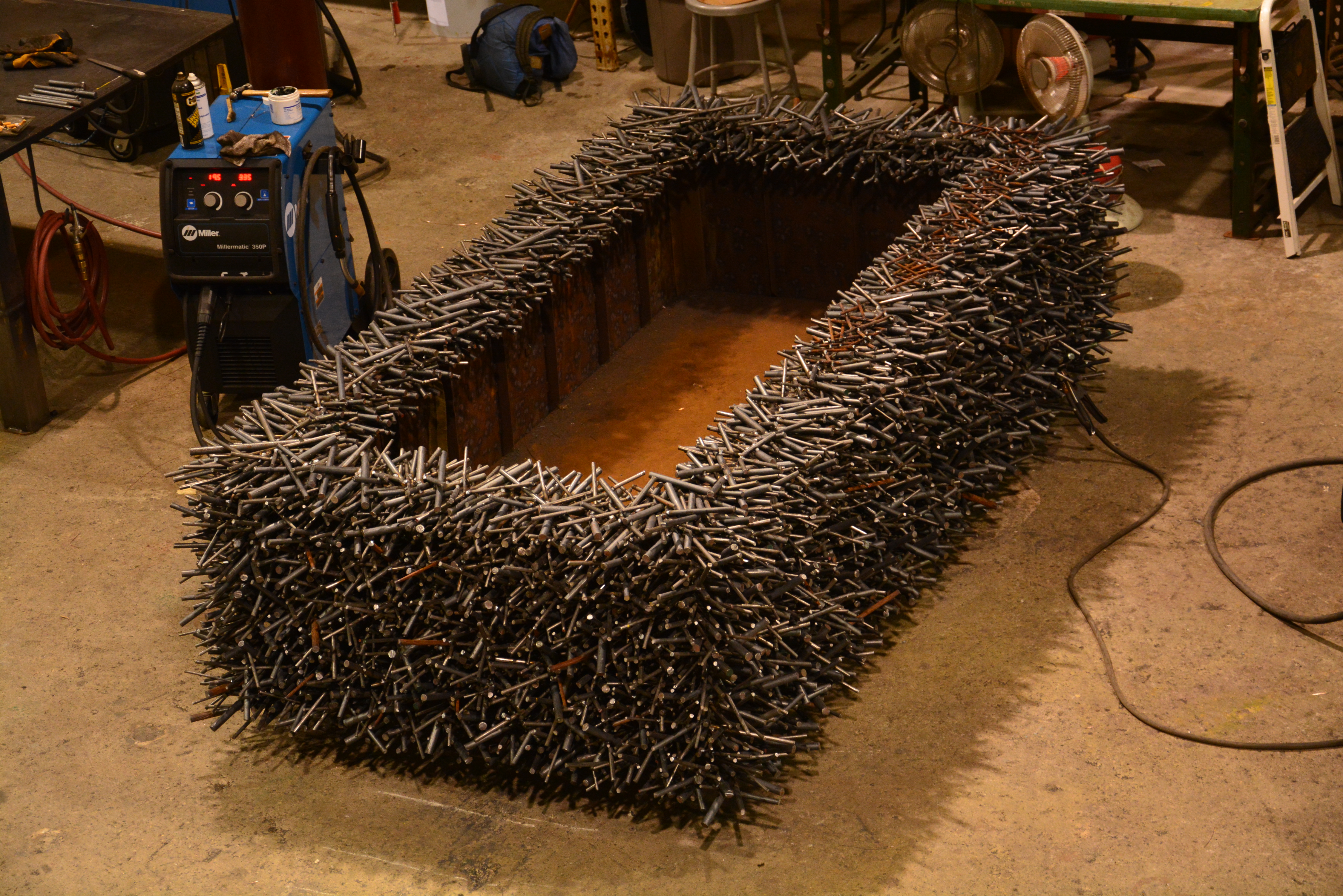
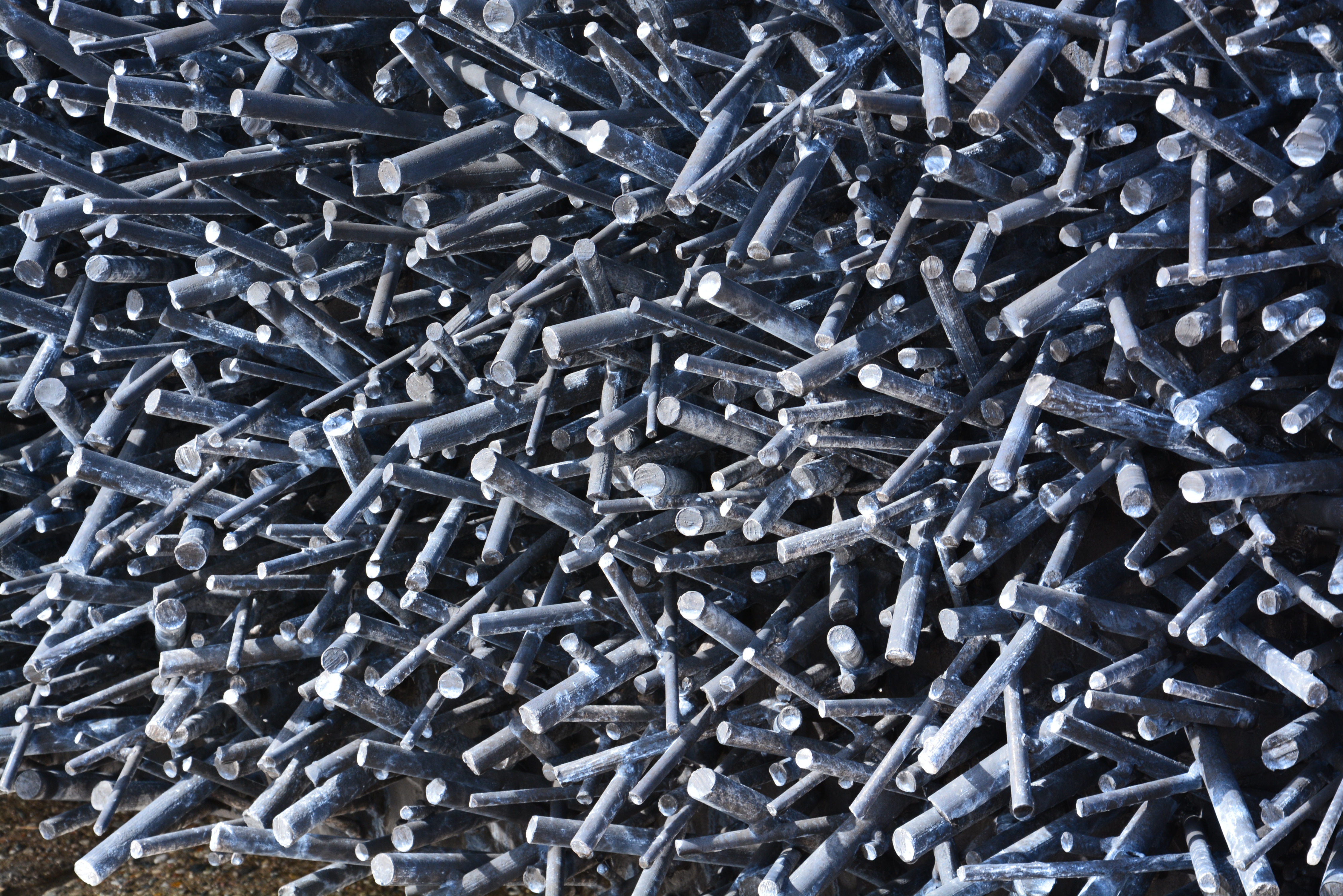
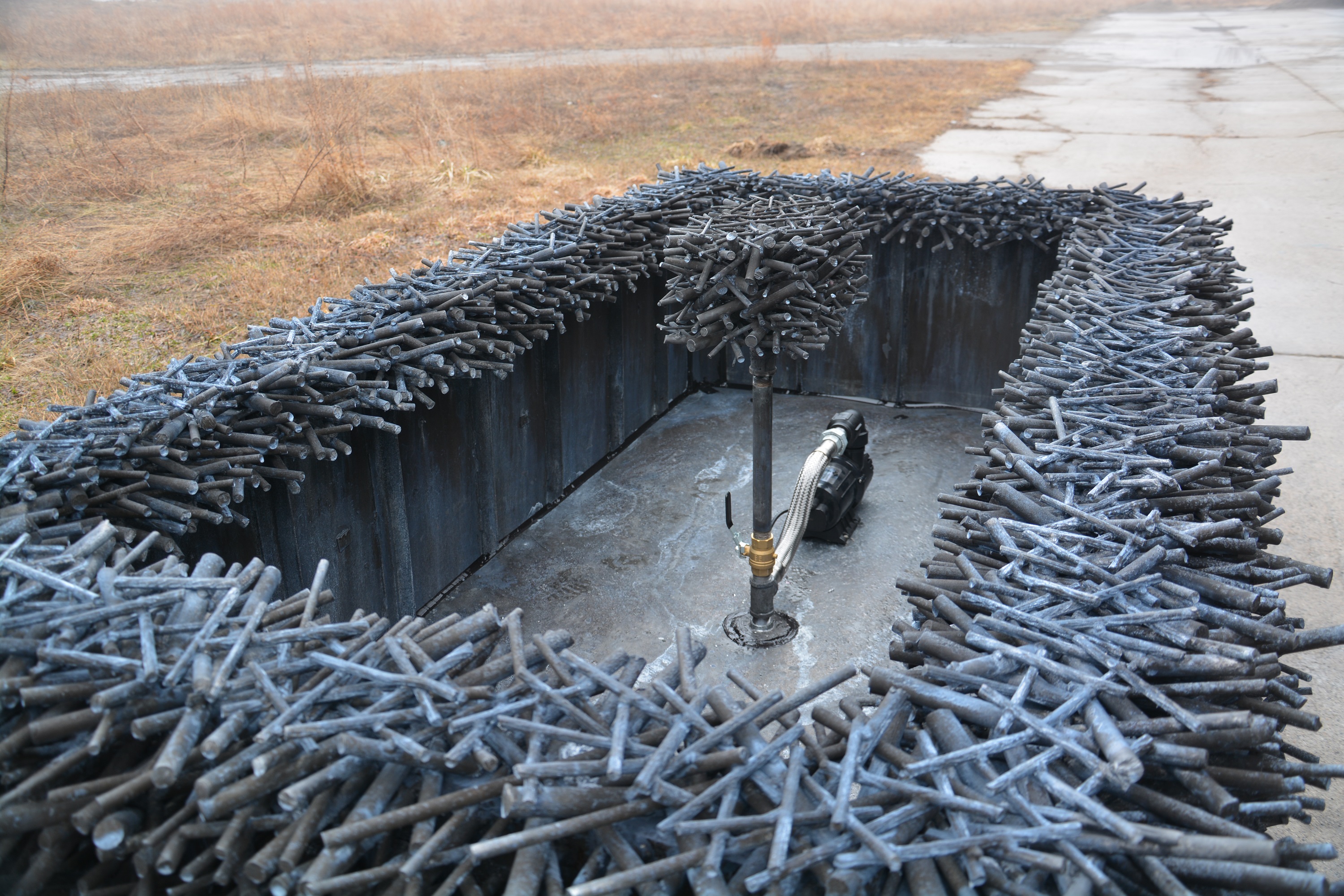
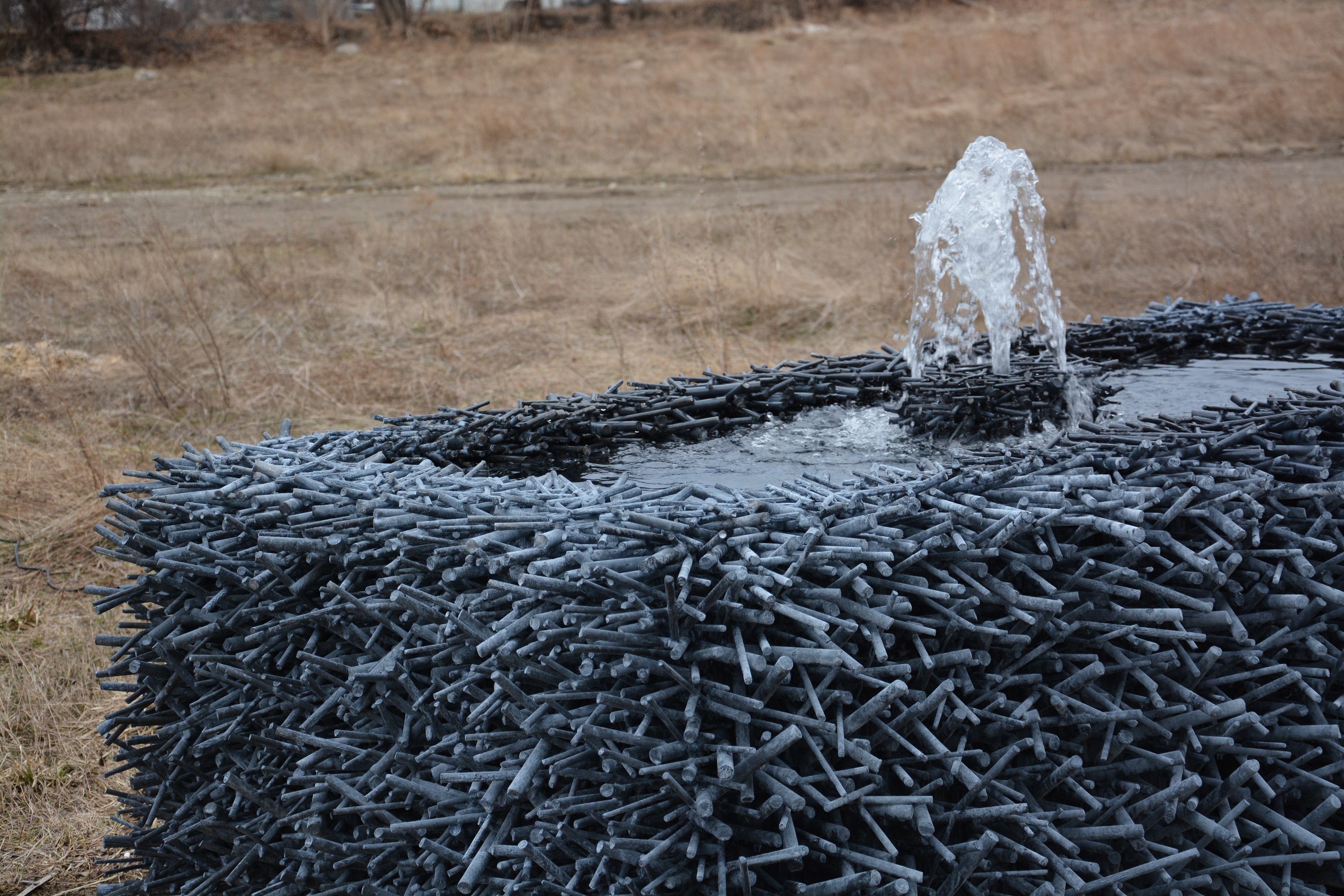
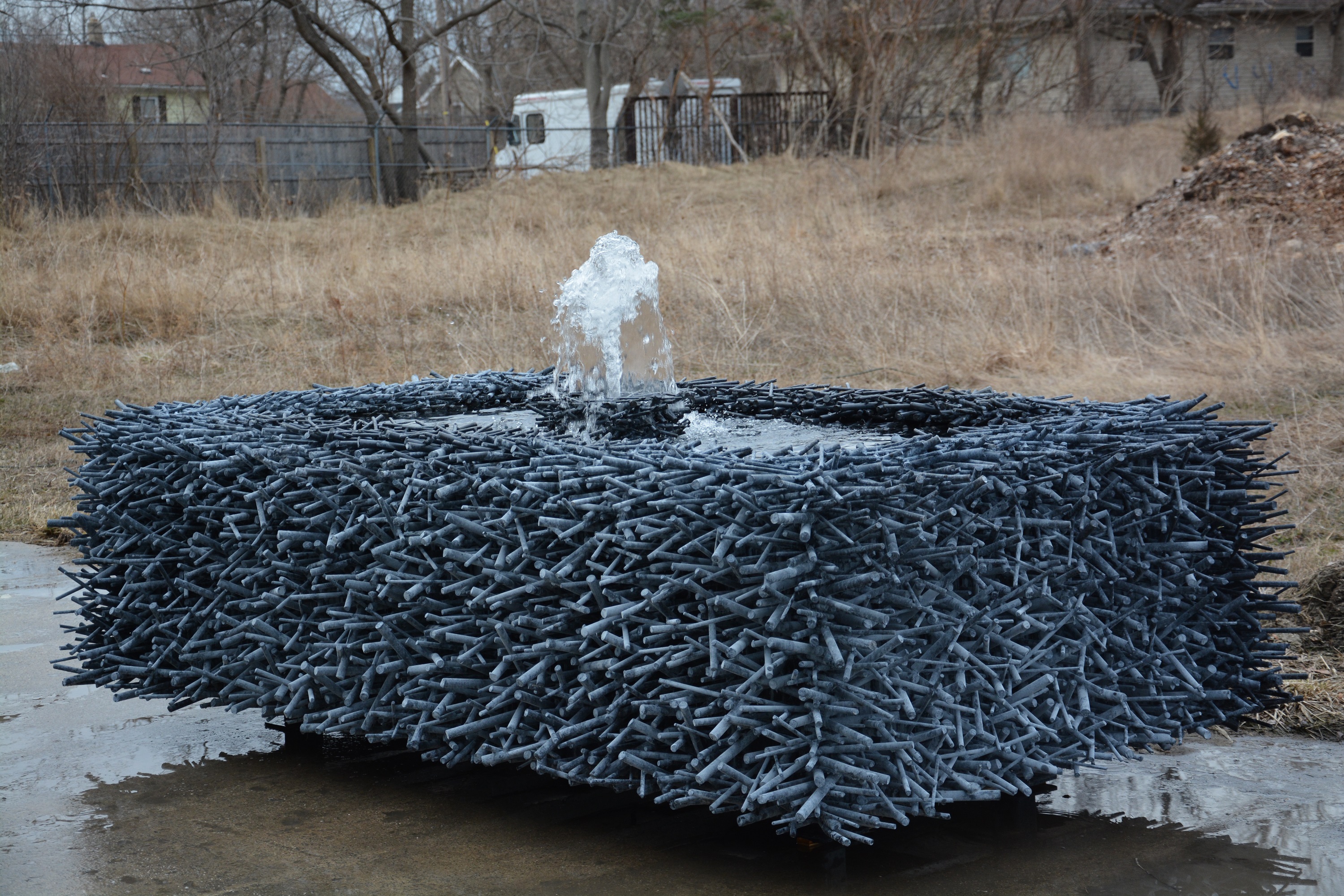
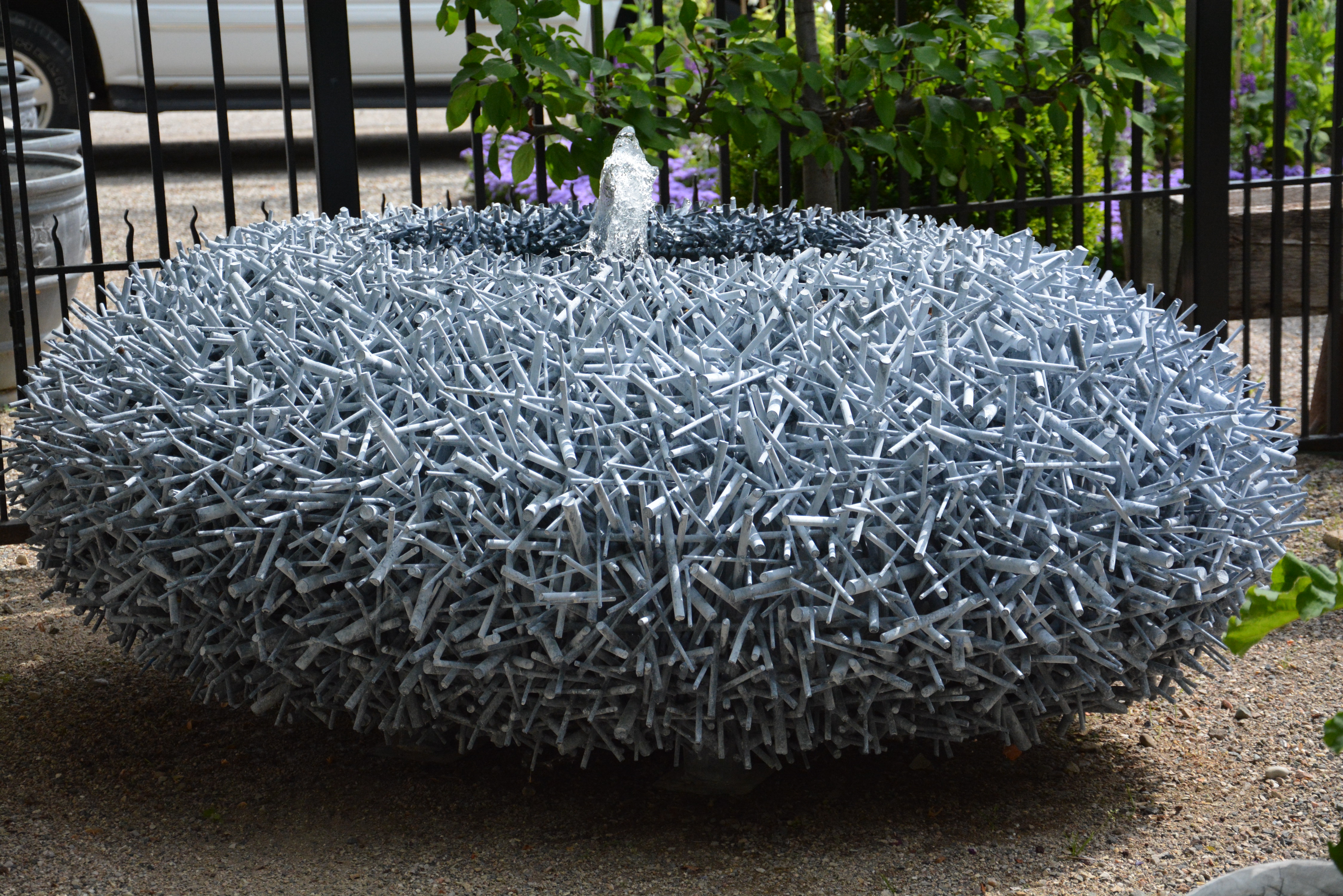 This oval stick fountain was fabricated at Branch. The client who purchases it was sufficiently enchanted to have it craned over his house to it final location in the garden. Water sustains life for all living things. You and me, and the landscape. A fountain – a vessel for that water – can take no end of interesting and visually satisfying forms. Suffice it to say that if it lives and prospers, it has gotten sufficient water.