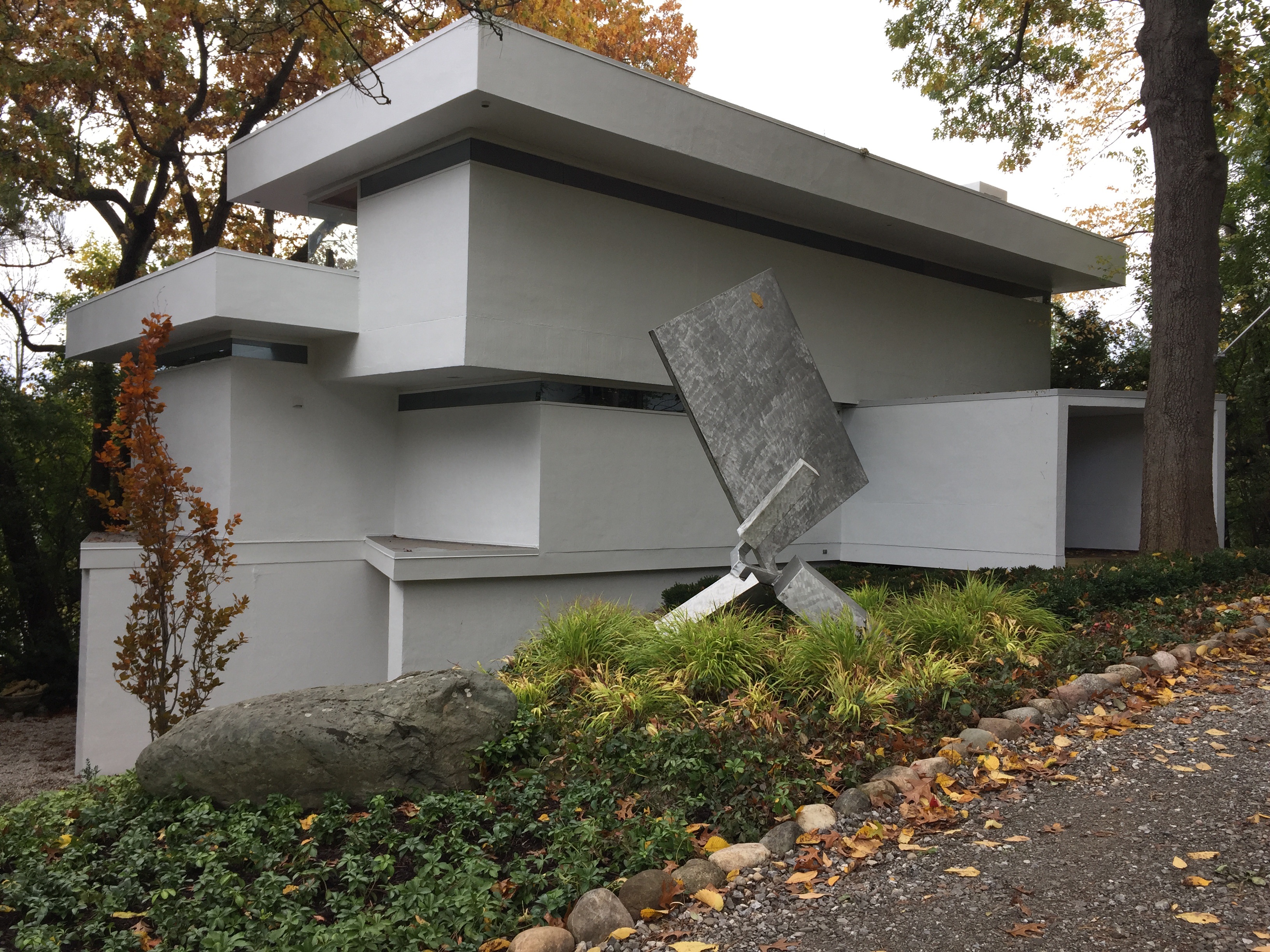
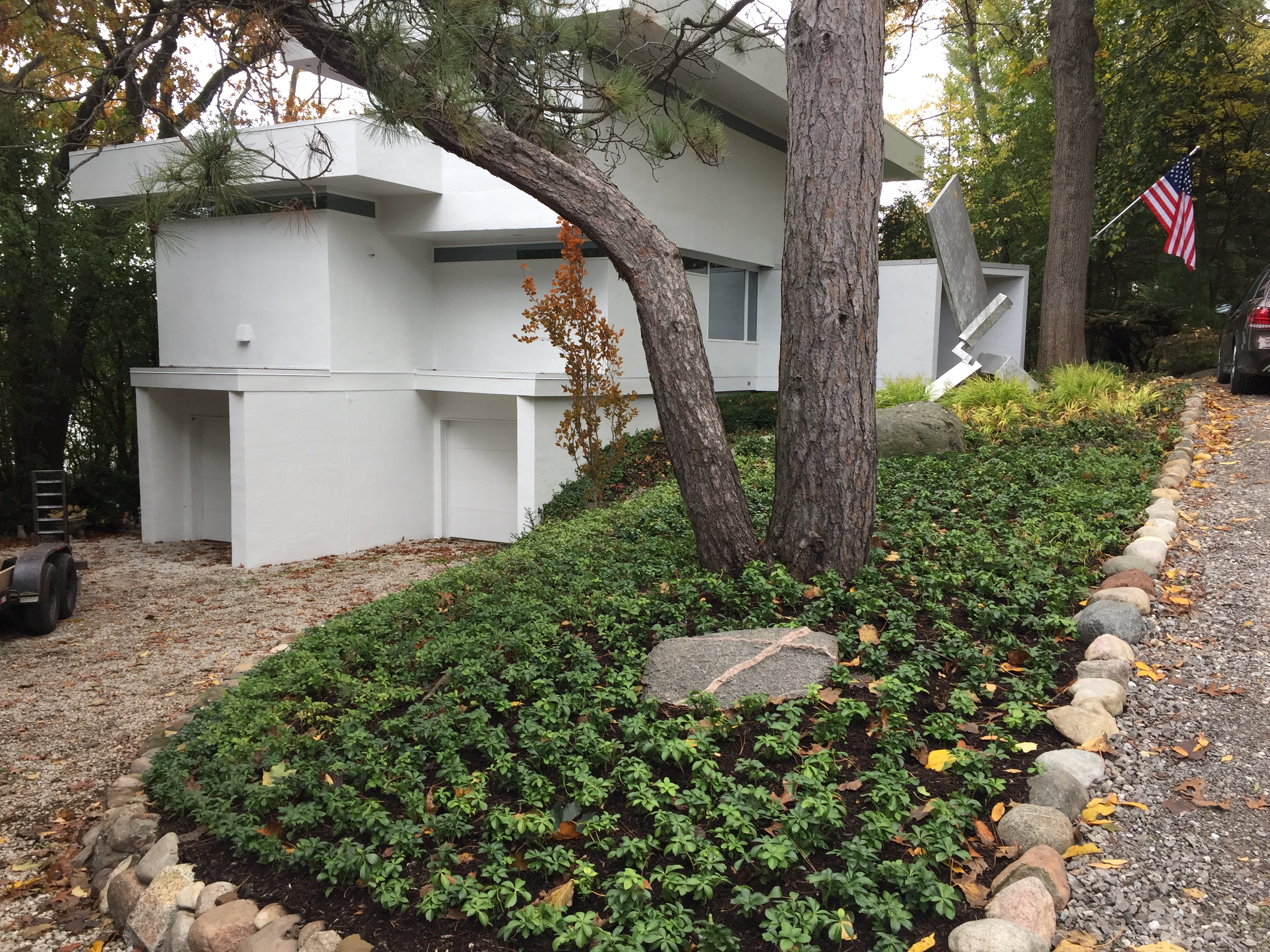
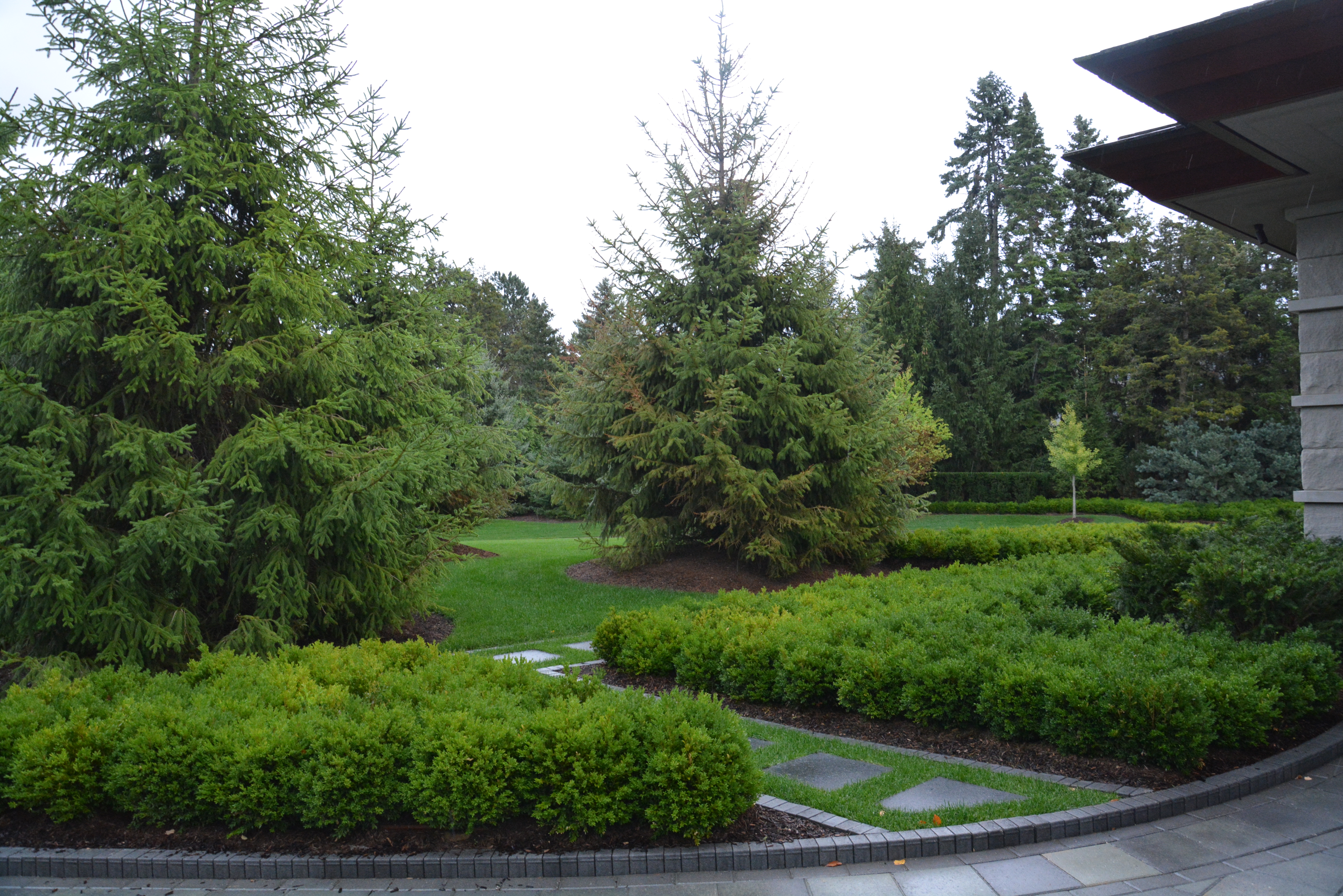
 As I was writing about the spring opening of Detroit Garden Works, it occurred to me that what the shop does best is reflect the taste and sensibilities of a wide range of gardeners. I have Rob to thank for that. Many years ago I made a landscape design call to a client whose house and art were of a contemporary ilk. On his rear terrace was a classical and traditional Smith and Hawkins teak bench. That disconnect made me blink. I suggested that he find some terrace furniture that more accuratetly represented his aesthetic. So called contemporary garden ornament has been available for commercial projects for a long time-if you equate simple and functional with contemporary. I am thinking urban trash receptacles, bike racks and giant fiberglass cylinder planters. What was readily accessible to private gardeners was meager. Times have changed in that regard.
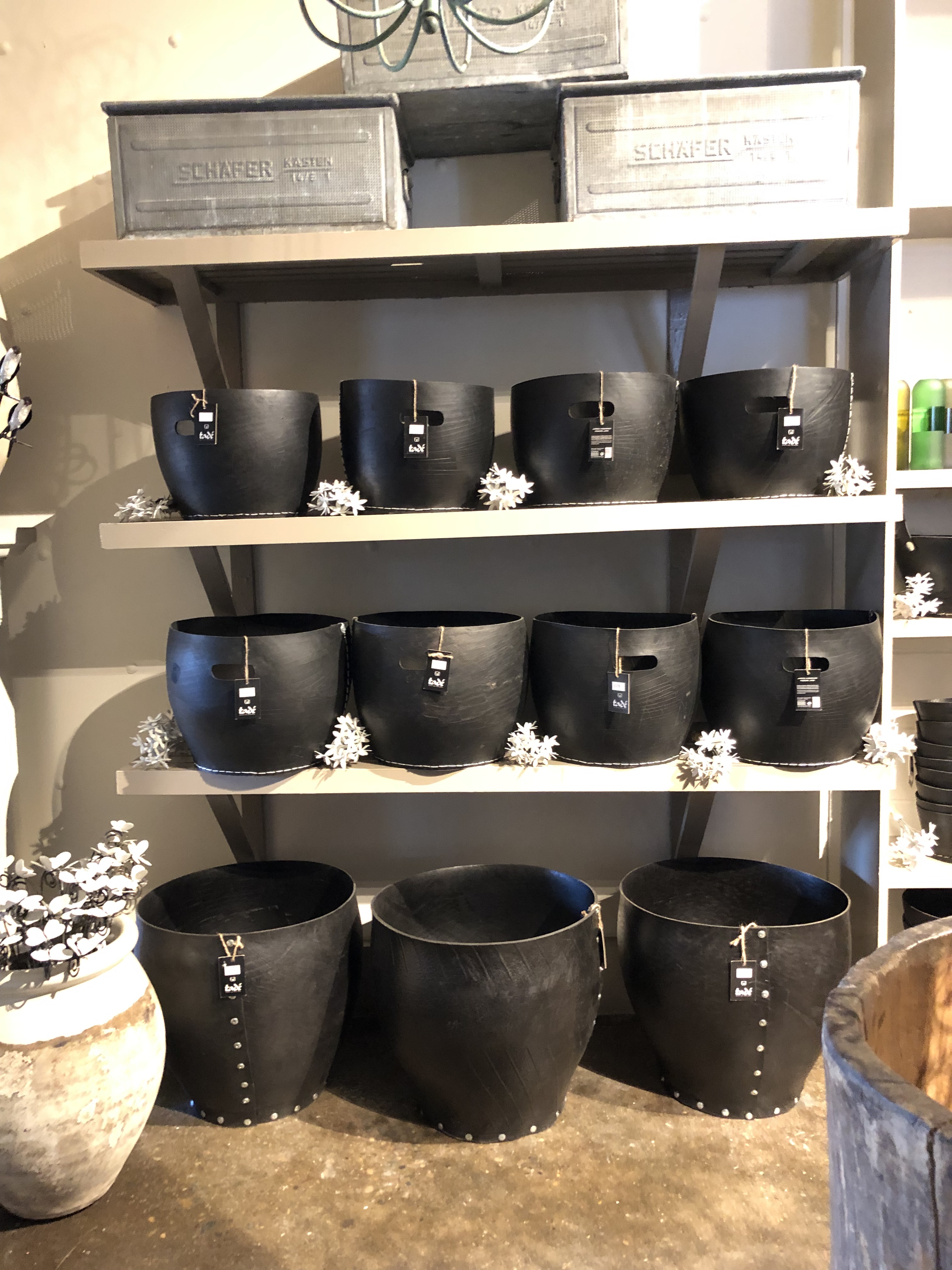
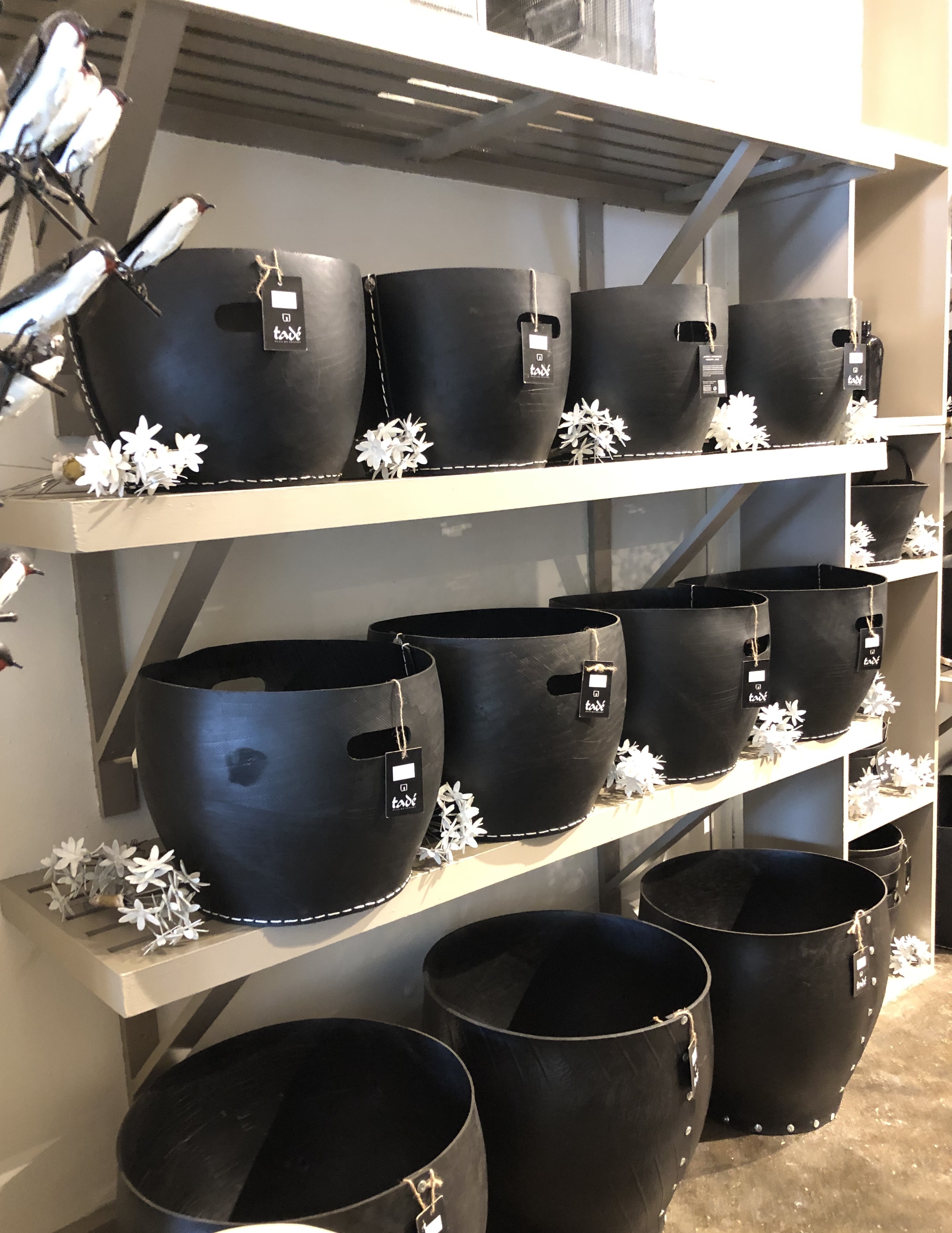 Shopping European markets has also made a big difference in the style of ornament we are able to offer.The Belgians, Dutch and French have been of a contemporary mind in the garden for quite a while. The containers pictured above are made from recycled tires from a manufacturer in France. They would look very disconcerting in my garden, but my client with the contemporary art collection would feel right at home with them.
 I probably have said this before, but it is worth repeating. Any idea about period or style that you express indoors is fine to take outside. And advisable. A well done landscape does have an aura- an aura of genuine expression of some kind or another is unmistakable. A judicious selection of garden ornament is a strong and vibrant way to indicate an aesthetic point of view in the landscape.
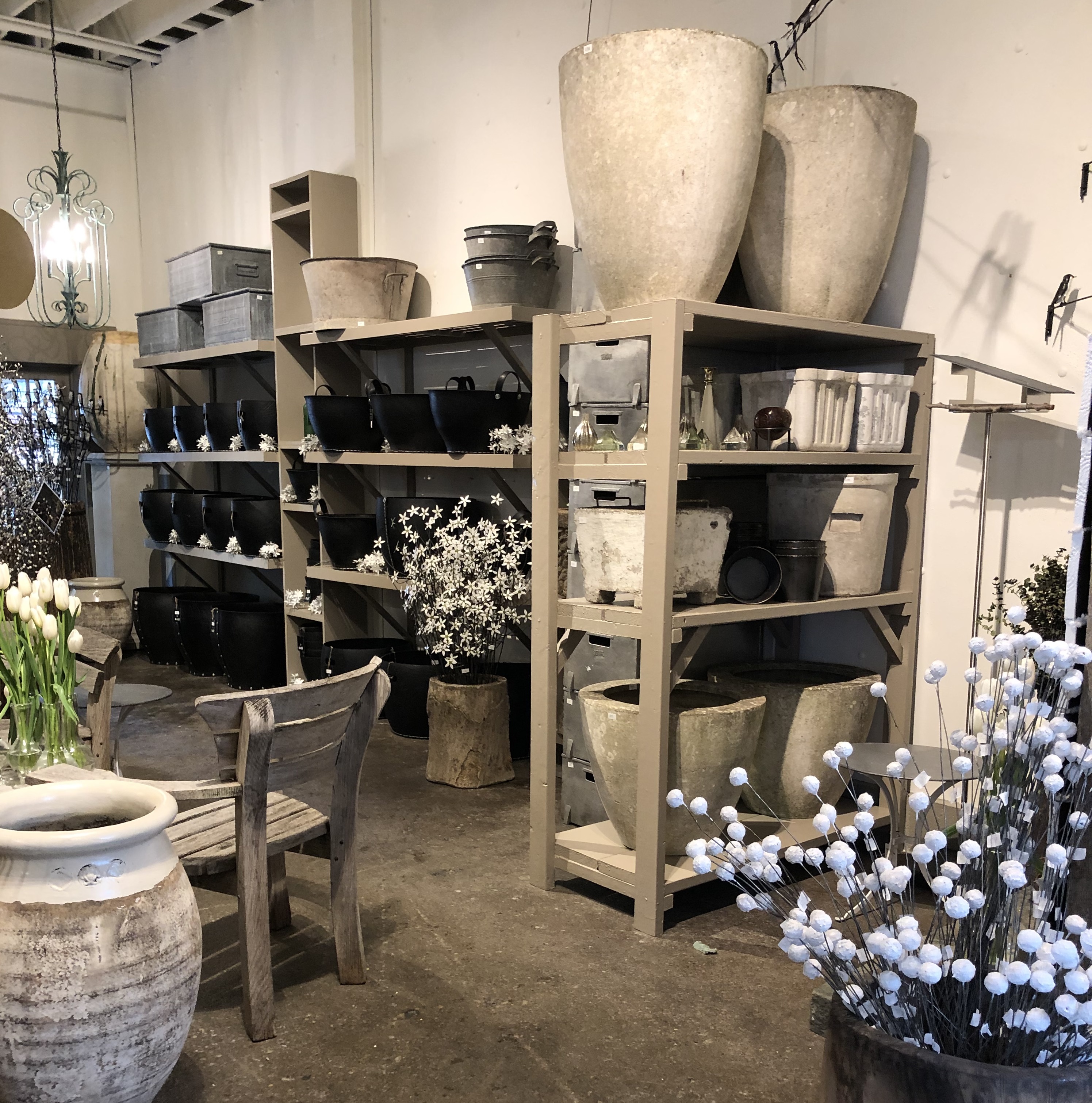
 A tree is a tree, with its own aura. That same species planted in a random grove in tall grass creates a different aura, driven by the aesthetic of the gardener in charge. A collection of that same tree planted in a grid could have a very formal aura-or a contemporary one. A garden ornament added to any one of these landscapes can organize and make the intent of that gardener clearer. This room at the shop is interesting, in that it takes traditional objects, and by association with more contemporary ones, gives those traditional ornaments a more contemporary aura. In the above picture, vintage French galvanized metal seed pans were lined up and stacked on a shelf against the far wall. The overall shape and grid has a very contemporary feeling, though I am sure the pans were originally used as a simple growing tool. The traditional glazed French jarre with a cream rim in the foreground is a very traditional shape. Paired with a vintage modern teak garden furniture set, the clean lines and simple shape of the container becomes its dominant visual characteristic.
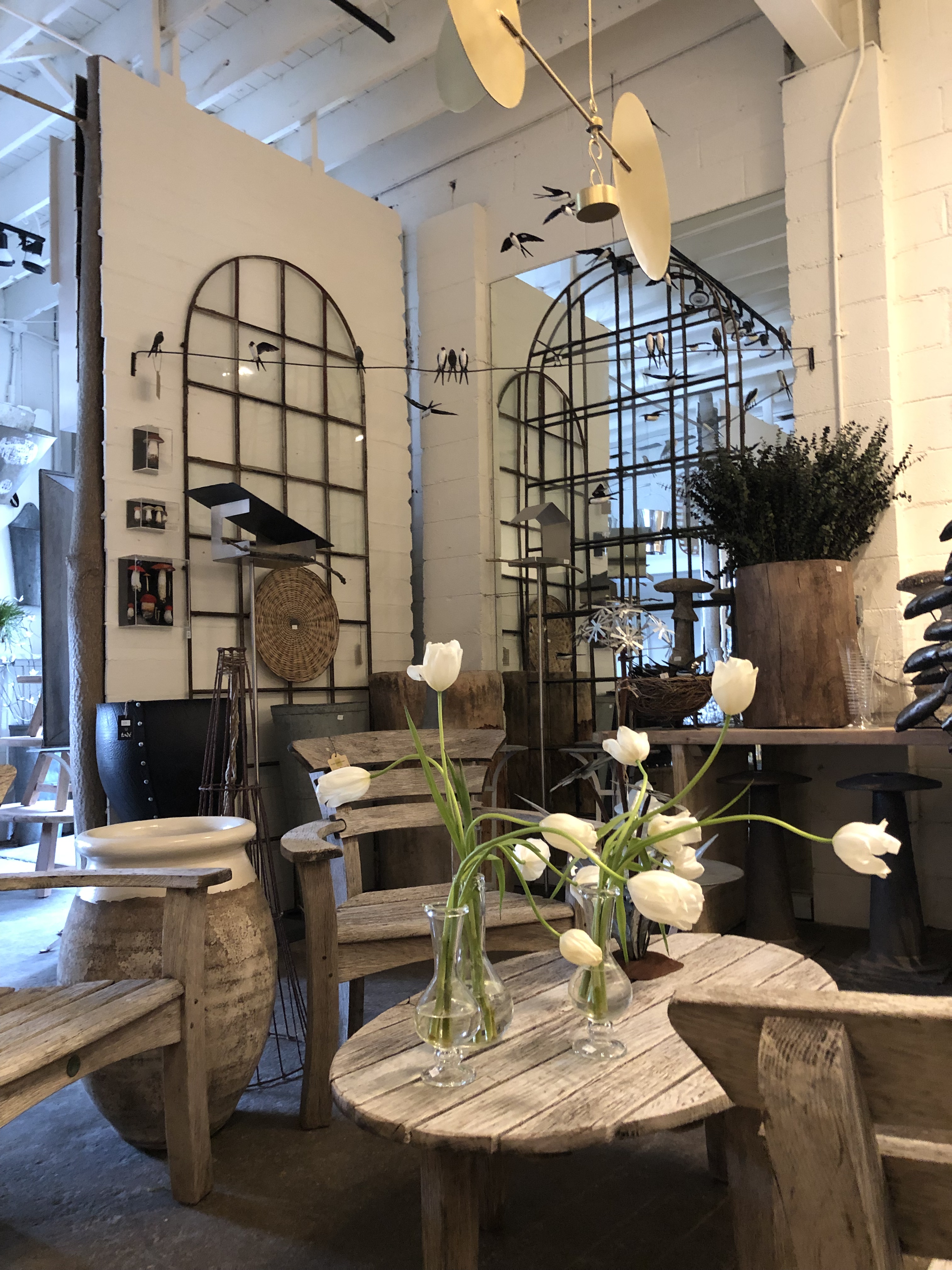 On the walls in the background of this picture, a pair of antique French conservatory windows look at home in a more contemporary setting. Their visual meaning is about their simple geometry, and not about their history. I would imagine the conservatory they came from was probably of a traditional sort.
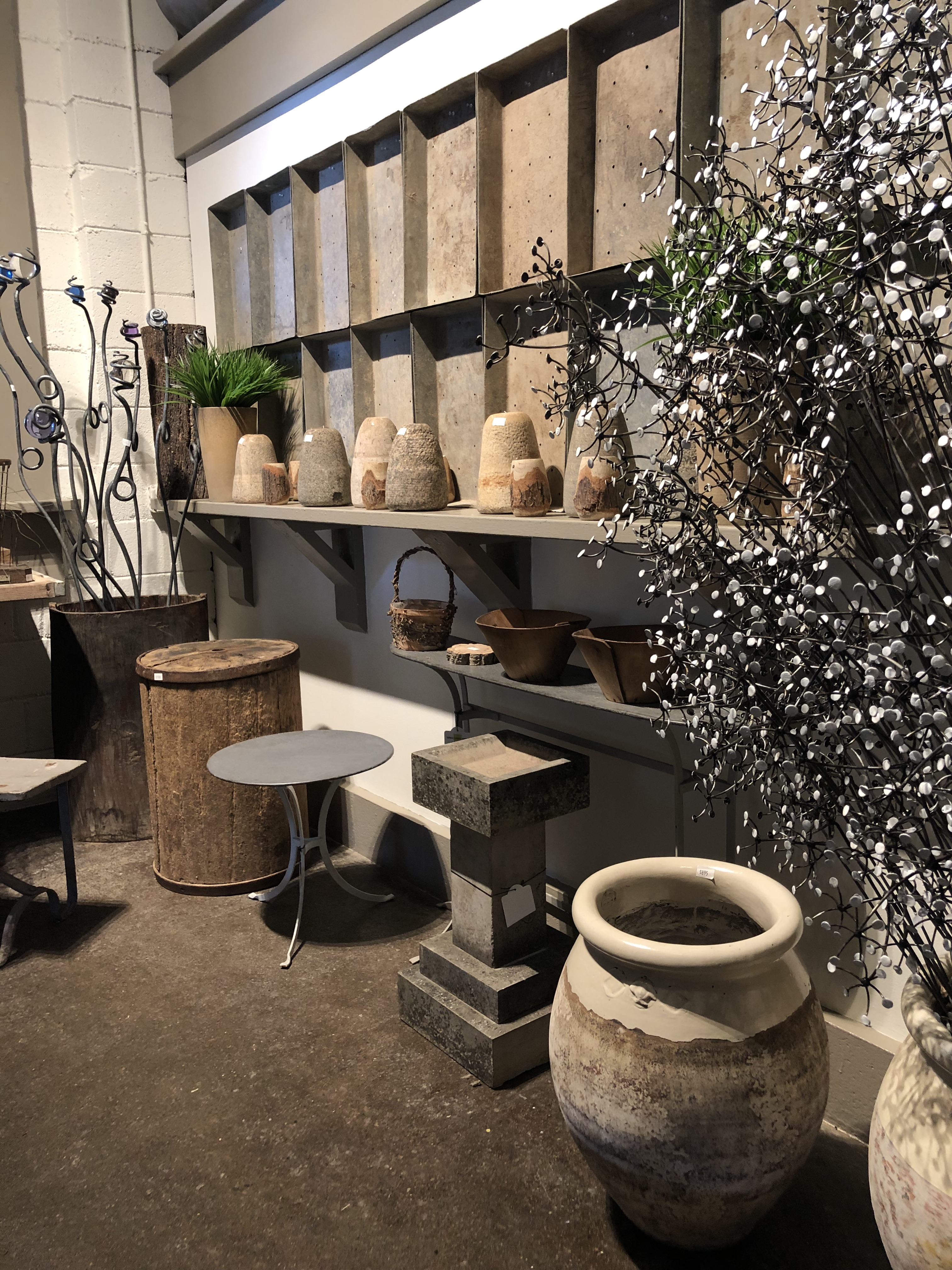 The birdbath in the above picture is an antique piece from England. It is easy to imagine it in a classical English garden. But I suspect it could be right at home in a more austere and modern garden. To determine whether a classical piece might work in a contemporary garden, I try to ignore where or how the piece might have been used, and concentrate on its overall shape. The short version is to appreciate it in the abstract, and without preconceived notions.
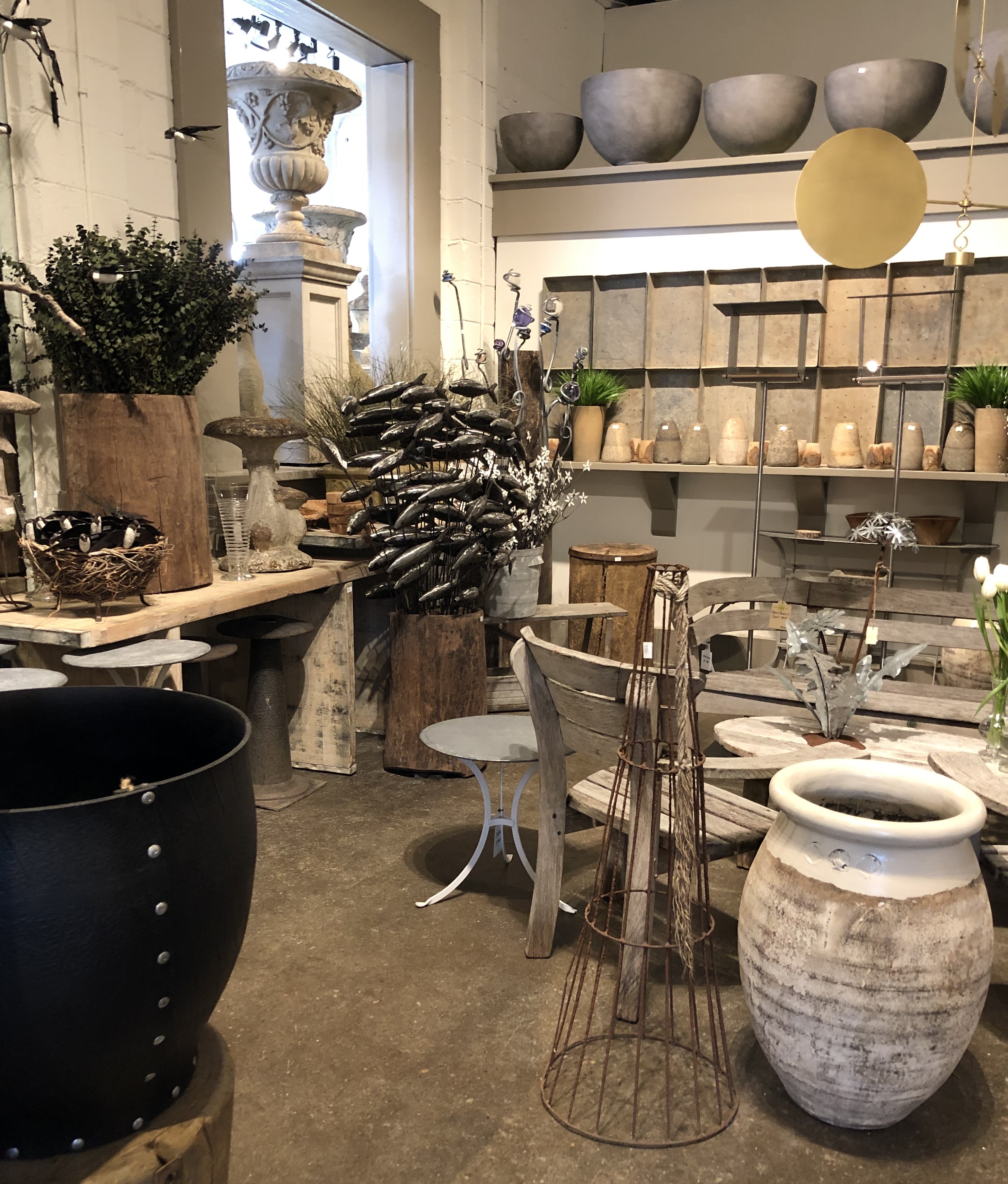 The urn pictured in the opening above has a very traditional connotation and shape. Its visual aspect is in strong contrast to the concrete bowl planters placed on top of the wall. Each asks for a specific kind of garden.
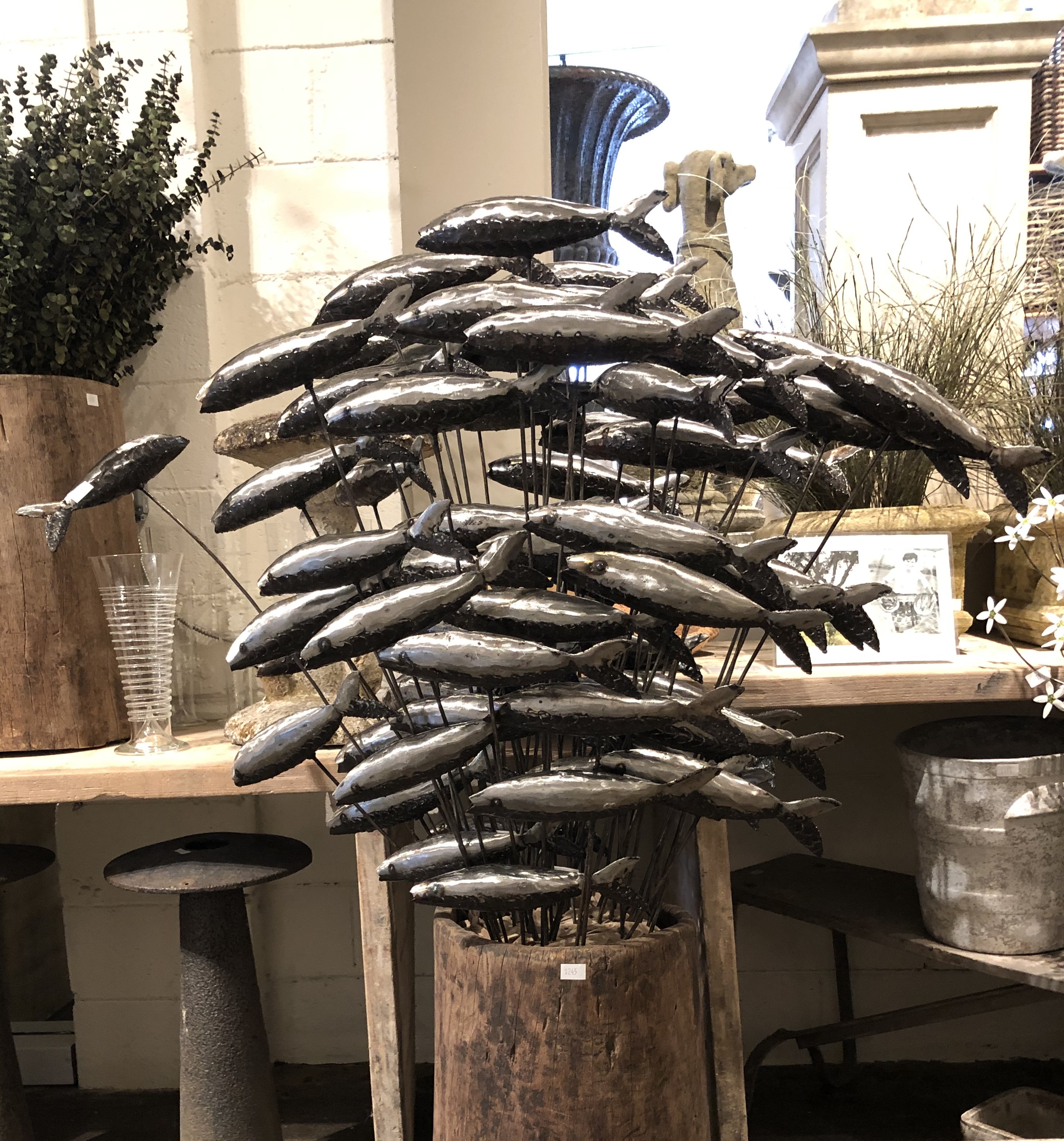 I have seen lots of fish ornaments for gardens. Some are whimsical. Others are accurate to a specific shape and color of a kind of fish. These French made steel sardine garden stakes have a sleek and contemporary look. They represent in the abstract the rhythm and sparkle of a school of fish in water. Rob has used these in contemporary container arrangements to great effect.
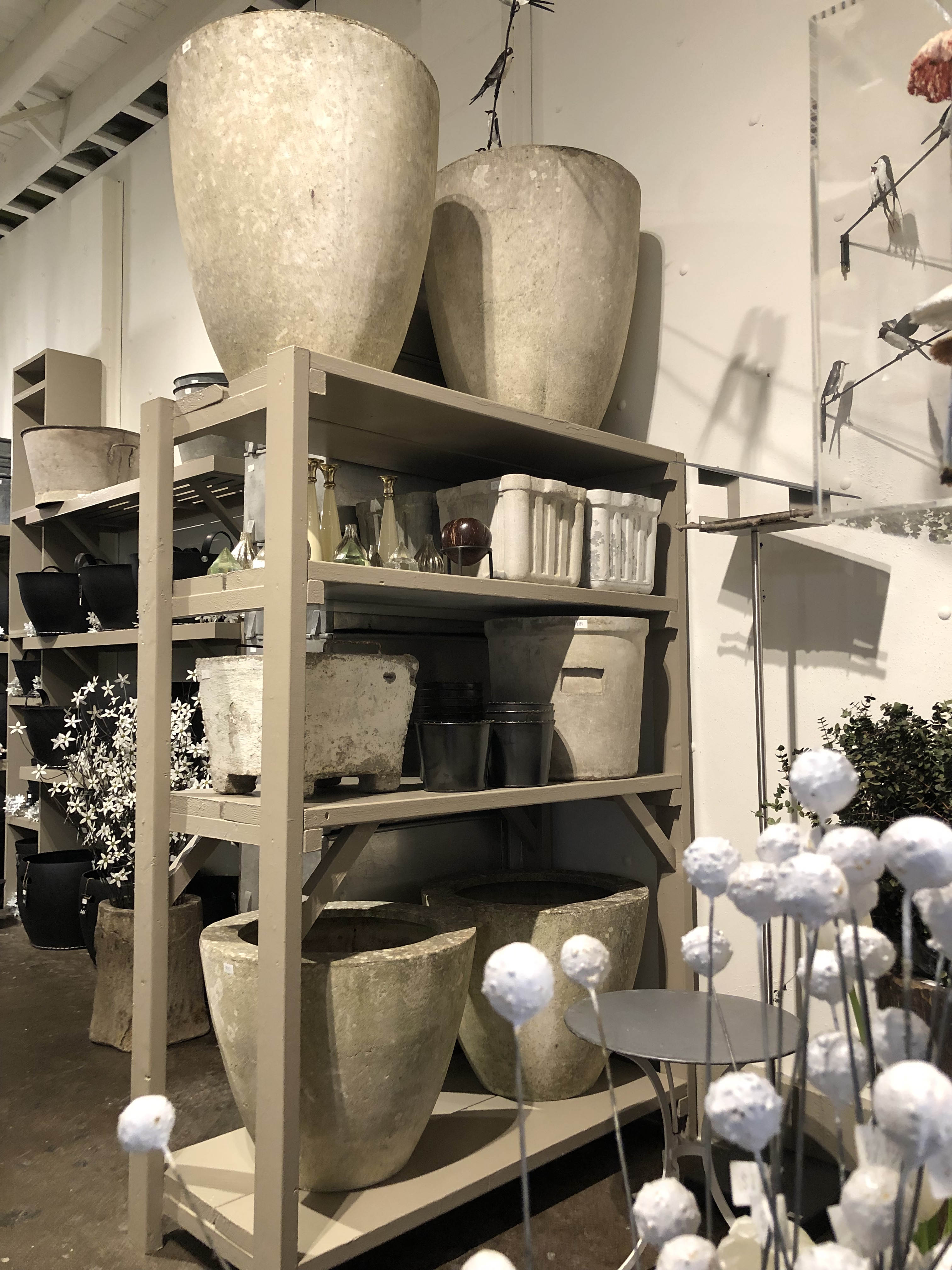 The vintage containers on this shelf have a decidedly modern feel.
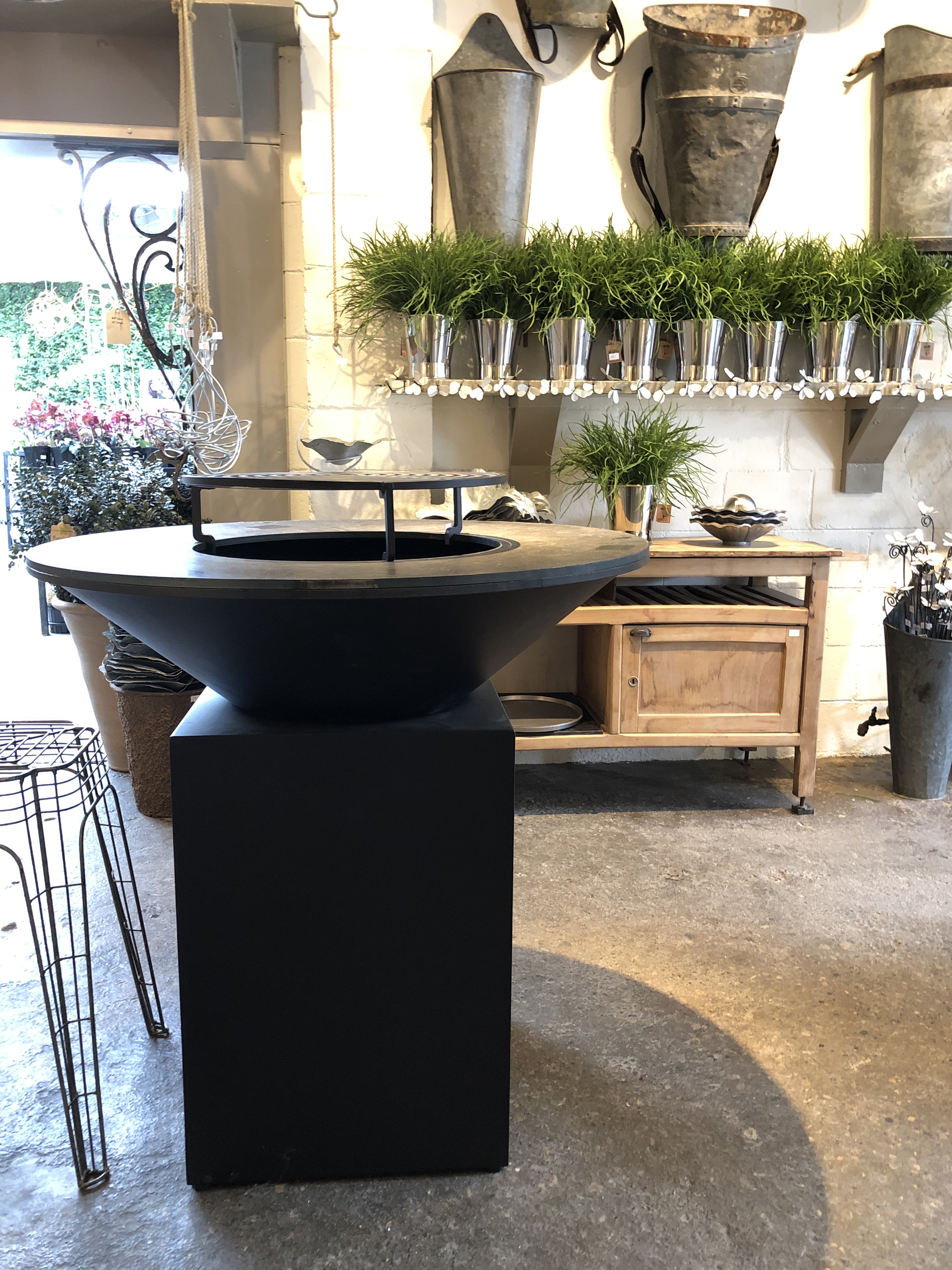 This grill bears no resemblance to the Weber of my childhood. Contemporary fixtures for kitchens have been around a good while. It is so great to see them becoming available for the outdoor kitchen. This Ofyr grill uses wood as a source of heat, and the top rim is a cooking surface as well as the grate.
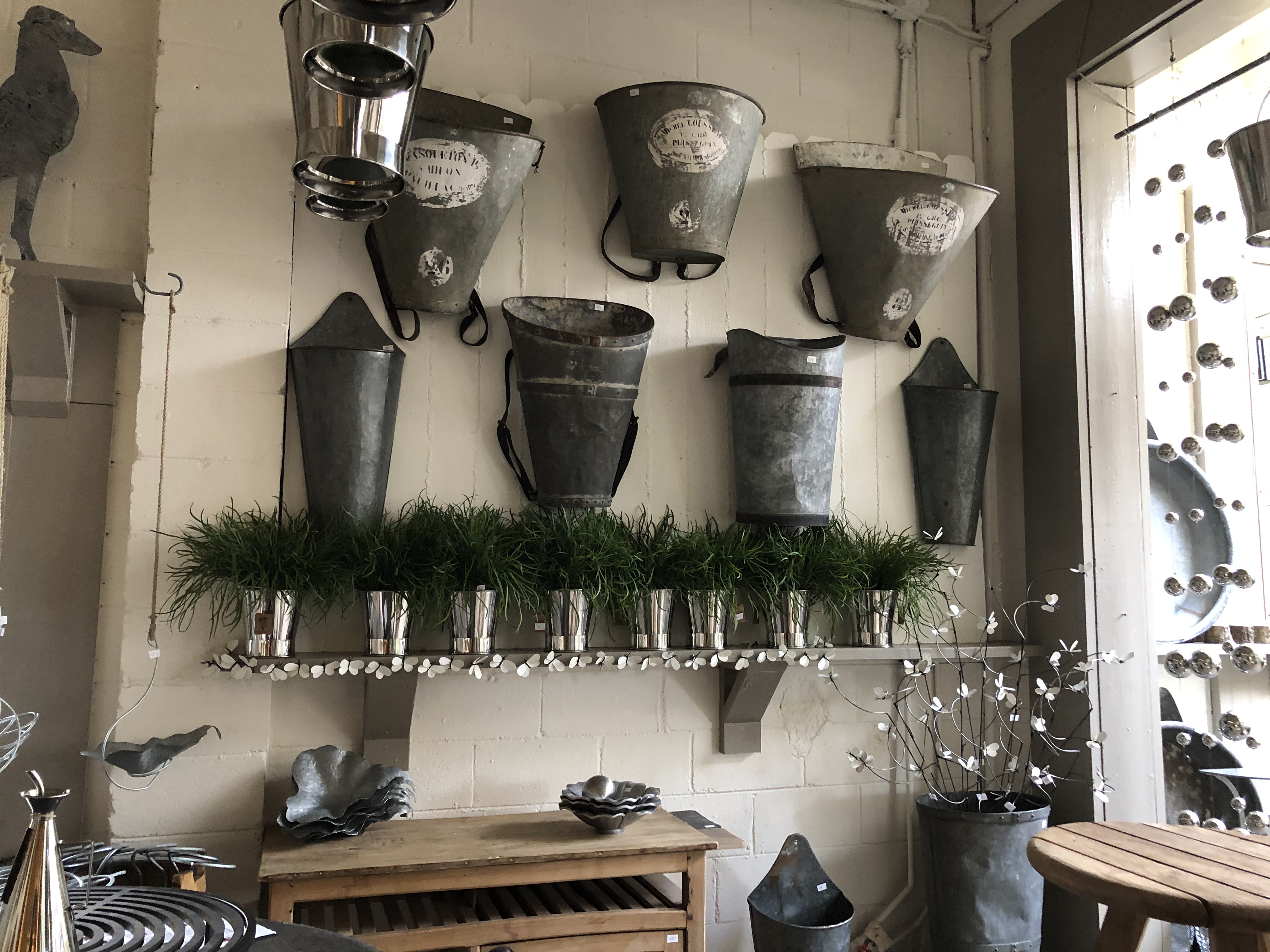 This collection of grape gathering baskets have quite a history, but attached to a wall and planted in an architectural way, they could be a welcome addition to a contemporary garden.
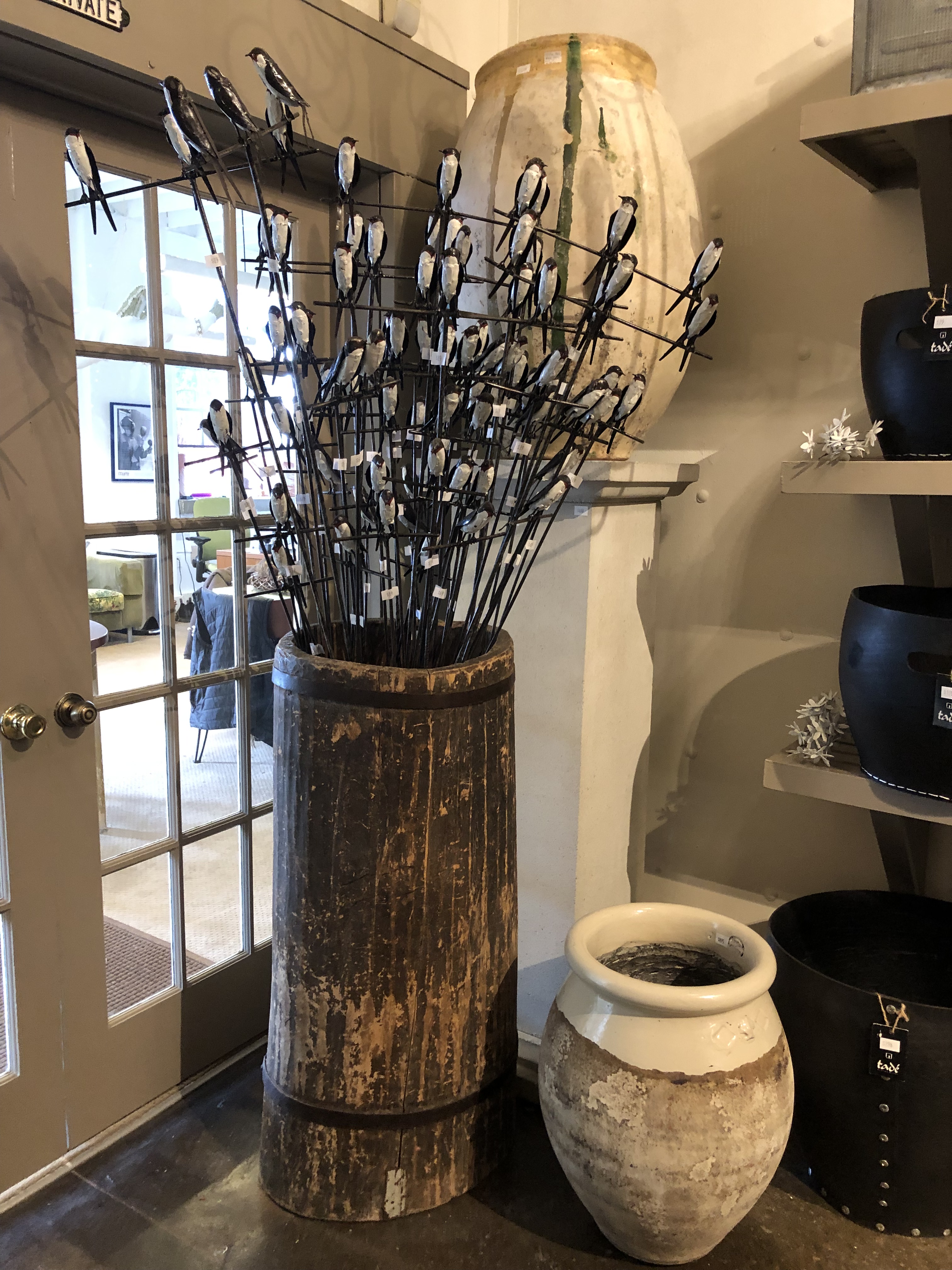 This contemporary version of birds on a wire come from the same French company that makes our sardine stakes. They come with one, two, or three birds wide at the top. Oh the possibilities, for a contemporary garden maker.