Container Plantings For Shady Places

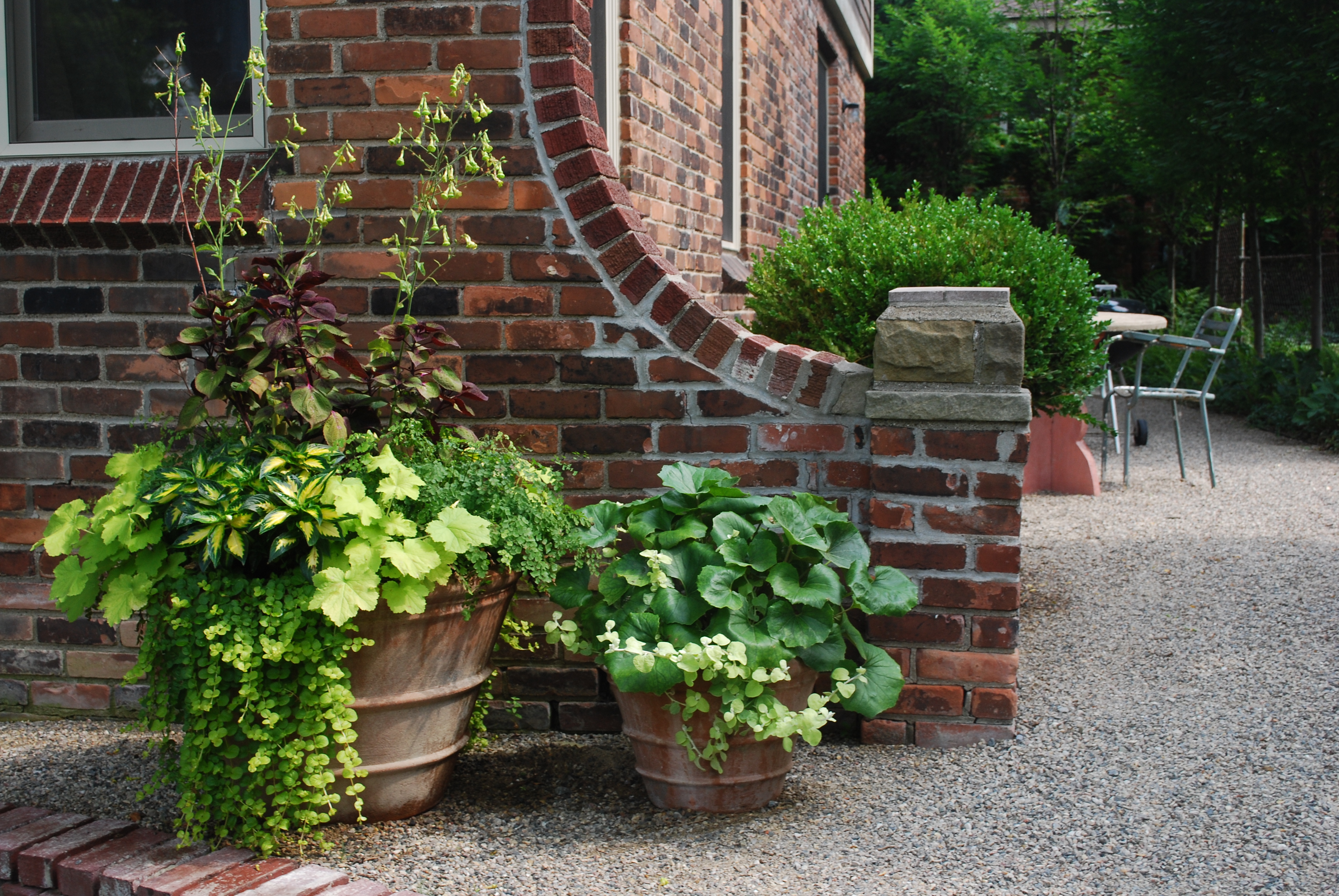
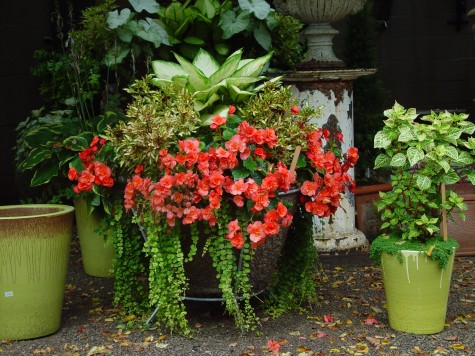
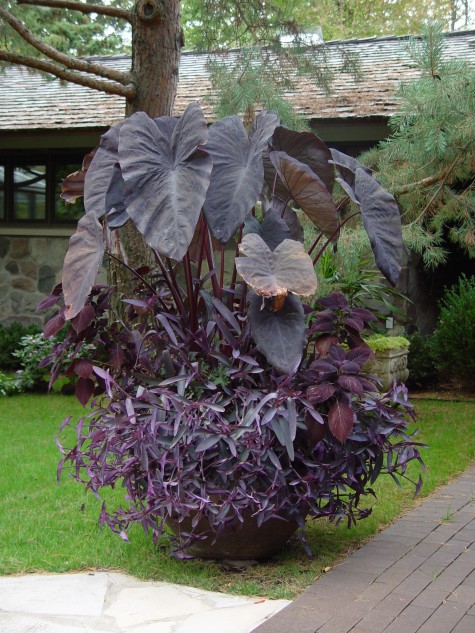
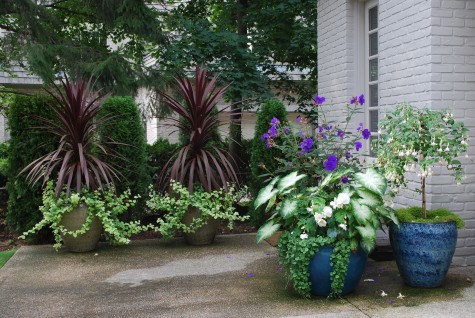
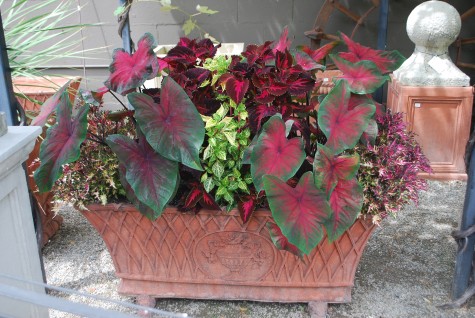
No shady spot need be a sleepy spot.  The combination of these old red spikes and variegated licorice entirely satisfy my eye.  The dark purple blooms on the tibouchina-astonishing.  White caladiums and a white fuchsia on standard-pale colors are great in the shade.  I take no credit for these containers-my client keeps them beautifully. 

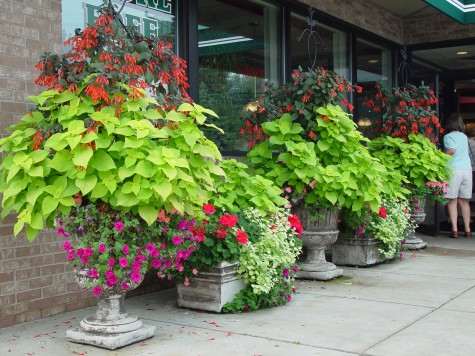
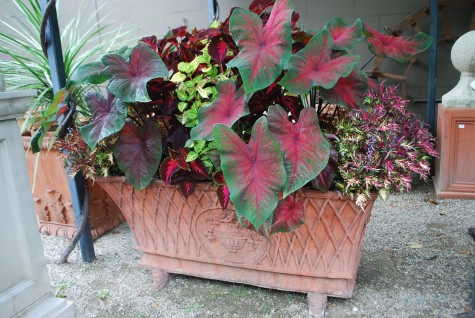
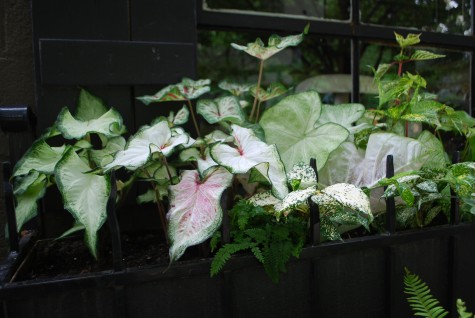
A window box at the shop is in fairly deep shade.  A group of caladium cultivars are dramatically light in that shade.  Caladiums are as easy to grow as they are satisfying.  The frilly leaves have a dressy and insouciant look.  Who could tell it was 96 degrees when I took this picture?  

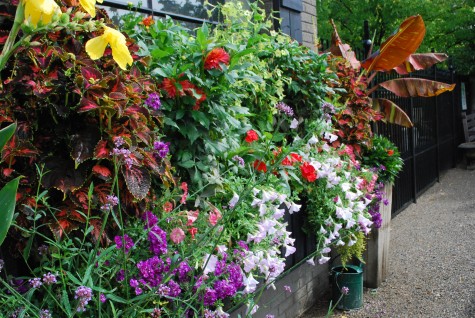
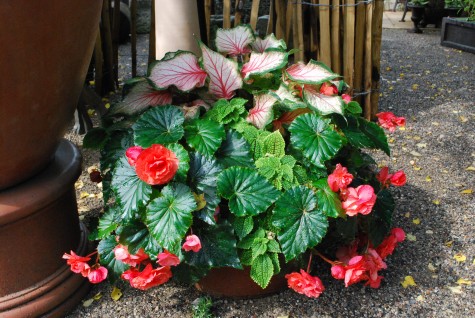
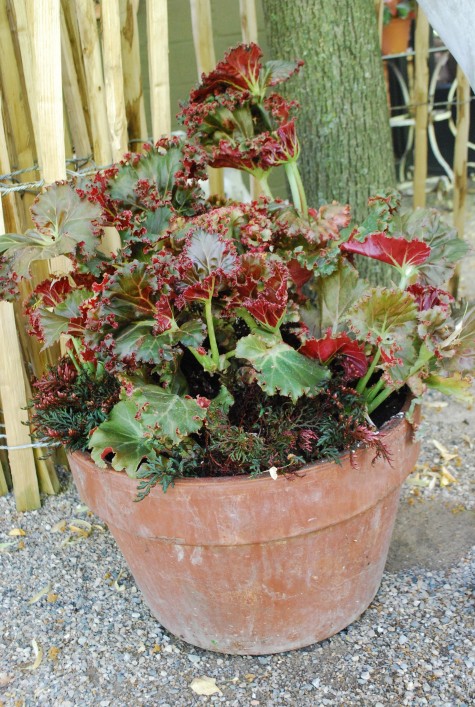
The begonia Madame Queen is new to me.  This plant has every visual hallmark of a difficult to grow plant; I do not know how to explain this.  After many years of gardening, I can tell the fussy plants from the easy going plants.  Madame Queen says it all.  I know the watering will have to be perfect.  I am game-given how much this plant could dress up the shade.

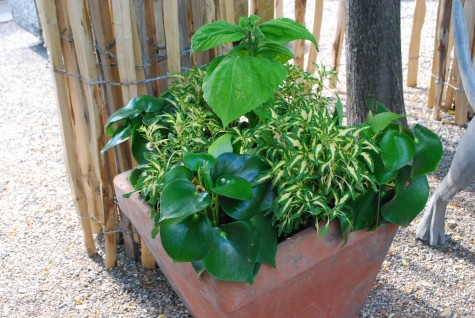
Who knew Kong coleus came in green?  The leaves are richly green, and velvety.  I am expecting this Kong to grow large.  The strap leaved yellow and green coleus will  provide a vivid and vocal supporting cast.  The Jayde pepperomia-frosting on the cake. 

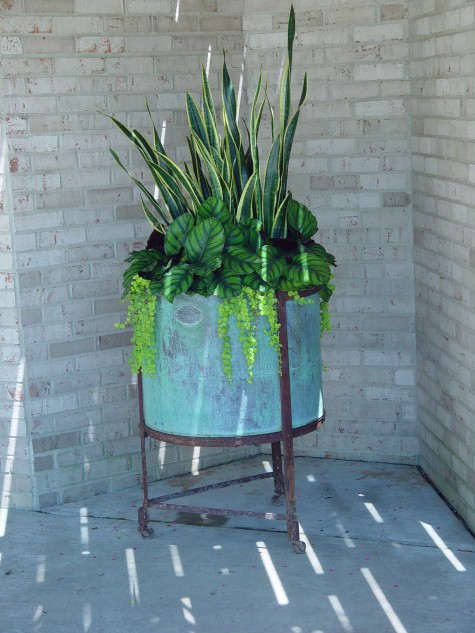
This odd spot happens to be underneath a second level deck.  An old copper washtub filled with sanseveria, calathea, and creeping jenny makes something of the space.   

I love leaves.  I have never seen one I did not like.  Leaves can provide color every bit as good as the color from a flower.  If you garden in the shade, consider leaves.        

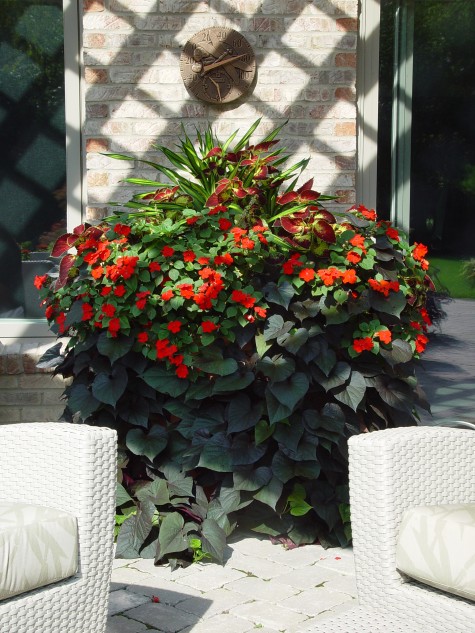
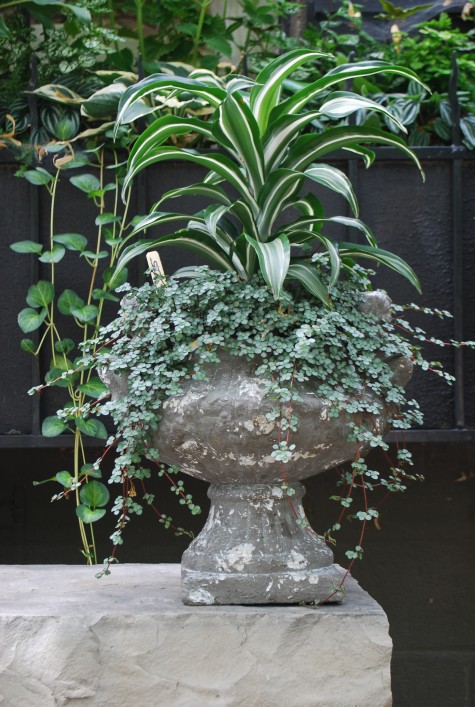
Tropical plants get a new lease on life, once they are moved outdoors.  They thrive in the shade outdoors.  I would guess they are a dracaena cultivar, and a grey pilea, but I am more interested in how they look in this container.  No gardener really needs to know the botanical names of plants.  What makes a gardener is experience. 

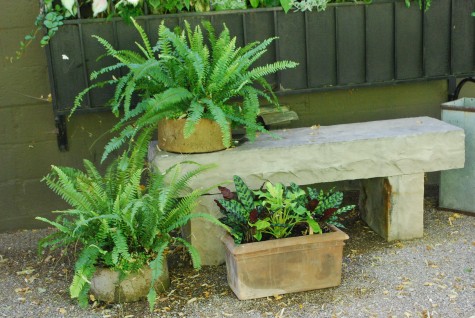
Rob has a love for weedy and fern like shady container plantings. As I like color in the shade as well as I do the sun, I am dubious from the start about his shade pots. His shade plantings are subtle and sensational.

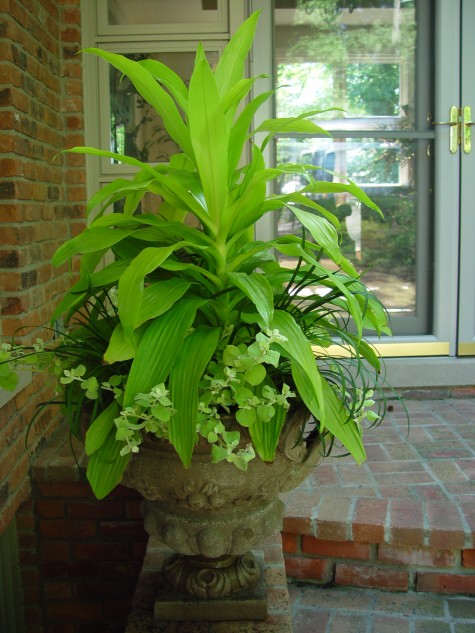
The lime green dracaena Janet Craig is anything but subtle.  The curly liriope and lime licorice dance around those large stiff leaves, and loosen up the entire composition. 

 Shady spots can be strikingly good looking spots.

Coming Along

How I enjoyed my fourth of July holiday.  The weather was perfect-partly cloudy, and not too hot.  With only one annual planting left to go, I had time to catch my breath, and tinker in my own yard.  My container plantings are coming on just fine.  As usual, I planted caladiums in my planters on the north wall-they thrive in that bright shade.  This small leaved variety whose name I do not know looks a little like fireworks-does it not?   

I suppose the fireworks designation really belongs to the Janet Craig dracaenas.  The large strappy lime colored leaved make a big statement in shade.  It will grow readily in very low light; direct sun will burn the leaves.  I trimmed off the lower leaves, to make room for the caladiums.     

I have planted one color or another of solenia begonias in the terra cotta boxes for years.  Non-stop begonias are not that easy for me to keep-but here they are, in the most intense shade of orange.  They succumb to rot so easily.  My plantes are staked up for better air circulation, and I remove any deteriorating foliage at the first sign of trouble. The green and white caladium with terra cotta blotches face down some lime irisine that needs more time and heat to get tall.  I like the change of texture provided by the liriope in front; lots of perennials are great looking in containers. 

My potunia verbena pot has finally stabilized; the heavy and just about daily rains have abated.  I keep this pot on the dry side.  The container is placed between two chairs, so I plant for a top view, rather than a side view.

This pot always gets planted green in some form or another.  The nicotiana alata lime is in its usual spot.  Nicotiana is probably my most favorite annual flower.  The cooly lime green, simple star shaped single flowers are my idea of a really great looking flower.  Two varieties of coleus some lime licorice and selaginella complete the planting.  I have had a tough time with licorice this year-I suspect the early cold rain is to blame.  

Though I planted an embarrassment of riches in Orange Punch cannas at the shop, I had to bring one home; my olive jar is the perfect place for a tall growing plant.  A shrubby growing orange lantana, and a couple of purple wave petunias complete the ensemble.  The companion planter is planted with the same scheme orange and carmine color scheme.  The heat of July will bring on the flowering of the dahlia. 

The University series of dahlias is new to me; this purple variety is a great color.  My coleus needs a little pinching, and my tricolor geranium needs to grow up, for all of the volumes to balance out. Annuals in my zone shine in July and August.   

The lime irisine in this box has yet to make much of an appearance, but the solenia begonias are thriving.  Like the non-stop begonias, I stake them with bamboo.  The solenias will fall over with the weight of the flowers-this habit makes them great for hanging baskets. The vinca maculatum has grown so long, I swept it up on the ledge.  I will be interested to see if it continues to grow, in this horizontal position. 

 There are 5 containers on the drive, and 2 in ground plantings at different levels.  I have tried a lot of color schemes here; warm colors seem to look the best with the yellow and orange stone. 


I have never planted any yellow flowers here before, but I am liking how it looks.  Yellow butterfly marguerites are a nuisance in the deadheading department, but when they are good, they are very good.  It seems like they are happy; they should double in size before the end of the season.  As much as I love yellow petunias, they are not particularly vigorous.  We’ll see if I can manage to keep them happy. 

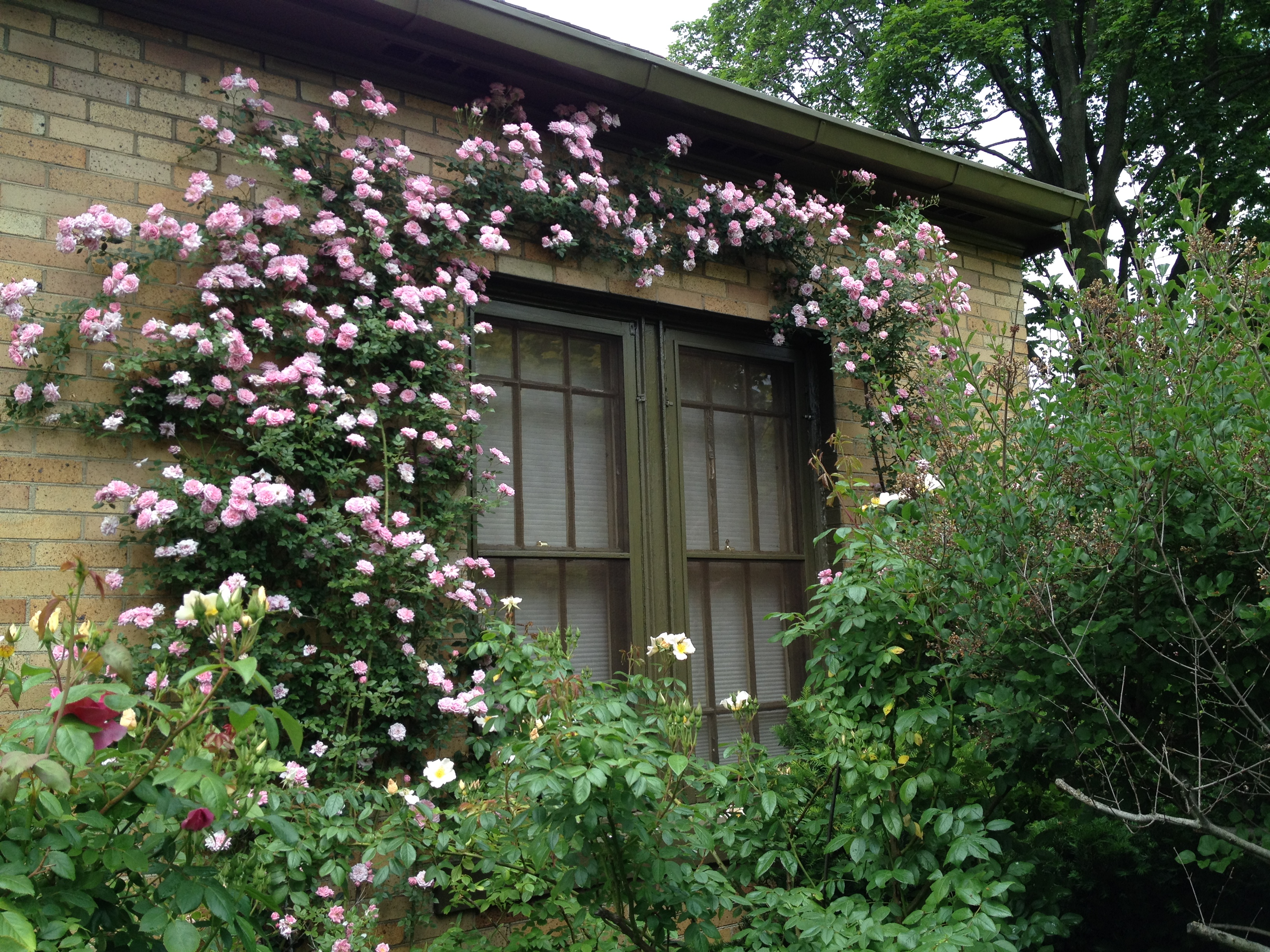
In the rose garden, a different color scheme all together. In deference to my pink and white roses, I have pink mandevillea, nicotiana mutabilis and alata lime, white angelonia pink and white petunias, and Persian Queen geraniums.  Faintly visible is my steel plant tower; the vine and nicotiana get a lot of help staying upright from it.  By summer’s end, it will vanish from view.  This Tuscan style square is a very large pot; it asks for a planting that will grow large.  Watching plants grow is my favorite channel.

A Favorite Place

I have my favorite places.  What makes for a favorite place?  A client with an eye for beauty and a committment to the garden.  A client who is always willing to try something new.  That said, an ancient and sparsely foliated scotch pine flanks the front door-Mr. will not now, and not ever,  let me touch it.  This too makes for a favorite place-strong feelings.  The Australian tree ferns I have wintered in a greenhouse for them for about 10 years.  We cut them back to the main trunk in the fall.  By spring they are leafing out vigorously.  This year I underplanted them thickly with maidenhair ferns.    

A pair of chimney pots got planted with an unknown begonia-I like the leaves.  The rusty colored hairs on the stems and backsides of the leaves look great with the rusty brown pots.  Lime licorice grows anywhere for me-sun or shade.  That pale chartreuse color will highlight those deep green leaves.

Planting day was a sunny day-so my pictures are not very good.  A lime, lavender, purple and yellow color scheme is enlivened with an occasion burgundy potunia-just for emphasis. Vinca maculatum will trail dowen long on the far side, as will the misty lilac wave petunias.

The small box got cactus flowered purple dahlias, purple angelonia (new this year) lanai blue trailing verbena, white petunias and lime licorice. 

A pot nearby has a yellow and peach bicolor dahlia, and a skirt of dark red violet trailing verbena.  I like the forms of the plants together as much as I like the color.  I like the contrast of the big dahlia leaves to the slight-sized verbena leaves.  Plants have visual relationships on a lot of levels.   

The centerpiece of this pot is a double (also known as hose in hose) datura.  I caution anyone who grows them-every part of a datura is poisonous.  The plants smell poisonous.  If you cultivate this beauty, wash your hands after you touch it.  Beyond the warning label lies a gorgeous big leaved plant with giant flowers.  A diminuitive white and lavender veined mini petunia against lime licorice is a cooly tart, and small textured mix.  The datura will be the star of the show.

The perennial garden at the pool is just coming to life.  The peonies are out, and the roses are not far behind.  The purple alliums show well from the second floor deck; this is a garden primarily viewed from above.  We add some nicotiana and verbena bonariensis between the tall perennials, and plant an annual border to soften the edge of the pool brick.  This year, showy oregano, appleblossom petunias and heliotrope will fill in and cover the soil.   

When my client asks for herb pots, she is really asking for basil pots.  I did a pair.  Leeks in the middle, and everbearing strawberries with pink flowers at the corners. Lots and lots of basil.  This I understand.  Its pungent smell and taste-irresistable.

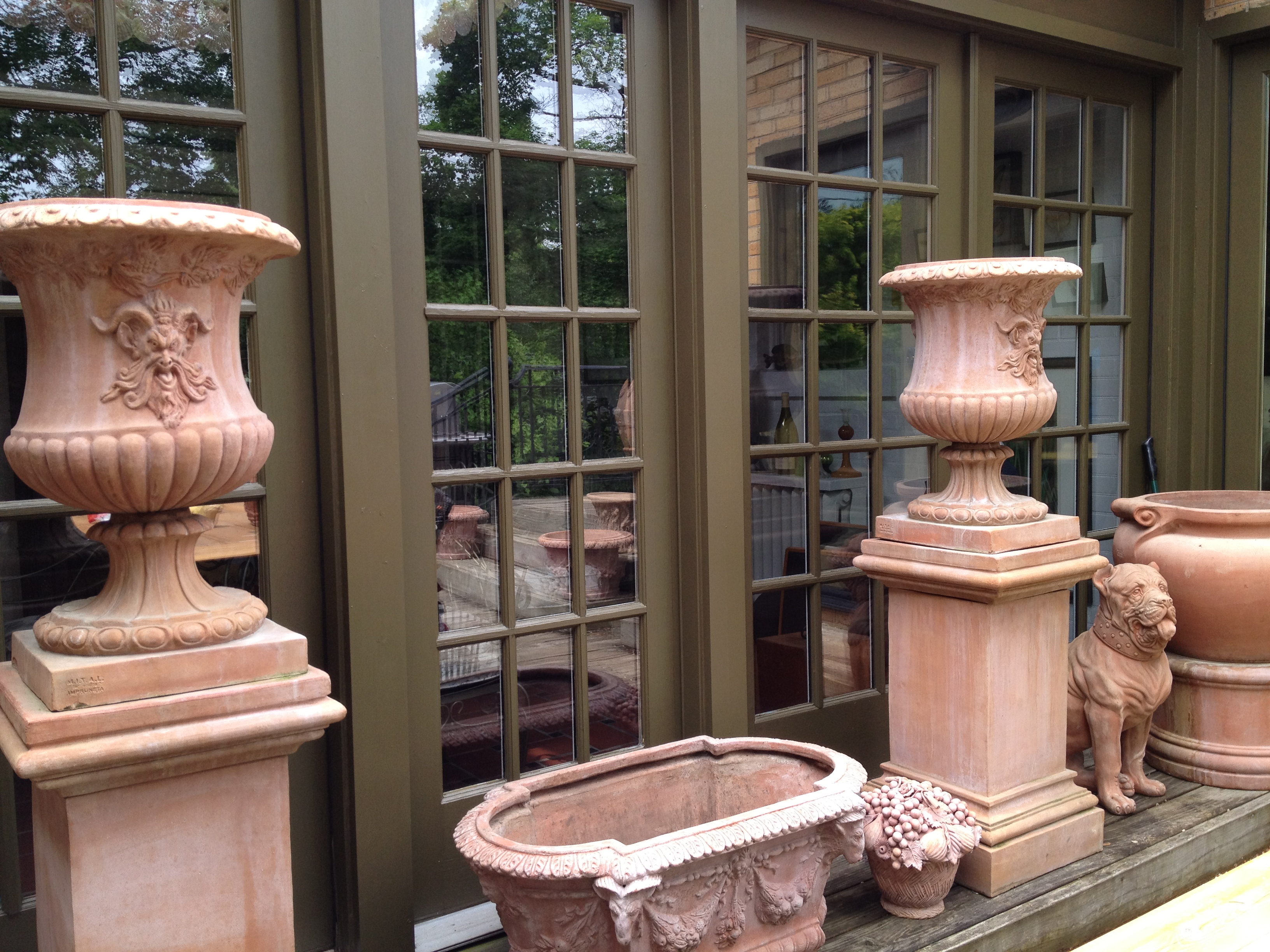
This trio of pots feature an old variegated ivy topiary, and a single ball boxwood topiary.  The boxwood got an underplanting of variegated licorice; the third pot is stuffed with a dahlia.  The pots are from Francesca del Re in Italy.  The are very simple, handsome, and frostproof.  The clay is so loaded with minerals that the pots are very strong.  We make sure no water collects in them over the winter.  Freezing water expands as it becomes ice-this process can damage pots.  These terra cotta pots have been outside for a good many years.

This wildly natural rosemary has belonged to my client a long time. The only thing we prune is the rootball; this plant has a life of its own going on.  This year, we underplanted it with white polka dot plant-I think I am going to like this. 


My first project with this client many years ago involved digging up every plant she had, and rearranging. This took 2 days.  There were lots of projects after this-not the least of which was the most romantic garden wedding I have ever been involved with.  My client-she drove that bus.  The story of the driveway?  The drive needed to be enlarged; the original brick was no longer available.  We took up all of the old brick, and reused it with a new brick in an entirely different pattern.  All of the pale brick you see here is original.  The two colors of dark brick are new. It looks entirely believable; the mix of old and new reads as one thought.  The 12 year old waxleaf privet topiaries got planted back in their summer home-they are just about to bloom.  Most every bit of this garden-swell.

A Plant Collection


Planting containers is a big job, especially when there are lots of them.  I plant almost 40 containers for this client every year; I plant 27 pots of my own at home every year. Every year I have to fight off the urge to plant more pots.  That said, I have a few ideas about how to keep the project manageable-both in design and execution.  Every bill I send is completely detailed as to plant varieties and numbers.  Feel free to try this at home.  Keep track of how many plants it takes to plant your containers.  Take pictures.  Keep notes about what you like-and do not like.  This helps keep the shopping part organized.  I know ther numbers of plants this job requires;  I plan ahead.  This is essential, as she lives 45 minutes away from the shop.      

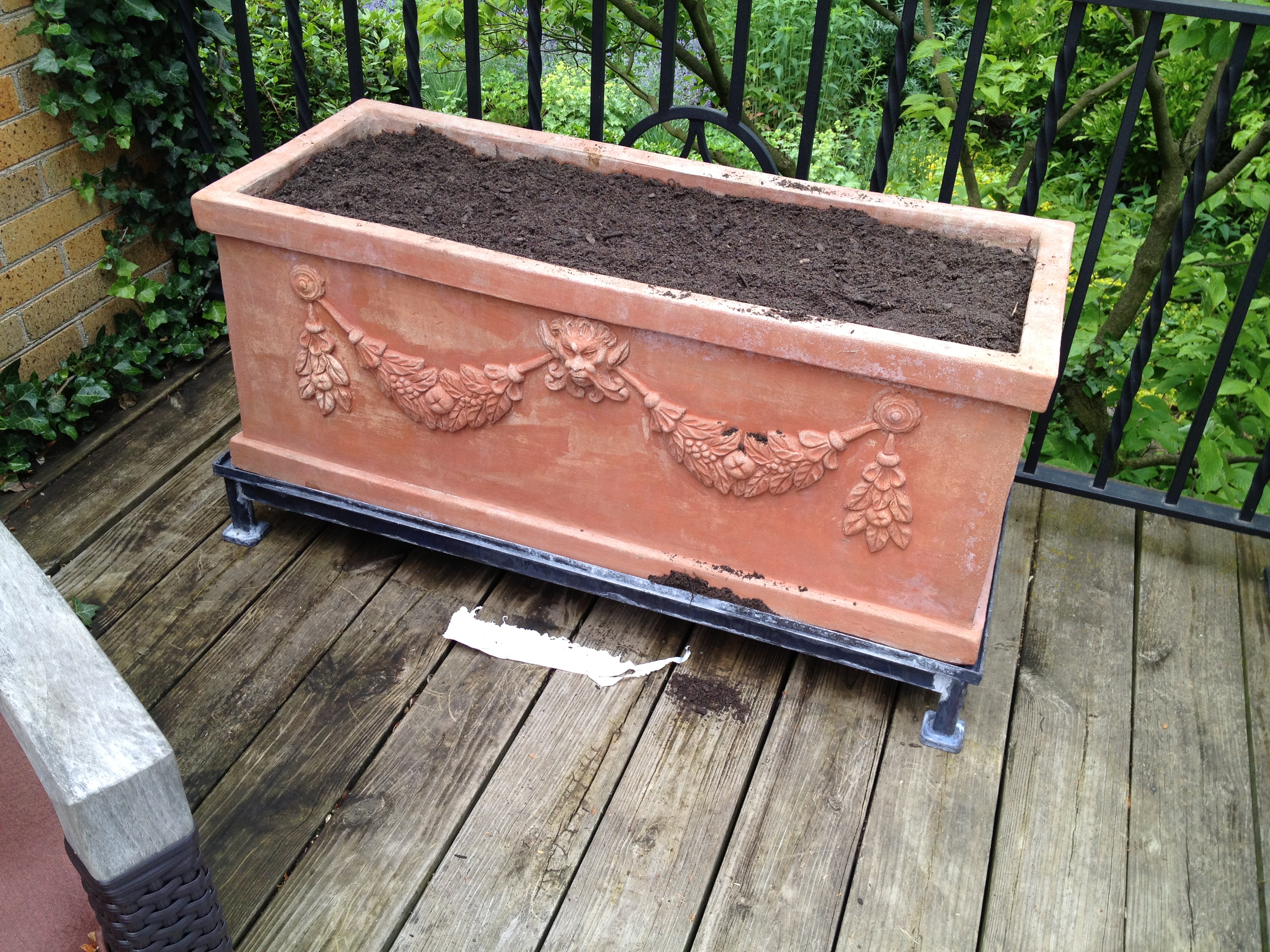
Round containers-think of them as needing layers of plants-planted in rings.  A centerpiece plant is ringed by a mid layer ring, and an edge ring.  Bigger pots need more rings-smaller ones need fewer. This long rectangular planter needs 2 long rows of plants.  When I lay out the planter, I start in the center, and work to each side, so the planting is symmetrical. This planter, just like a window box, only has so many spaces for plants.  I pick my palette, and then figure out how many repeats I will need.  The repetition of plants establishes a visual rhythm.  In contemporary plantings,  I may plant just one plant all over, and hope that plant has a favorable season.    

Once I have some numbers in mind, I think about what plants make good neighbors-both side to side, and front to back.  My diamond frost euphorbia asks for something with a denser texture and bigger flower-does it not?  Verbena is a great companion plant.  Cirrus dusty miller has big, matte, felted leaves.  A good companion? The tiny and angular leaved shiny succulent pictured above provides good contrast in form and texture, while repeating that grey-blue color.  A good companion to lavender, whose flowers and foliage are so wispy, is alyssum, which flowers low, and profusely.It is hard to see what is going on in this annual bed far from the terrace-but for the blobs of white.  That white is from the leaves of caladiums-they read well from a distance.  Later in the season, short white and tall lime green nicotiana will bloom.  The ground cover under all-white polka dot plant.  This shade planting is a much more interesting solution than white impatiens.  Lime green coleus would look great here as well.  This is a collection of plants that work well together. Larger growing plants means you do not need so many to make a statement.  Space your plants in the ground knowing how they will mature.  In-ground plantings spaced too close together not only invites disease, it can result in an overall shape that is not distinctively shapely.

This old agave-this is its final year.  Agaves need to be quite old before they bloom.  Once they bloom, the parent plant dies, leaves the baby offshoots to continue. This bloom stalk could grow to 14 feet or better.  This agave is part of a collection of plants my client has had for a number of years. We underplanted it with a mass of Kent Beauty oregano, a soft, drapy, and delicately colored ornamental oregano that will highlight the visual architecture of the agave by way of considerable contrast in scale, texture and form. 

Phormiums, or New Zealand flax have an architectural presence on a smaller scale.  The diamond frost  euphorbia will froth up and spill over the container.  This is a collection of two that looks handsome together.

Another member of the topiary plant collection, a Teucrium Fruticans on standard.  Bush germander has silver needled leaves, and grows 4 to 6 feet tall in warmer climates.  This topiary has to be wintered in a barely heated light space.  Any collection of plants that can be wintered over in a light space or garage has two advantages.  They not only live a much longer life than most annuals, they grow and become sizeable. This germander is almost 10 years old; it is a beautiful container plant indeed.

We planted white mandevillea, and staked it on four 10′  natural bamboo poles.  We secure the poles with concrete wire for strength, and covered the wire with simple raffia bows.  Lime nicotiana, white angelonia, silver dichondra, white anyssum and white million bells rounds out the collection.

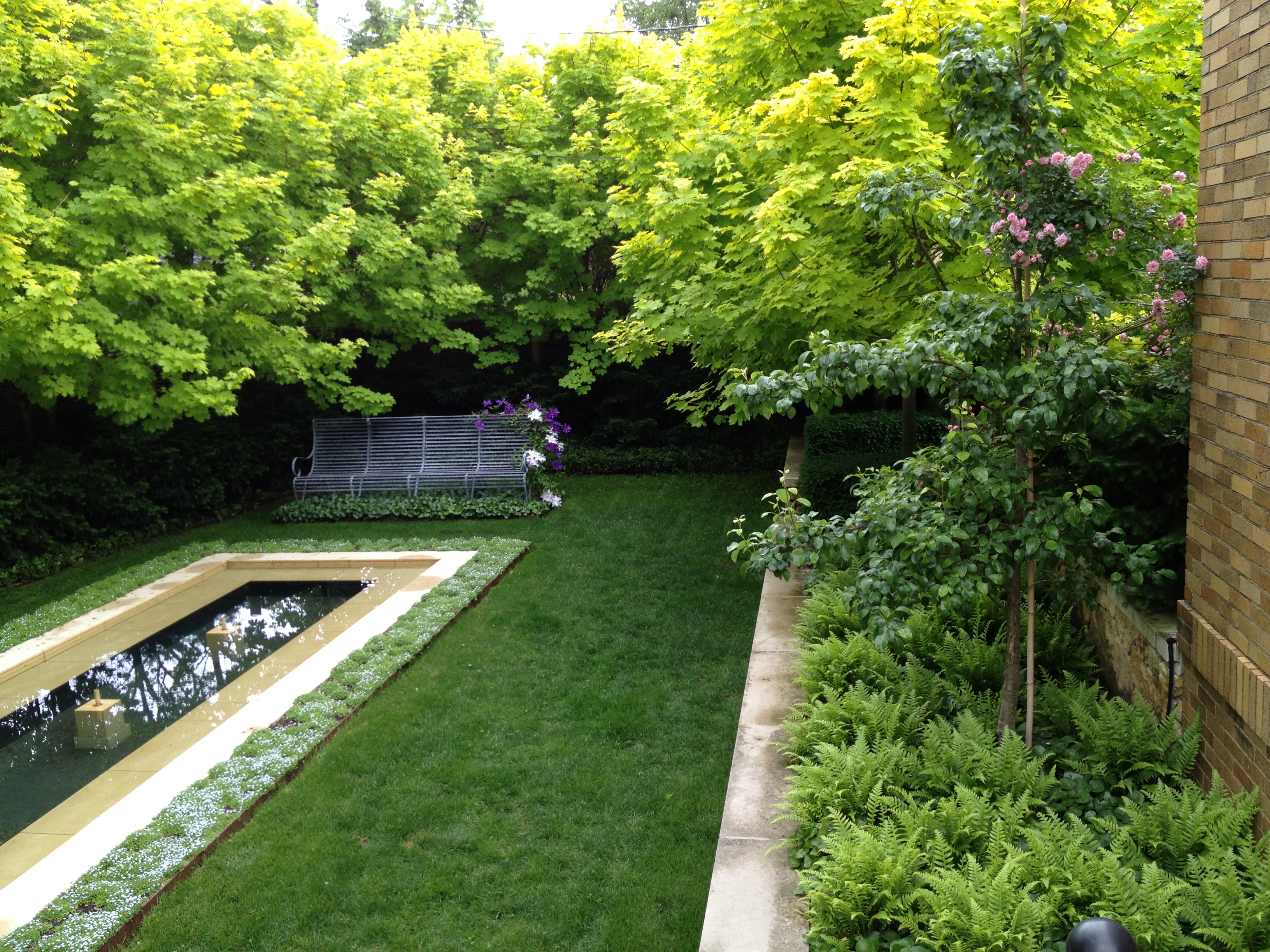
The newly created plant frame around the fountain is planted with Isotoma Fluviatilis.  I spaced the plants at a foot apart, as it grounds very quickly.  Hardy to minus 20 degrees, and tolerant of heavy foot traffic, it will barely break the plane of the stone.  The new stone around the fountain is angled slightly away from the fountain, so rain will not pool there.  The plant frame helps to minimize that stone set on a slightly higher grade than the original terrace. 

Four lead pots sit on the front walk, each with its own boxwood topiary.  These boxwood are hardy in my zone 7 out of every 10 years, so I winter them in an unheated dark space for the winter-just to be sure.  The ball shaped boxwood with attending topknots is a good contrast to the tapered shape of the lead pots.  Variegated licorice at the corners, with a green dichondra in between completes the planting.


A lovely pair of Kimberly ferns flank the front door.  As they tend to grow upright in a vase shape, I planted maidenhair ferns as a groundcover under the Kimberlys.  This puts the overall edges of the planting gracefully out over the edges of the round lead pots.  I do so love pots planted green.