Some Like It Hot

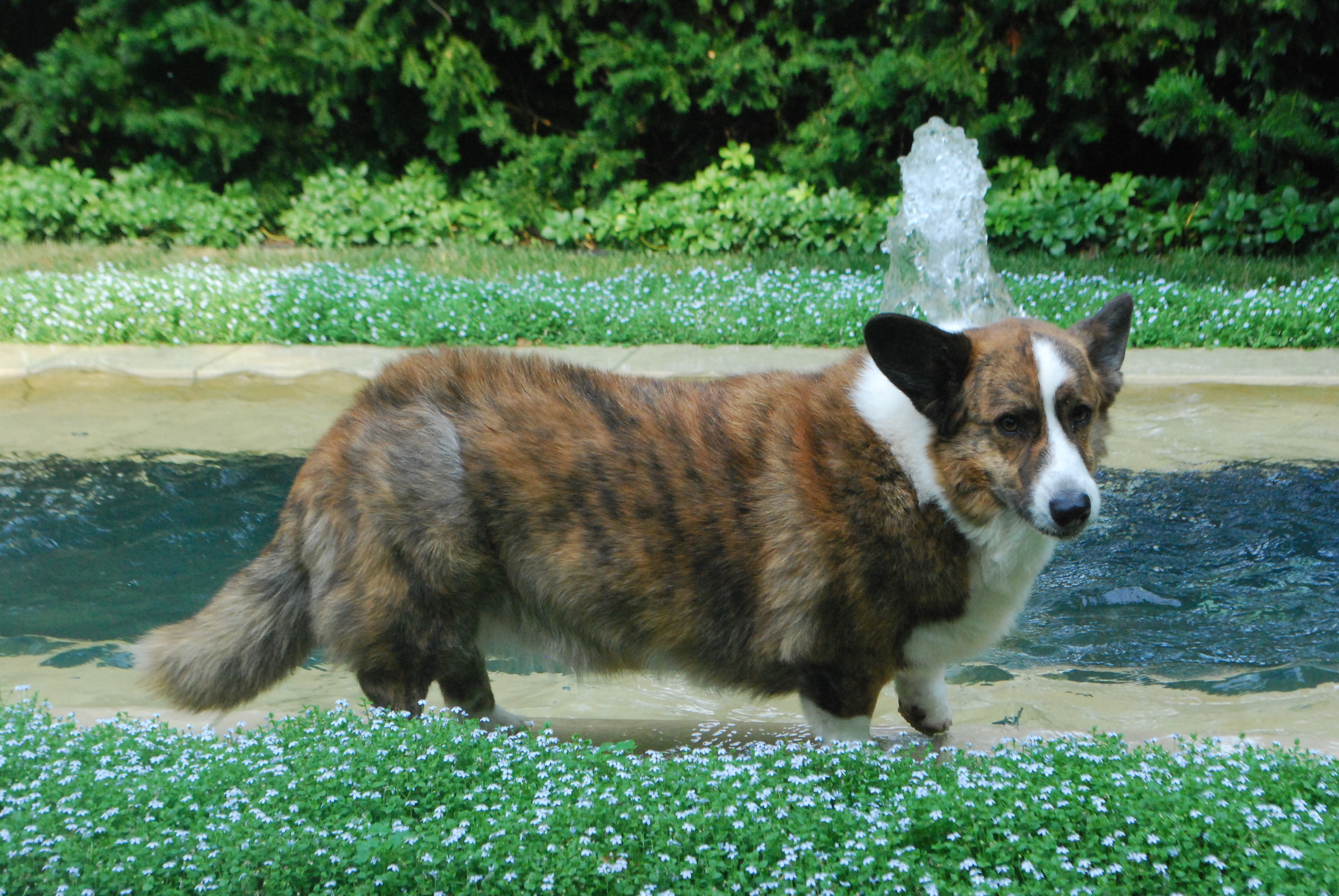
cardigan welsh corgi

The blisteringly hot and persistent heat of the past week has made many a gardener, and the above pictured corgi, miserable.  Howard, who would not set foot outside the door if he thought he would get his feet wet, had an alternate plan for yesterday.  Strong winds were pushing water over the coping of my fountain.  He doesn’t look all that thrilled with his situation, but he had no plans to go elsewhere either. I had to laugh, watching him stand with obvious annoyance in a few inches of water.  Just like the rest of us, there was no getting around the heat.    

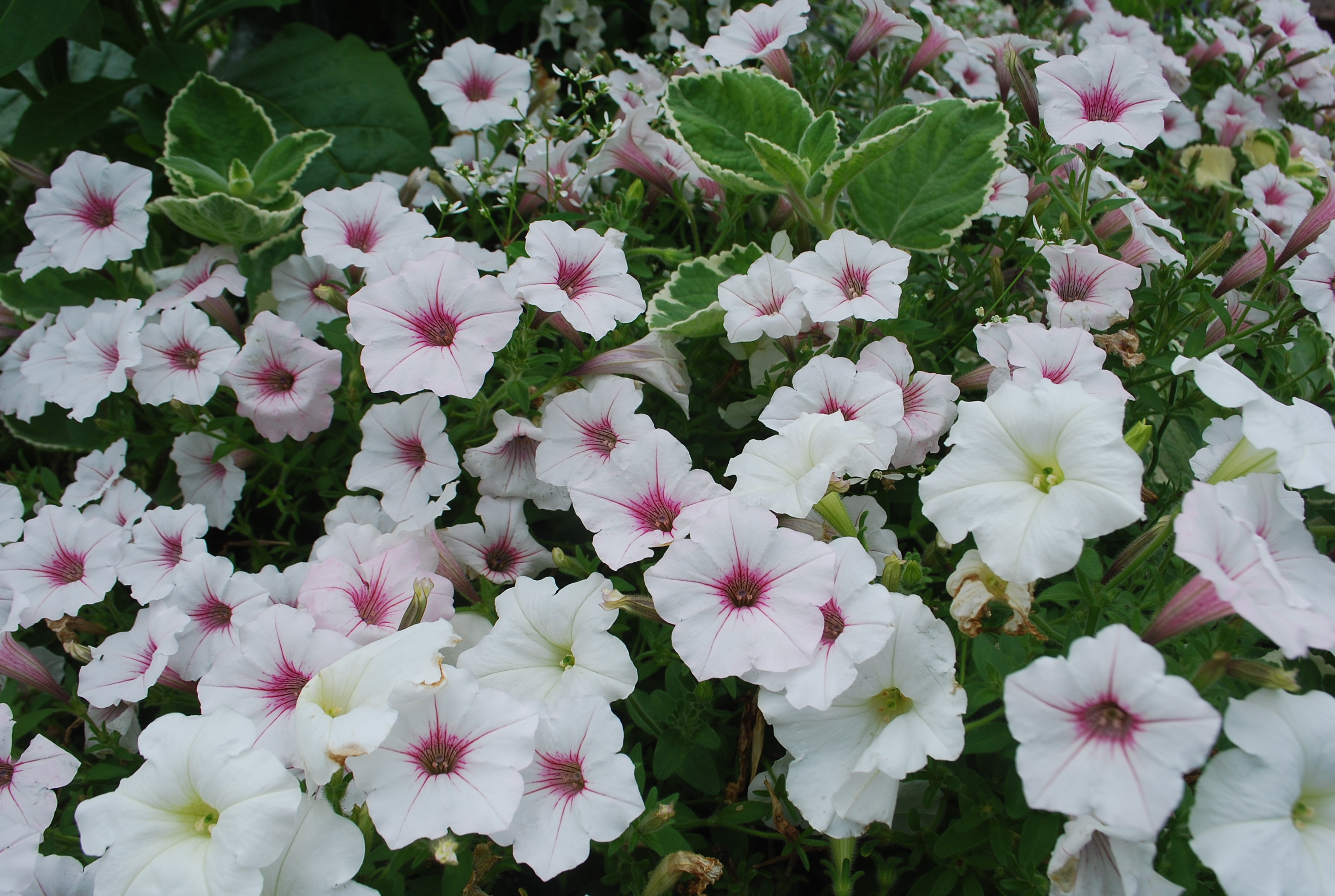
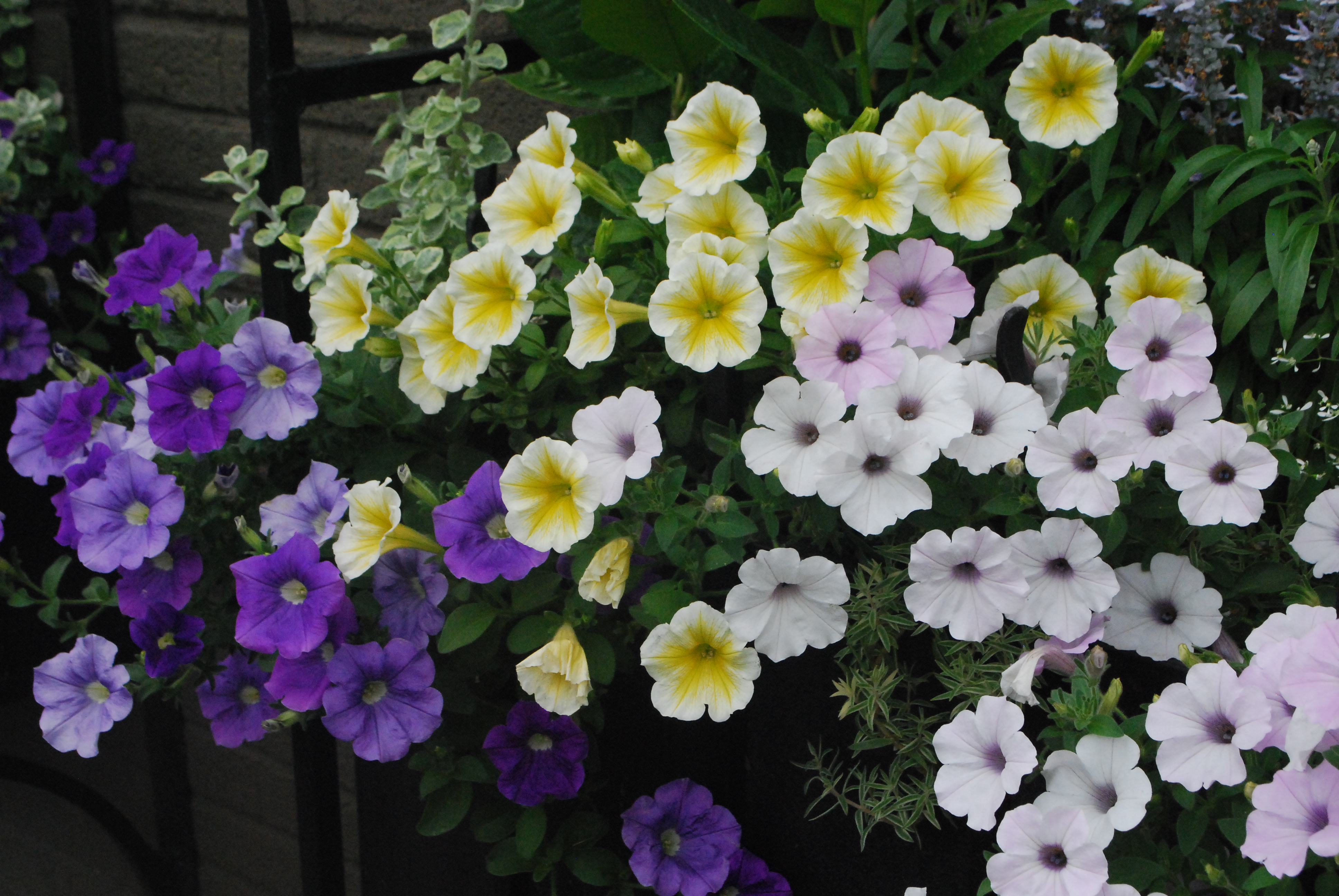
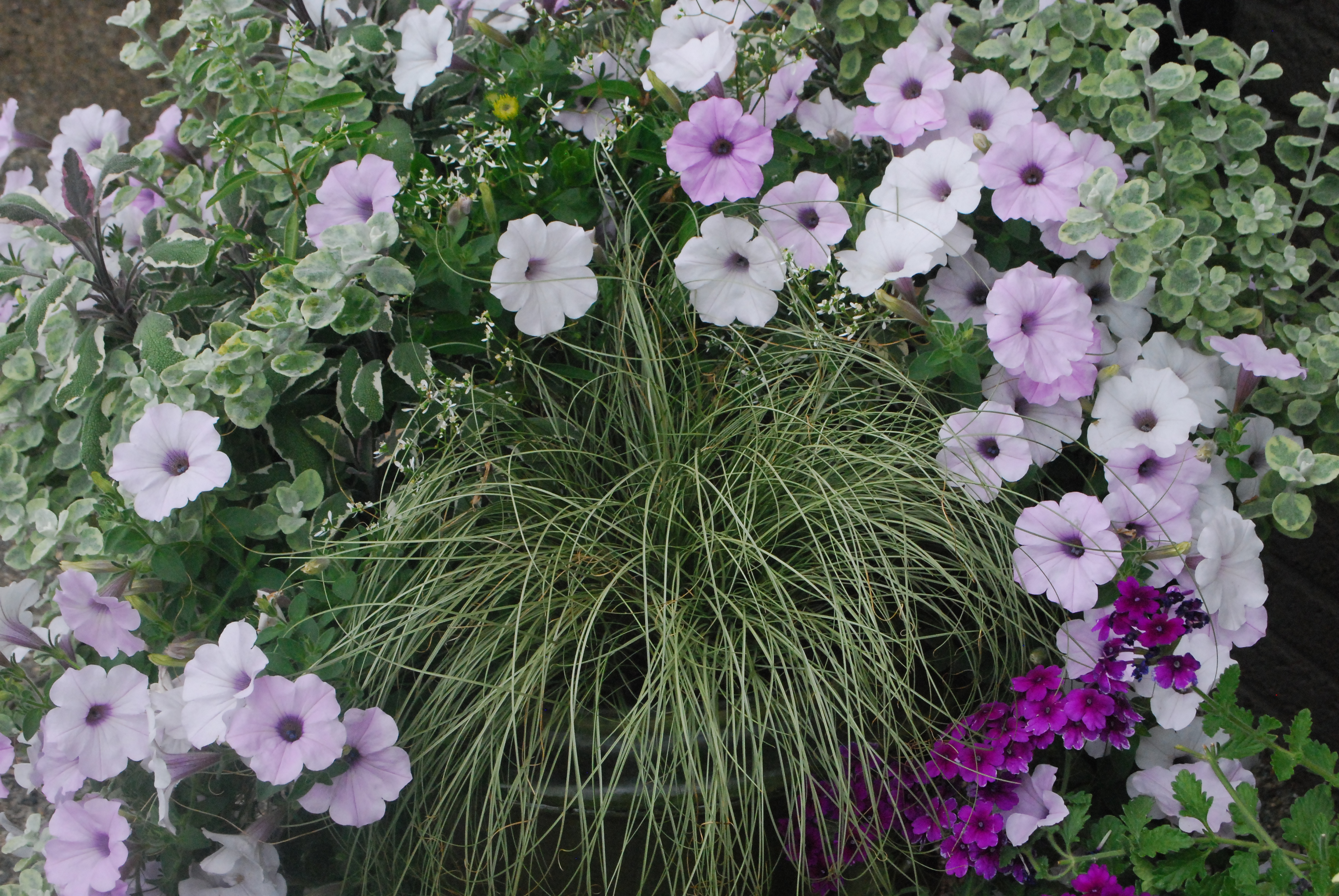
petunia

It may be stating the obvious, but plants evolve in response to their environment.  Though last week’s Garden Designers Roundtable topic focused on texture in the landscape, there was quite a bit of discussion about how the surface of a leaf says everything about a mechanism for survival.  I had never really thought about it before, but plants that live in environments where rain is extremely scarce have evolved to minimize the evaporation of water.  Those leaves are thick skinned.  Tropical plants where rain is frequent and heavy can survive just fine with thin and jumbo sized leaves.    

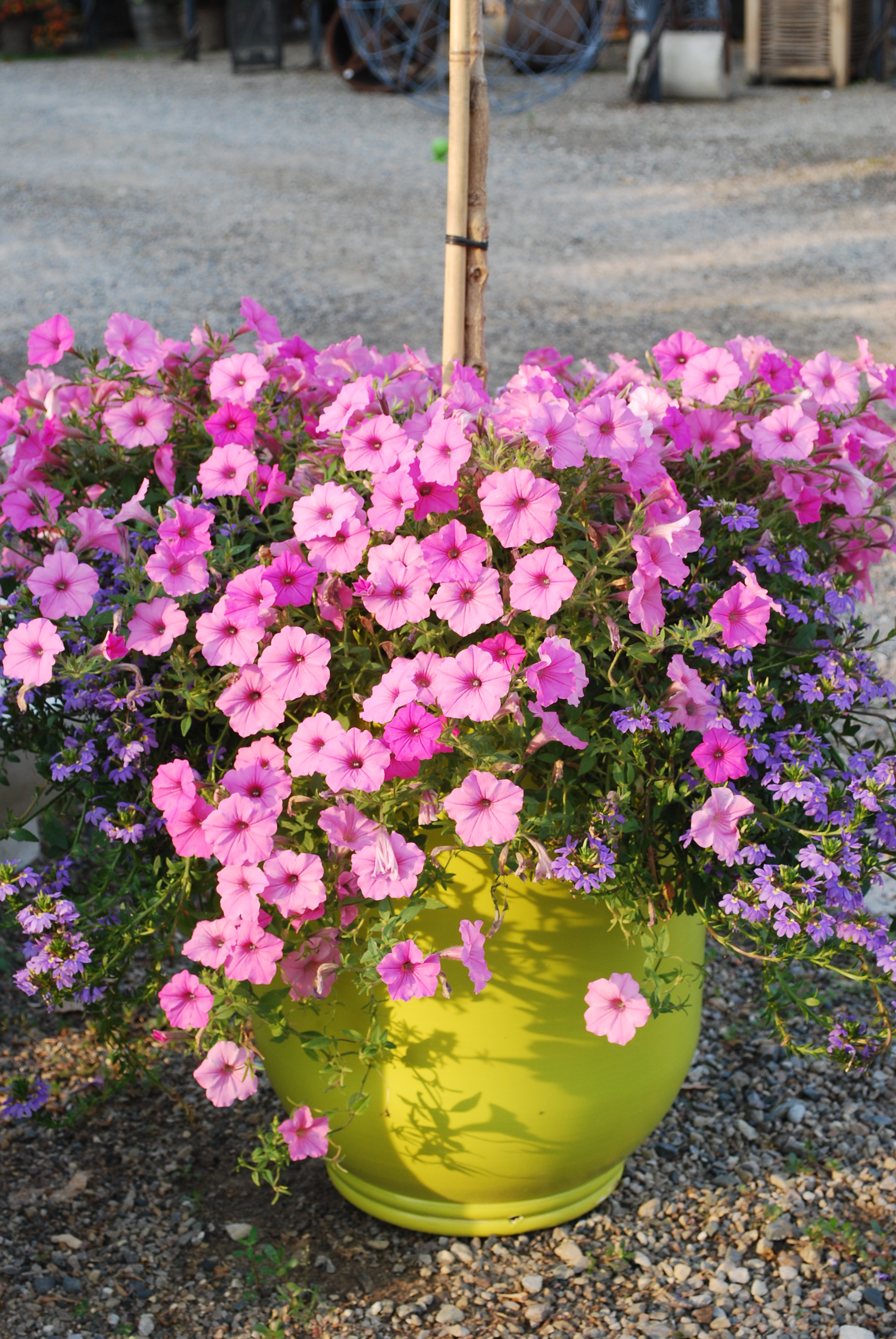
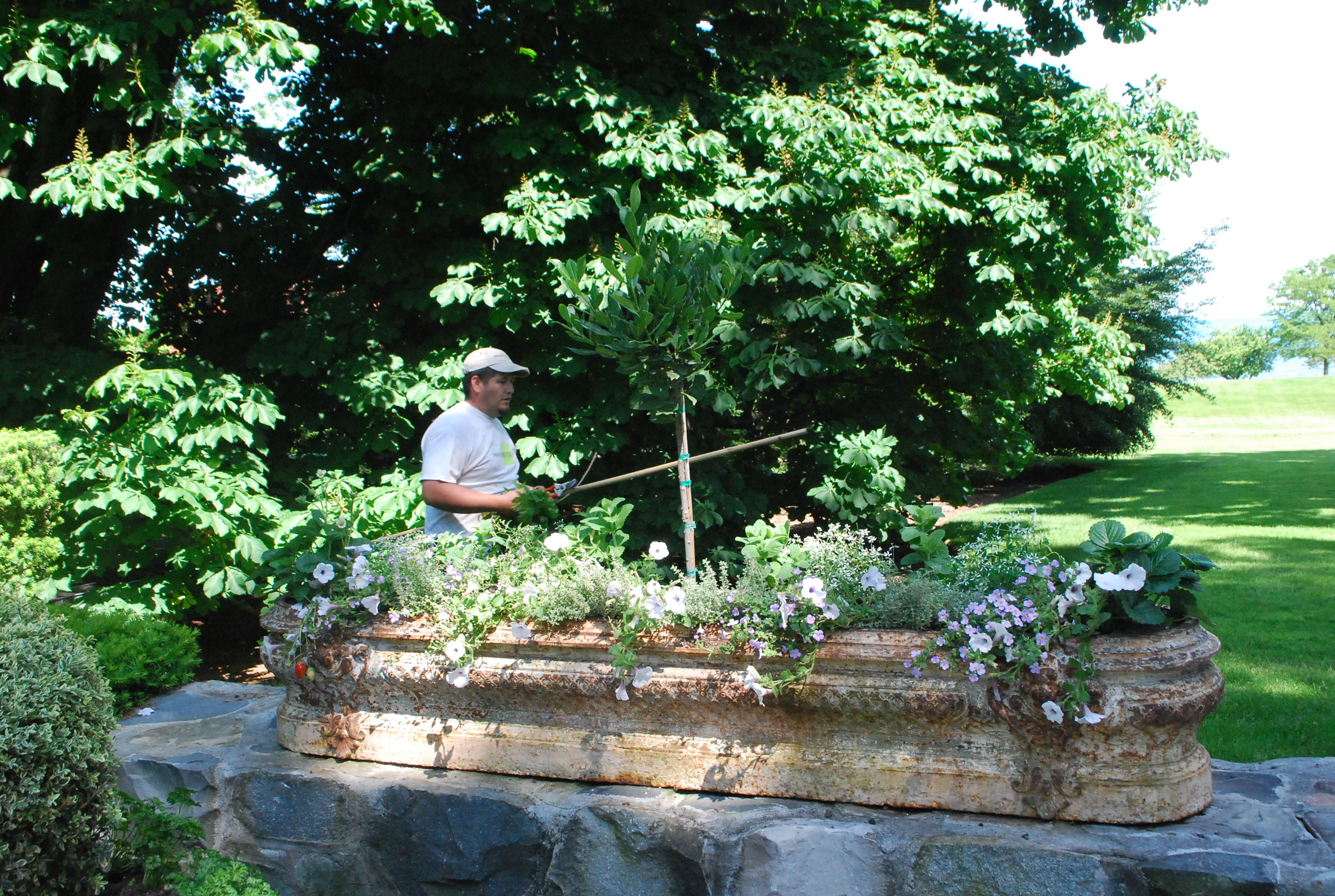
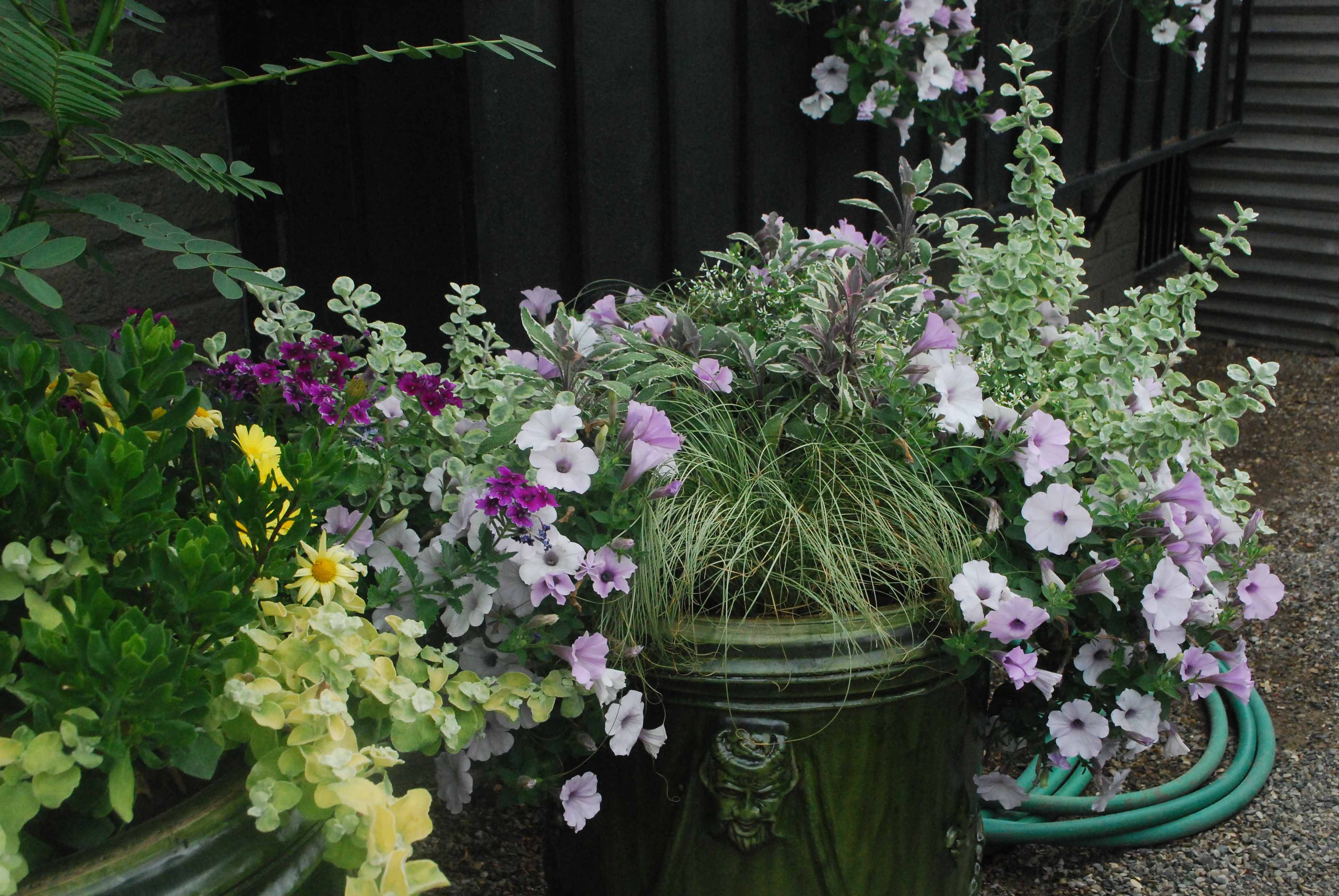
Petunias are native to Argentina.  Many species of helichrysum, like the variegated licorice pictured above, are native to South Africa.  The blue-green frosted curls sedge is a cool season grass, meaning it grows best before the advent of hot weather, and after the cessation of hot weather.  It tolerates, but does not grow much, in really hot weather.  These plants are equipped to handle the heat.

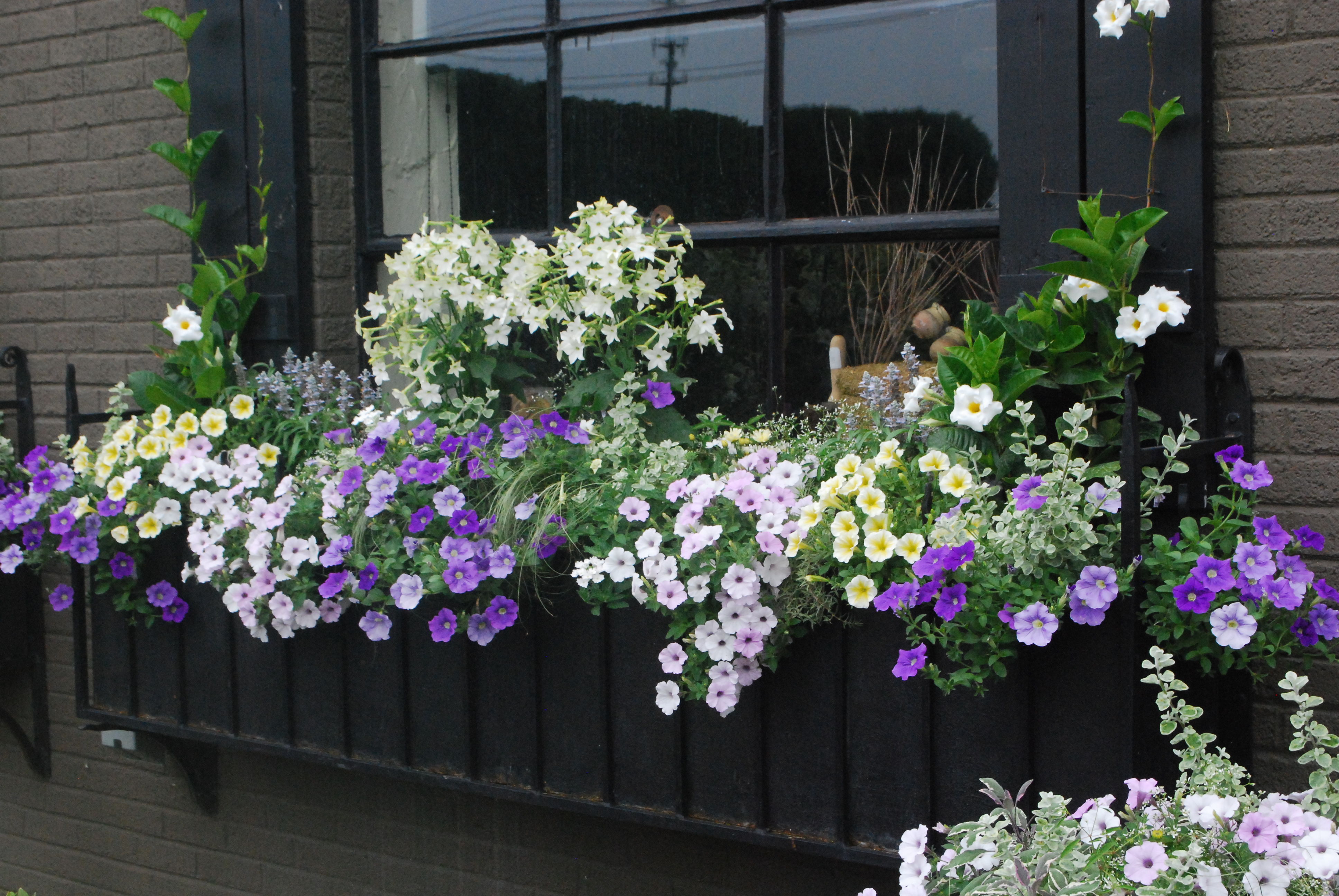
sunny window boxes

Most of the plants I use in containers are hybrids of non-native, tropical plants.  The petunias like to be grown on the dry side, and usually do well in the heat of our summers.  They come from places that are routinely hot.  New Zealand sedges, of which the hybrid Frosted Curls is an example, are native to a far more temperate zone than mine. They can tolerate our midsummer heat.  But not all heat is created equal.  Extreme heat is one thing, but extreme heat that goes on for an extremely long time takes a toll.

heat loving annuals.jpg

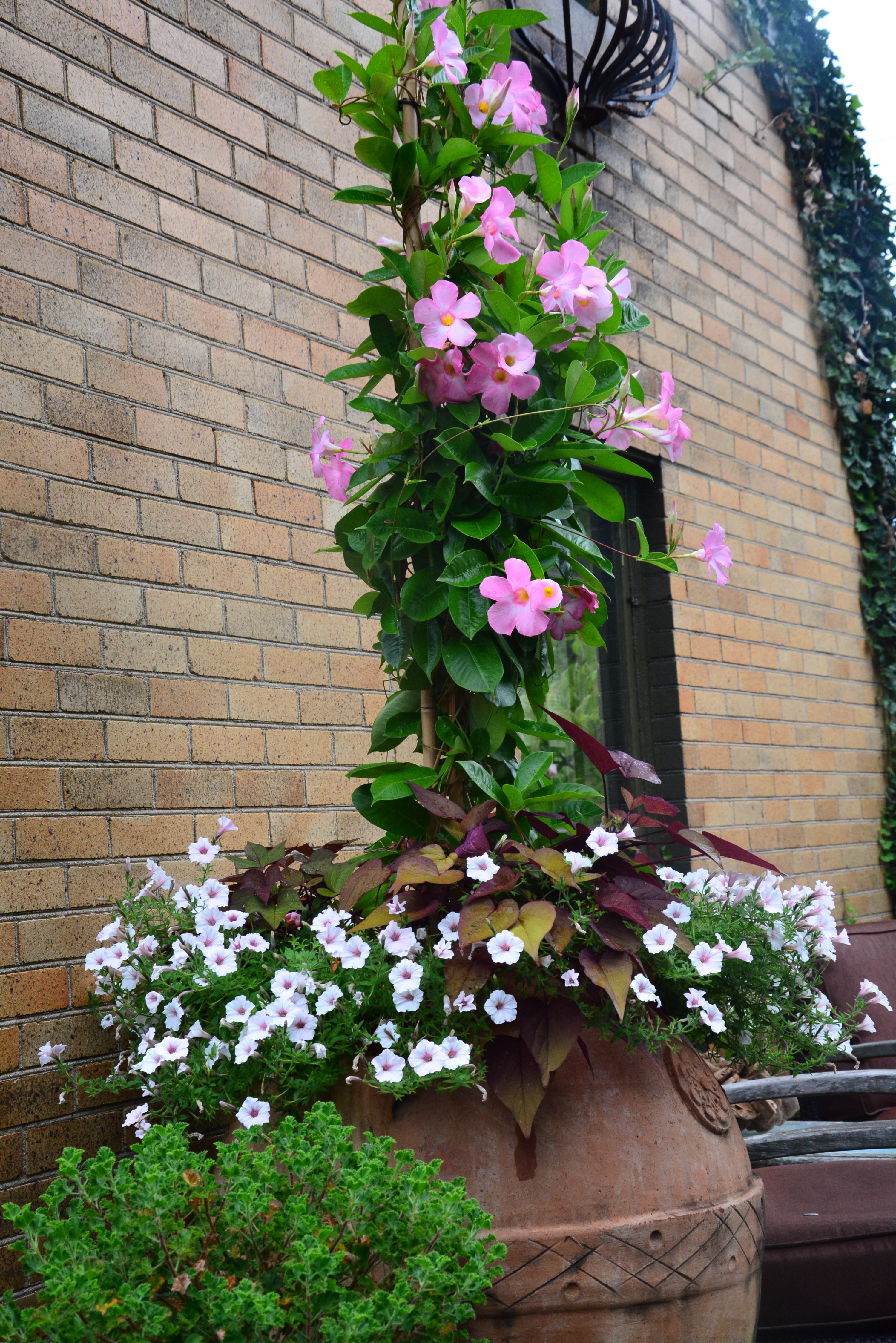
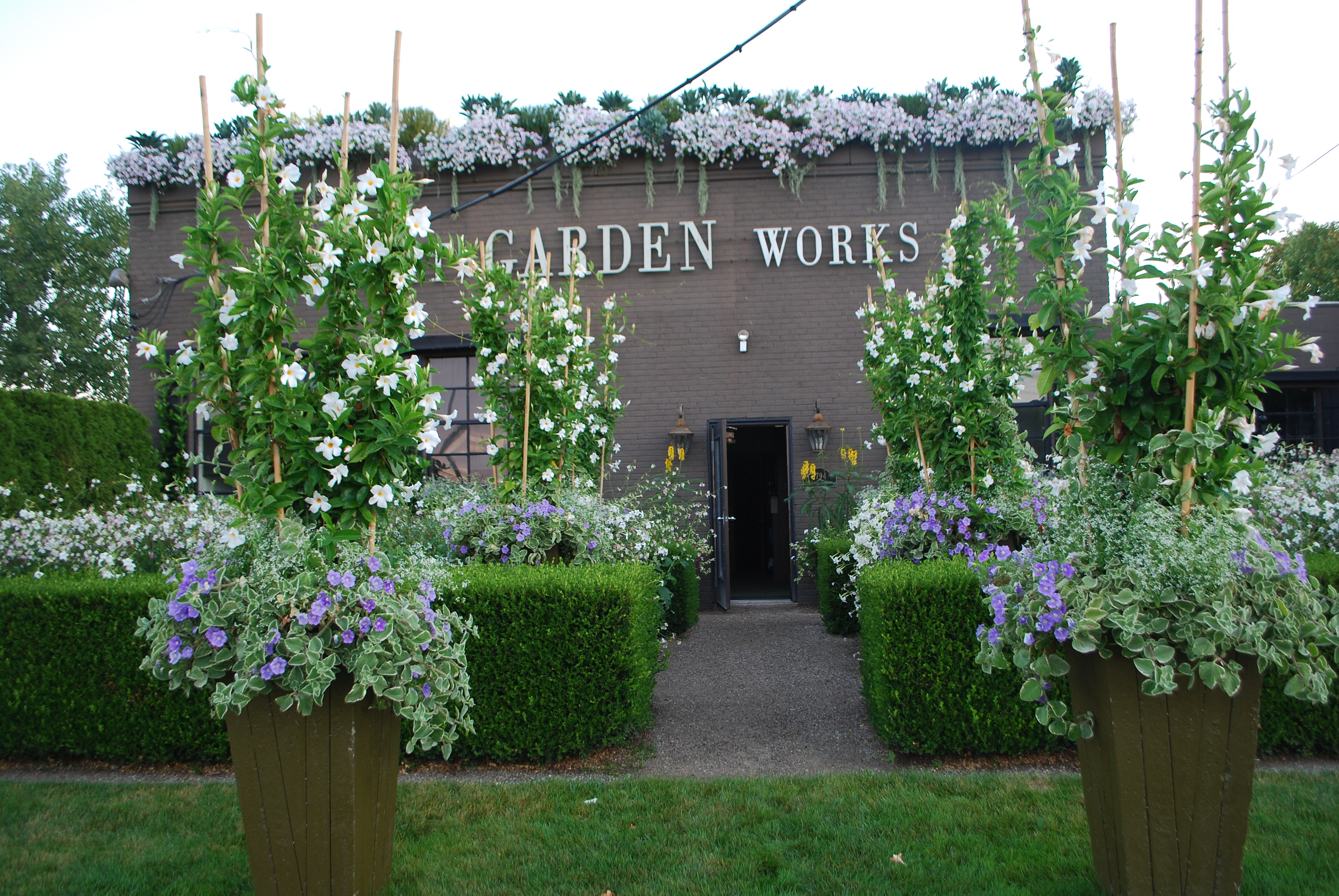
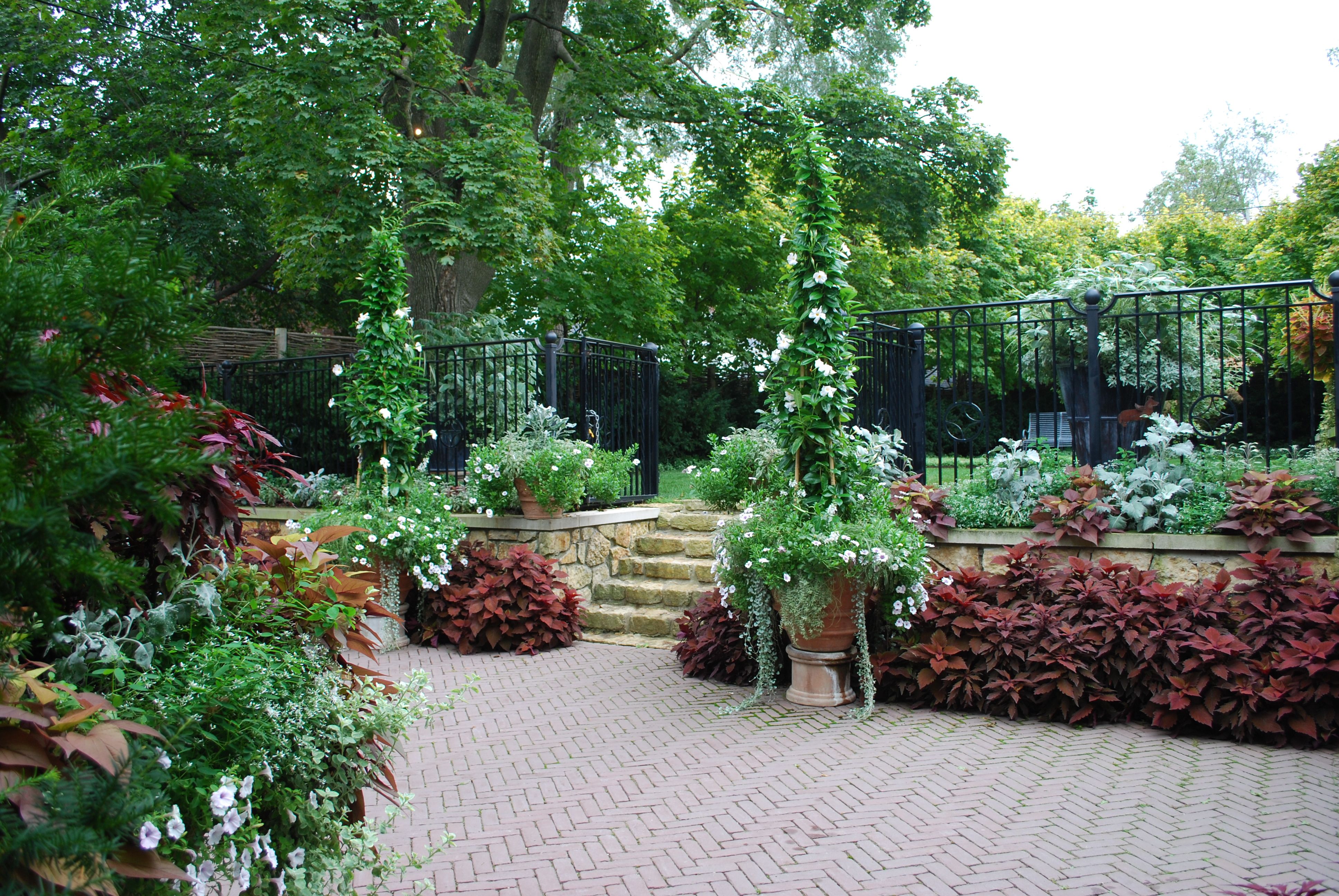
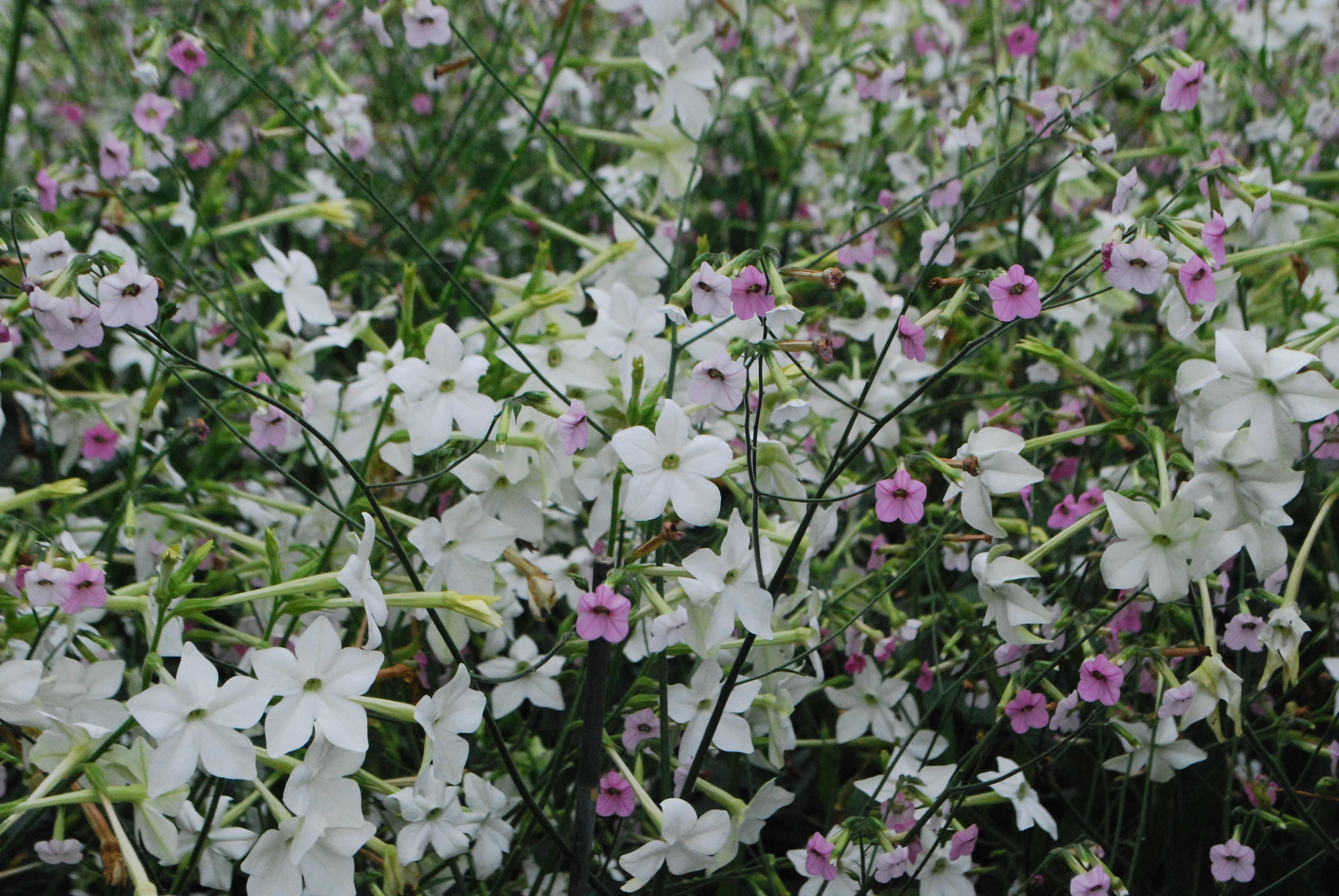
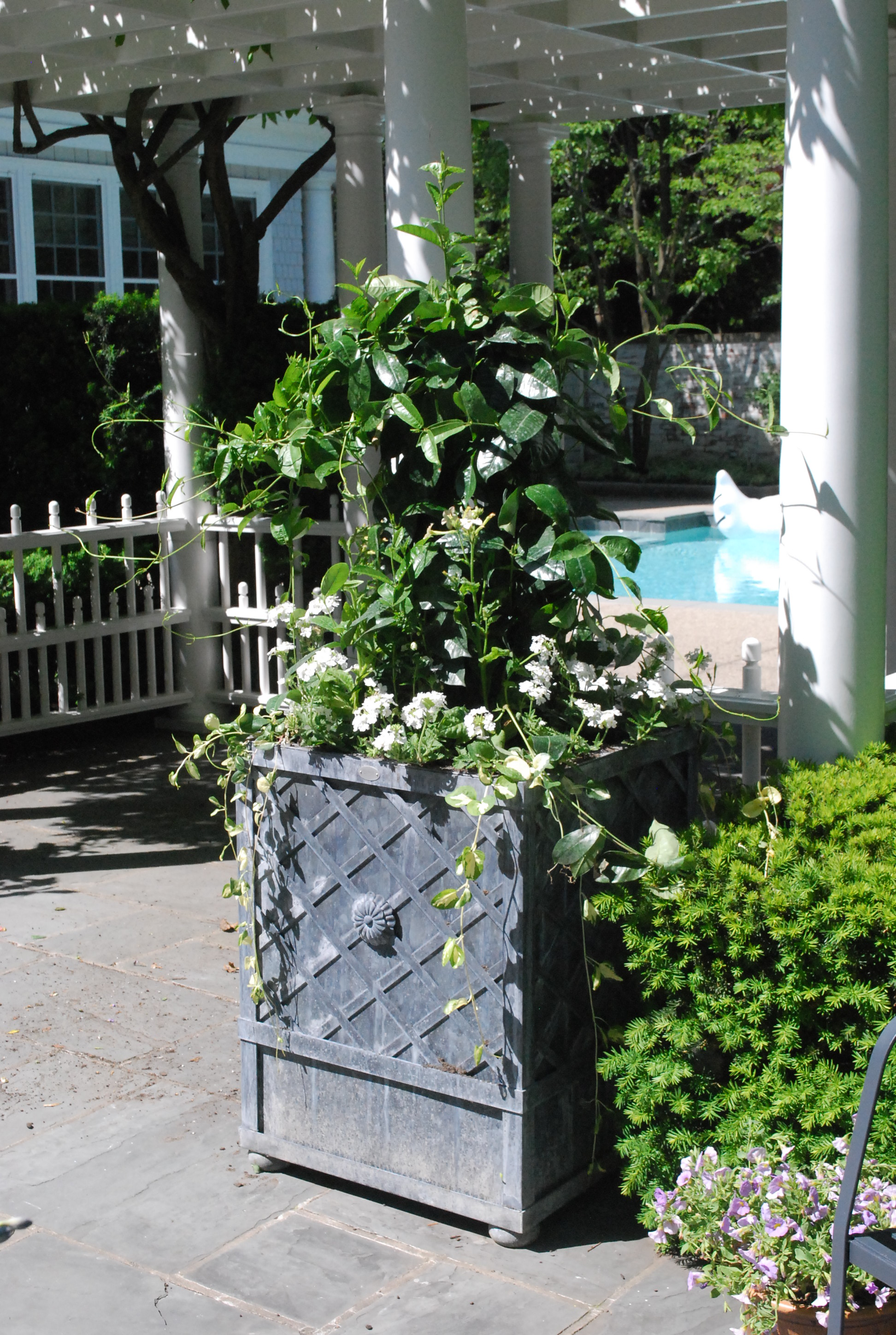
The petunias are fine, and growing lushly-at the moment.  They are dealing with this weather far better than I.  The white mandevillea will sit until the weather gets hot-they are native to central and South America.  Many mandevilleas are native to Brazil.  They grow and bloom like crazy in hot climates.  I expect this white mandevillea will get bigger and bloom more should our hot weather persist.  Nicotiana species can be found in environements all over the globe.  I find mine do quite well over the summer, and rebloom profusely.  Nicotiana mutabilis in particular will rev up in the fall, and send out substantial new flowering stalks.

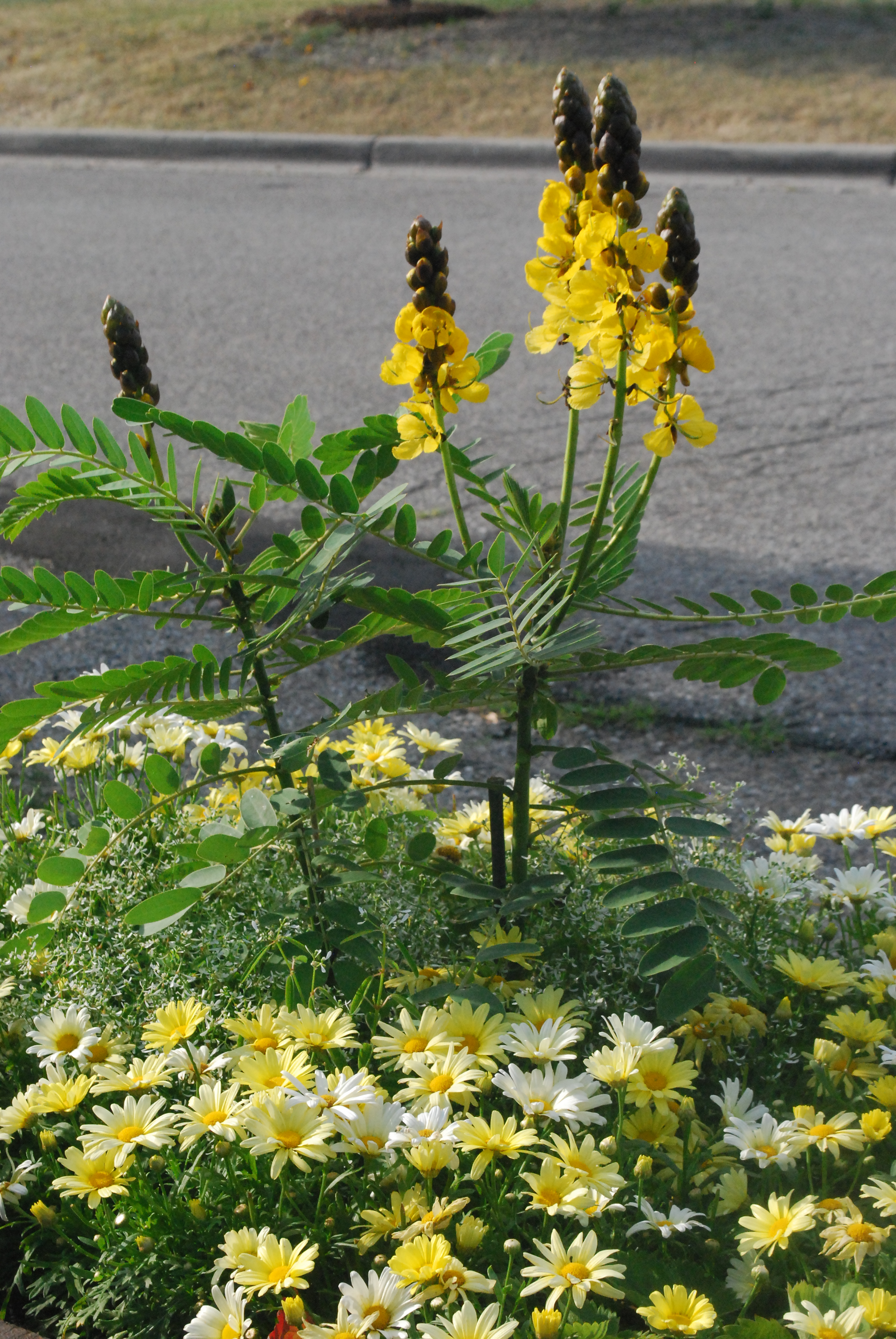
cassia

Cassia didymobotrya is commonly known as the popcorn plant.  The fragrance of buttered popcorn is strikingly apparent, should you run your fingers across the stems and leaves.  It is a shrub, native to South America, that will grow 4 to 6 feet tall in one season.  They may grow larger, given a hot season.  They make a substantial showing in a container garden.  They throw yellow flowers on and off all summer. I am particularly fond of the pea-type leaves.  Cassia is a tropical plant with a very airy appearance.  Planted in a cast iron cistern placed at the edge of our asphalt street, it looks stress free, and is growing well.

Texas sage topiary

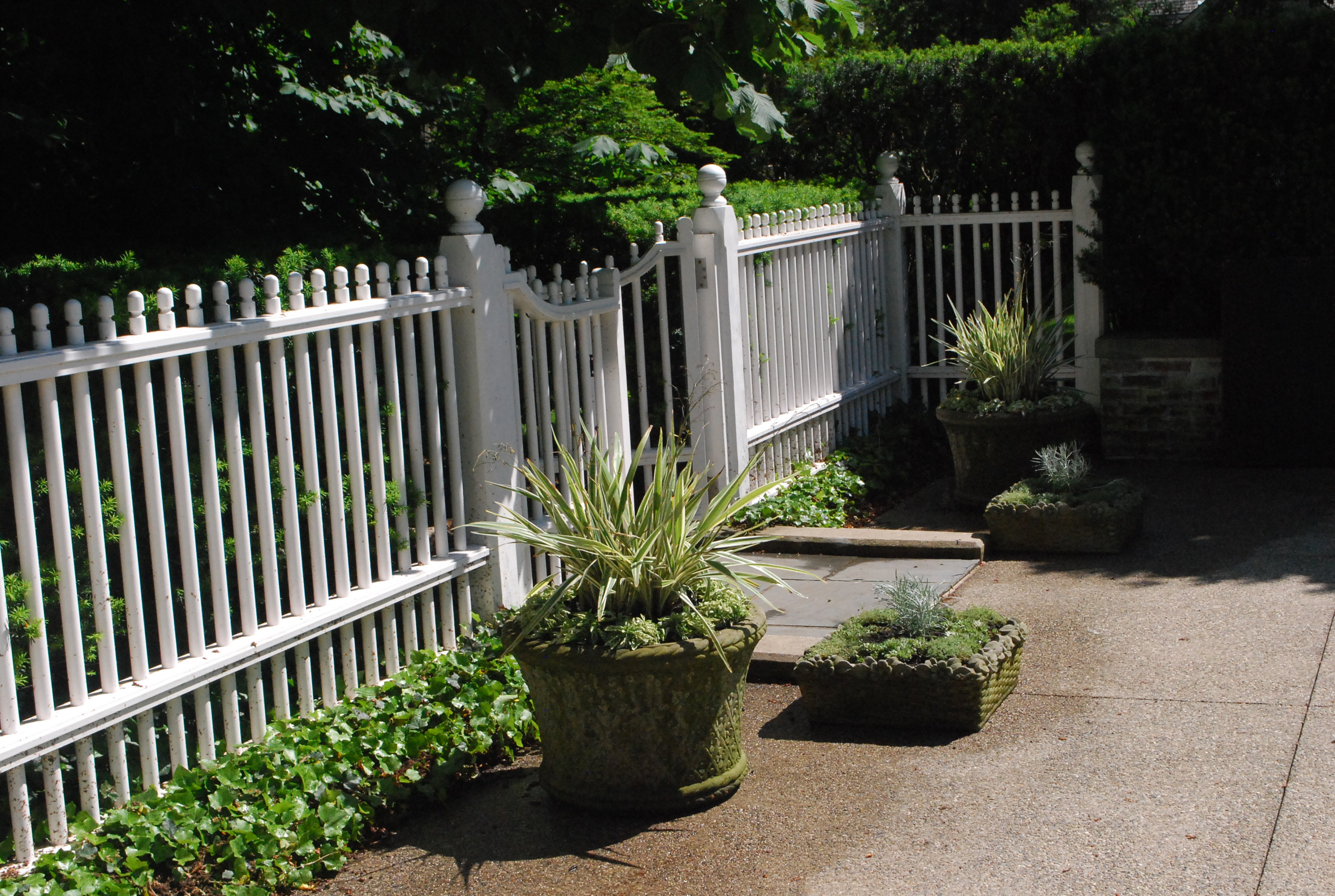
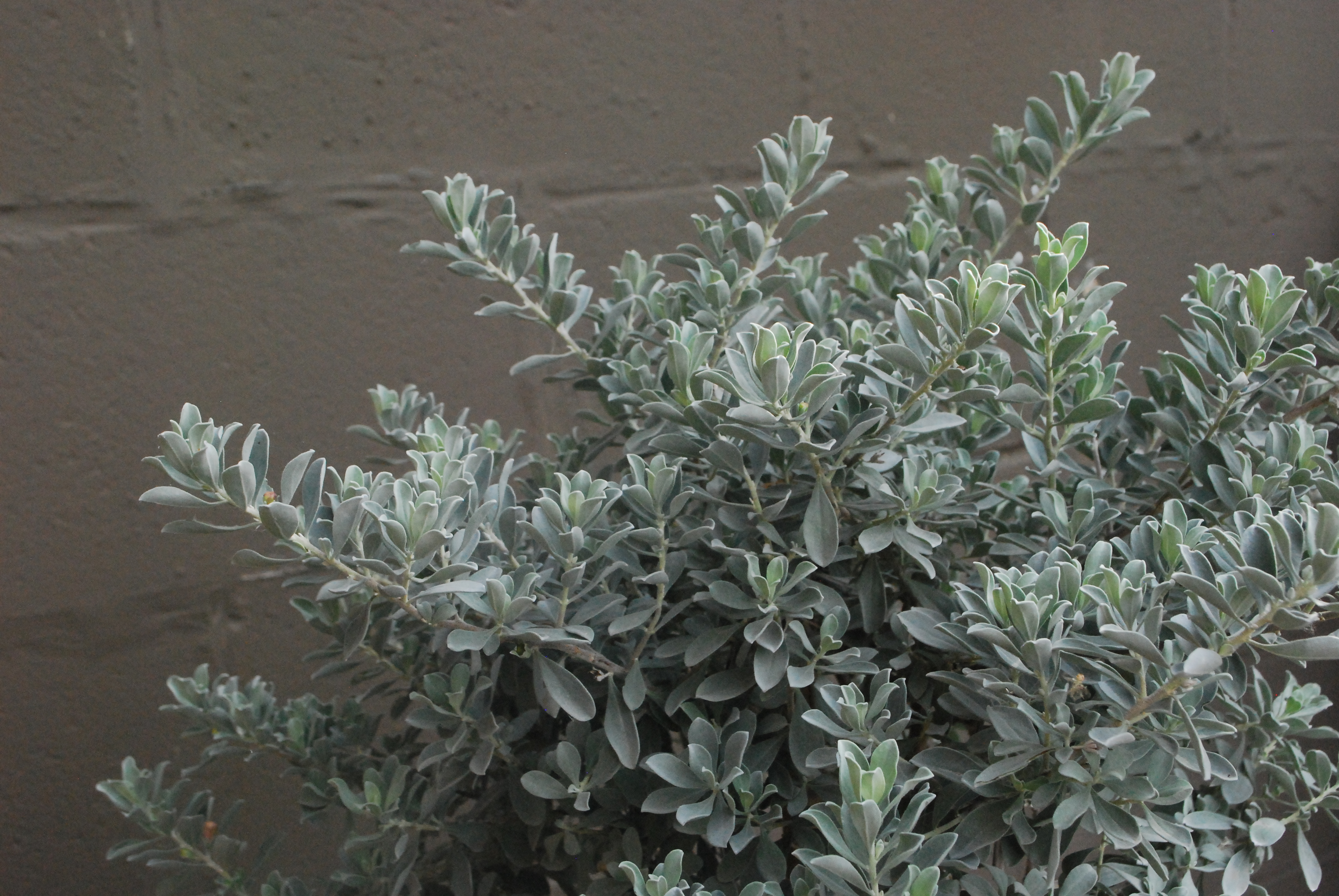
Texas sage is as it suggests-it thrives under desert conditions.  I have never had a leucophyllum bloom for me, but perhaps this year I will get lucky.  They like desert conditions, but oddly enough require some humidity to bloom well.  I cannot believe the usual Michigan humidity is far behind. I know that many grey foliaged plants are native to dry places.    Lavenders and grey salvias will not tolerate too much water for long. 

I do know there can come a point when heat can severely damage plants.  The first line of defense against life threatening damage is to go dormant.  Both plants and animals will aestivate, meaning they slow down their activity, in order to conserve moisture and energy.  Petunias and impatiens will go out of flower, if they temperatures get too hot, and stay too hot. Our drought-like conditions are not helping one bit with the effects of the heat.  Many lawns in my area have gone brown and dormant-they are aestivating.  Should the soil temperature gets too high, roots can literally cook.  I remember a summer in the mid eighties where many growers in the Cleveland area lost nursery stock from soil temperatures that soared over 100 degrees.  There is nothing that can be done to defend against extreme weather like this.

white nicotiana

The best I can do to help my plants survive a bout of unusually hot weather is to water them when they need it. Even if that means I am outside with a hose when I would rather be anywhere else.  So far, so good. 


Memorial Day Weekend

Italian terra cotta pots

Both of my crews combined yesterday to plant annuals in containers and in the ground at one of our big jobs.  We finished up about 3:30.  It was the consensus that my pots could be brought out from the garage, and filled with soil-an end of the day job.  I was delighted with the offer.

Italian terra cotta pots

Next to the pruning of the boxwood, this is my favorite day of the year.  The pots come out of storage.  I move them a few inches this way or that.  I may reconfigure them altogether.  I have next to no warning when that moment for the placing and filling of my pots will be-good thing.  The pressure of the moment is sometimes my best effort.  When I have too much time to think and rethink, I can stall and move right into a tail spin.   

Italian terra cotta

I do not like my crews glaring at me, waiting for a decision.  They want to get the work done-with dispatch.  Needless to say, all of my pots are out and placed now, and furthermore chock full of soil.  It takes my crew only moments to get this part done.  It takes me many more moments to make a decision about what to plant.  I walked by these dirt filled pots many times late yesterday afternoon.     

container planting

That I am home in the afternoon at the end of May is a rare day indeed.  Of course I took advantage of that moment. I toured every square inch.  Though what I will plant in my pots this year is so much on my mind, I enjoyed what has been going on in other parts of my garden, in my absence.

Jeanne Le Joie

My roses are starting to bloom.  They are early this year.  The climbing roses, the dwarf Jeannie Le Joie, and the big flowered climber Eden, were not a bit fazed by our terrible April frosts.  They are coming into bloom, as though all was well with the world.  My Griffith Buck roses-another story.  The buds are small.  The extreme heat we have had the past few days means some flowers have come into bloom, and shattered in less than a day. 

dwarf climbing roses

Our late April frosts are still haunting my garden.  But it was hard to be discouraged.  I was in my garden on a sunny afternoon the end of May.  This means I was on holiday. 

late spring

I was happy to be home, unexpectedly, on the Saturday afternoon of Memorial Day weekend. 


The Photographs

glazed French pots

You may have noticed that this website has a new format.   Indeed it does.  My big interest in updating the blog was that the photographs would be bigger-better.  Clearer.  I am no different than most; say what you will, but show me a picture.  A photograph communicates in a graceful yet direct way. The picture of this French pot does a vastly better job of explaining the look than a collection of words.

A photograph does not require good grammar, or proper punctuation.  A good photograph of a garden can capture the light, the weather-the moment.  The written word-a labor of love which invariably looks like labor.  My pictures-sometimes they capture in one fell swoop what would take me 800 words to describe.

Italian terra cotta pots

I have days when I am not interested in reading the words.  I only have eyes for a visual moment. It took me a few days to learn how to use this new format. The lag time made me furious!  What garden writer wants to be out of touch the latter half of May?  But  I am pleased with the results.

mossy clay pots

I like the bigger pictures.  And that you can see them even bigger yet, if you click on them.  As for my post yesterday about the process of choosing great pots, here is an addendum.  A visual addendum.

The gardener who would fall for this contemporary Belgian glazed pot is entirely different from the gardener who would choose wirework plant stands.  The gardener who would mix them in a grouping of pots-another sort. But enough of the talk-enjoy the pictures.

cast iron jardiniere

French cast iron jardiniere

American ridged concrete bowl pot

two-tiered plant stand
two tiered wirework plant stand

English concrete rectangle

glazed French terra cotta

glazed French terra cotta

limestone urn detail

concrete pots

brick and rock pot

terra cotta pots

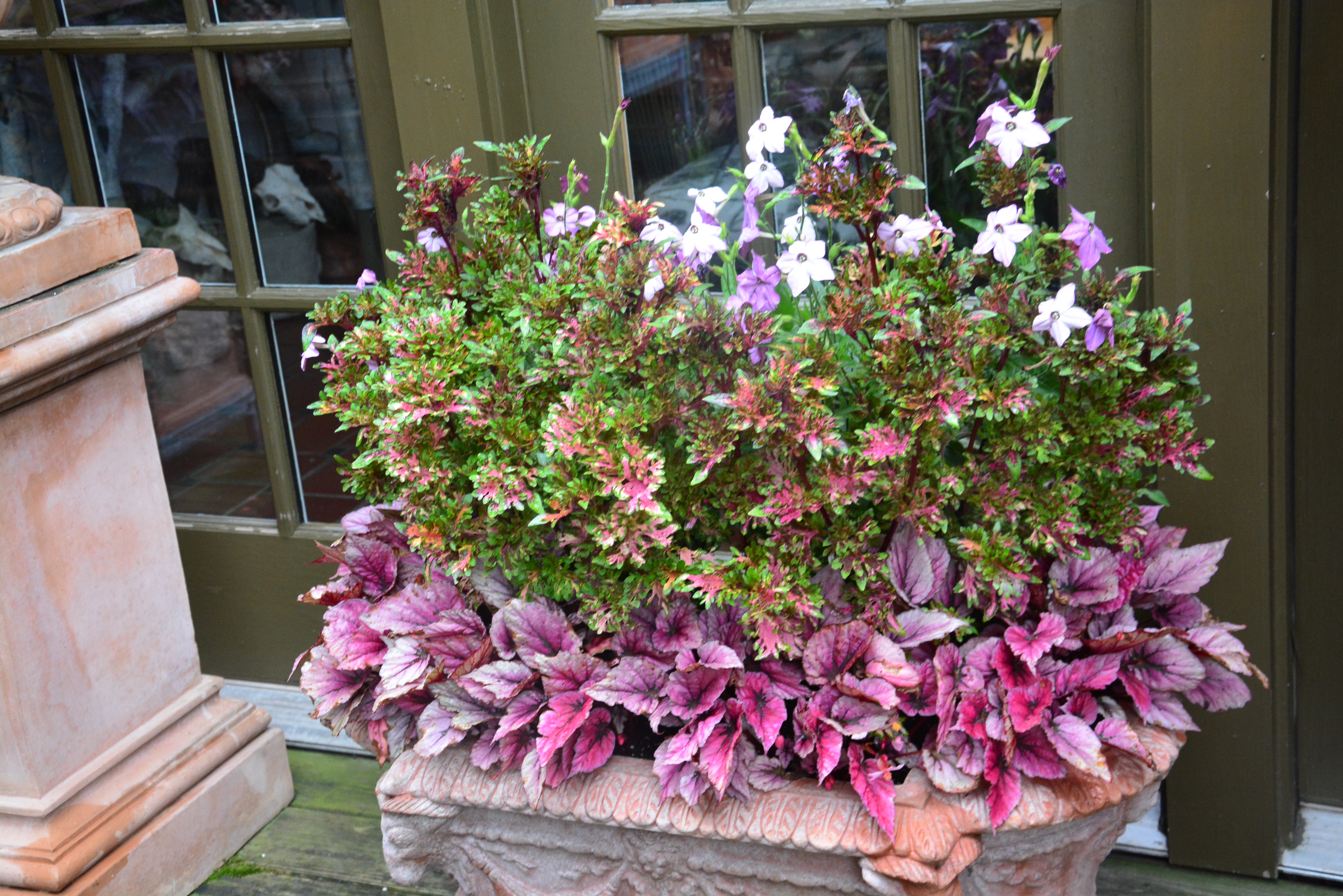
Rob planted these Italian terra cotta pots.  The combination of great pots and great plants-truly lovely.


Loud And Clear

Airy and wispy container plantings are not for everyone.  Furthermore, there are some places that they simply don’t work.  These planter boxes sit on the wall enclosing a parking lot of a restaurant only a median away from a busy four-lane road.  The speed limit is 45mph; the noise is deafening.  In the 2.5 seconds it takes to zip past this wall, there is an impression that will register with even the most garden-deaf driver.  The combination of colors is ebullient, enthusiastic, splashy-friendly.  The boxes are overflowing; the plants all look healthy.  My client takes great care of them-just like she takes care of her restaurant. That message is loud and clear.              


These large Belgian boxes are visual stoppers at the corner of this terrace.  They ask for a robust planting.  Plants with large leaves and substantial size go a long way to capture the eye.  Bananas, calocasias, alocasias, cannas, farfugium, tibouchina grandiflora-there is a long list of tropicals that can easily handle holding down the fort. Vigorously growing plants in bright colors will chime in.  The smaller planting of a lemon tree, and a pastel mix of petunias, though robust,  would be lost without the big backup.       

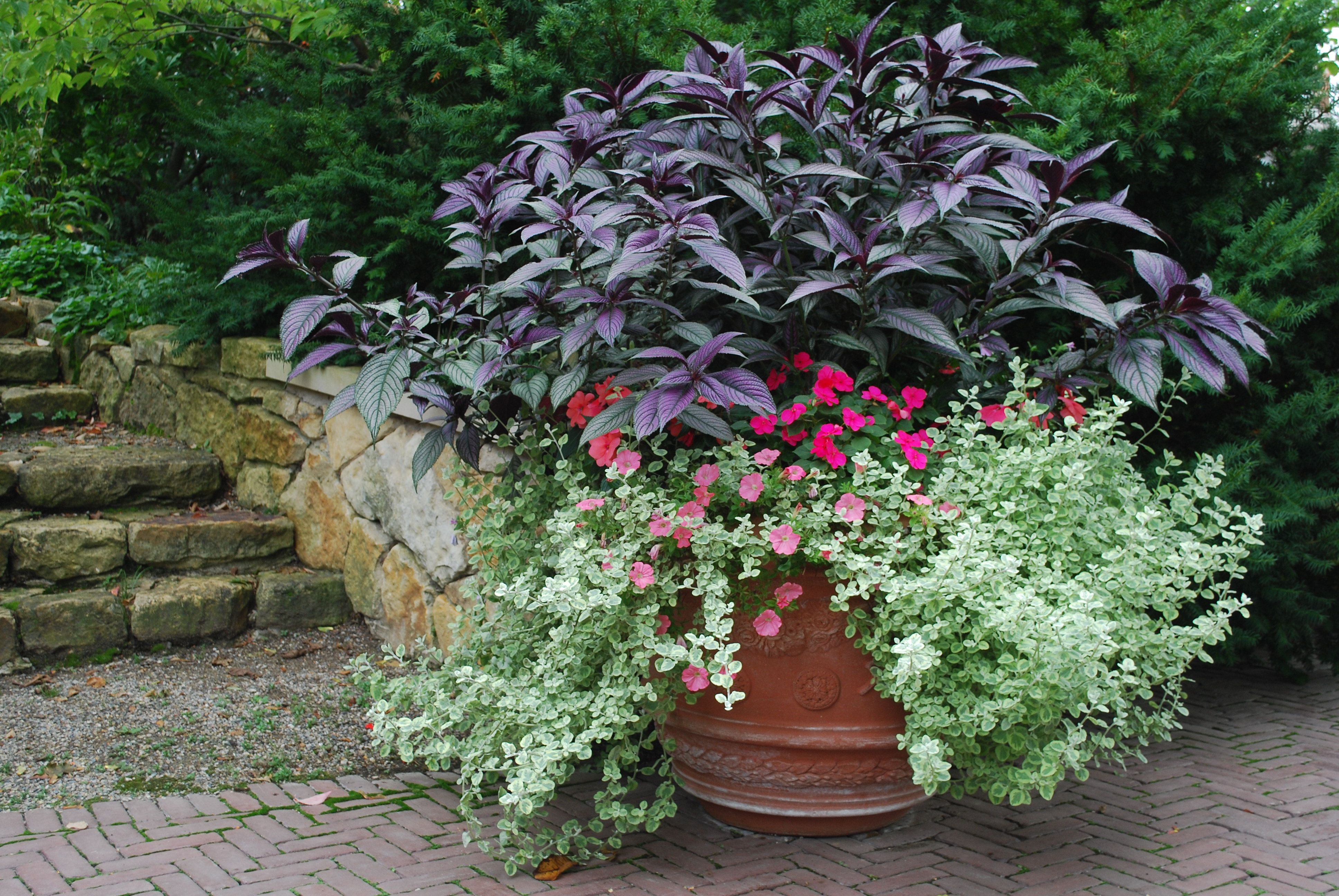
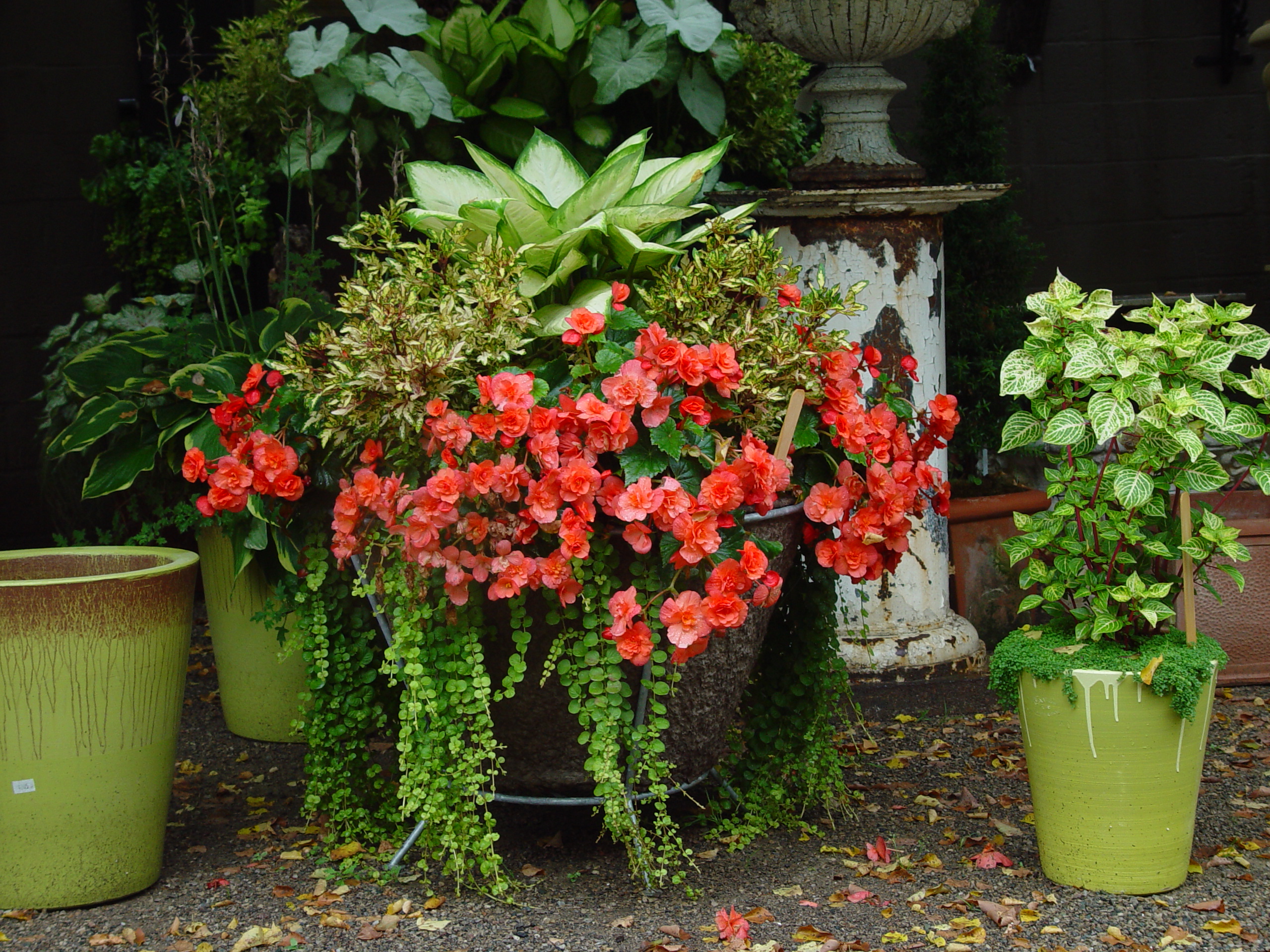
A solidly robust planting has much to do with the choice of plants.  The three plants comprising this pot have grown together in a shape that is dense and low overall. Just try to get by it without looking.  Chartreuse makes every other color pop all the more; creeping jenny is a vigorous perennial that loves some shade, and will grow in a bog. There is nothing subtle or airy about this planting-this is by design.   

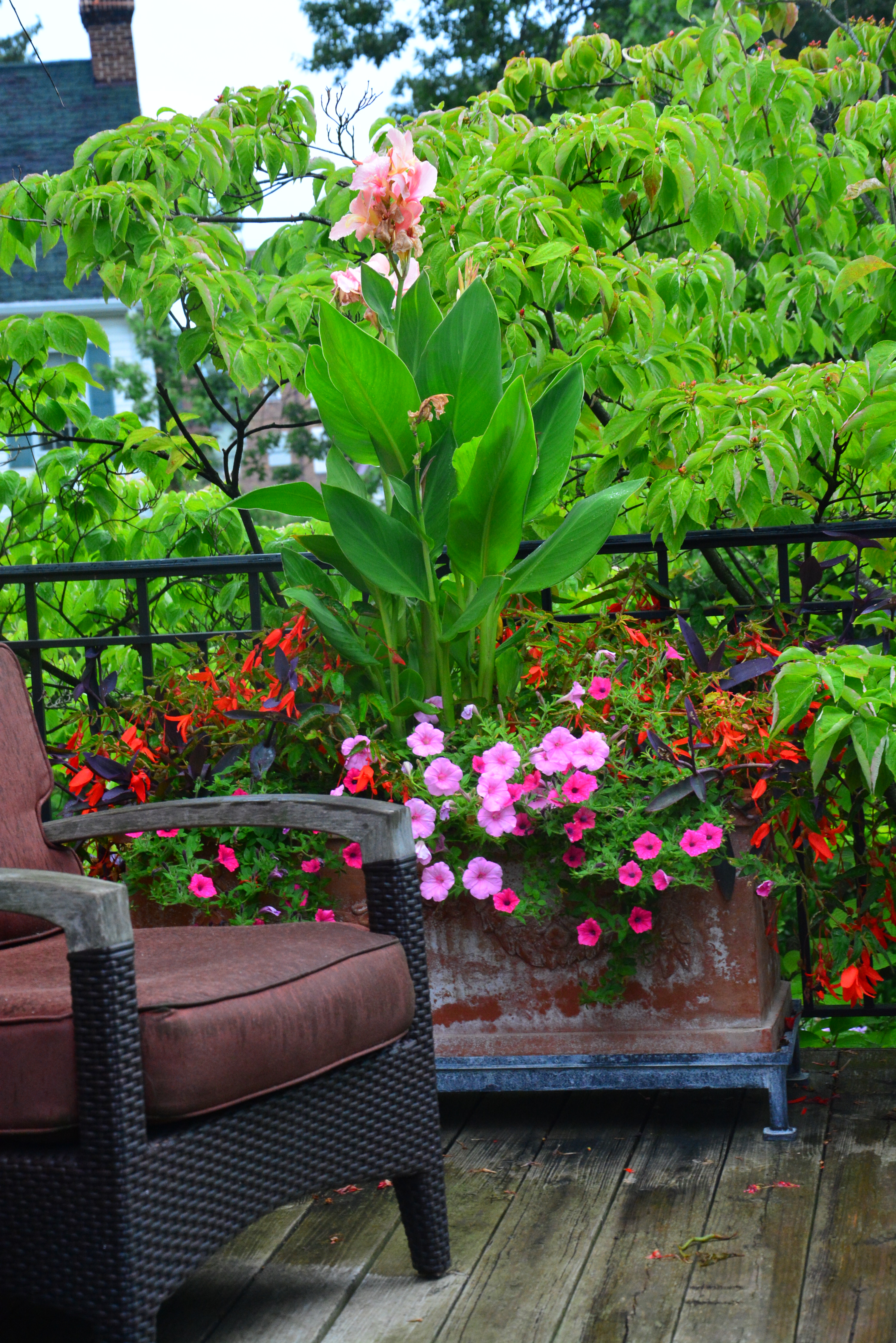
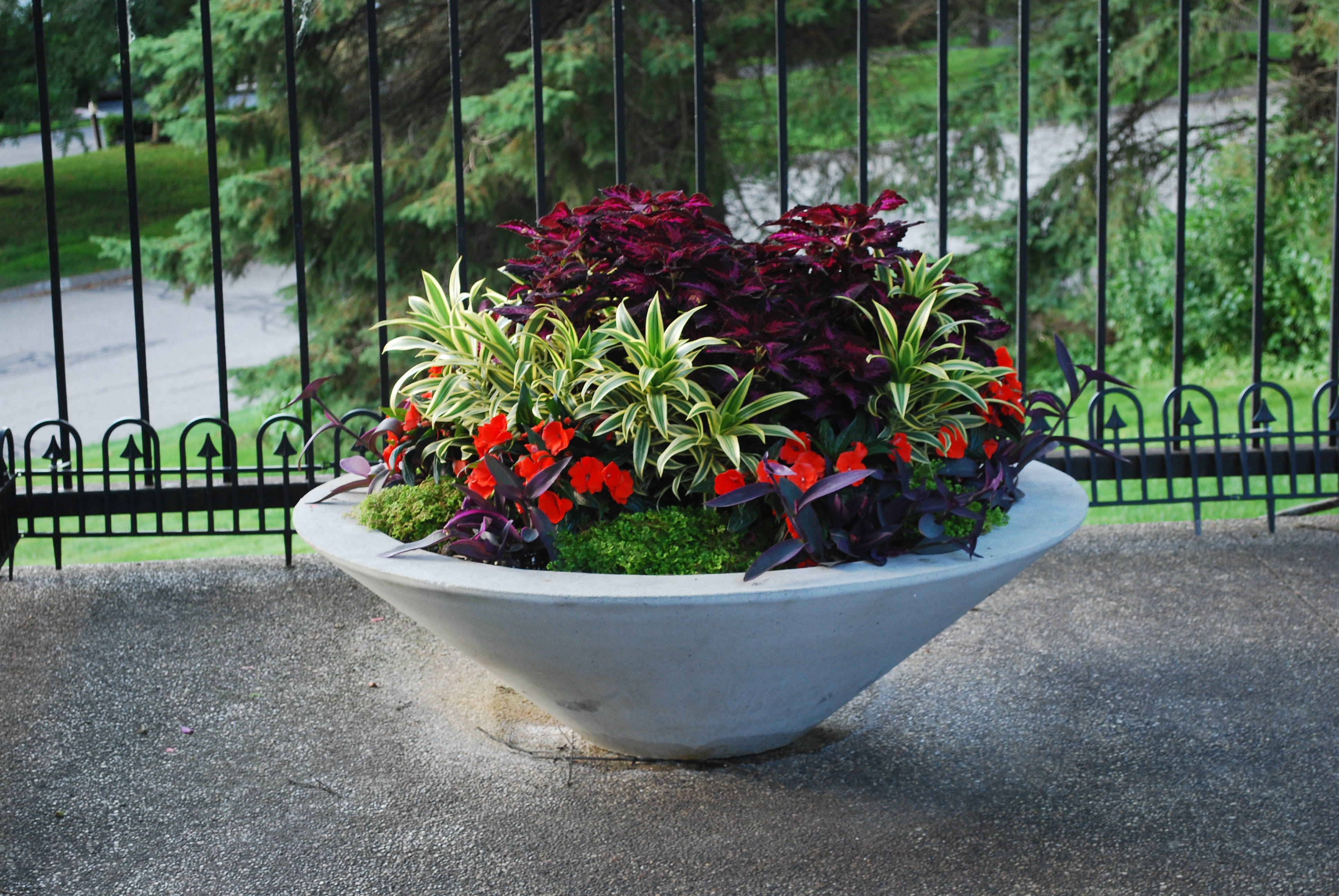
I can say the same for this pot.  It has grown so vigorously that the pot is no longer part of the composition.  Black and red; red and green-these color combinations are dramatic.  The contrast with the off white wicker furniture is all the more dramatic.  This modern furniture is very chunky and overscaled. These two chairs have some planted company that is even larger, and more chunky. The topknot comprised of a dwarf yellow variegated dracaena and a coleus-that look is in no way planned.  Just natural.  

Gartenmeister fuchsia is an upright variety that handles hot weather like a pro. It can grow to a substantial size, and can easily be wintered over.  However, the dark foliage and small tubular dark orange flowers are rather subdued.  A tutu of lime green coleus turns up the heat.  The red geraniums,magenta petunias and lime licorice don’t hurt. This fuchsia is naturally very airy growing; its woody shoots grow every which way. The colues masks all of those wild hairs; these plants grew together densely in a cone shape.  

Big growing plants are accompanied by lot of leaves.  The leaves of the trailing verbena and petunias are barely visible in this picture, but there is no mistaking the coleus and dahlia leaves.  My office is dark, given this window box planting.  Any container design warrants some study.  Do I need this planting to block an untoward view?  Do I want a container to stand out, or integrate into the large landscape? Right now is a very good time to be looking over your container designs; I take notes.    

A very large terra cotta pot with a purple chocolate glaze is home to this monochromatic planting. Black calocasia, a purple black leaved coleus, and moses in the cradle, makes a sizeable statement about volume and texture.  Calocasia ia a very obliging tropical, in that it will grow as big as the container into which it is planted.  This planting is the better part of 8 feet tall.  This discussion of texture anf form-loud and clear.

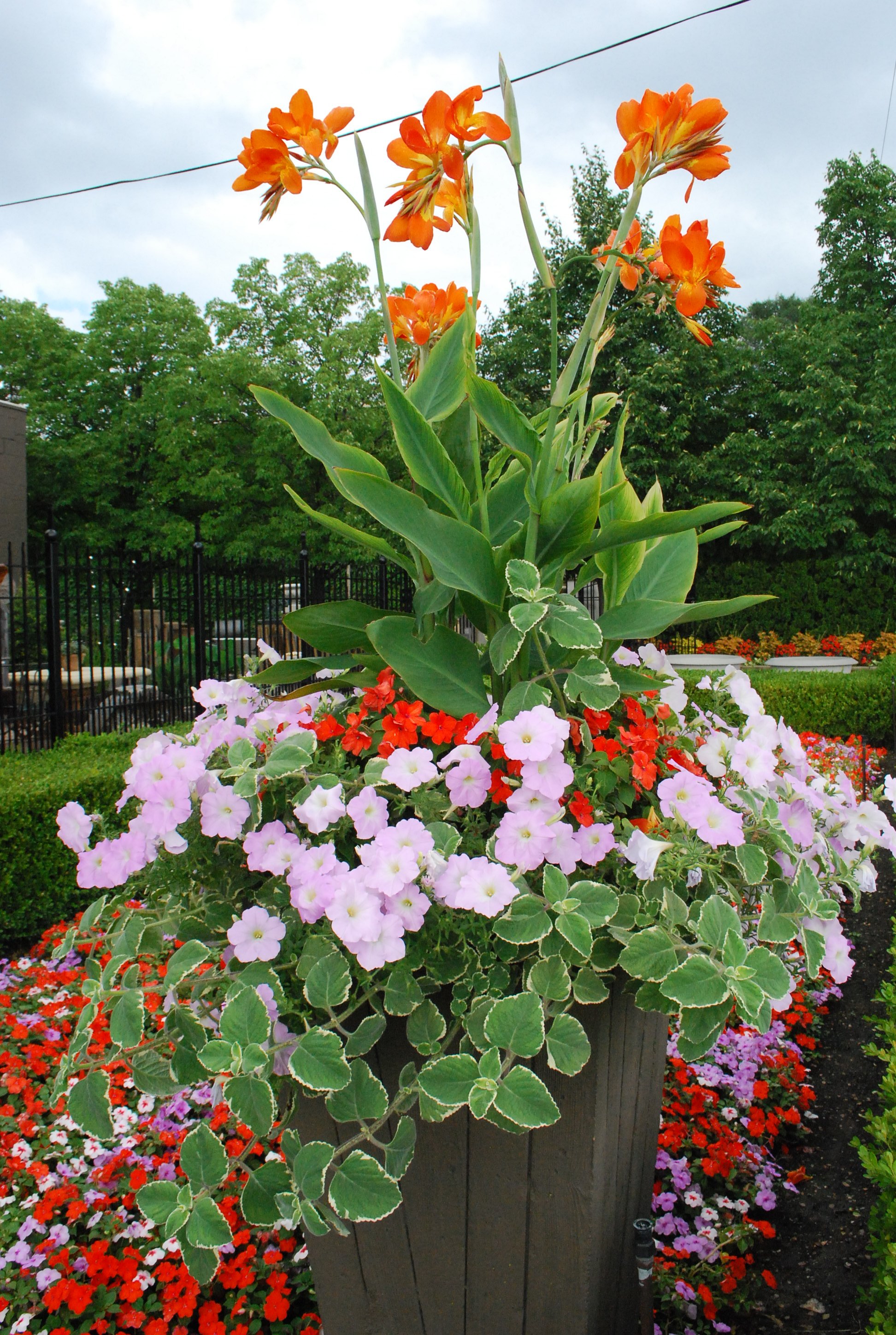
Cannas and zinnias-they both are big growing and leafy.  A skirt of trailing geraniums and lime licorice add lots of color at the base.  A neighbor standing behind this pot on the sidewalk would not be seen.  Sometimes a blocky and solid planting can organize a space-in this case, it presides over a densely growing square of boxwood.  Solid, dense and visually clear-this is how I would describe this spot in the landscape.

Large leaved caladiums depend on their size and shape to make a statement.  I like how lush a well grown plant looks.  I am leaning towards planting a lot of them next year.  Loud and clear is much about vigor.  I would much rather work to keep a growing fool of a plant in line, than every day have to convince a prima donna of a plant to choose life.  This is a personal preference. Even the subtle and wispy growing plants that I favor are strong growers.  

But back to loud and clear.  On that list of plants that can deliver that for you-big growers, dense growers, robust growers, large leaved plants, large growing plants, brilliantly colored flowers.  Brilliantly colored leaves; leaves with great shape and texture.    It is up to you to put them all together in a way that enchants your eye.