Scheming

This is the time of year I start planting annual plants for clients.  I am hoping we are at the tail end of the third rainiest spring on record; I planted all week last week in the cold rain.  It is a good thing I really like to do this; it kept my mind off my wet feet.  I have other things to think about besides being wet-like a color scheme, for instance.  I just planted one small garden at the shop, in illustration of the idea of scheming.  Scheming can refer to some underhanded activity-I prefer to think of it as an orderly way of working, or a way of working where all the pieces fit together in a satisfying way.  The concept of a color scheme for a garden is easy to understand.  Putting plants together where all of the respective colors workwell together-not always so easy.  

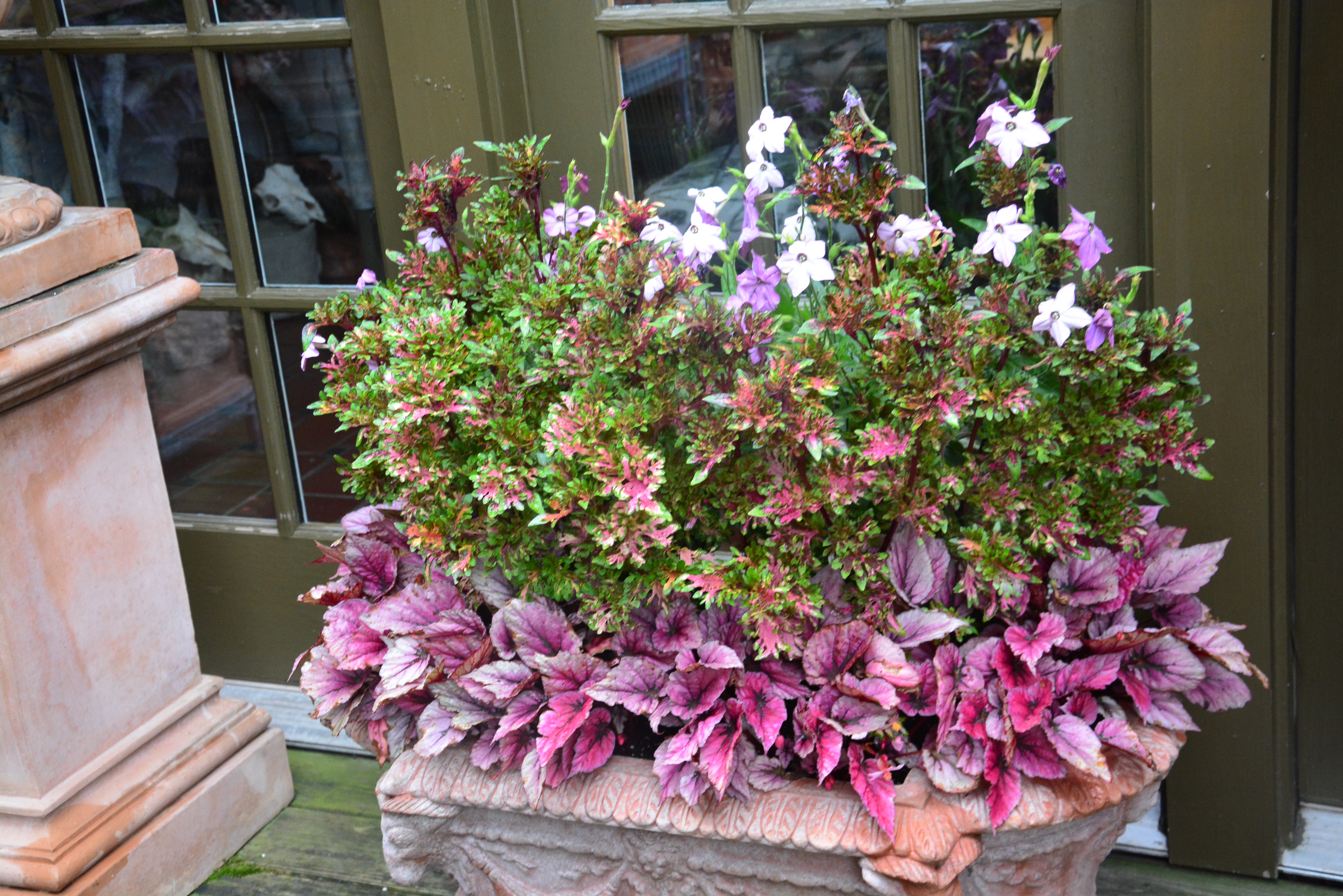
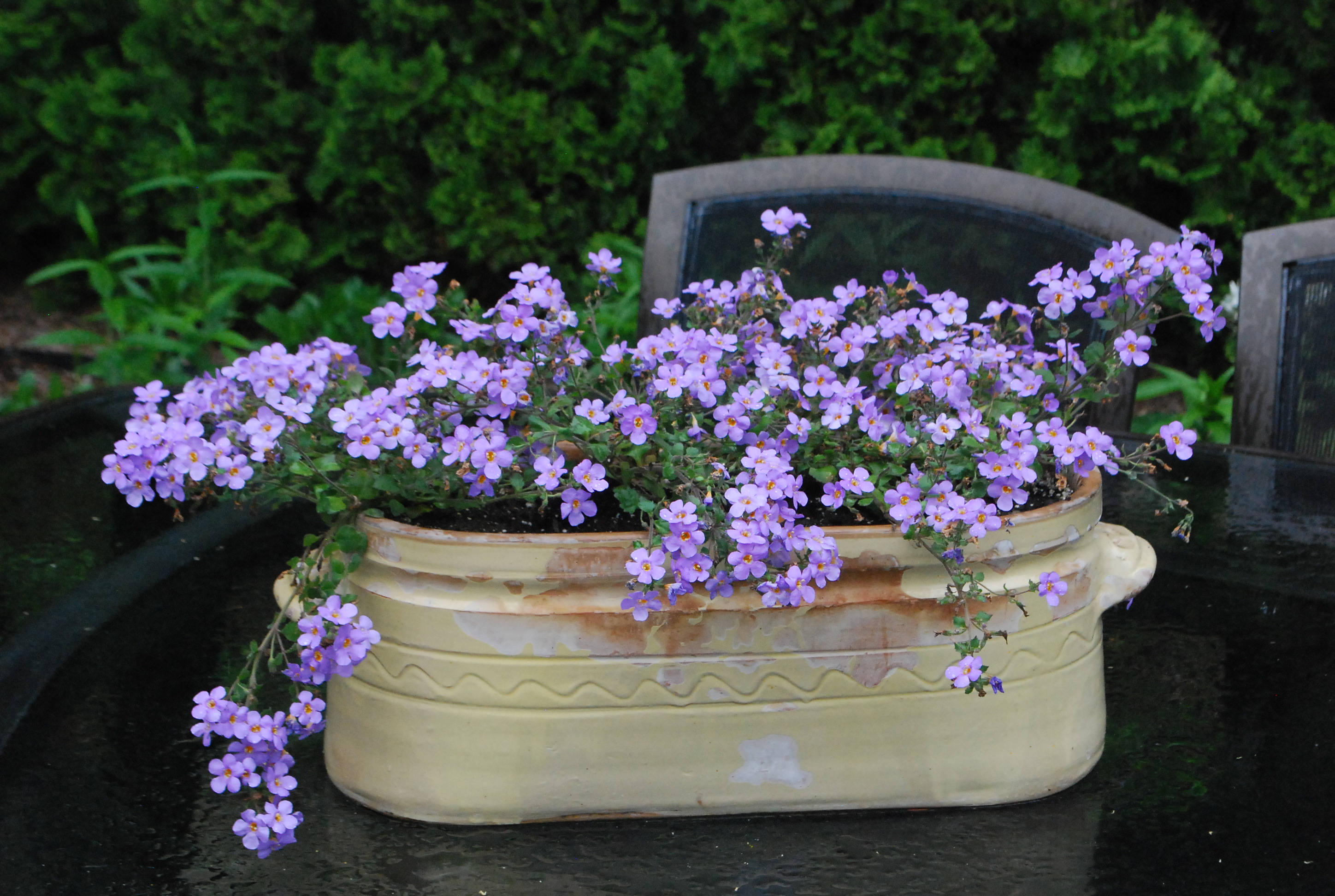
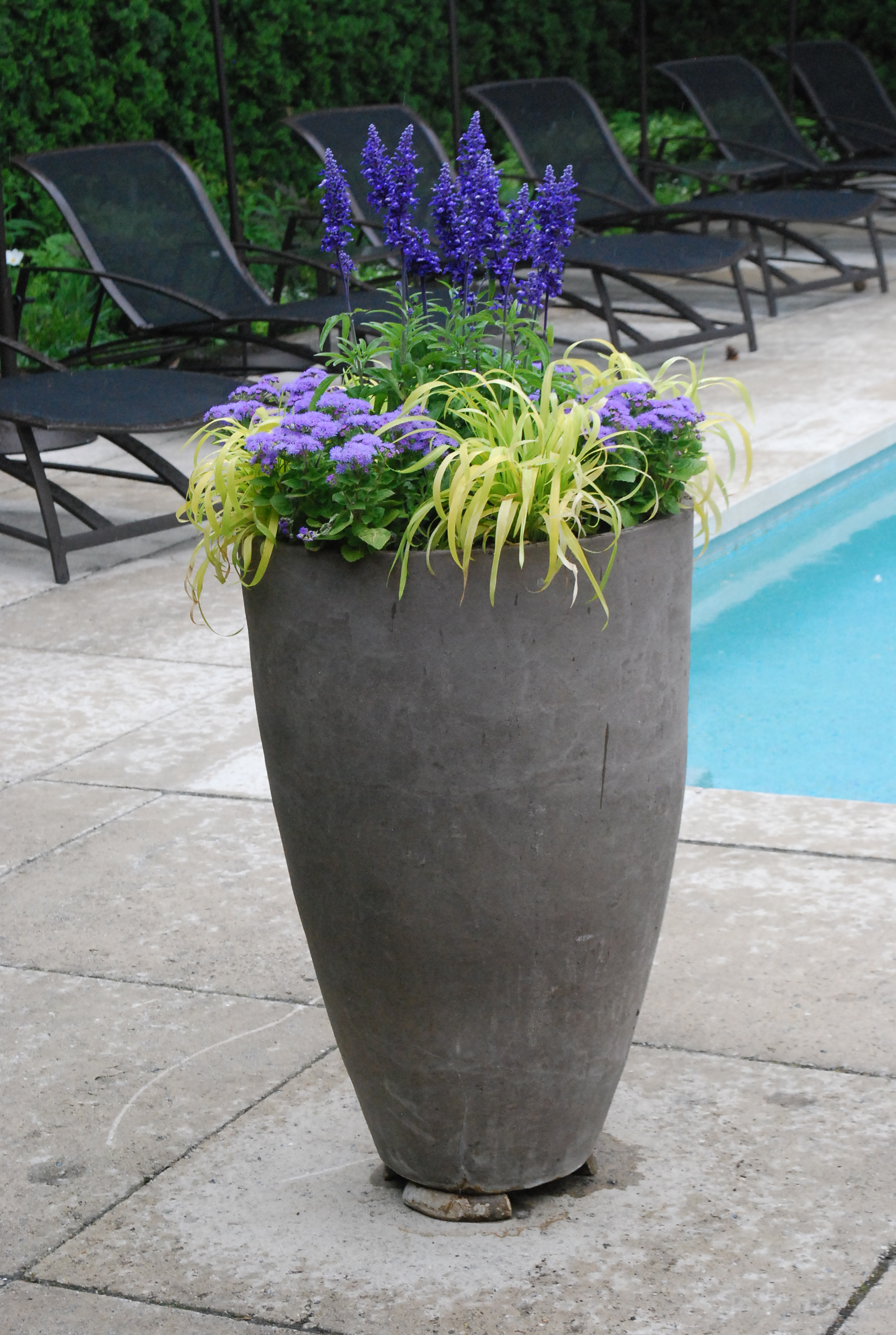
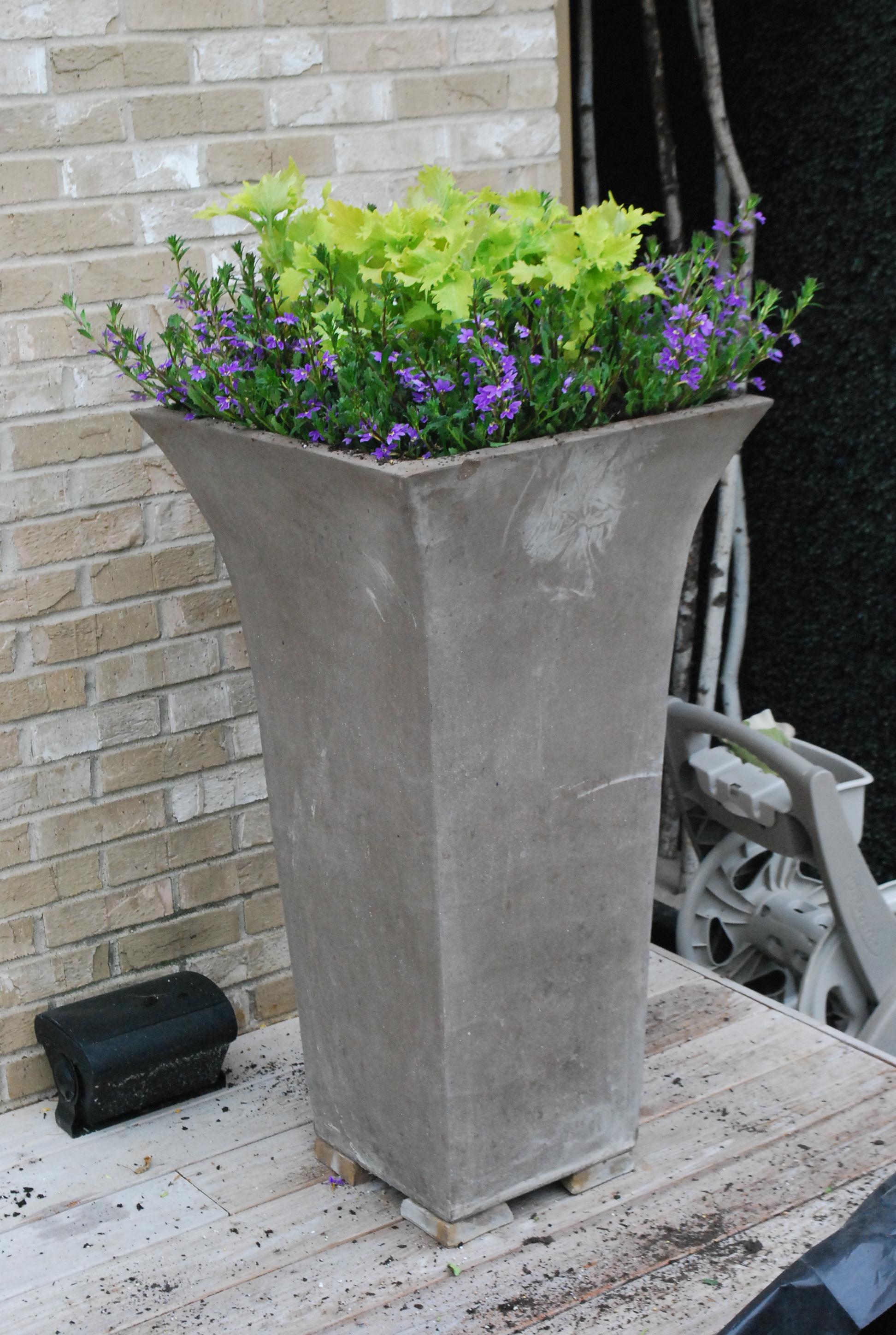
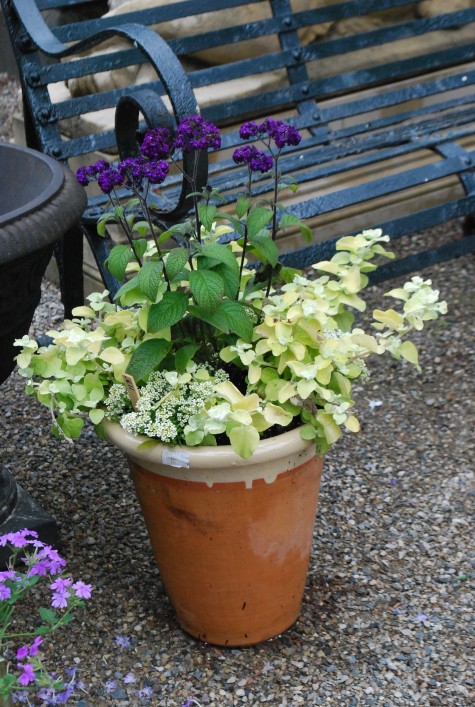
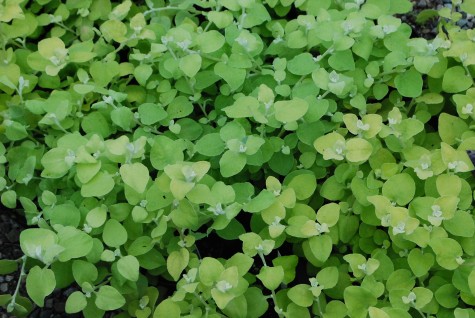
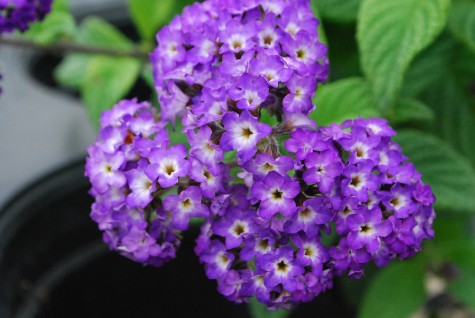
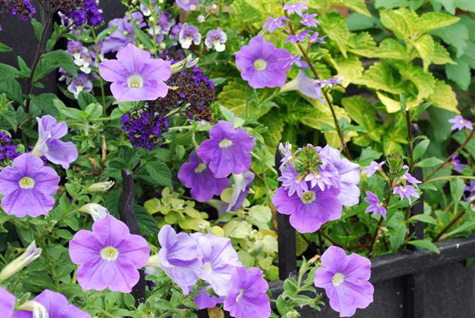
Color schemes that feature contrast will be lively.  The wild card of course is that every flower comes with a plant that has leaf color. The heliotrope pictured above has intensely purple flowers.  The leaf color is a medium green.  Flower color may be your primary interest-but there is a green scheme that needs attention too.  The lime licorice in this pot is a green that contrasts well with both the flowers and the leaves of heliotrope.   

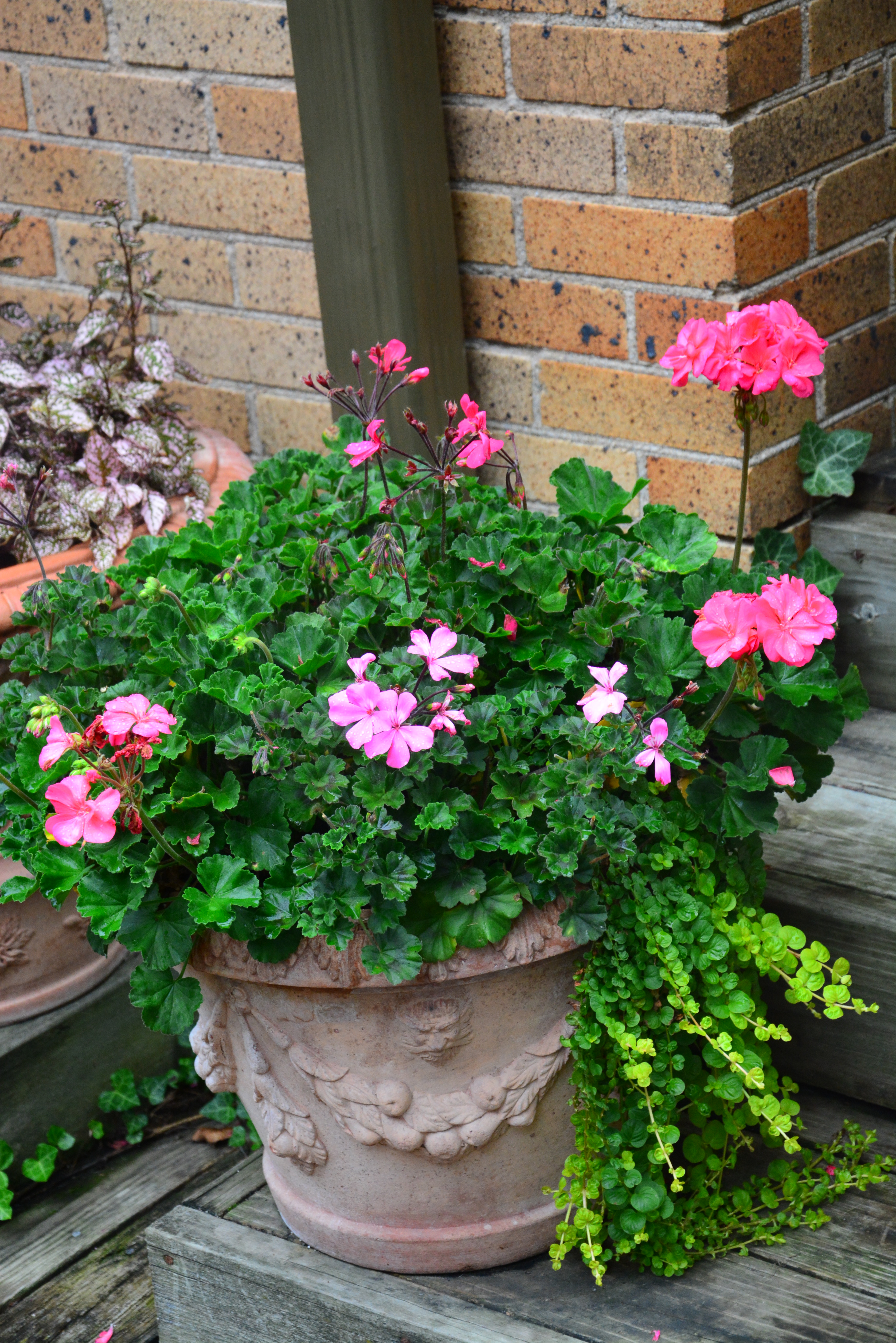
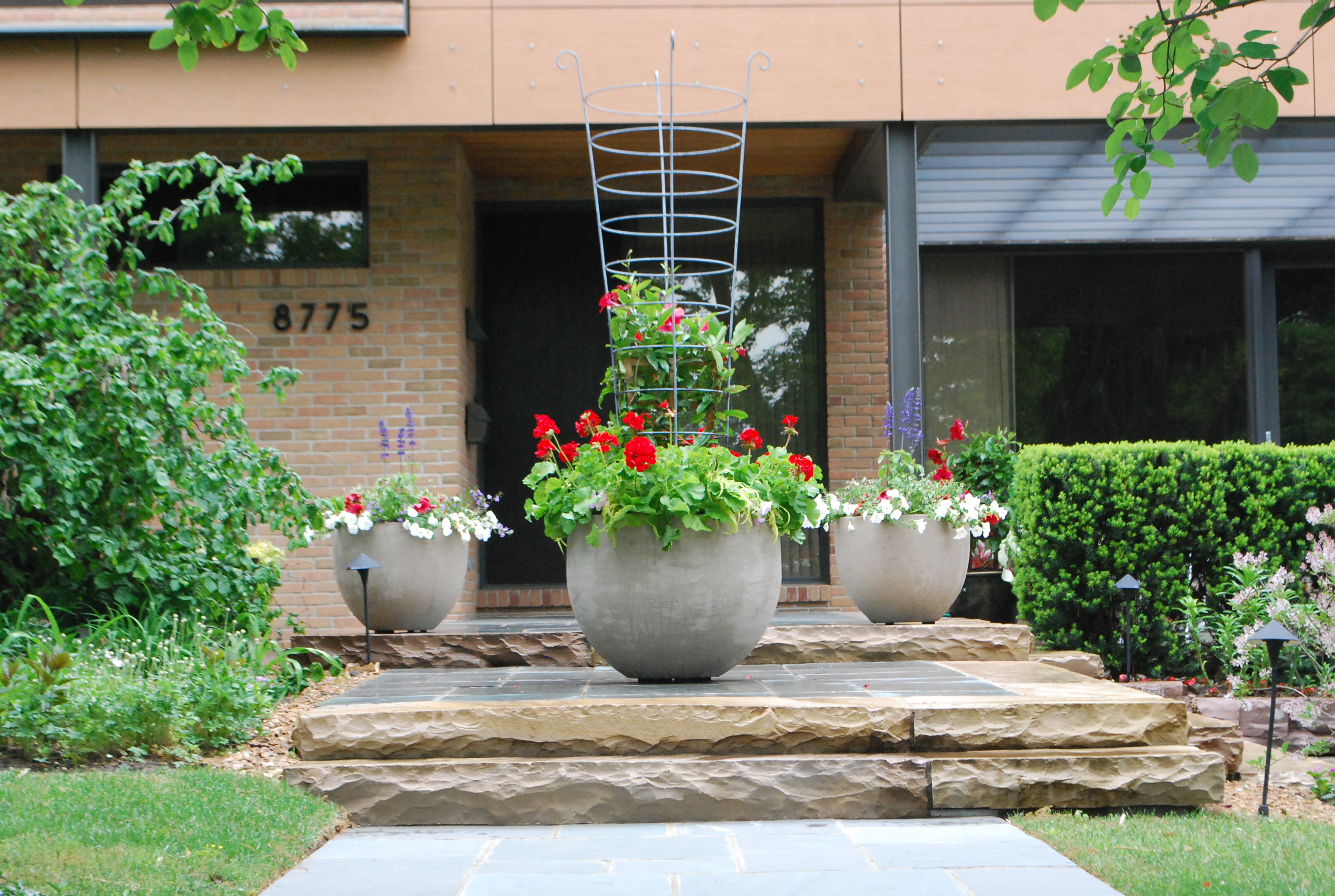
Both the lime and variegated licorice are invaluable in planning a color scheme.  This lime green will read yellow, when planted next to yellow flowers.  It will read very lime green when paired with red flowers.  Red geraniums and lime licorice is a color combination that reinvents the red geranium.

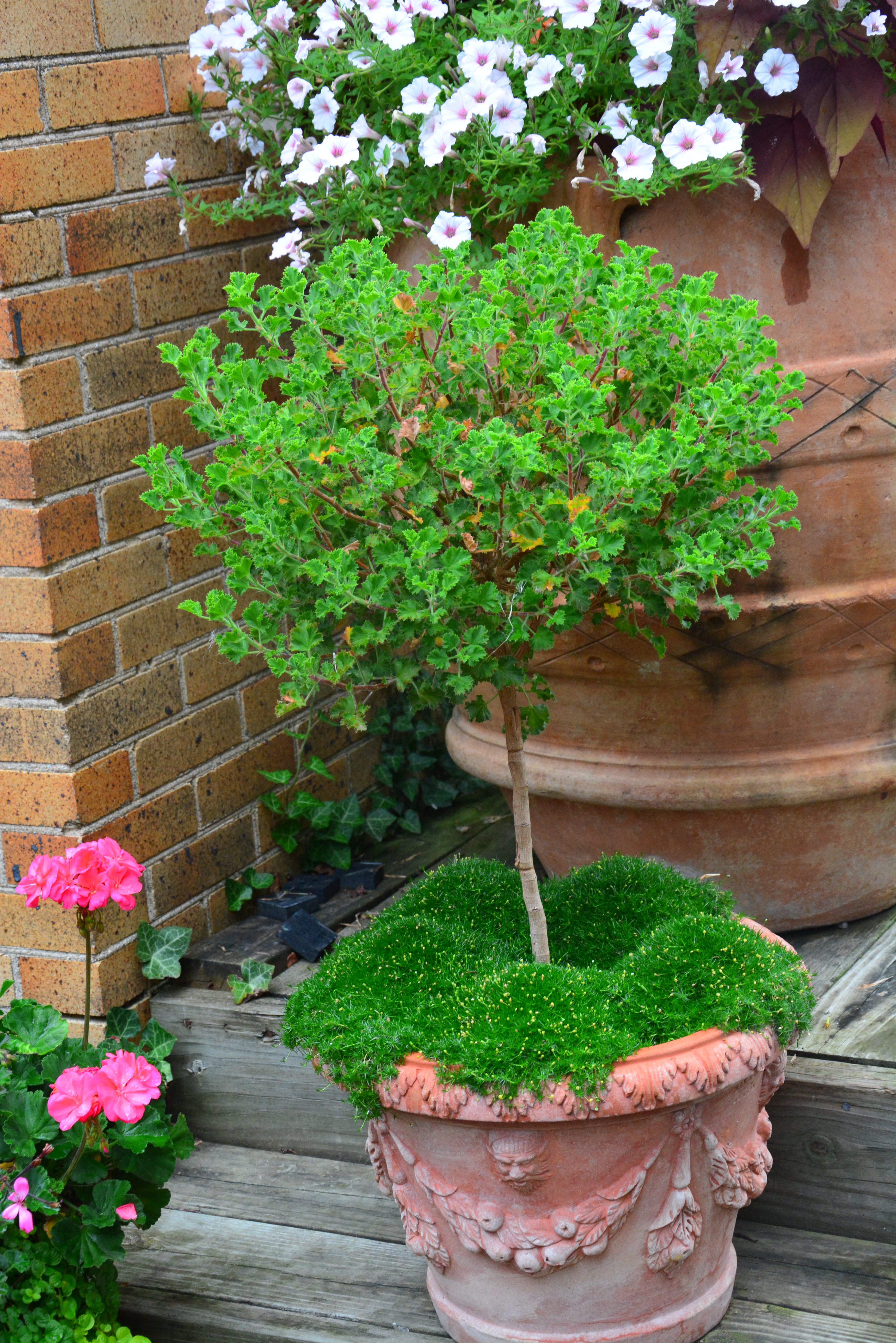
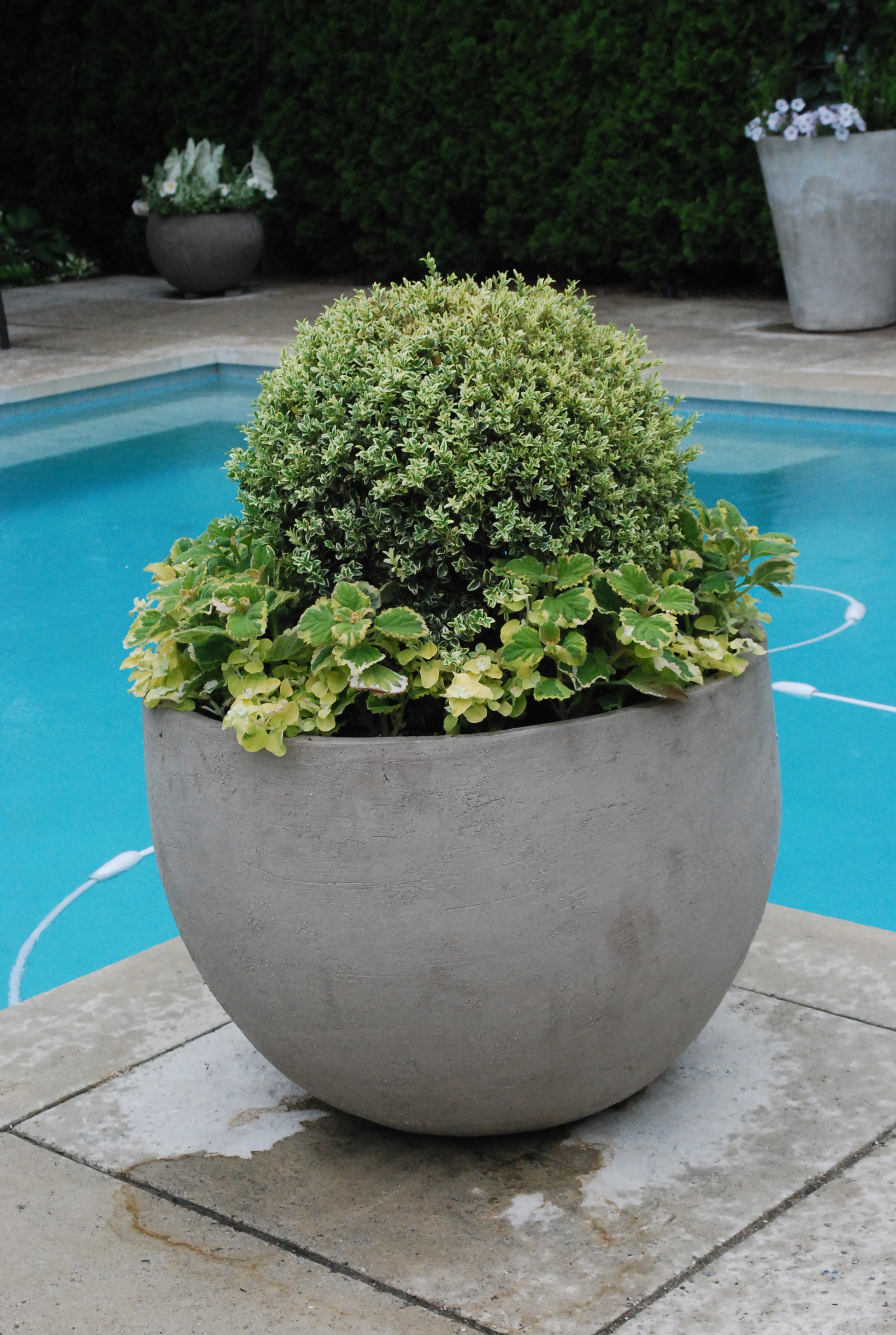
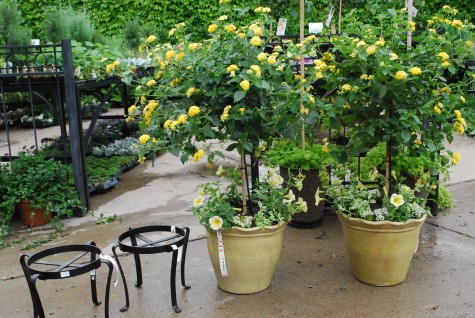
This lantana topiary has several shades of yellow in the flowers.  Both lemon yellow and deep yellow are represented.  Why did I choose variegated licorice in this pot?  That more blue green leaf relates better to the deep bluey-green of the lantana foliage.  The alyssum chosen here is called “citron”.  In a composition featuring yellow, it reads cream yellow.   All of the greens featured here are related.  All of the yellows relate.  

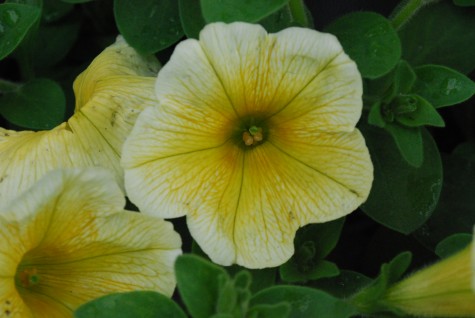
The third element in the lantana pot is a yellow potunia.  Potunias are a series of petunias developed  for a compact habit of growth, making them perfect for a container planting that does not necessarily ask for a trailing element. The lantana pot has a piecrust rim and band at the top-I would not want to completely cover that interesting detail.  The pot is not that large-I would not want it to be overwhelmed by the planting.  But the best part are the two tone yellow flowers-a perfect element for a yellow and green scheme so strongly suggested by the lantana standard.  

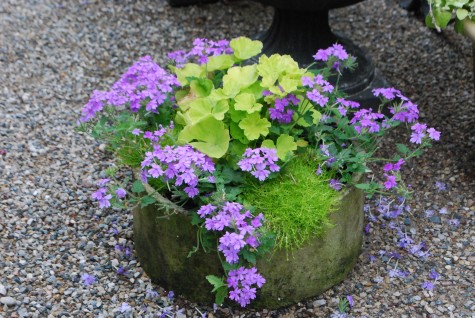
Persian Queen geraniums have brilliantly lime green leaves; I value this about them more than their hot pink flowers.  The lavender trailing verbena is a cool and striking foil for both the Geranium, and the scotch moss (sagina subulata aurea). Purple and lime green is a great place to start scheming. 

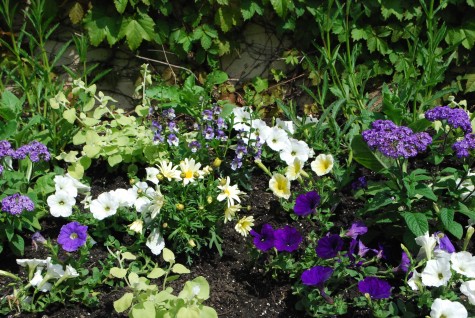
Variations on a color create visual interest.  Heliotrope can vary from deep dark purple, to lavender.  Sky Blue petunias are a very pale version of Royal Velvet petunias.  Yellow petunias with Sky Blue and  Royal Velvet petunias- a color scheme begins to tune up.  Add some white petunias for bright, and some lime licorice to the green scheme makes for a series of color relationships that create visual interest.

The scheme for this small anuual garden is as follows.  Lavender verbena bonariensis, lime and white nicotiana alata are my tall elements.  Mixes of three plants mix more evenly overall than mixes of 2 plants.  My mid level plant-bicolor angelonia-white and purple in the same flower.  Vanilla Butterfly marguerite is the pale cream yellow verson of the intense lemon yellow “Butterfly”.  Purple heliotrope and yellow potunias finish up that level.  On the border, white, sky blue/lavender and dark purple putunias mixed with lime licorice.  This color scheme-white/purple and lime, with a dash here and there of yellow.  If you think you see petunias and licorice planted from back to front between my tall flowers, you are right.  The big growing annuals take a long time to come on.  I like a bed of flowers that engages my eye from the start as well as the finish.  We’ll see if my scheming amounts to something good looking; I have my fingers crossed.  All is in the hands of the plants, and how they grow, now.

At a Glance: Lavender and Lime

glan1

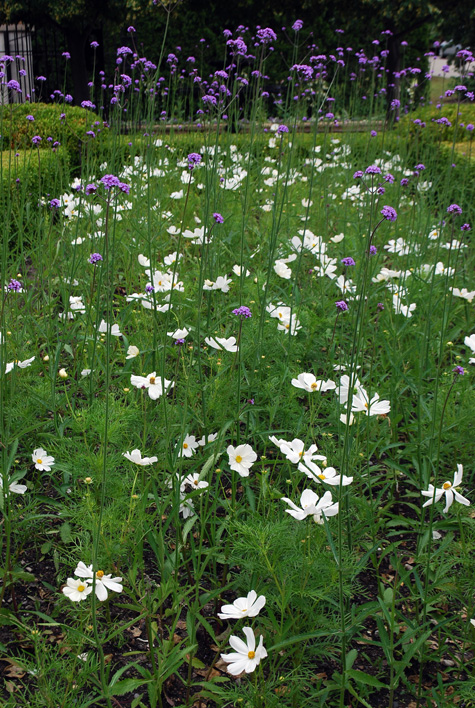
White Sonata Cosmos, Verbena Bonariensis

glan2

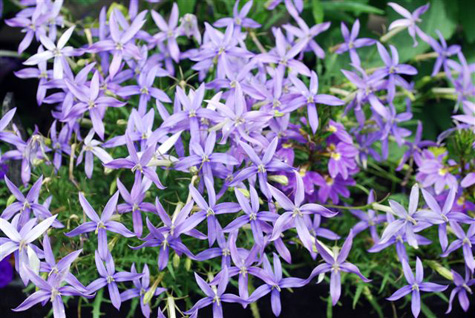
Laurentia

glan3

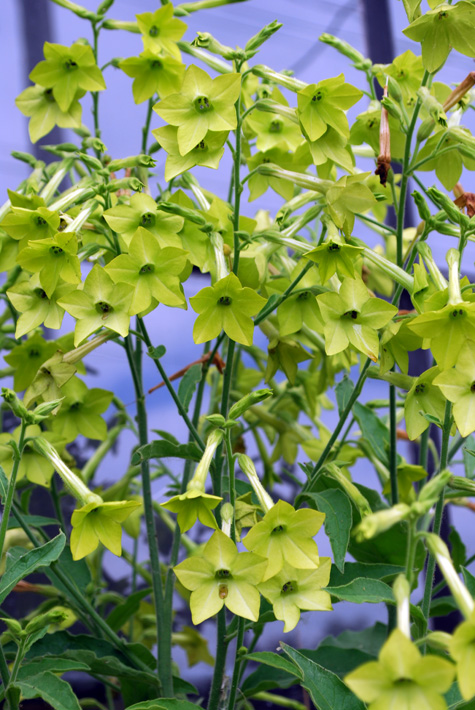
Nicotiana Alata Lime

glan5

glan6

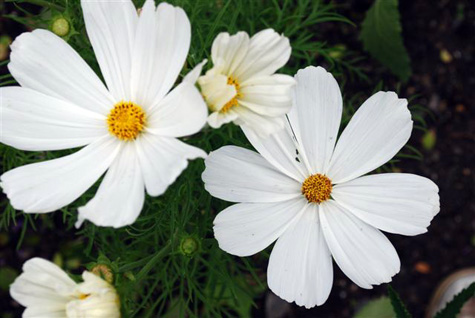
White Sonata Cosmos

glan7

Heliotrope, Scaevola, Coleus, Petunia, Angelonia, Licorice

Bringing the Garden Upstairs

I have a few clients that challenge me to be the best I can possibly be-this client is right at the top of that list.  Her design ability-whether it be interiors, or parties and events,  or gardening-is superb. She could have easily founded a  School of Design-had she had any inclination to do so. She and her husband live in a beautifully overscaled modern house with a beautifully high pitched roof, and overscaled high-pitched  dormers. (This is a landscape designers description of architecture; bear with me.)

1

To drive into the impossibly small front drivecourt, you would think the house was sited on a postage stamp of land.  But in fact, the house is sited on a steep ravine, and hangs out over a rear yard that widens, and goes on to embrace the river. It is a big property, with incredible aerial views.

2

She loves gardens and flowers.  Flowers and more flowers.  She is a master chef-so any plan for her has to include acres of basil, and the like.  OK-the challenge here-to plant a perennial garden stuffed with roses and other perennials, in a flood plane-courtesy of that river.  The first order of business was a lot of drainage, and rear yard grading. When her son got married, we had to install floors in the tents and stepping stones between them at the last second-which we did.   The perennial garden ramps up to a curvy modern swimming pool.  So far so good.3

I met her when I was young-so I had no problem moving every tree and every shrub within two days of my first work there.   There were trees, shrubs and perennials placed poorly, and too many boulders. But that house was a jewel-perched out over a beautiful piece of property.  The house-a beautifully designed tree house.4

A house sited in the crowns of trees-how beautiful.  But what if you love to cook, and grow flowers, and want to sit with your garden and family  around you?5

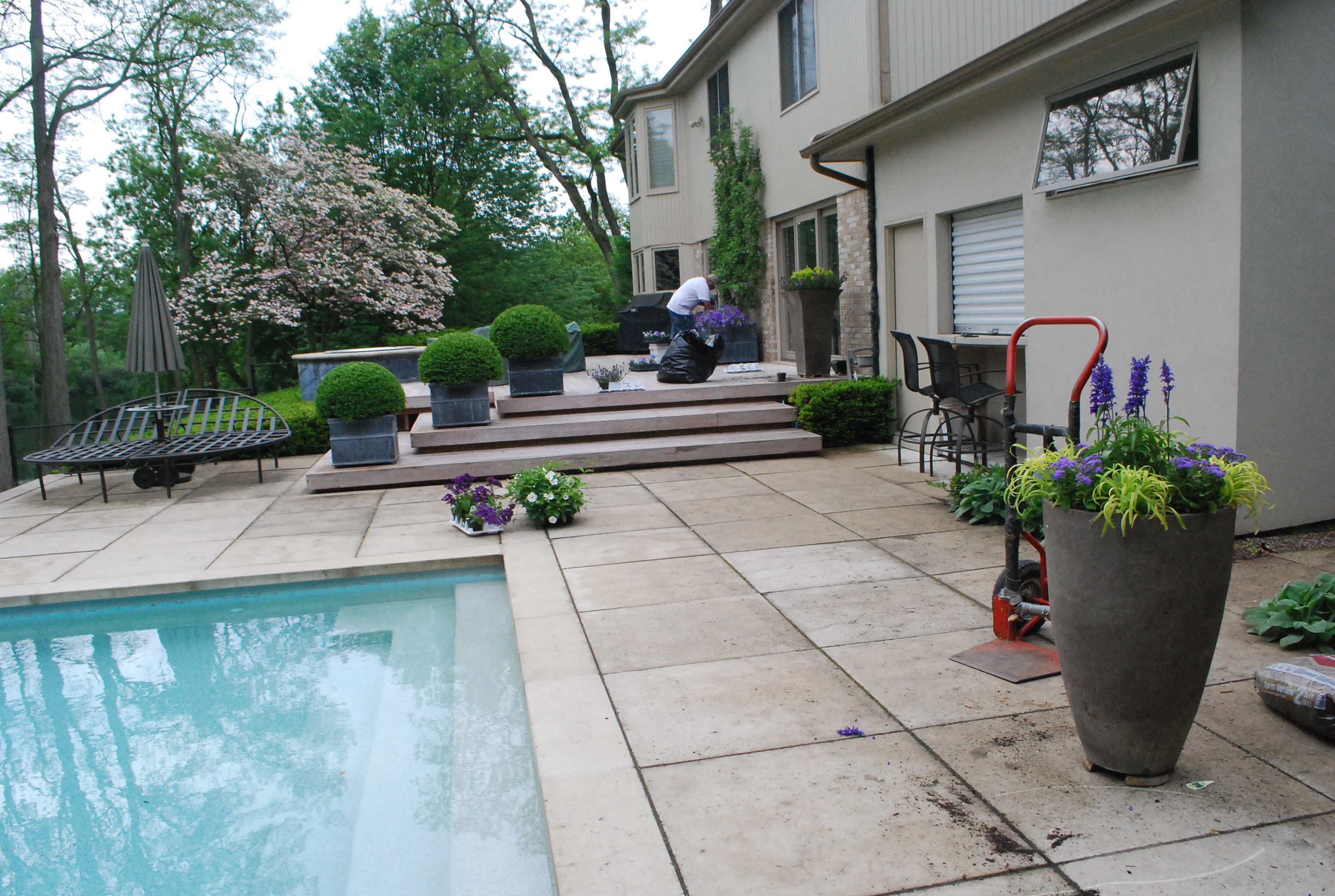
The house already had a giant deck all across the back.  Stairs to the lower level had a small landing-perfect for pots. The lower level under this deck-dark, and intimate. My only suggestion-windowboxes.  And lots of pots. 6

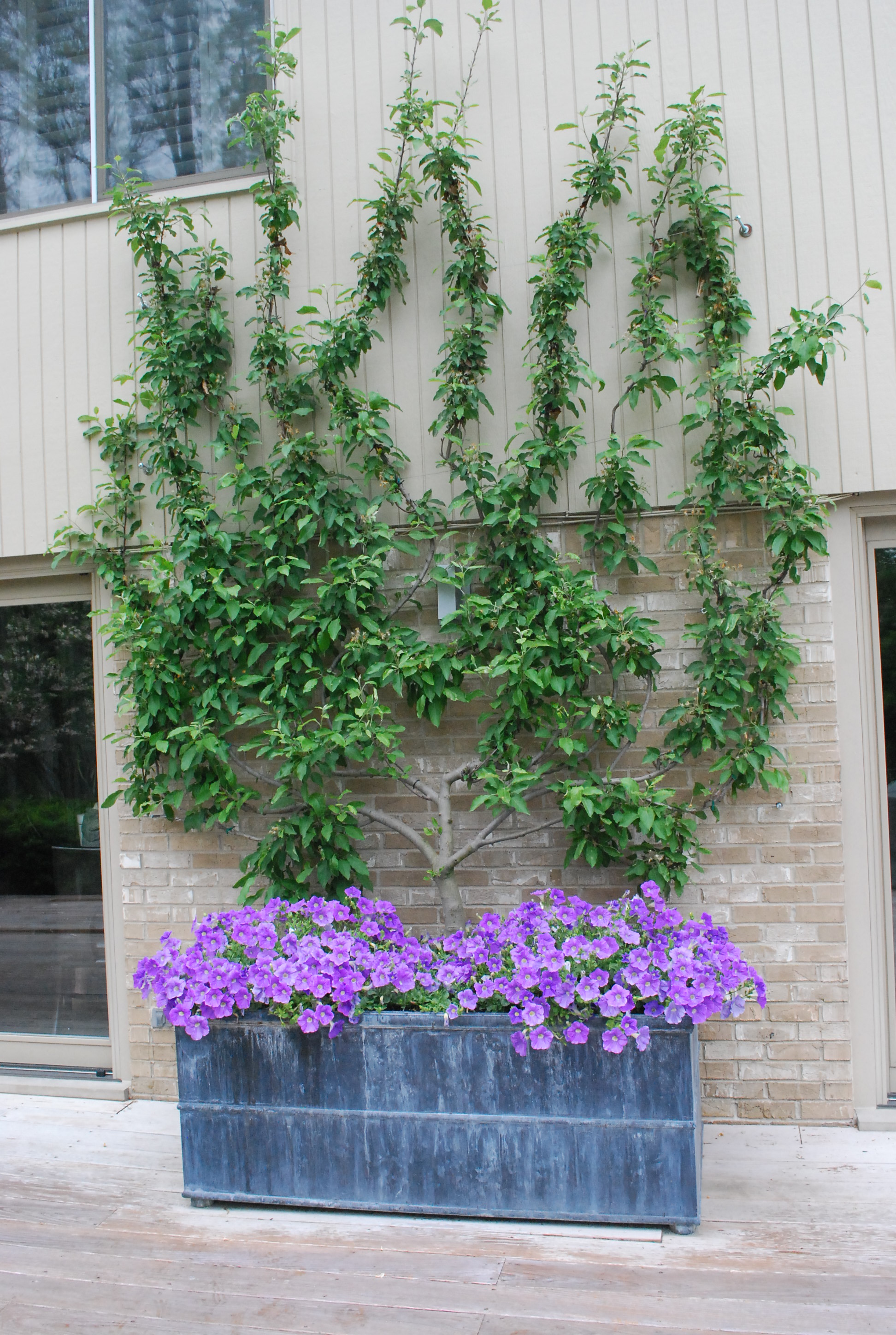
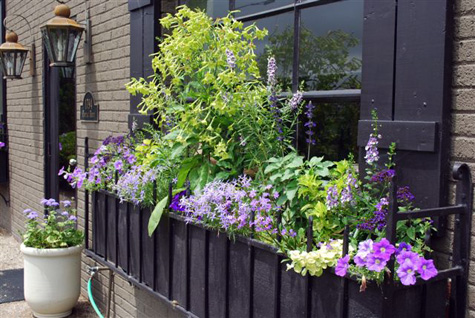
We built and hung two giant windowboxes-off the deck, at the railing height.  There is a whole symphony of flowers in those boxes every year-every year a new arrangement. The pots we outfitted with automatic irrigation-there are too many pots for one family and one hose.7

I heard my client tell someone recently  I had brought her garden upstairs for her. I had neither the words, nor the clear conscious intent to do this-but I realized when I heard her that she was exactly right.

8As I said, she is a client that encourages me to be the best I can be.  I am a very lucky designer.

Texture

texture1Texture is such an exciting element in plants-and plantings.  Defined by Wikipedia as “an identifying quality”, or the “appearance and feel of a surface”, the texture of a plant can be about its appearance.  Some plants are shiny leaved; some have felted leaves.  Some leaves and flowers are thin (sometimes referred to as “substance”) and some are thick and juicy looking. Some leaves are wisy and airy looking-others are big and broad-and look as though even a big wind wouldn’t disturb them. This kale is ultra-crinkled-beautiful.

texture2Texture can also refer to how a plant feels to the touch-who could resist touching this scotch moss?  Contrasting textures can make for a lot of excitement in a planting-but even the relationship of one small texture to another can be interesting. 

texture3Some plantings where all the textures read similarly encourage focus on color, or mass.  The choice of plants very much dictates what about a plant or planting becomes the dominant element.  This box of grass, euphorbia Diamond Frost, thyme and sedum has that casual roadside weed look to it.  You notice the blue of the sedum first off, as the textures of all the plants are so similar.  There is a whole story here about little leaves. 

texture4Malabar spinach has thick, substantial leaves that are glossy and wrinkled.  This texture reads all the more strongly for its pairing with the diminuitive felted stems and leaves of lime licorice. 

texture5The hunky, toothy, slighting menacing leaves of this cardoon are softened by the much less architectural “Dallas Blues” panicum grass-and the so sweet blue petunias.  The cardoon has a felted leaf-the panic grass is smooth and shiny.  Those blue petunias are along for the ride-and soften much the architecture of the cardoon-and the pot.

texture6Large flowers like zinnias and petunias have a simple texture, while its companion grass has a complex, texture-like fireworks. Diametrically opposed to this delicately textured grass, caladiums and this lime dieffenbachia have leaves so thin and so wide the sun shines through them; it looks like the lights are on in this very shady spot.  Identifying what about a particular plant you like will help a lot to inform your design with them.  Everyone knows texture.  Its the process of being conscious of it that can help make for inspired plantings .

texture7