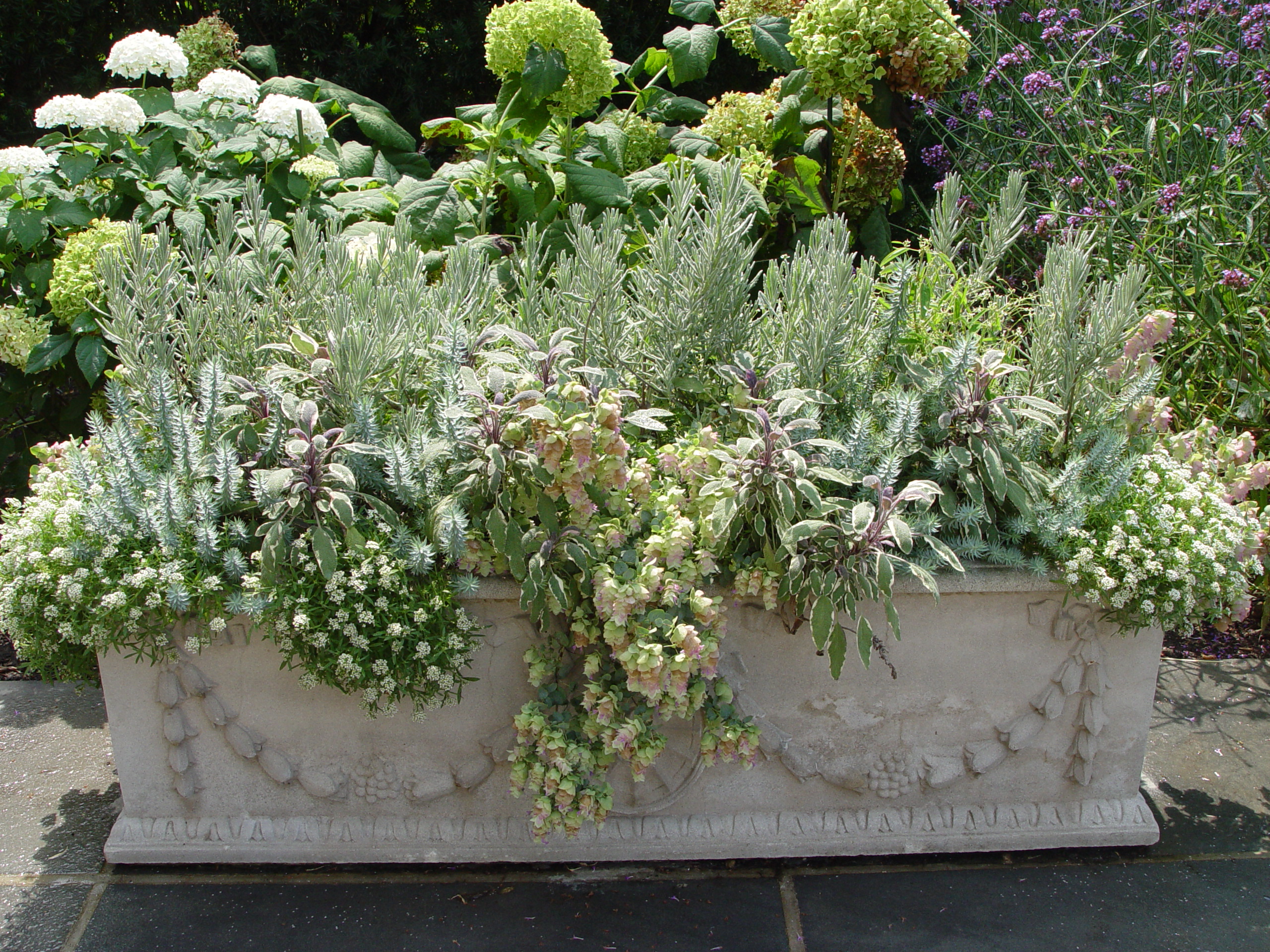
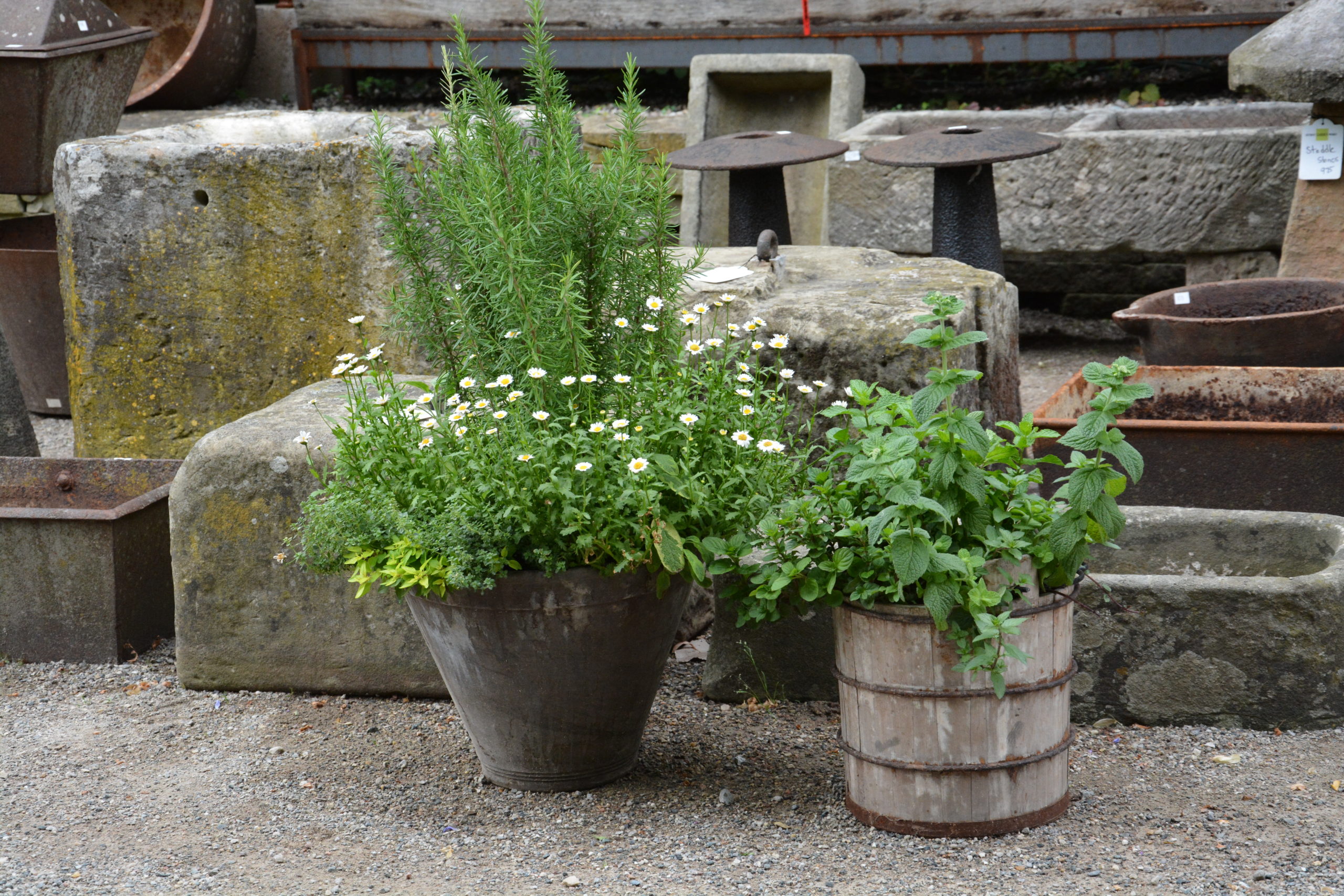
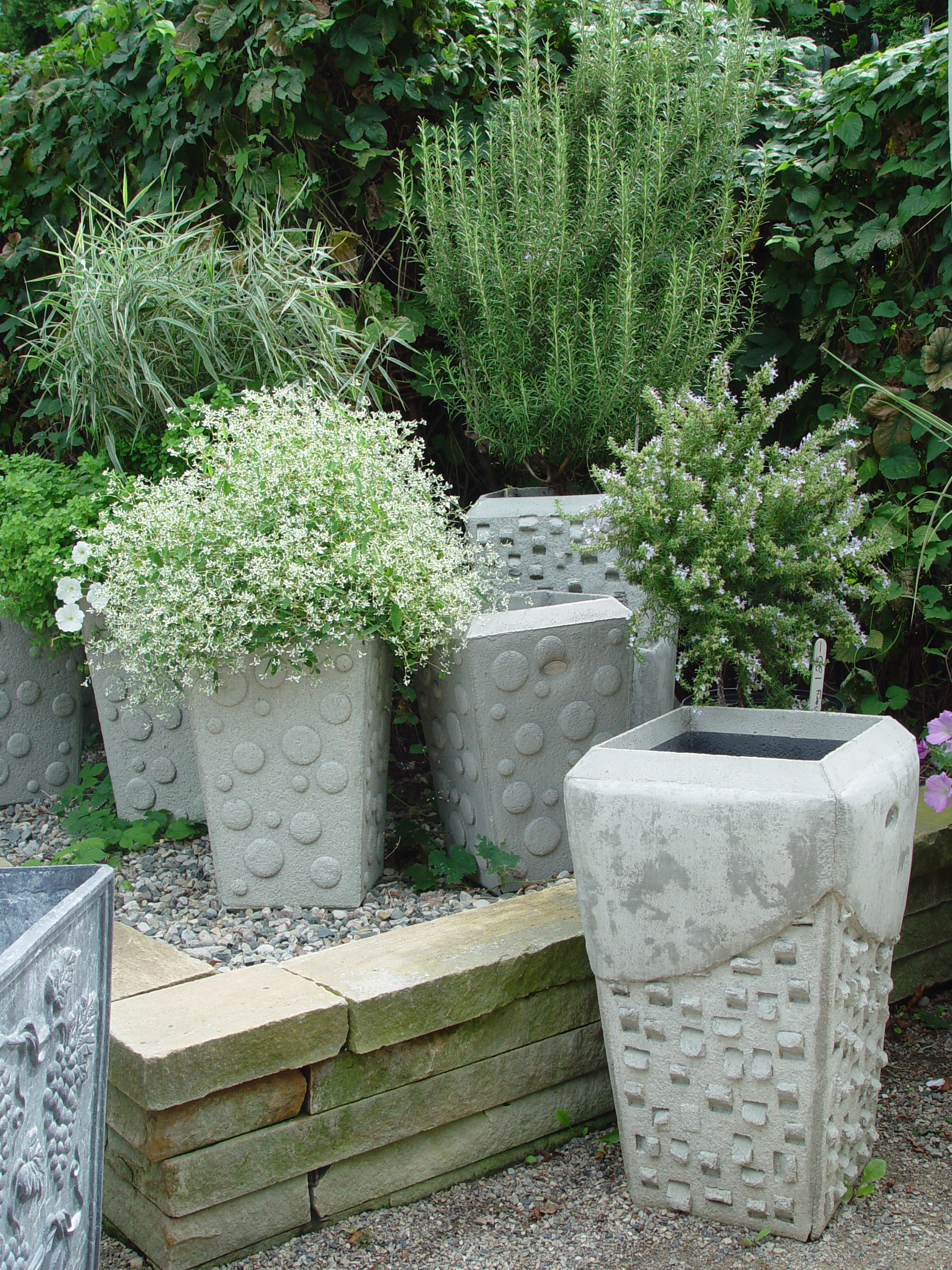
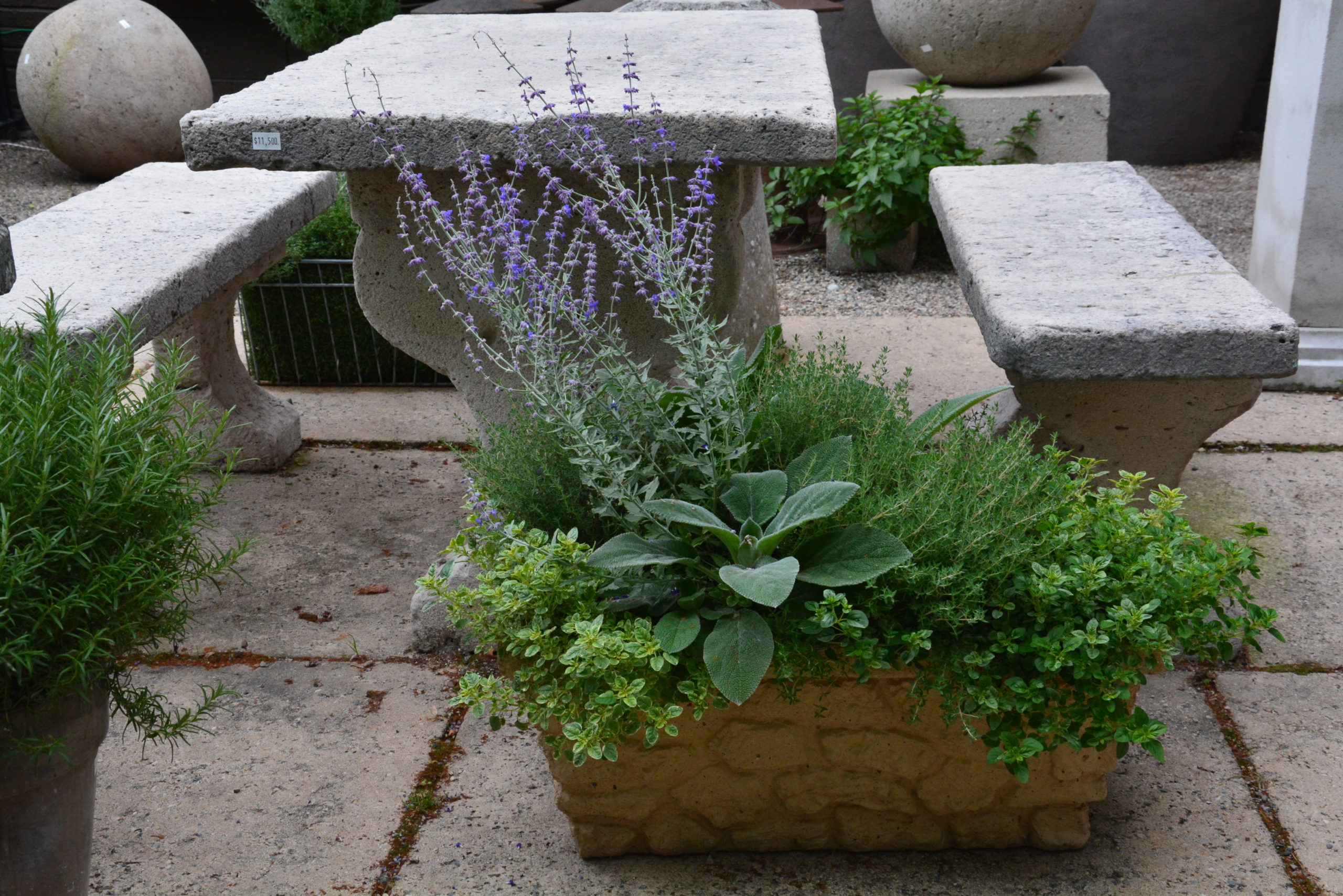
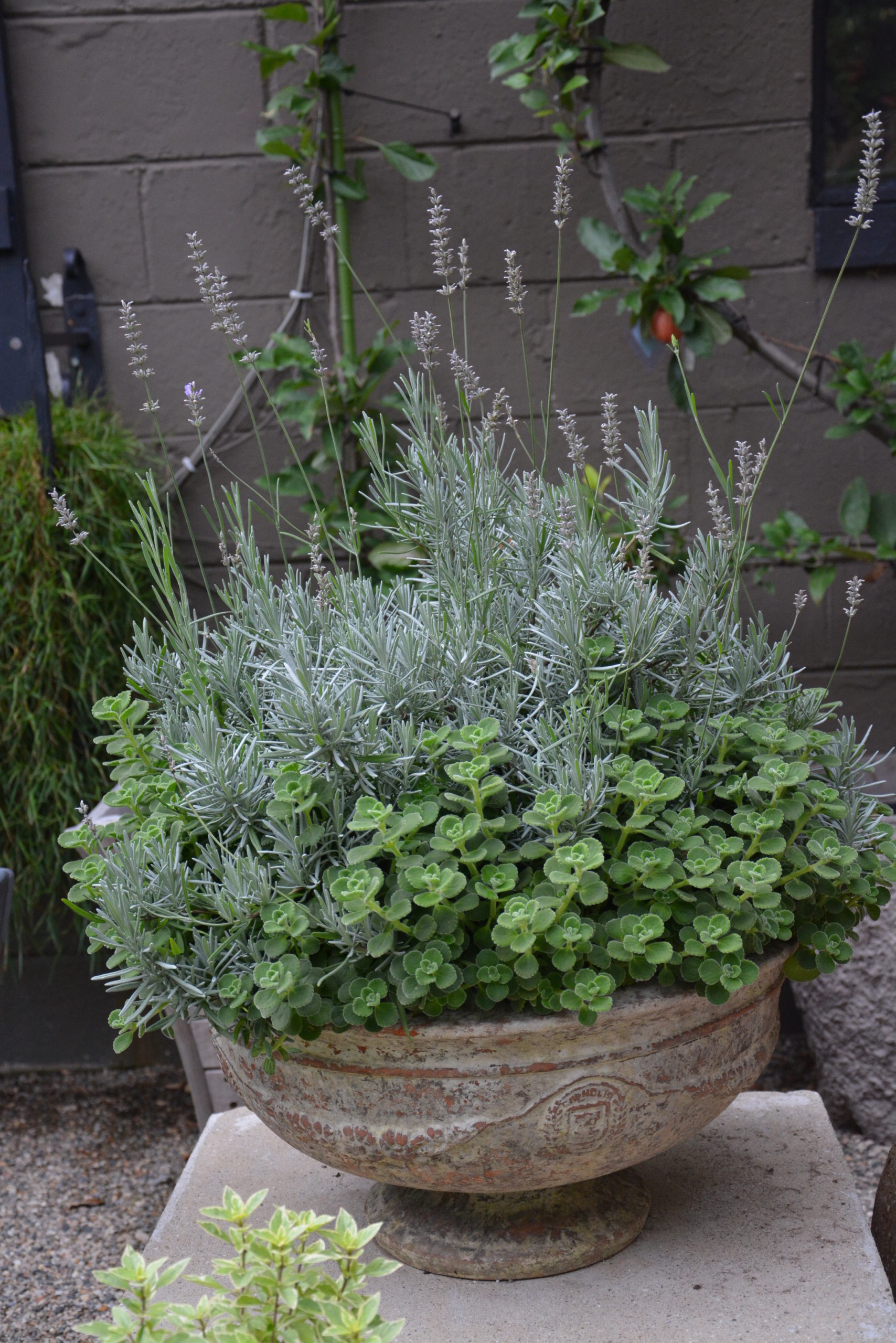
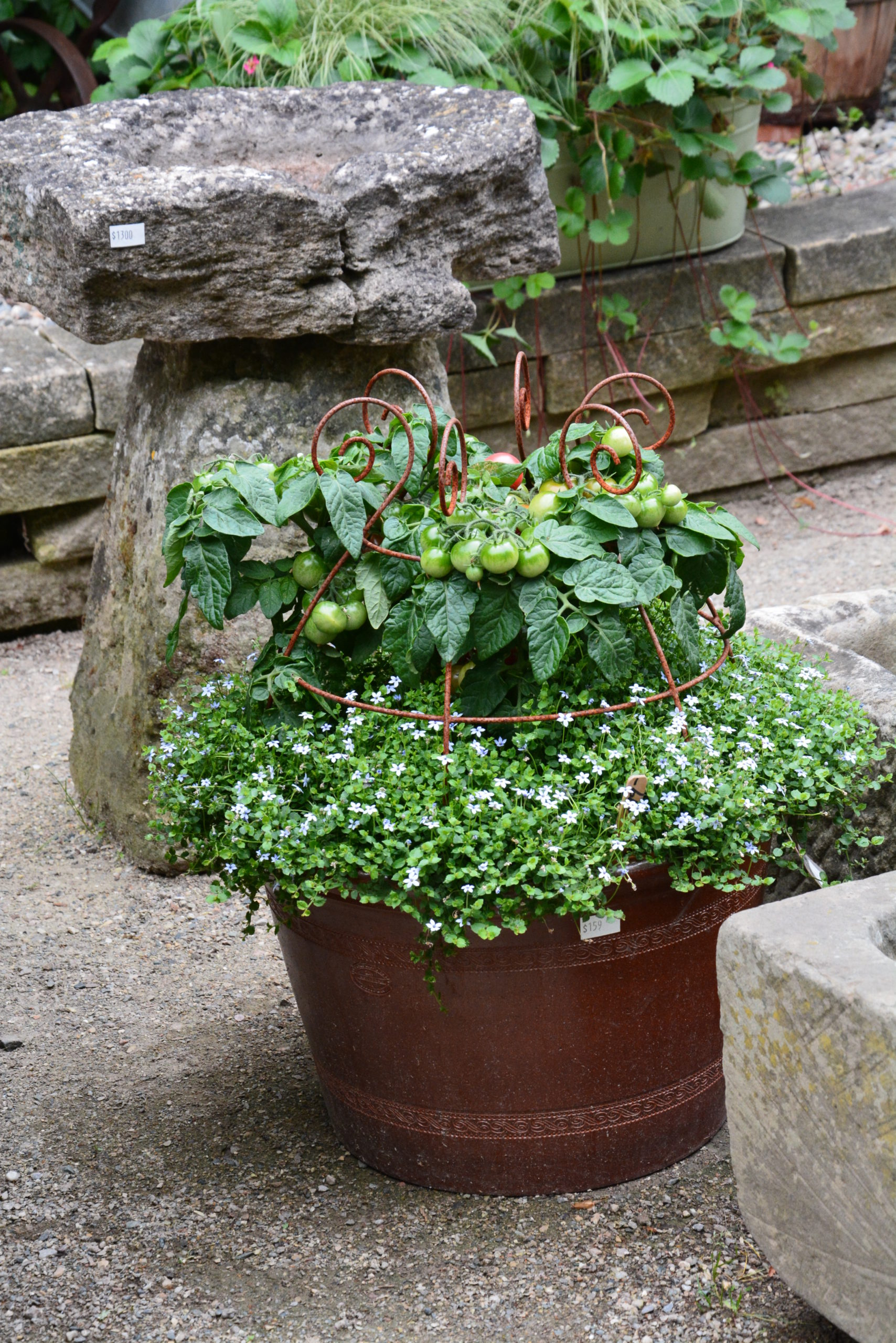
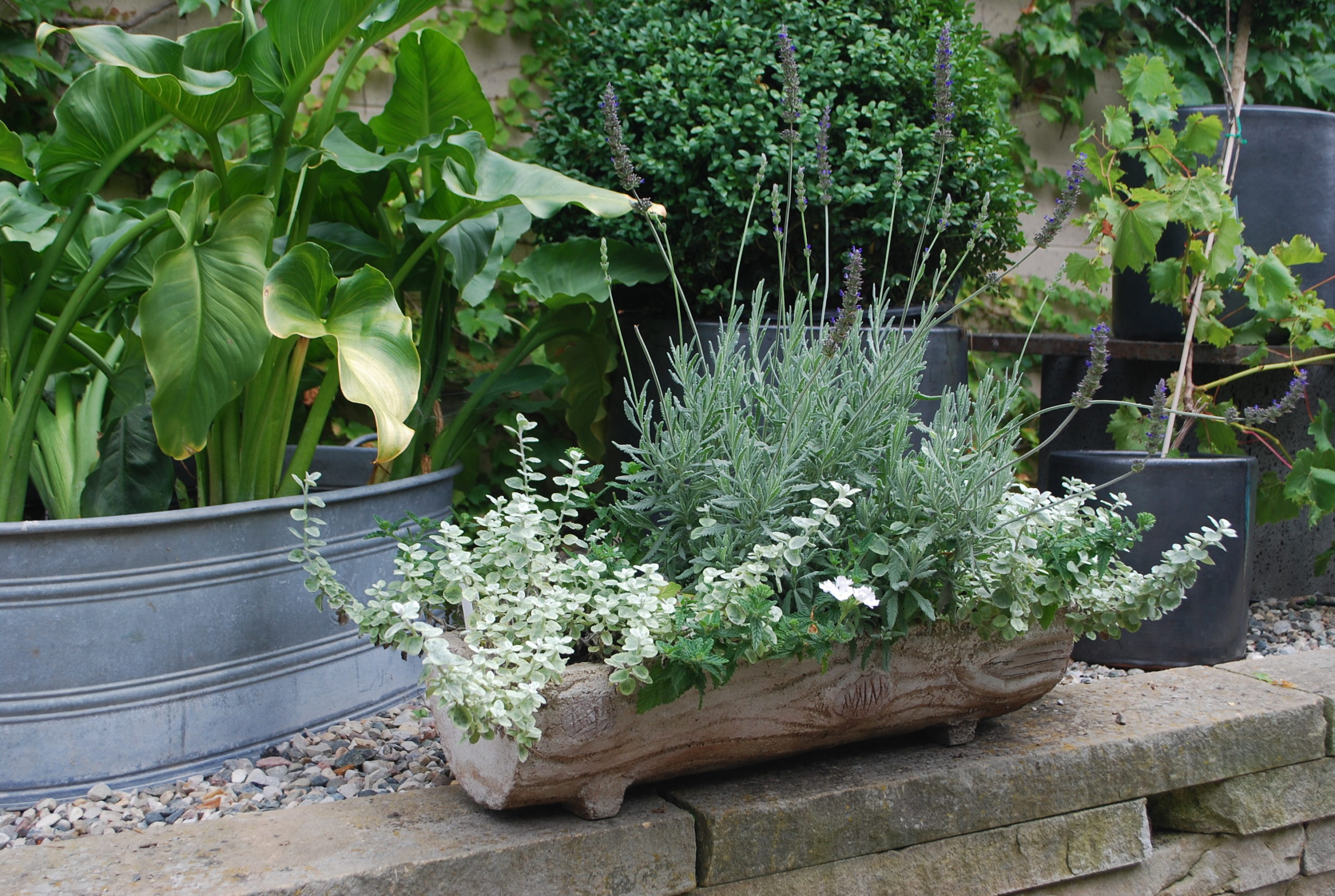
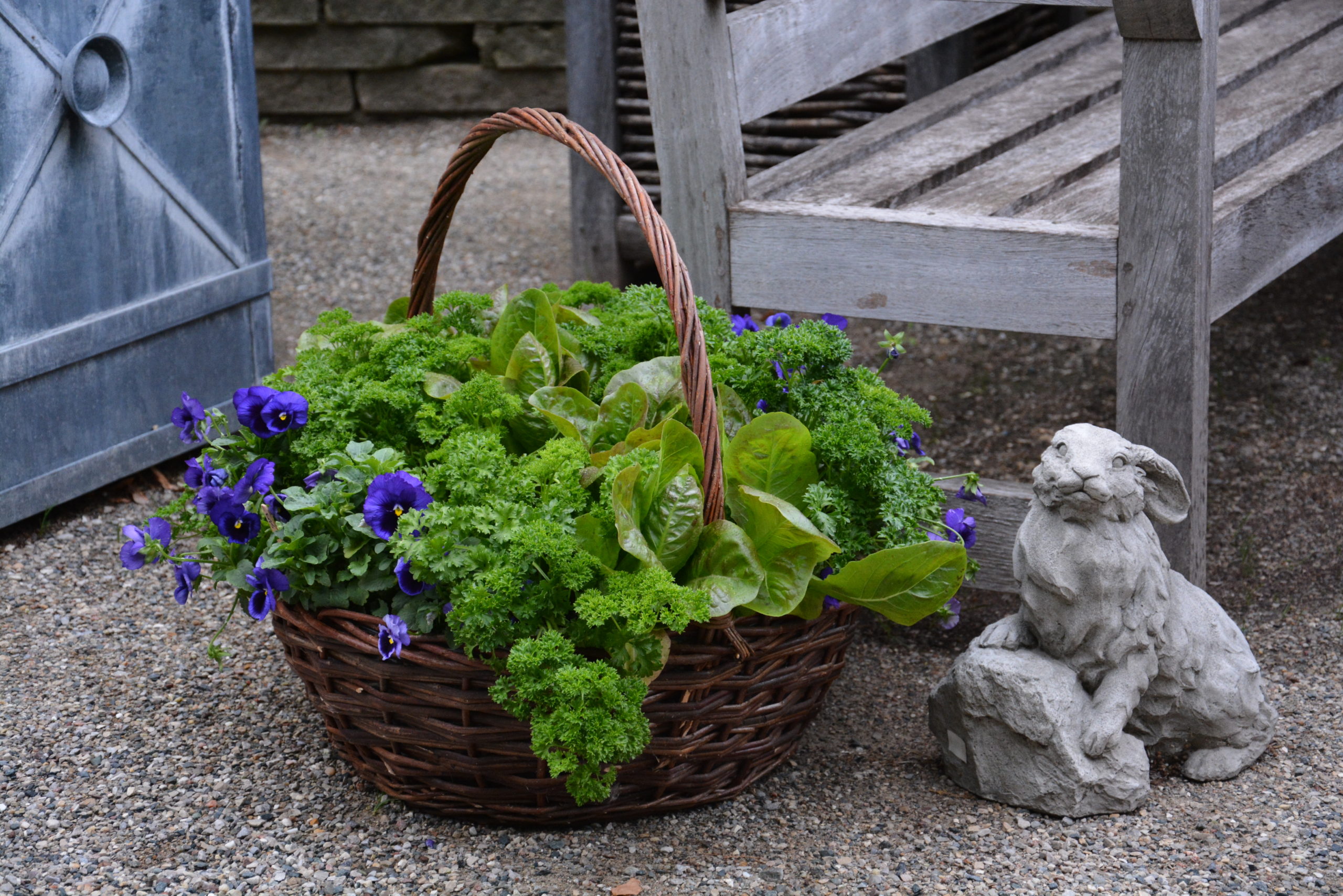
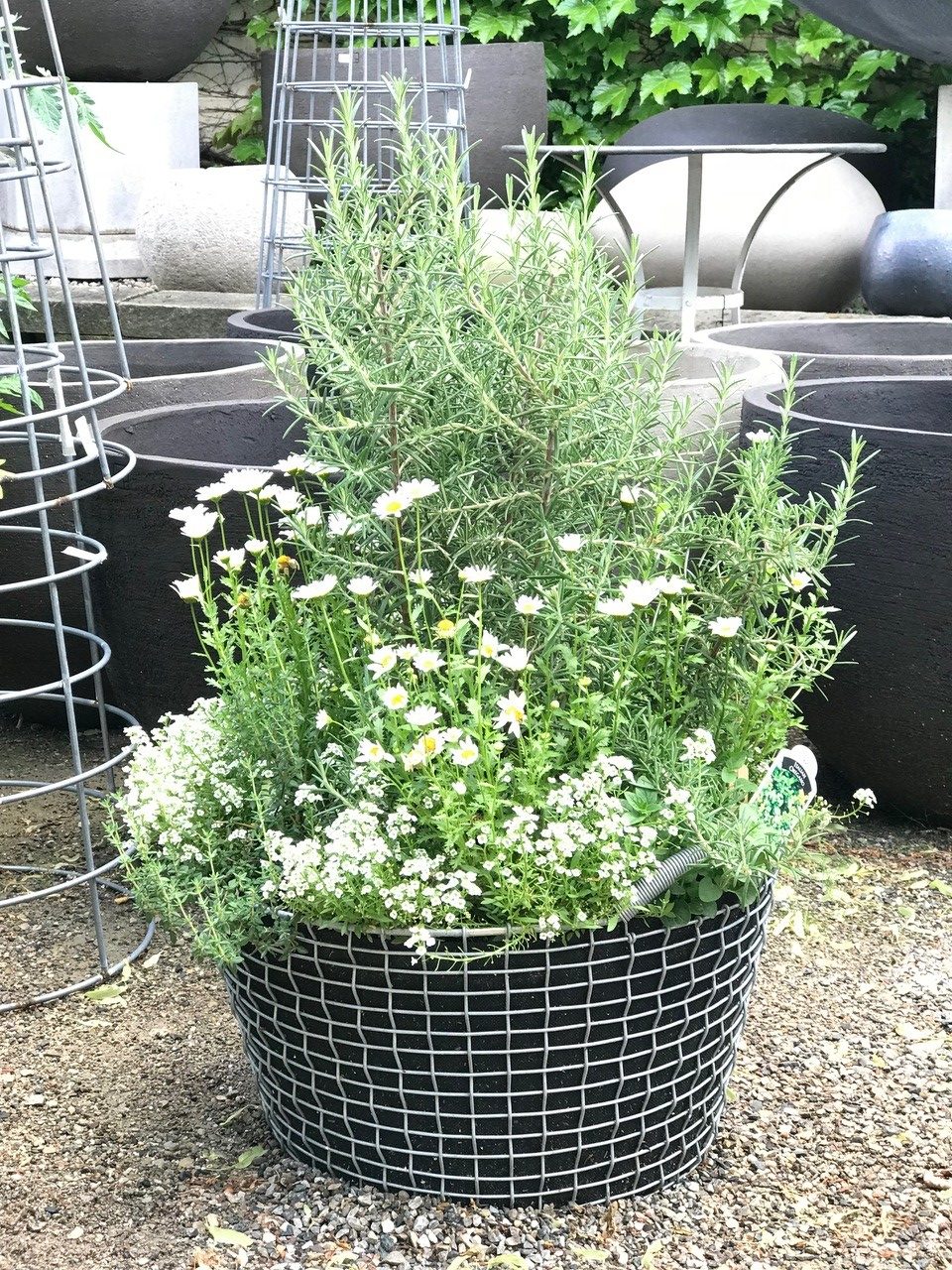
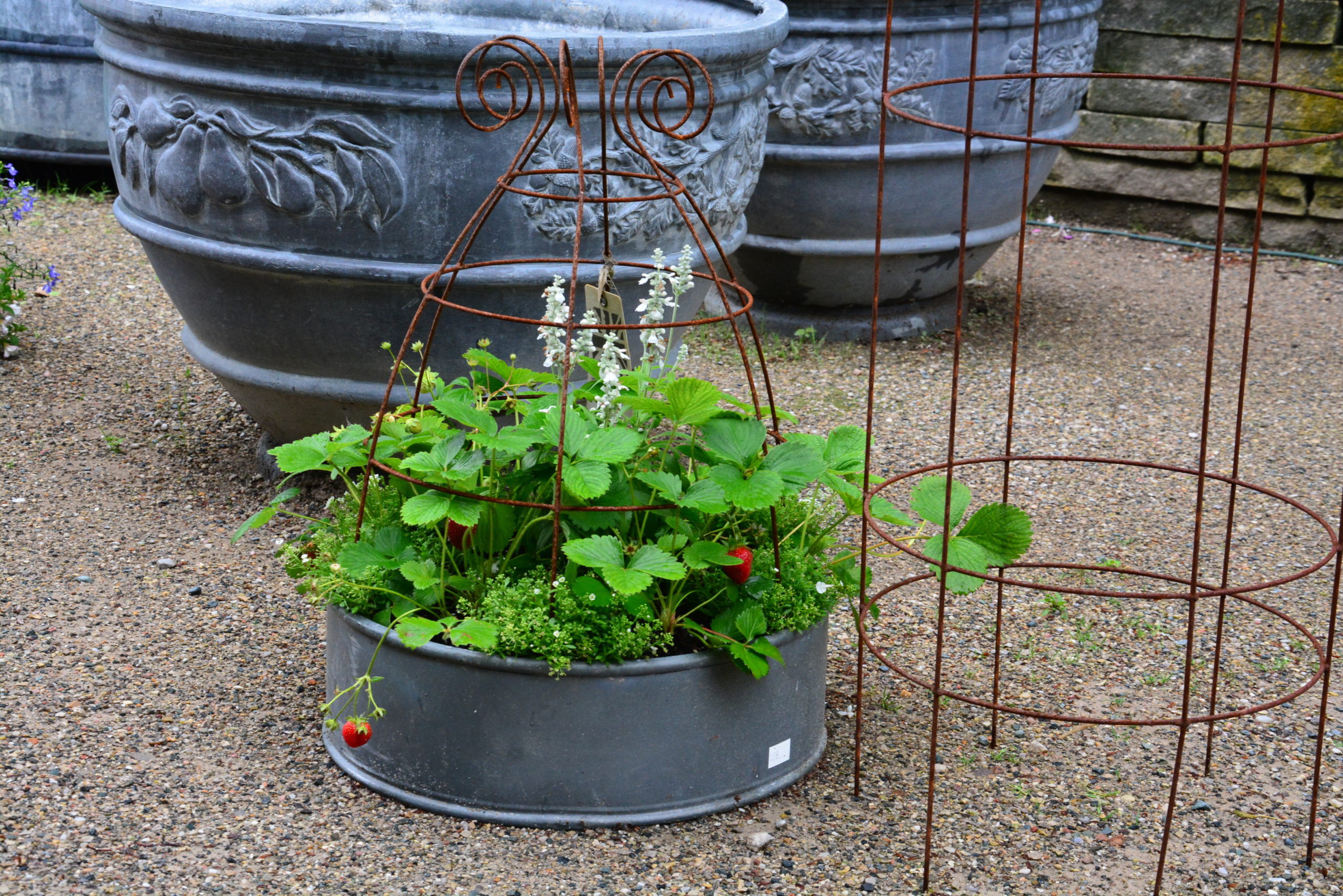
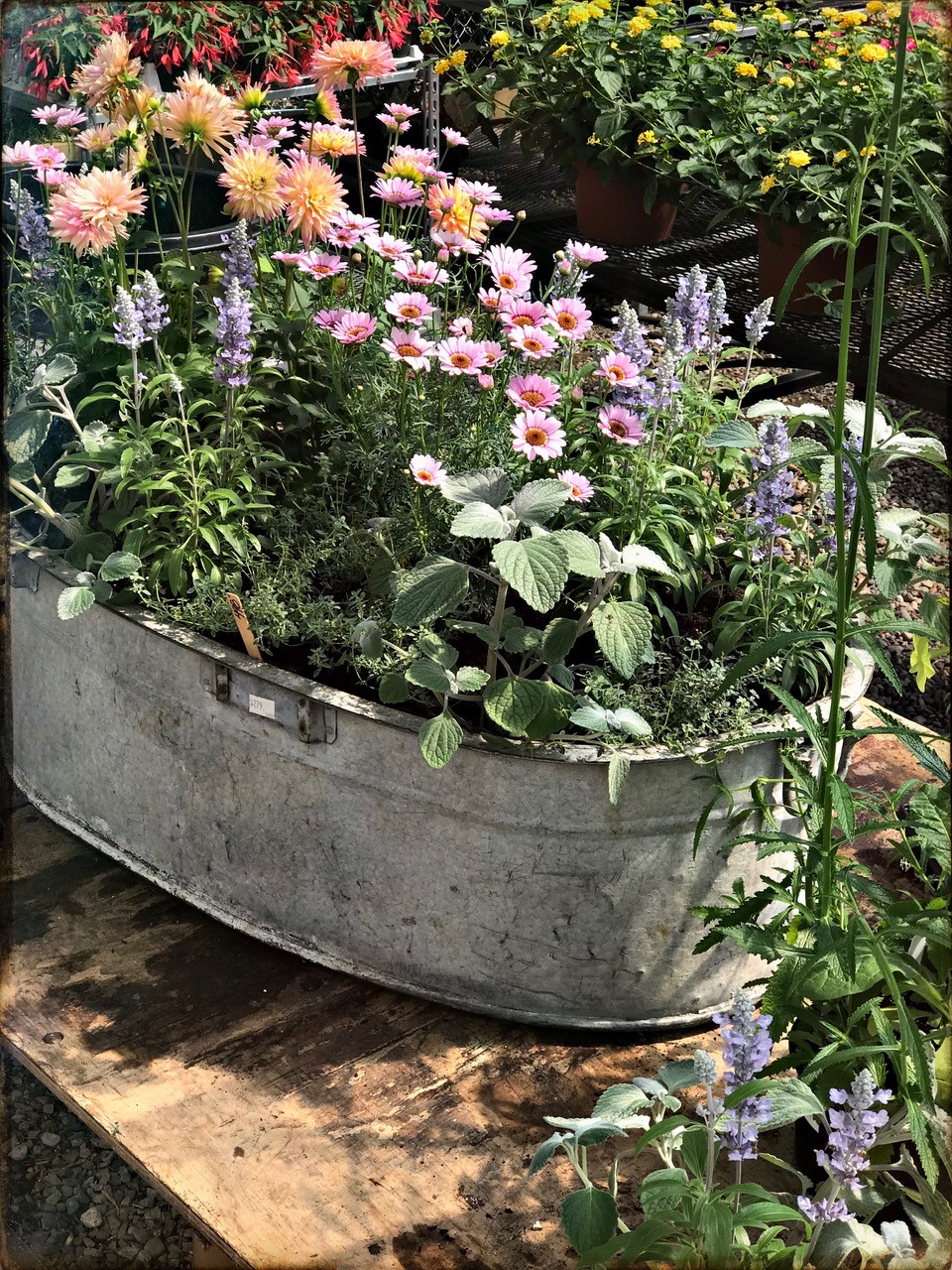
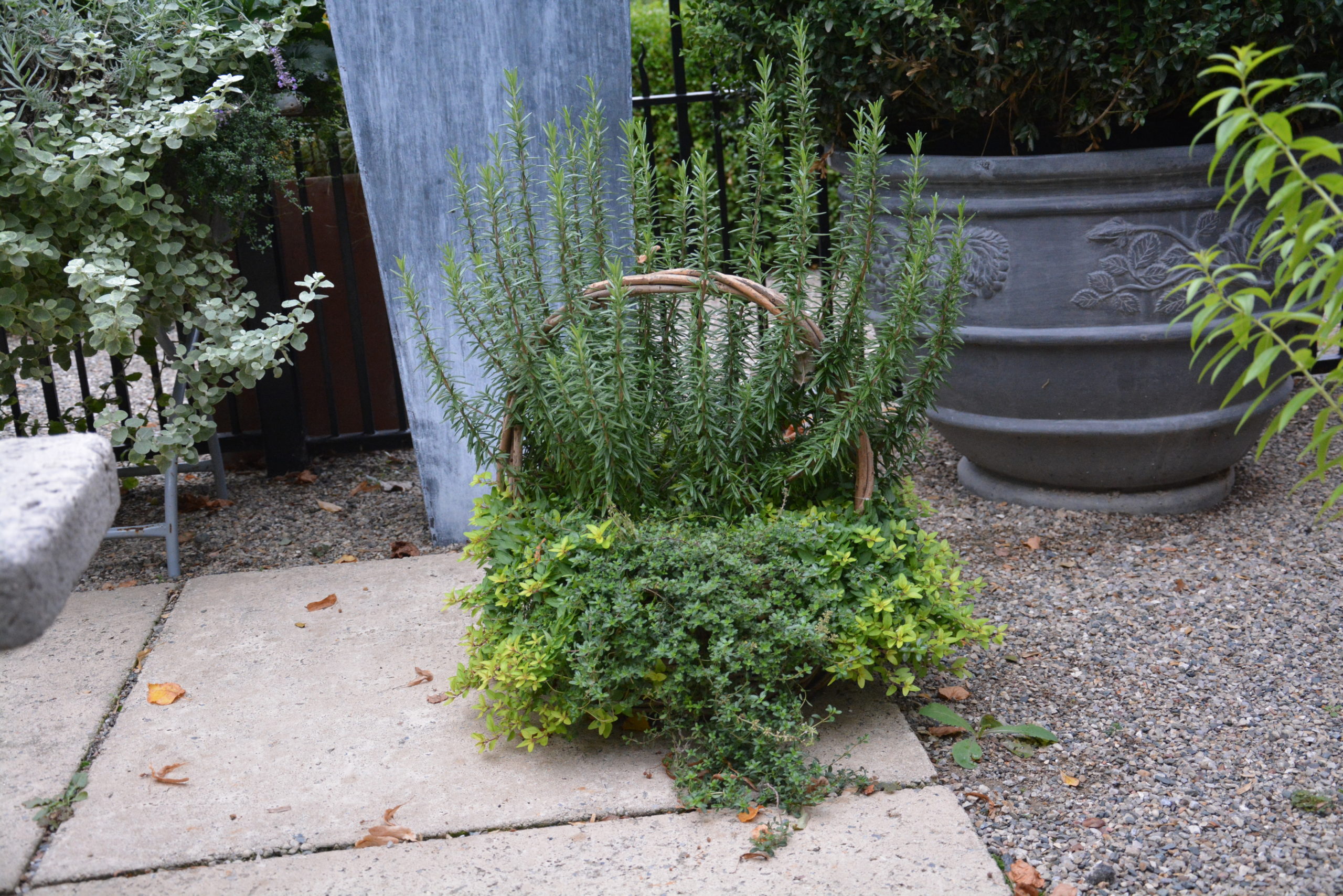
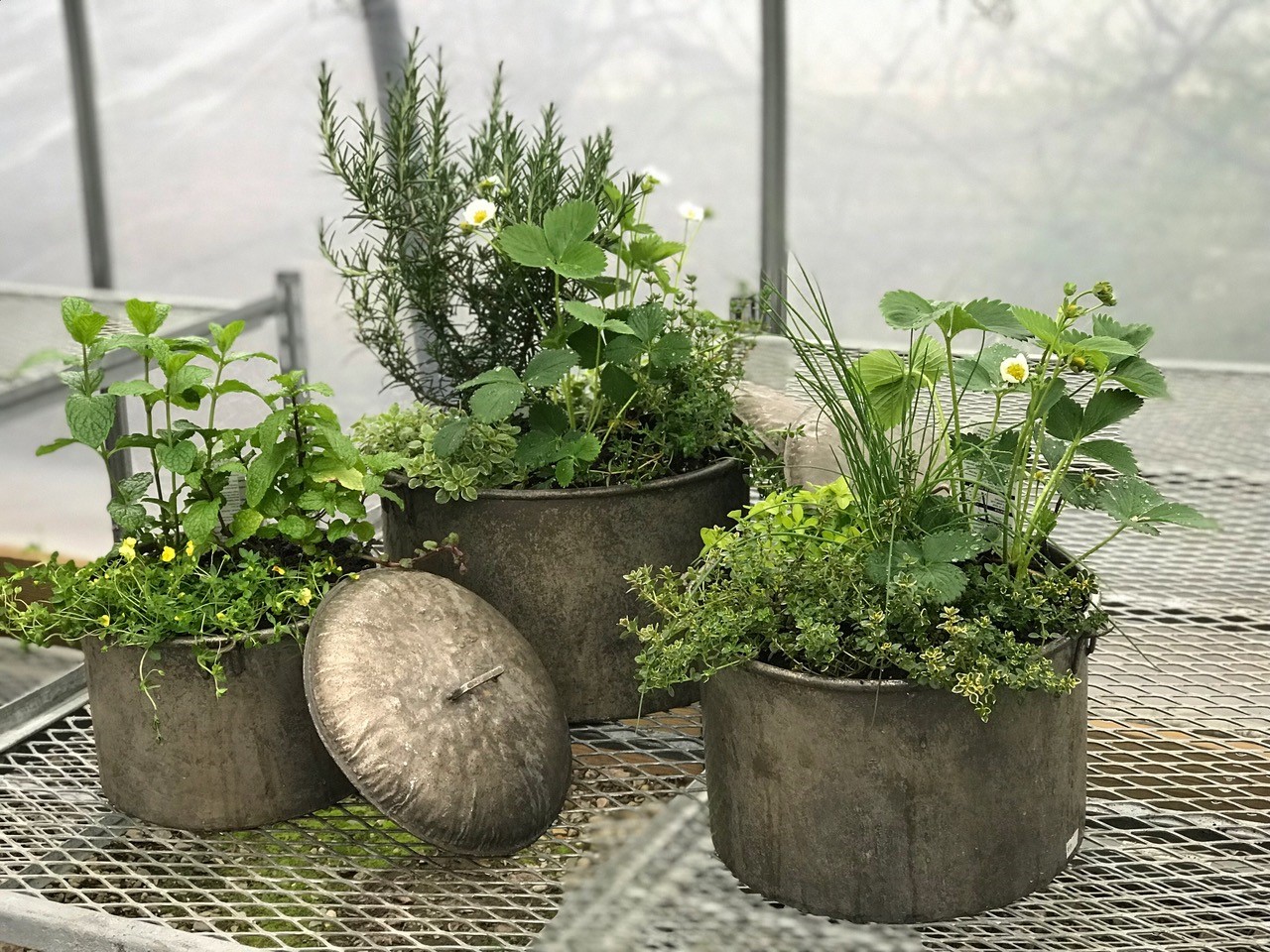
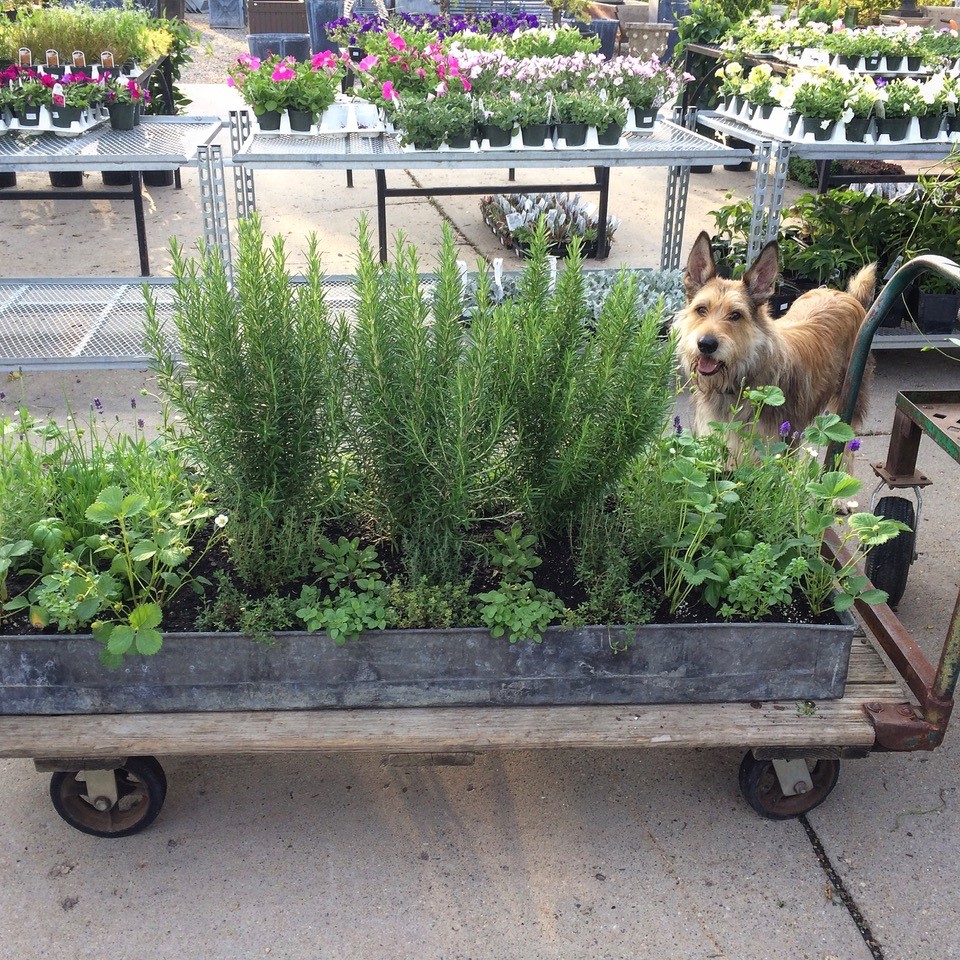
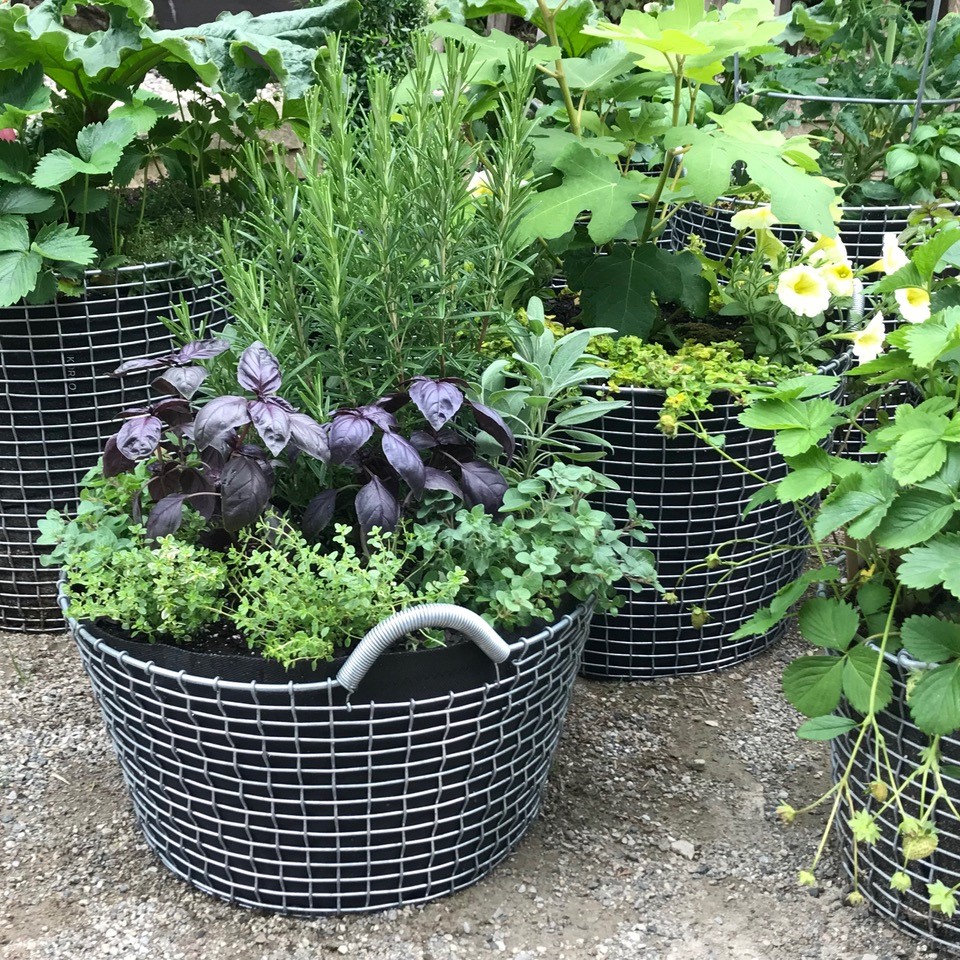
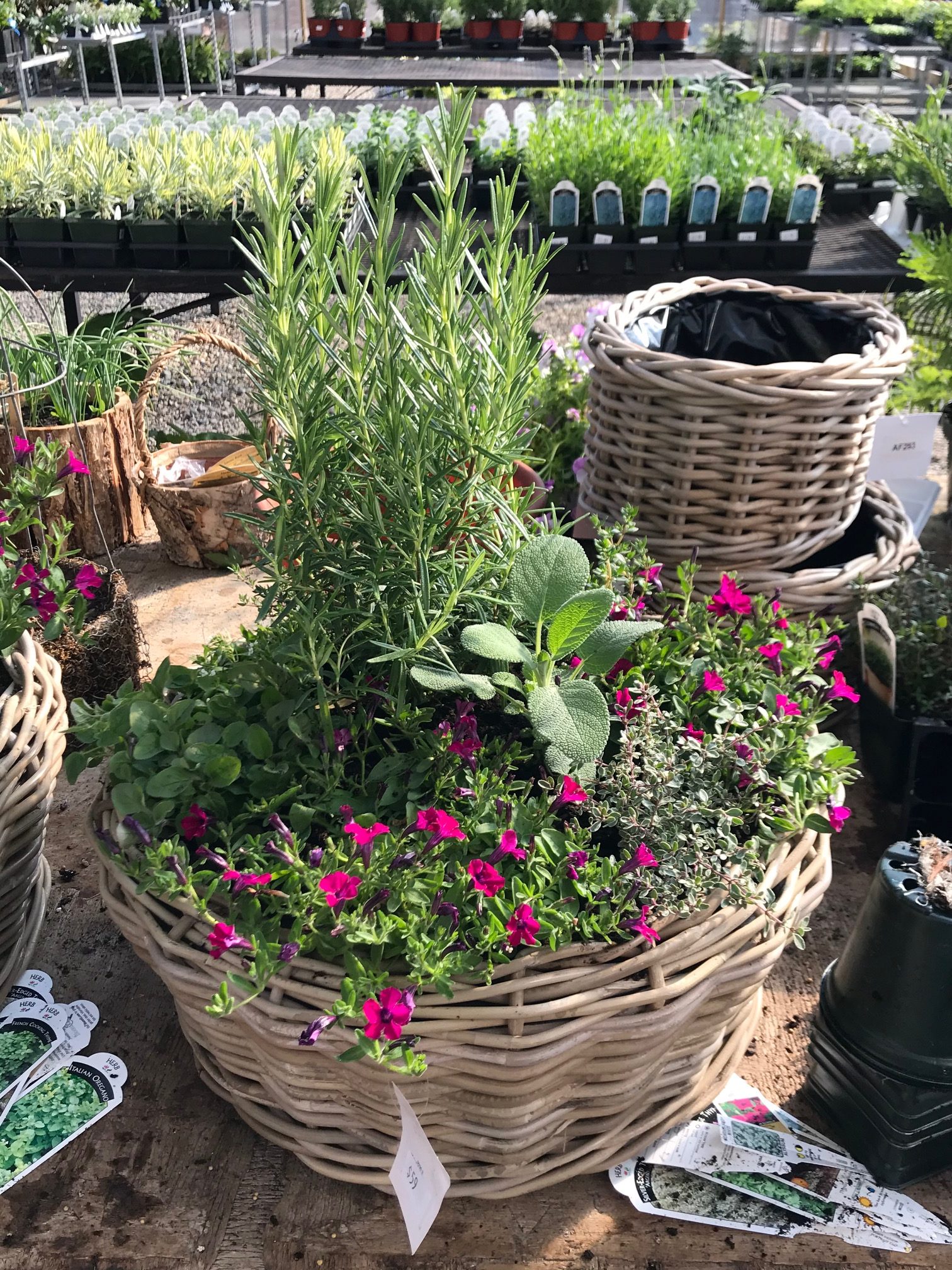
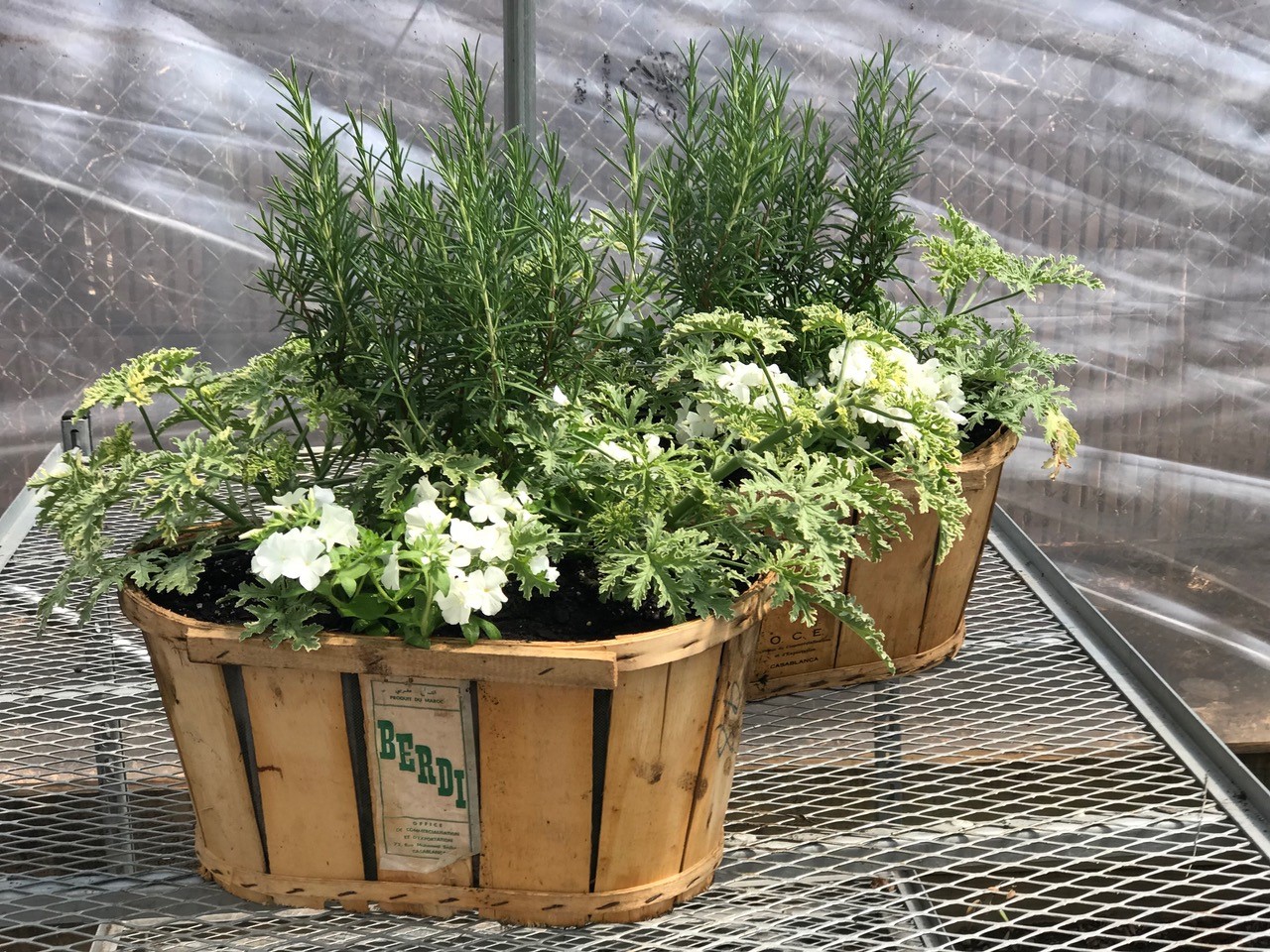
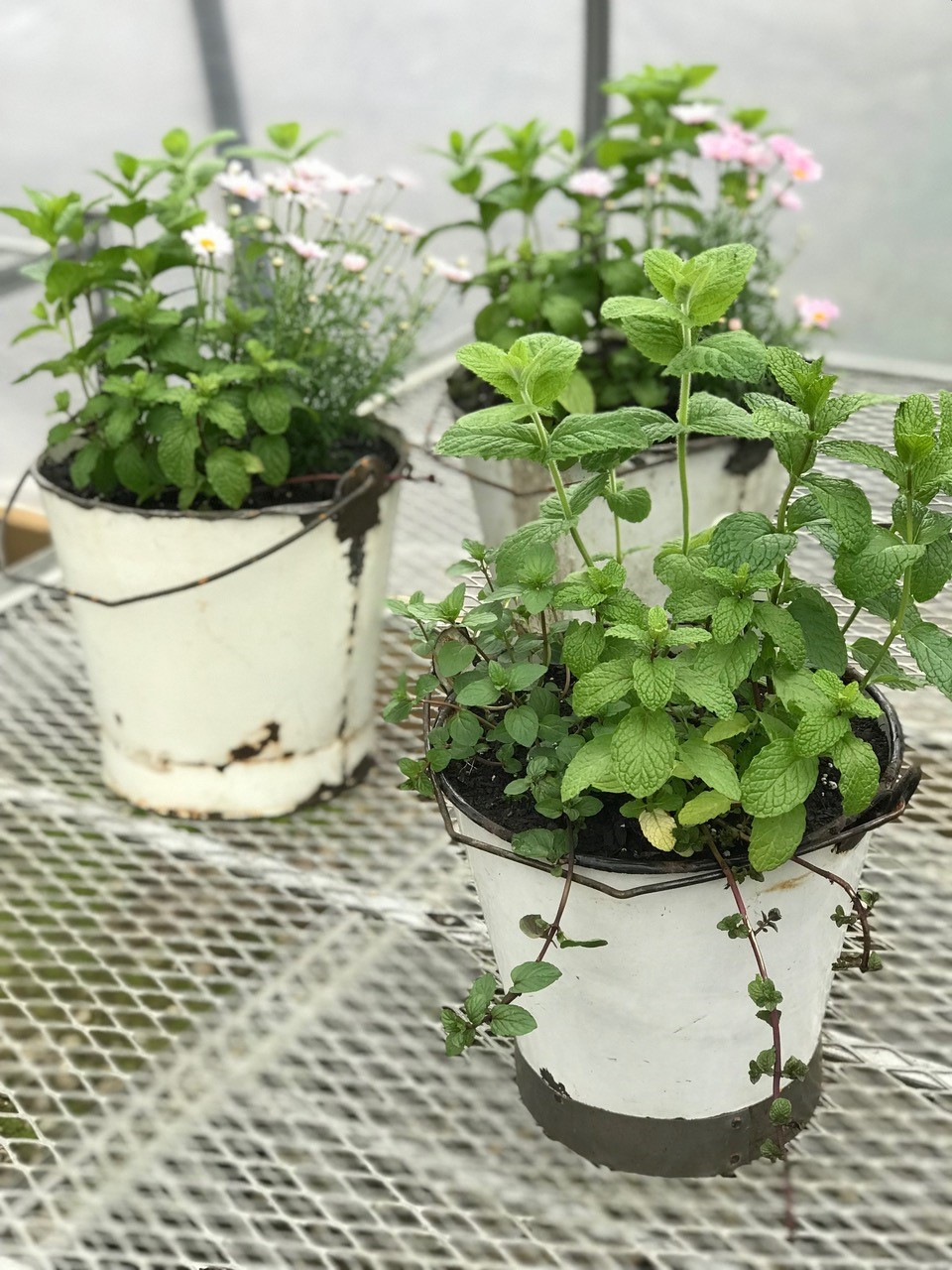
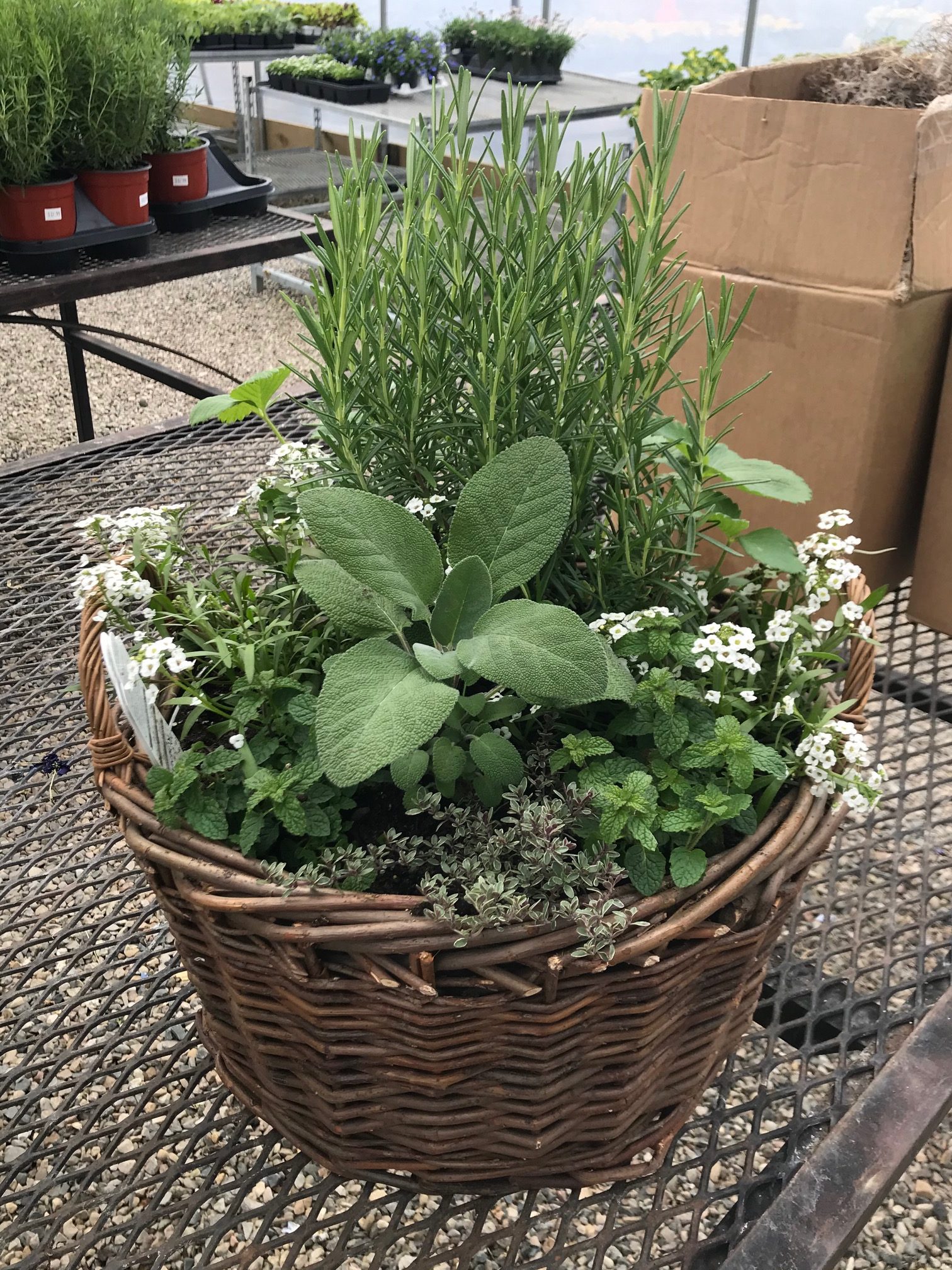
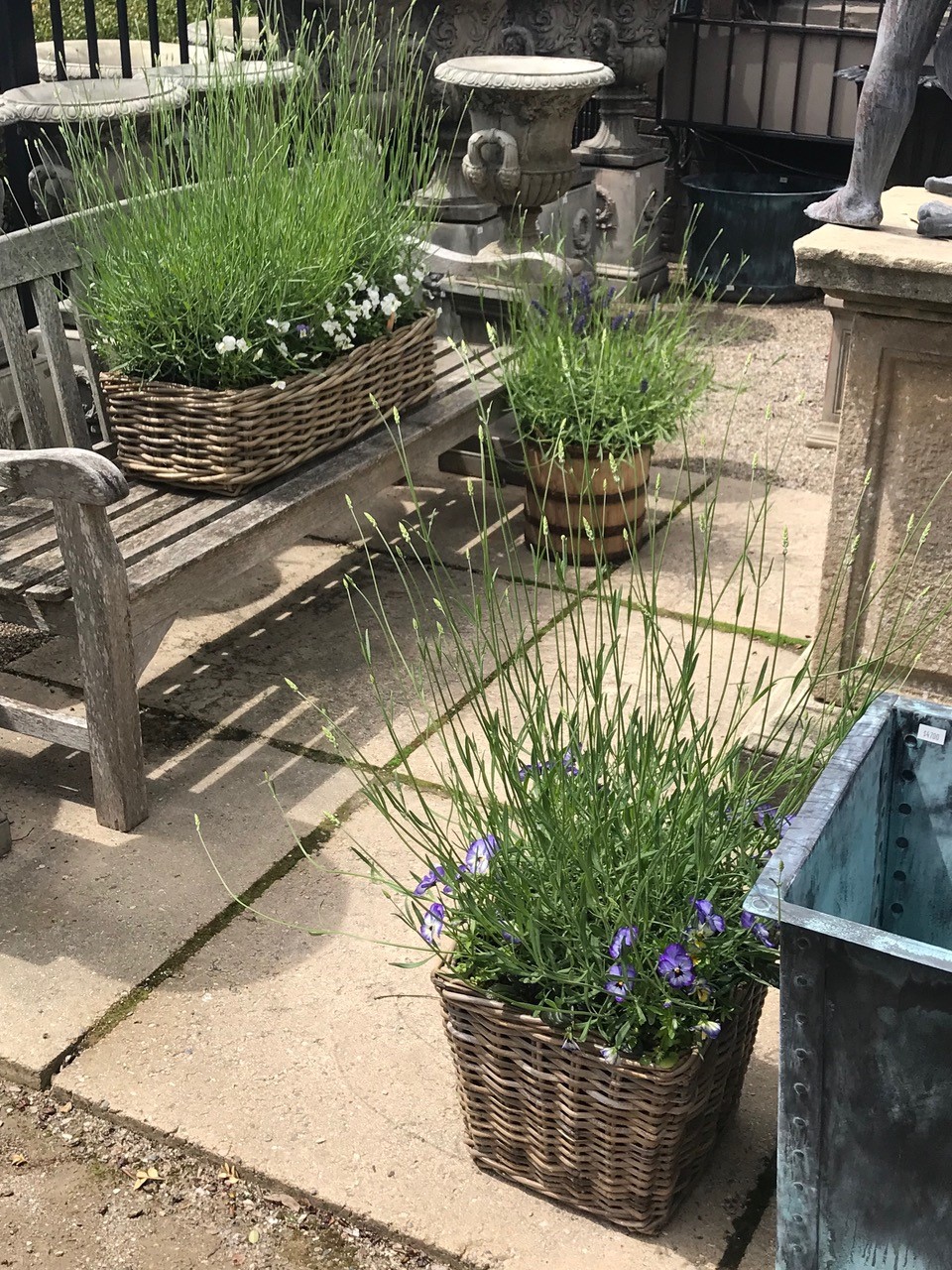
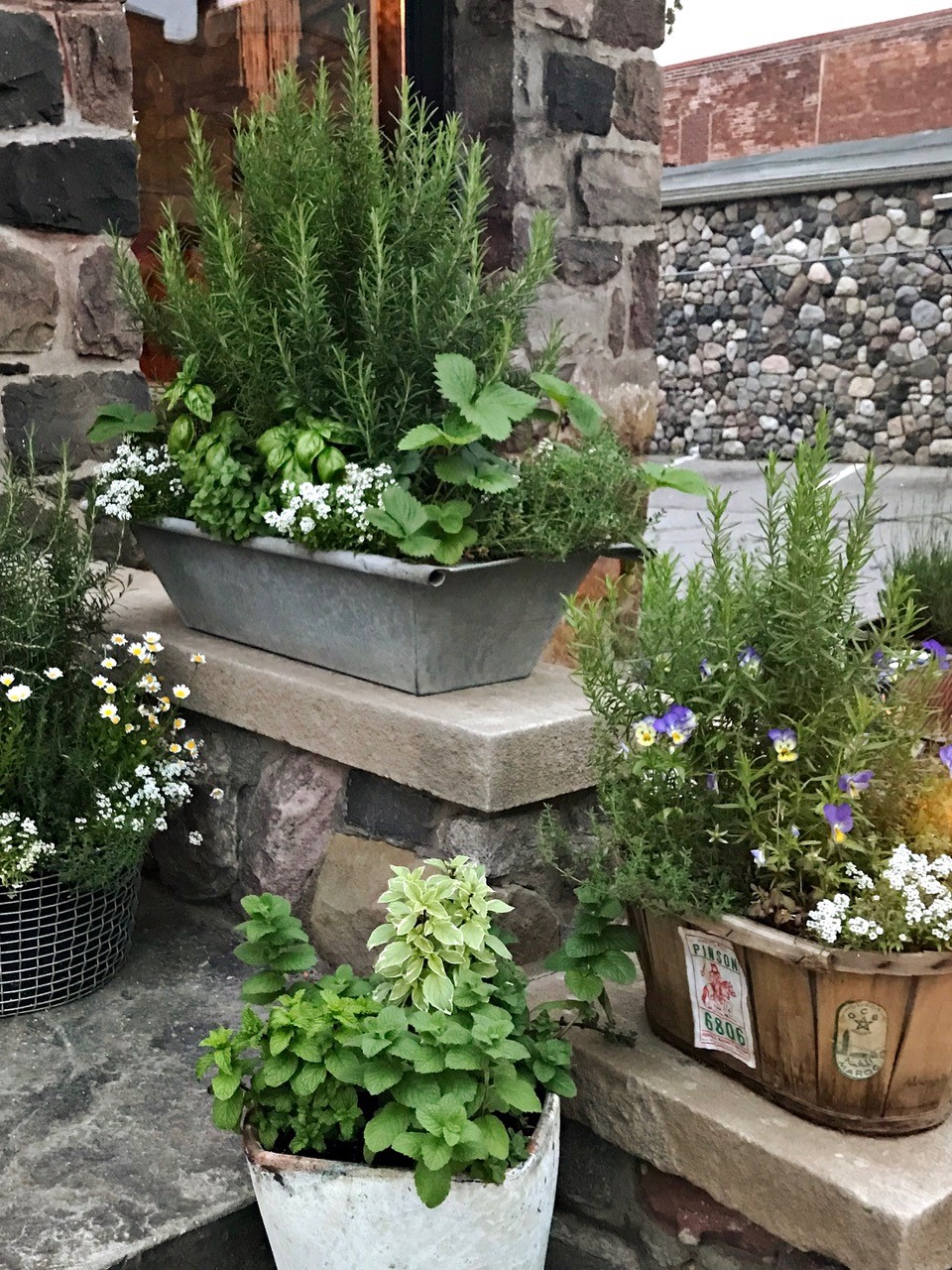
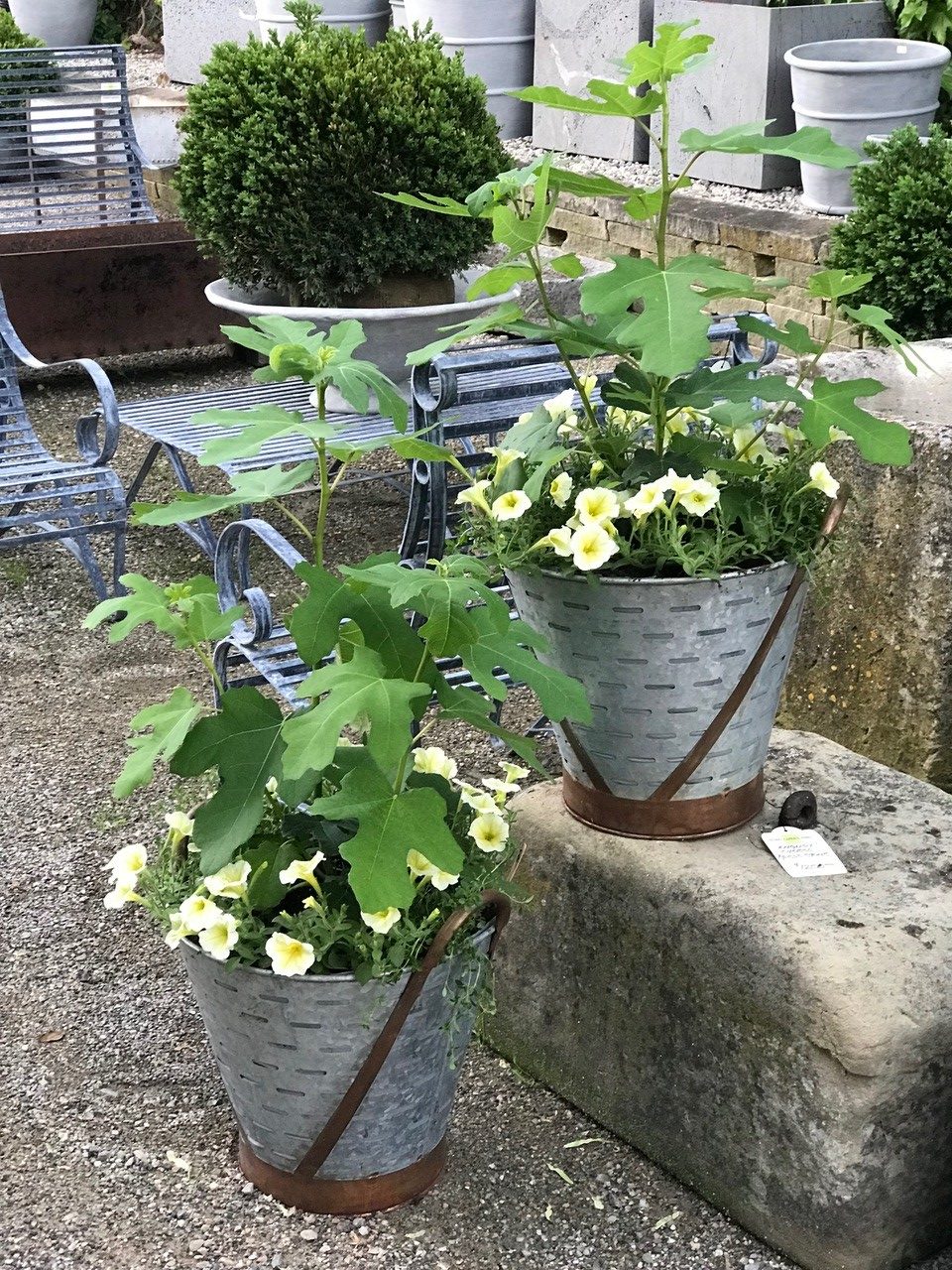
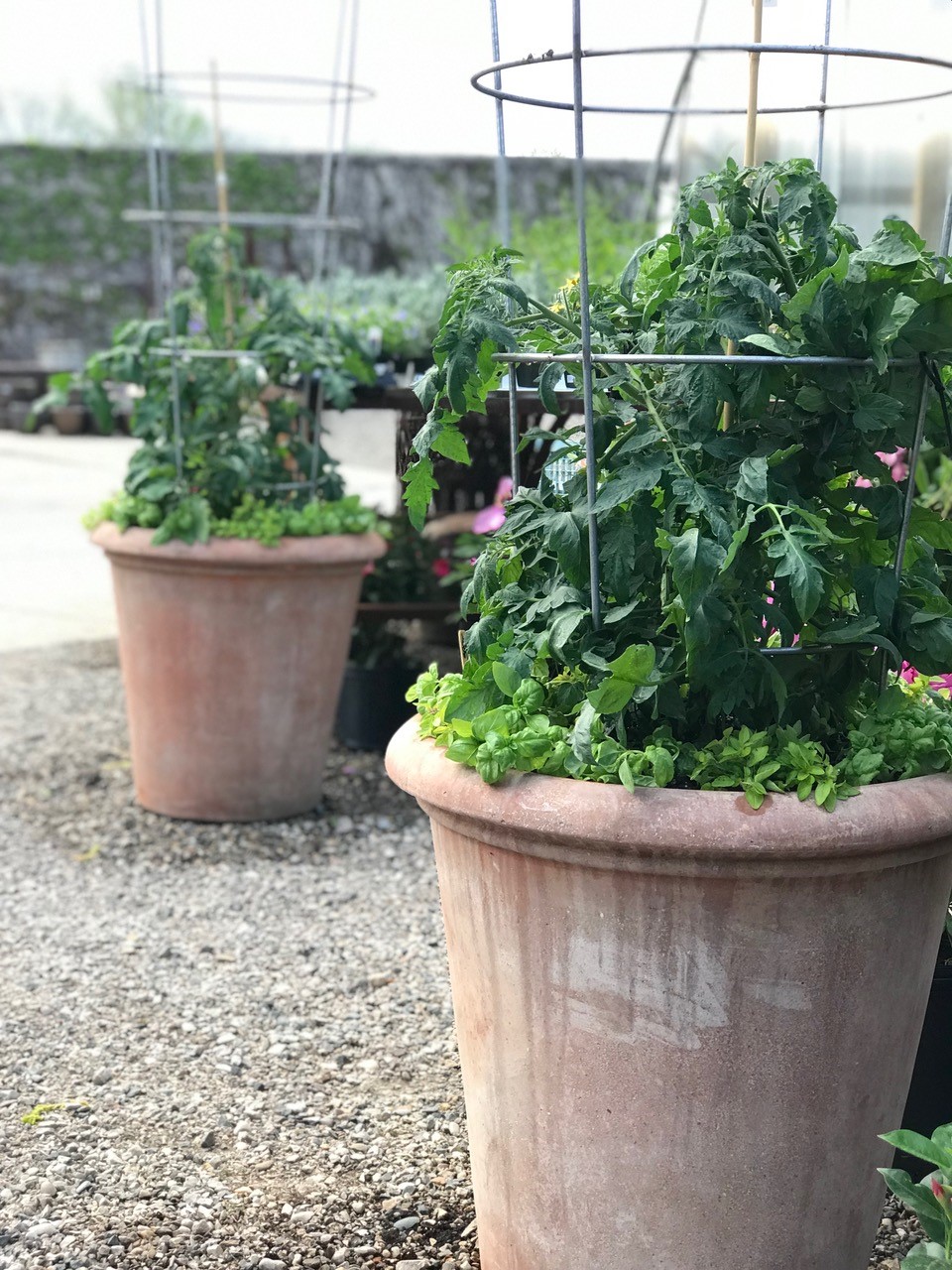
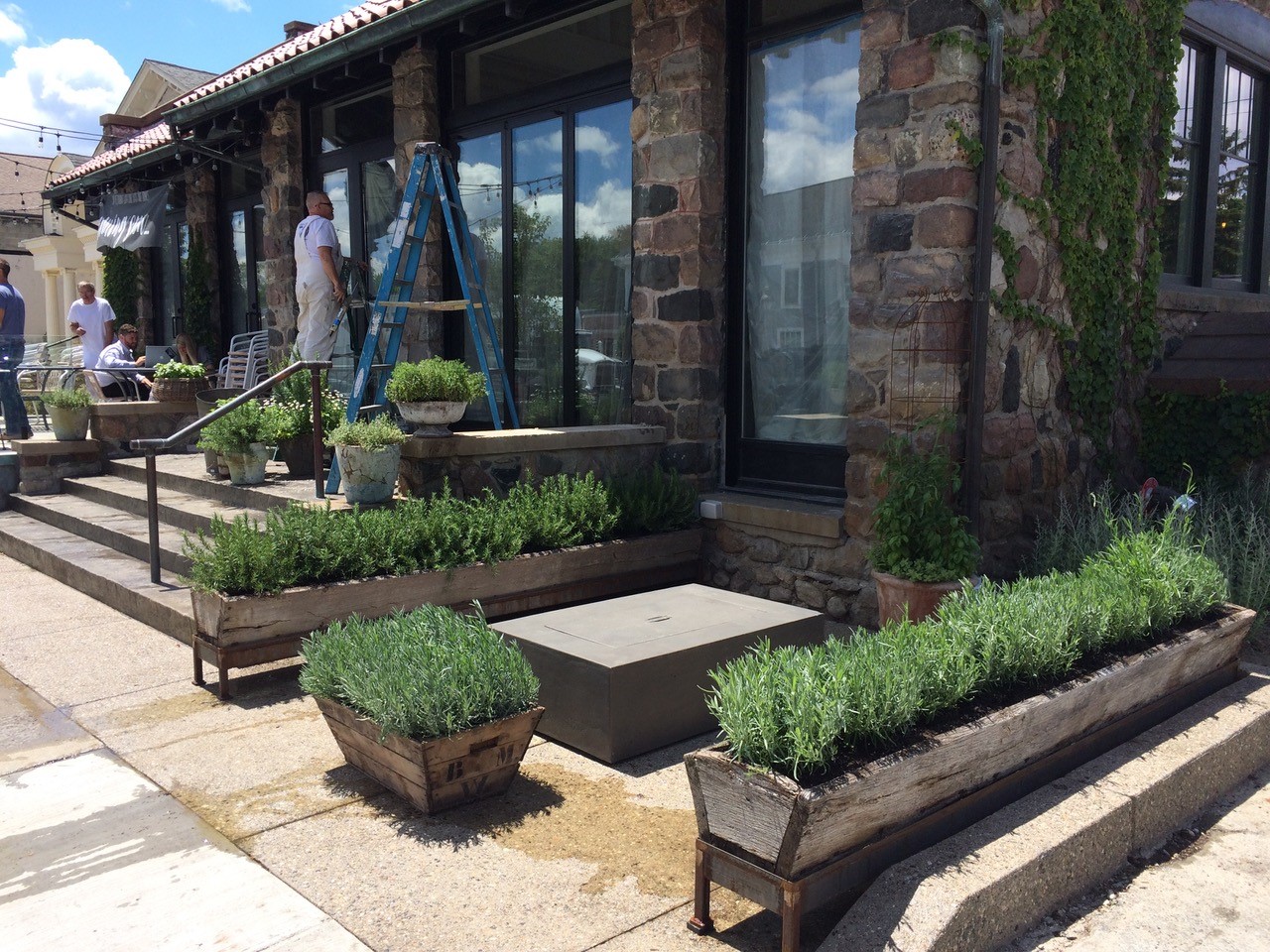
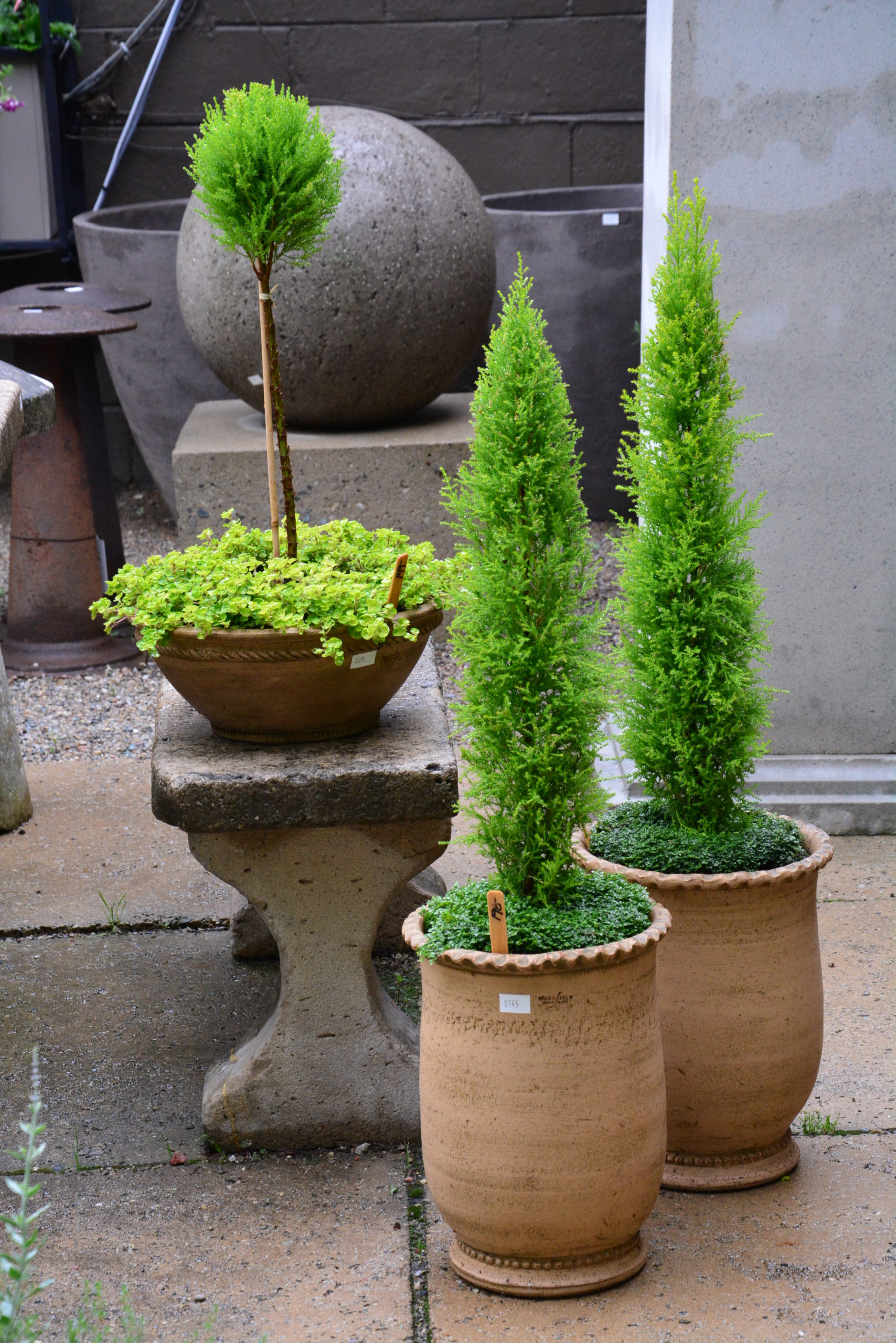
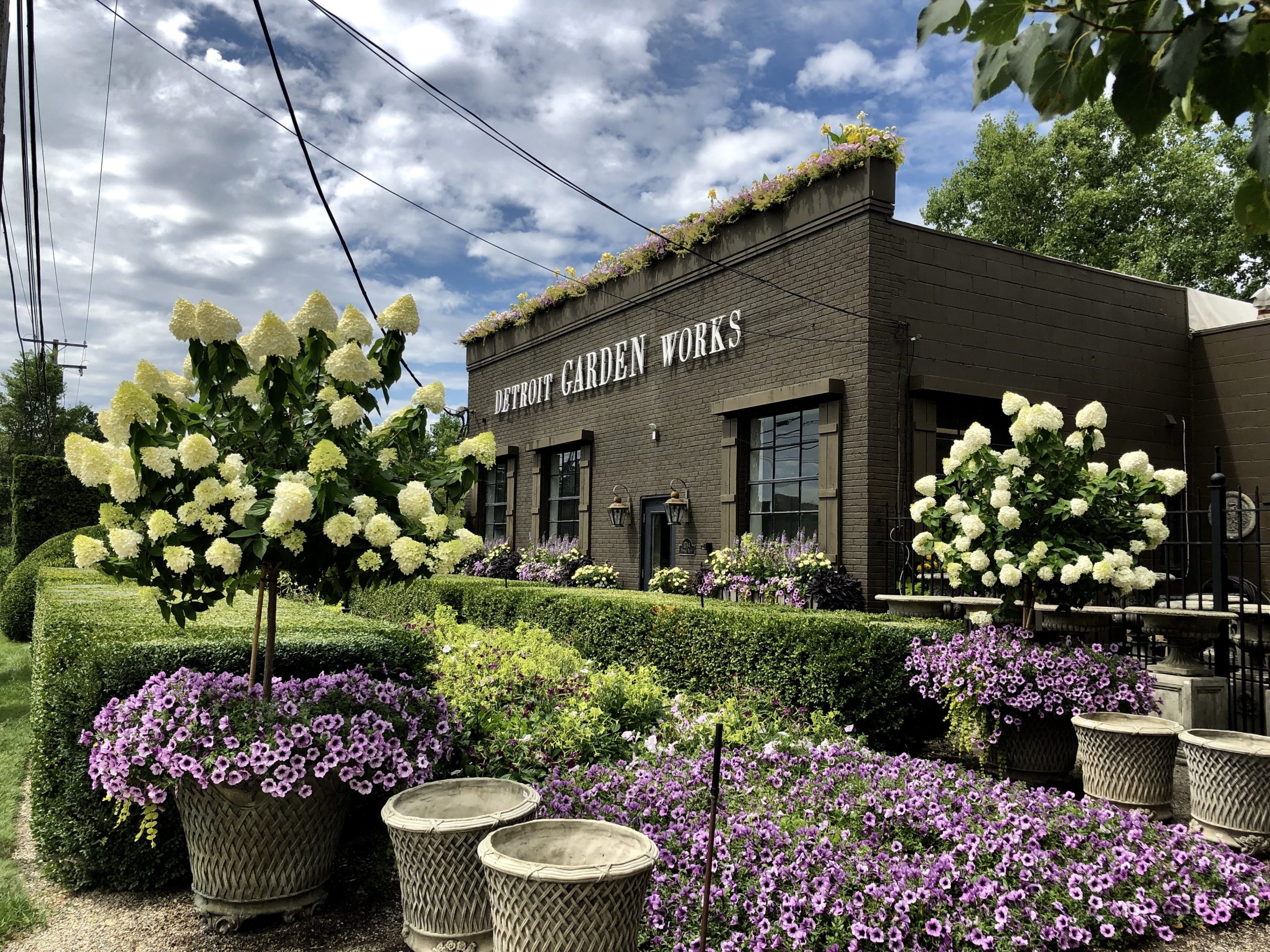
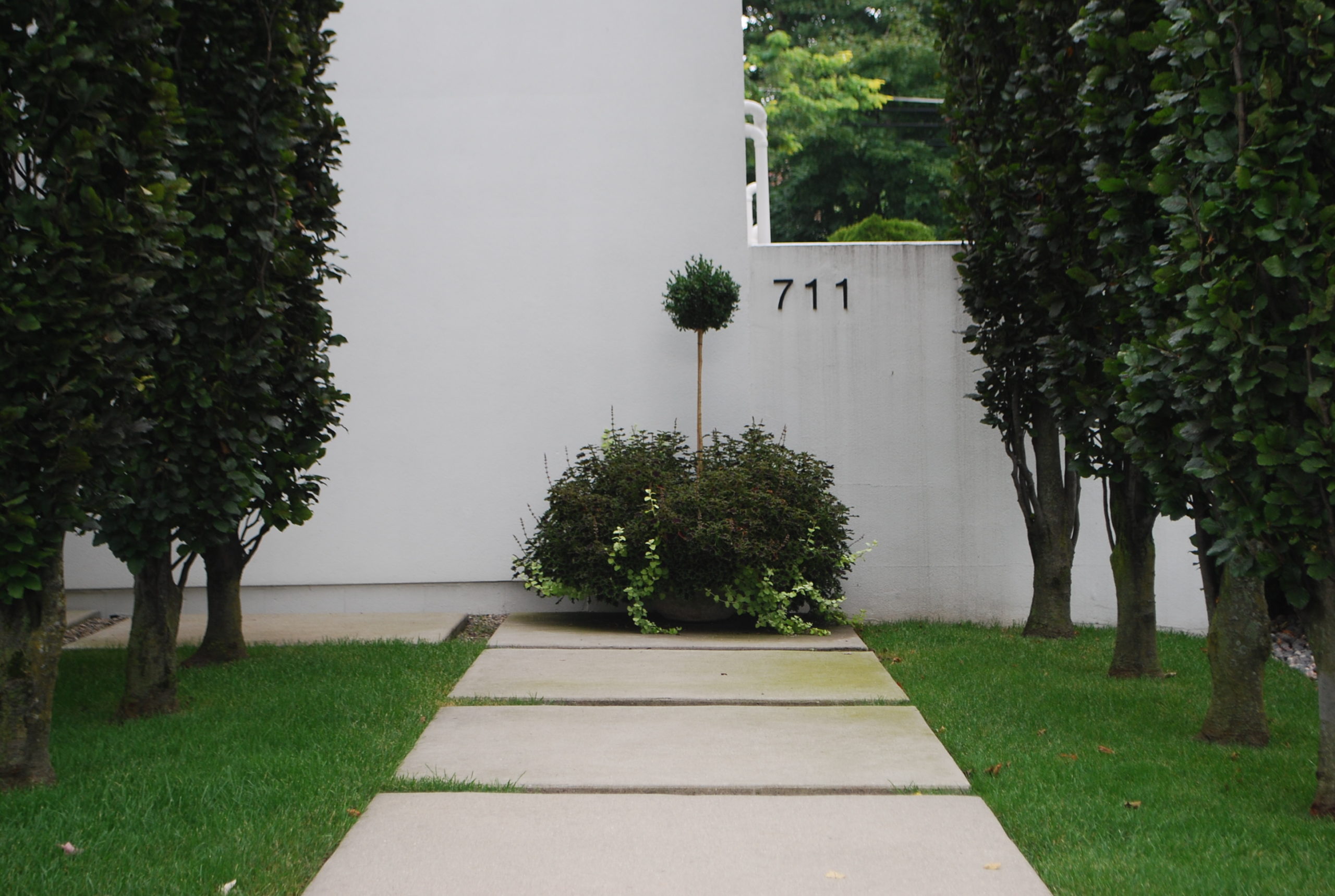
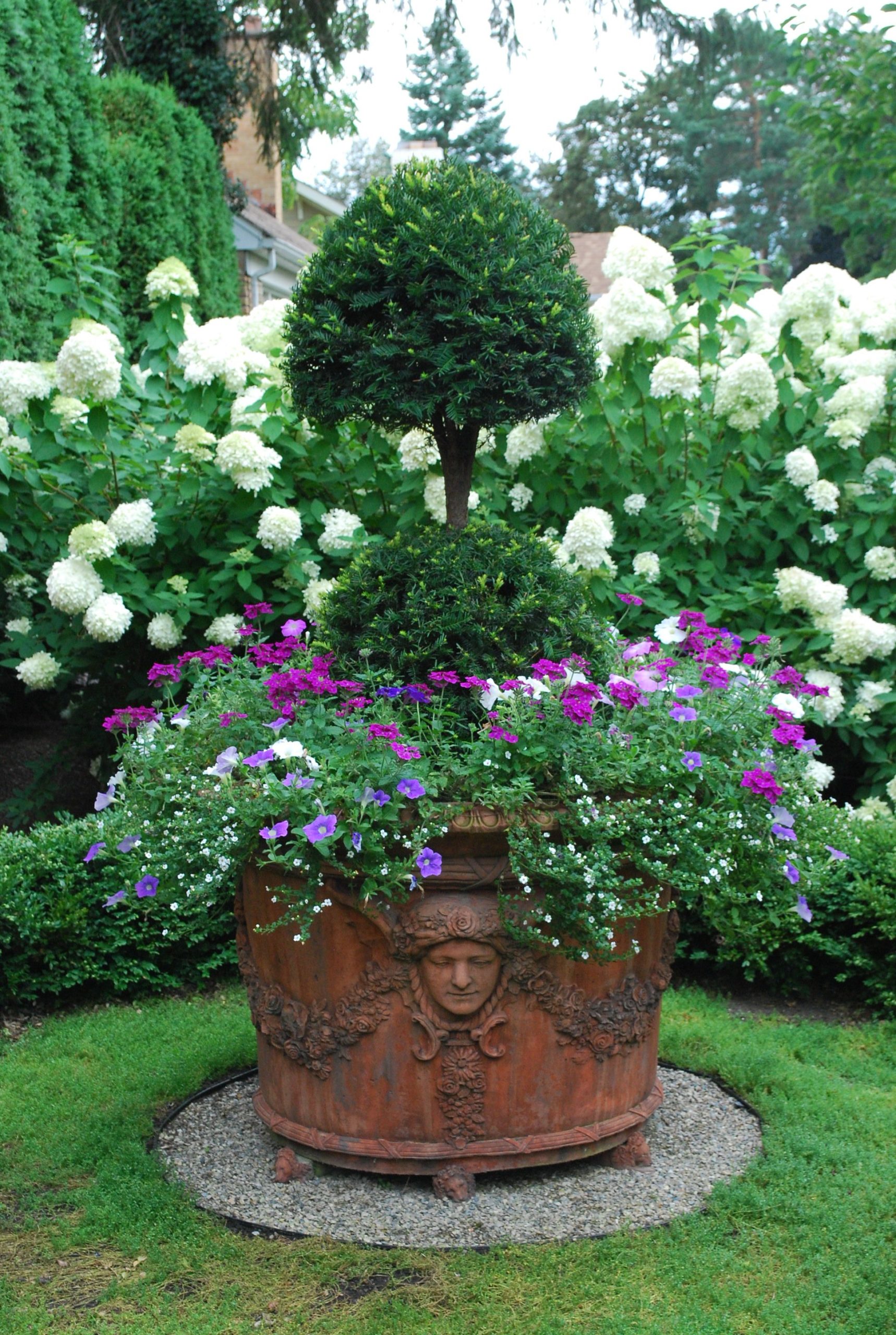
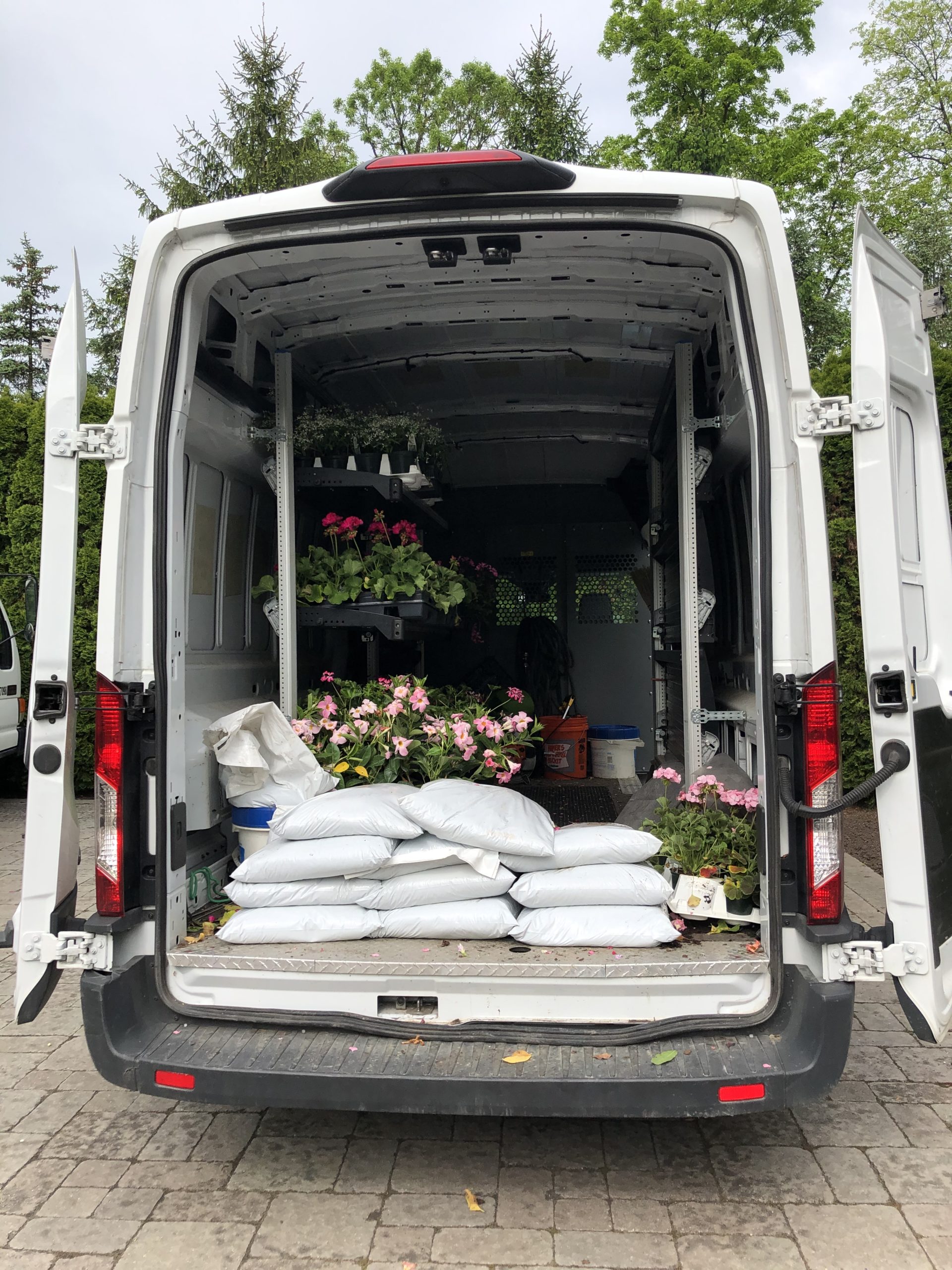
 I like to cart watch. During annual planting season, I am interested to see what plants people choose. I try to imagine what it is they are going for, as evidenced by the plants in their carts. Light and airy? Tropically intense? Textured? Moody? Exuberant? I could spot Rob’s cart in a greenhouse chock full of of them from four aisles away. There will be herbs, perennials, annuals that look like perennials, ferns, subtle colors, a touch of peach and pale limey white or pale yellow, grassy elements, self effacing shapes and unusual micro-textures. His cart will look much like a cross between a more measured version of road side weeds, and ingredients common to Mediterranean style cooking. If this sounds complicated, consider that I have been exposed to his work, and the evolution of his work, for decades. I know it when I see it. Some people shop plants with no rhyme or reason that I can determine. I am not a fan of no rhyme or reason, so I will skip over that. Other gardeners shop plants with color as a primary organizing element-I would be one of those. Determining a color scheme for a collection of pots is one of the season’s great pleasures. I am embarrassed to say how much time I spend going over a color scheme for my pots at home, and the plants that can represent that.
  We do on occasion get a request for a very specific color palette. In this case, a special event slated for August came with a request for pink and white flowers. Making that work is more difficult than you might imagine. There are many shades of pink, ranging from peachy pinks to blush and on to rose pink and carmine. Some pinks are dirty, and others ring clear as a bell. I am thinking of that classic medium pink petunias, “Cotton Candy”. The upshot is that there are many shades of pink to choose from. Take your pick. Shades of white are common in the house paint industry, but not so common in annual flowers. Porcelana roses, common in the cut flower trade, are quite creamy. Some white zinnias are creamy. White marigolds are decidedly on the yellow side. But most white seasonal annuals, from mandevillea, snapdragons, trailing verbena, supertunia white, New Guinea impatiens, and Boston daisies, are a fairly bright white. The variety will be driven by the shapes of the leaves and the growth habit of the plants, and various shades of pink. It certainly is easy enough to vary the volume of pink and white in a given container, but to plant a series of containers that stand out individually while guided by a restricted color scheme is an intriguing challenge.
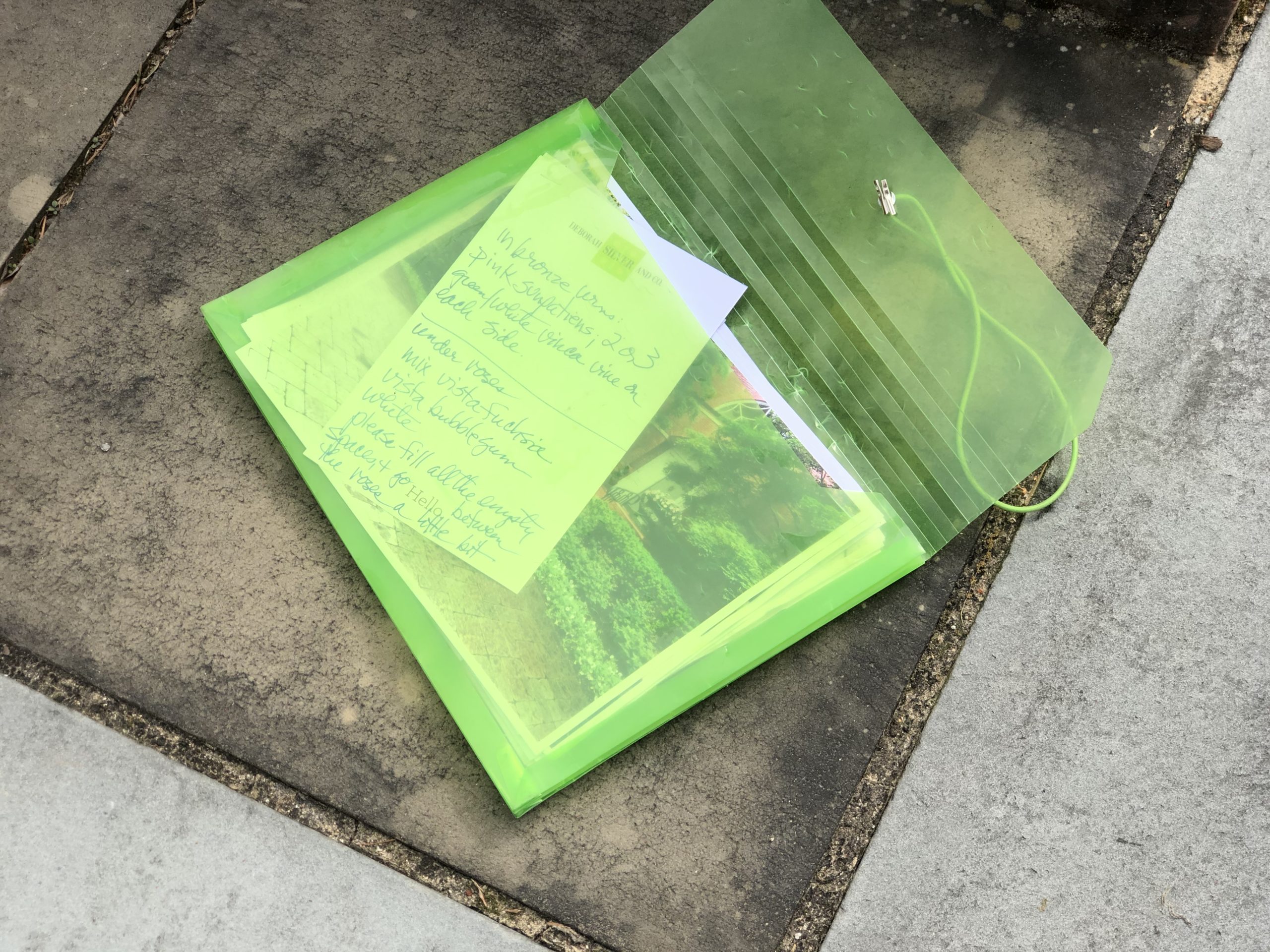 No matter whether the planting project is big or small, I furnish my crew with a photo of the pot or area in question, and a planting scheme. Those sheets go in a waterproof envelope. That is their invention. A job site is known for equal parts of dirt, water, hands and boots. Those sheets provide some order and direction. A road map, as it were. There is no discussion of the shades of pink or the volume of white. All of the design comes ahead of the planting. Years ago I used to accompany my crew to the job, and go over all of my design decisions in real time. To the last, my crew hated that. They made it known that I needed to make a call, and sign off – so they can do their part, unimpeded by any hand wringing on my part. They want to go and fill pots with soil, grab the sheets, assemble the plants, plant, clean up and water. Do I have any empirical evidence that suggests that my second guessing myself resulted in better design? No.
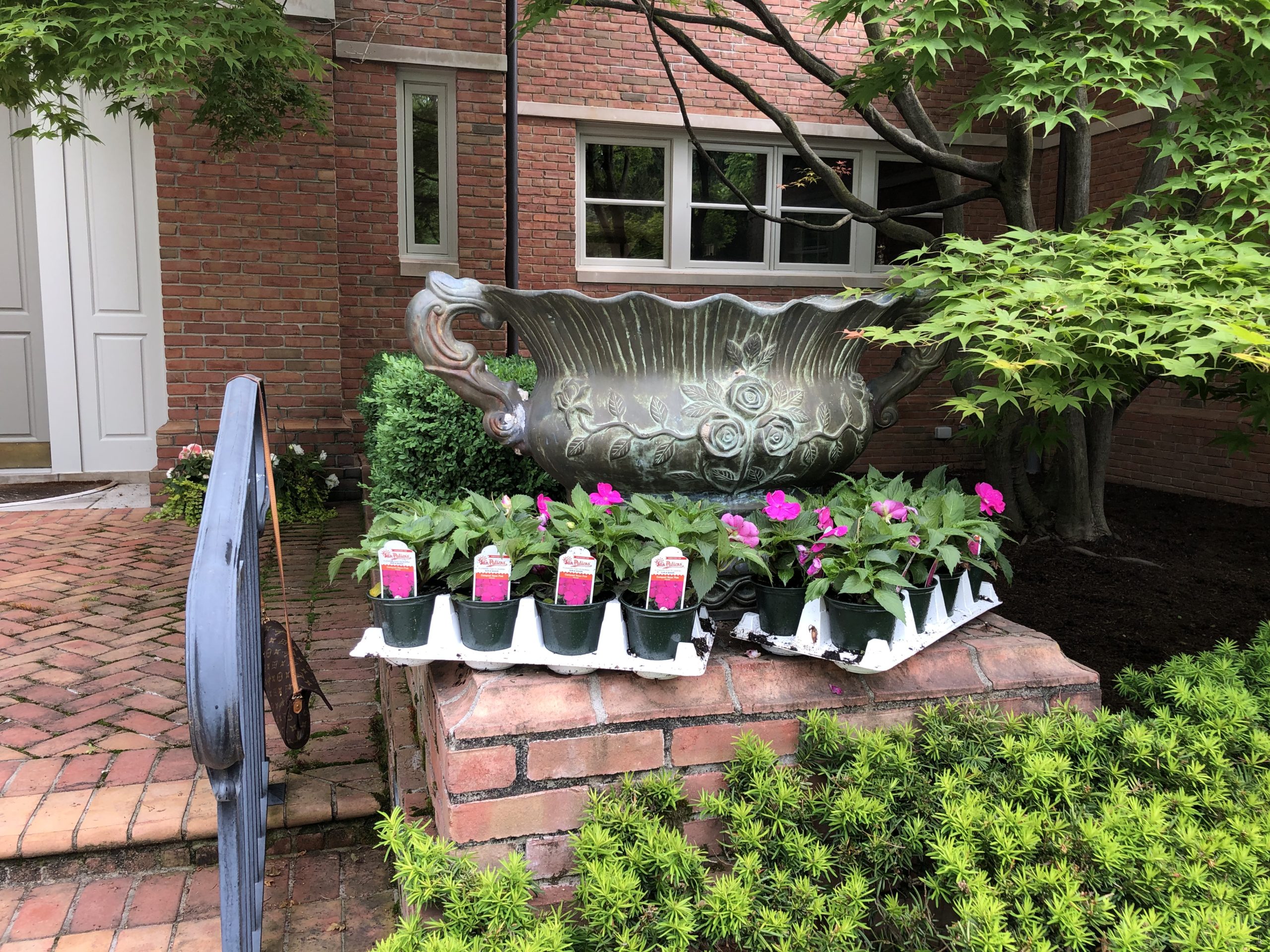 I never go to a container installation anymore. I am unwanted, and my angst about the design is a huge bore. Just ask my crews. So now I play my cards, mark up the sheets, hand them over, and stand pat. Of course I will not know whether my pink and white scheme will be beautiful, dynamic and enchanting for quite some time. The plants need to grow. But the pictures that come back to me via multiple cell phones during the installation and at the end of the day are a clue to the future. In my favor-it is hard to go wrong with plants. Those unloved plants can shine, given some inspired companionship. Rob is able to make marigolds look fresh and beautiful, despite their stiff plant habit and ball shaped flowers.
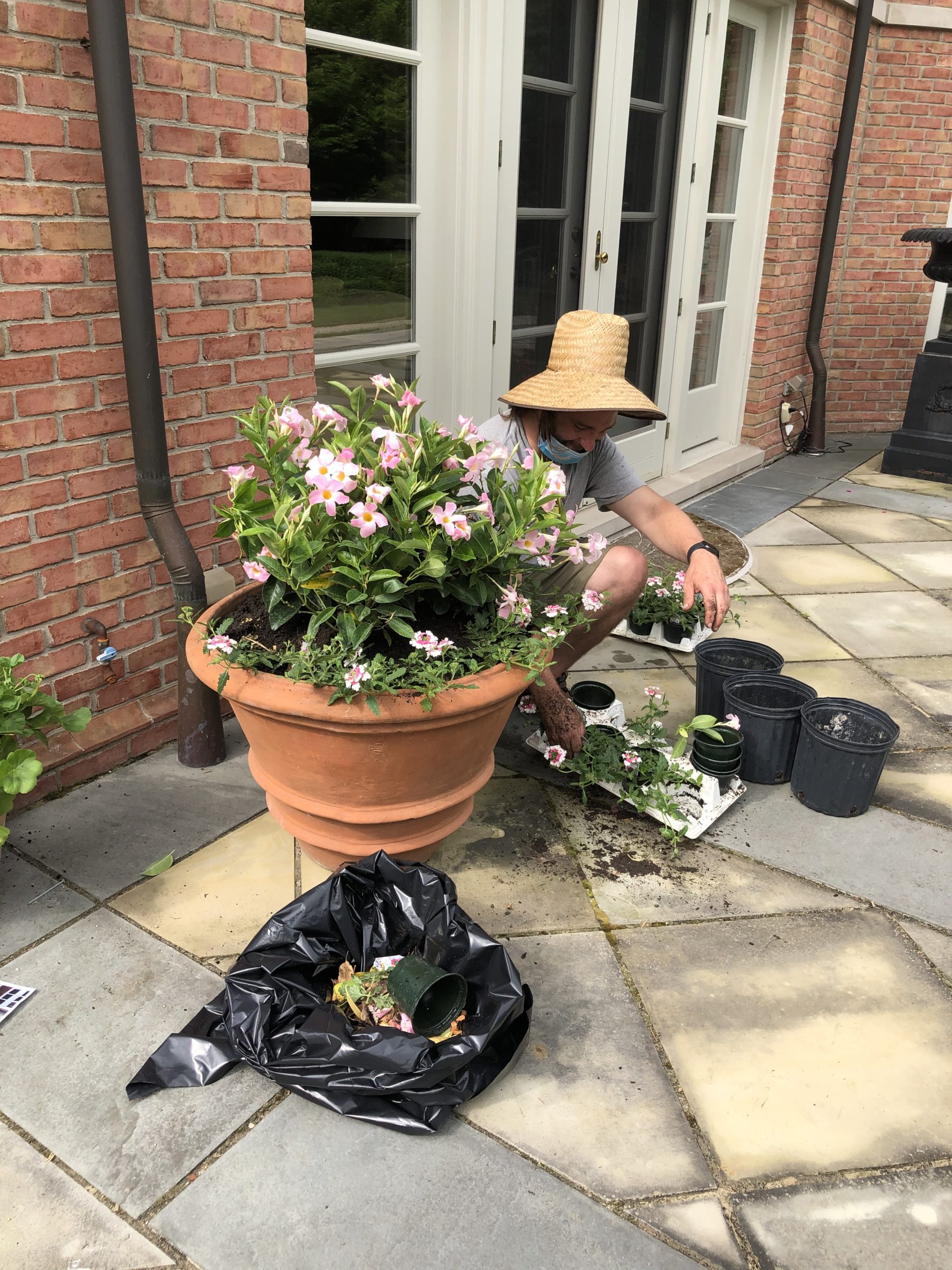 shrubby pink mandevillea and twister pink trailing verbena
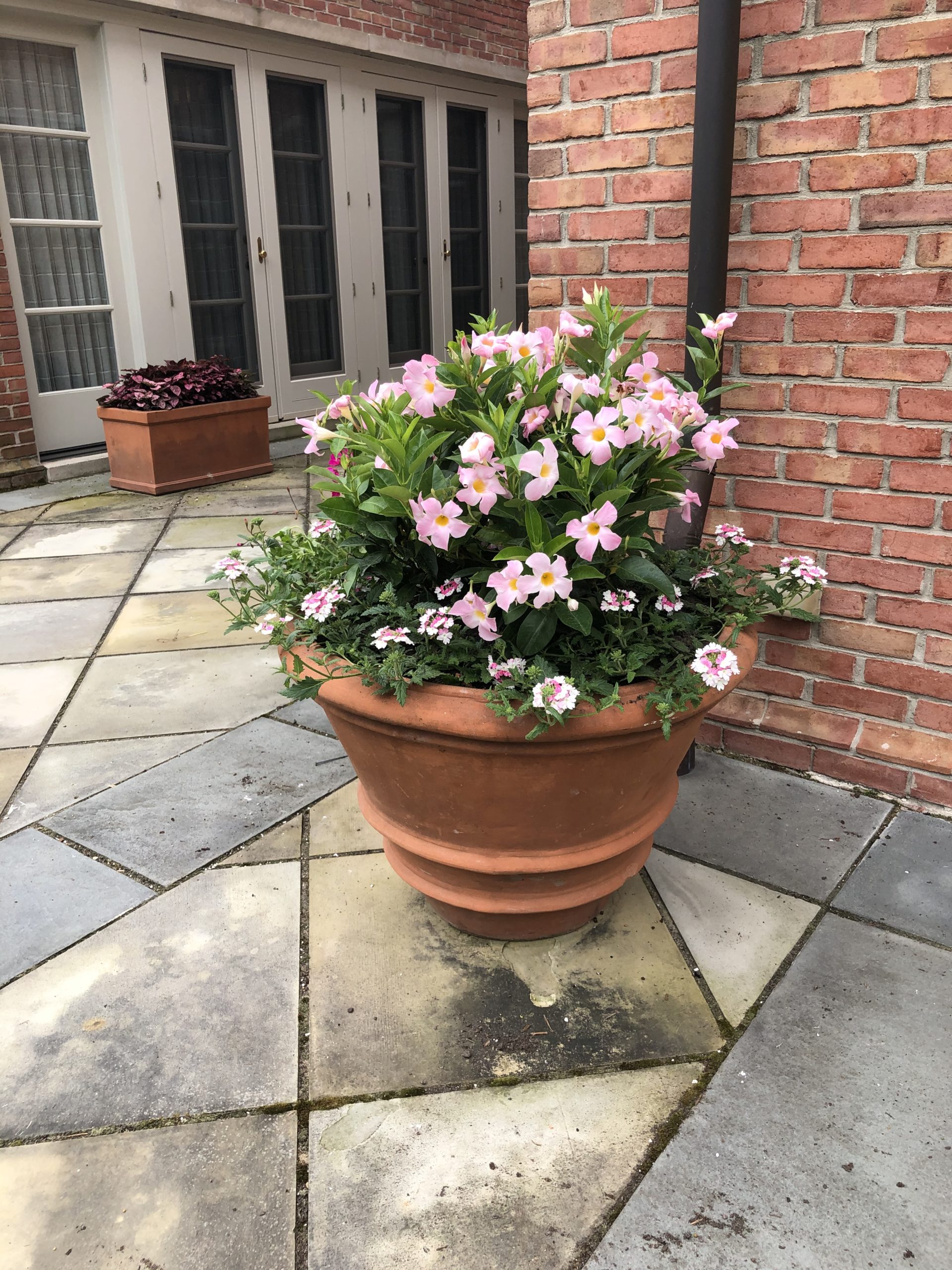 planted container
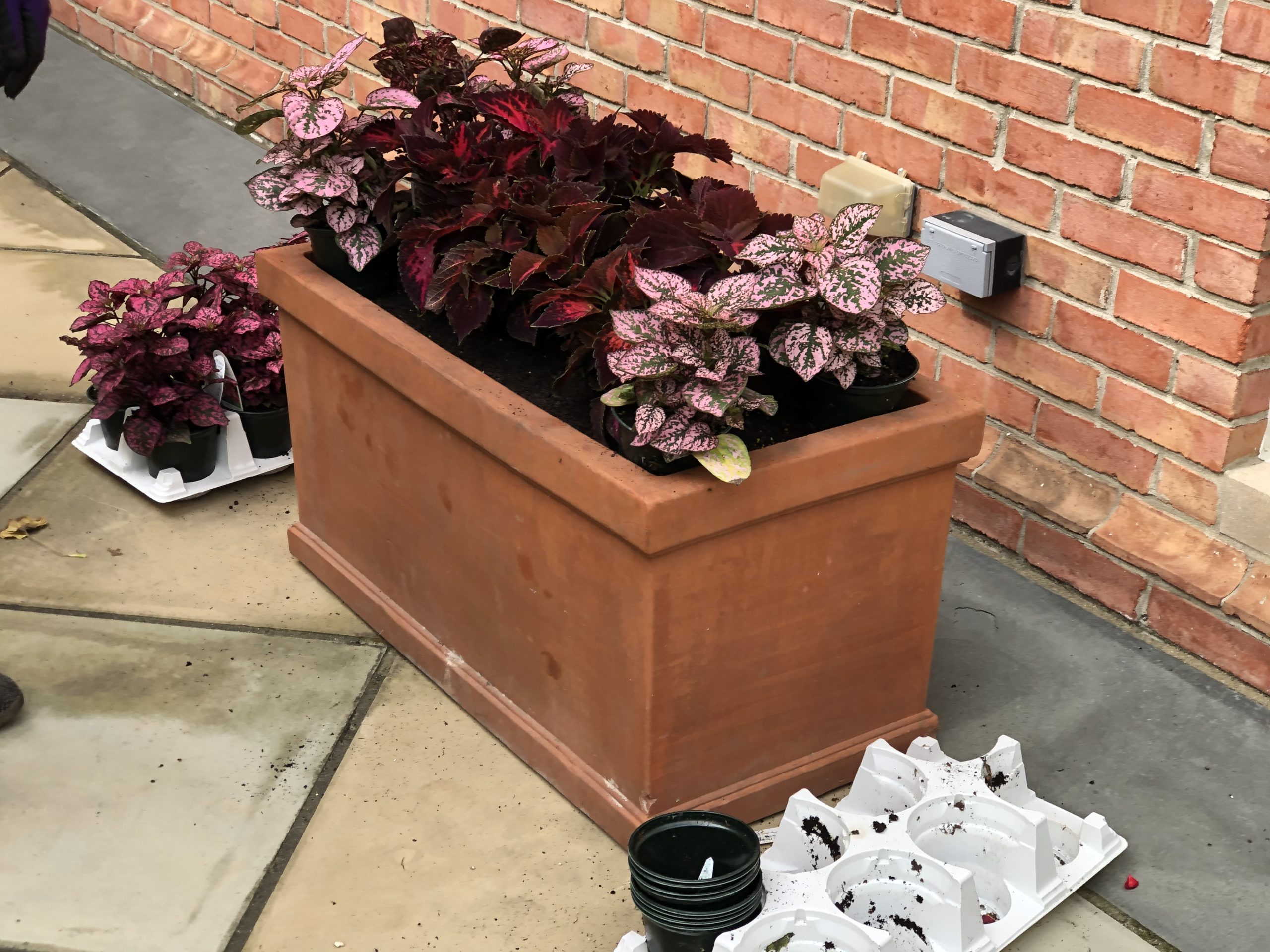 shade container
 kingwood coleus, pink and rose pink polka dot plant
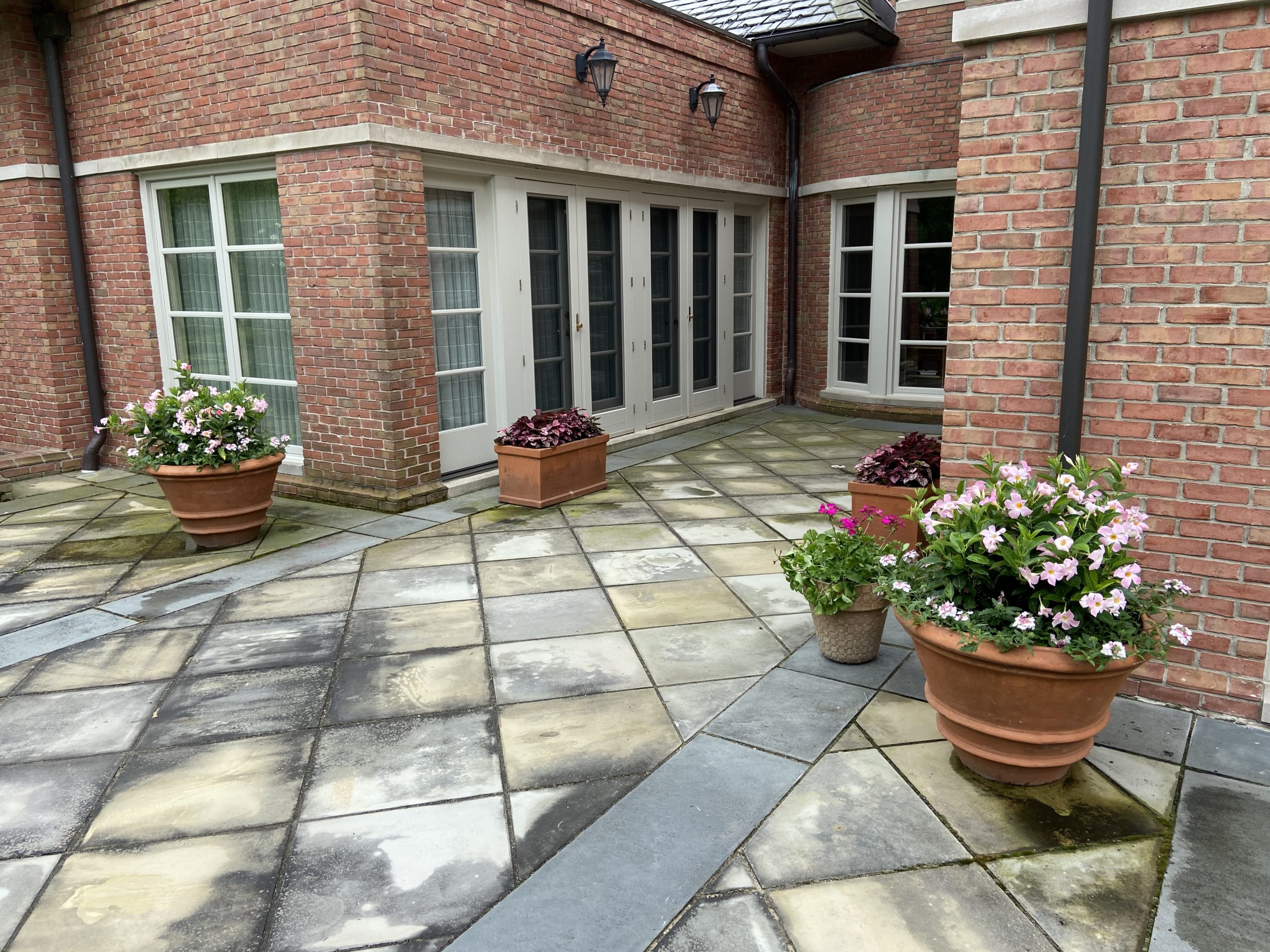
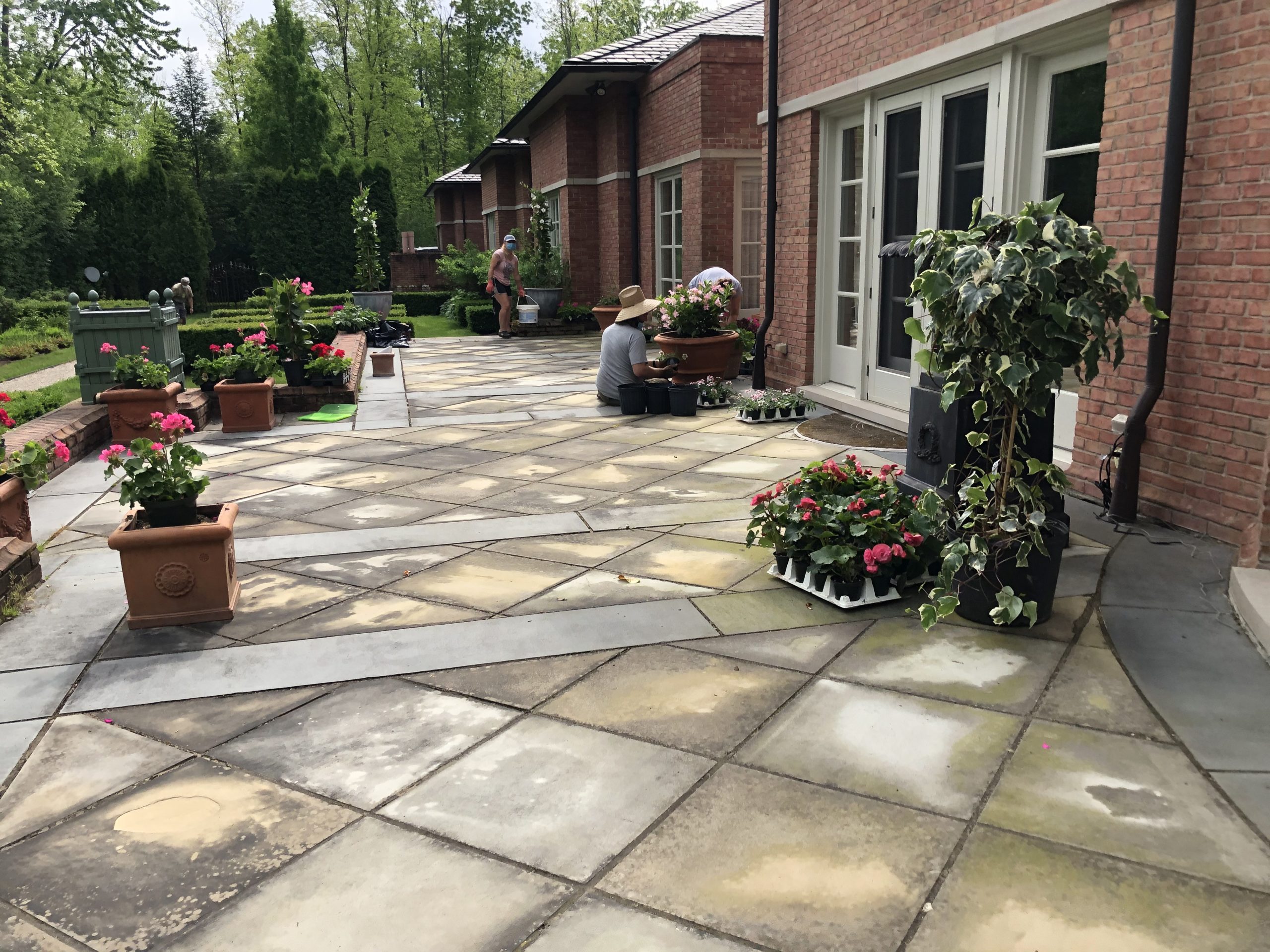 planting
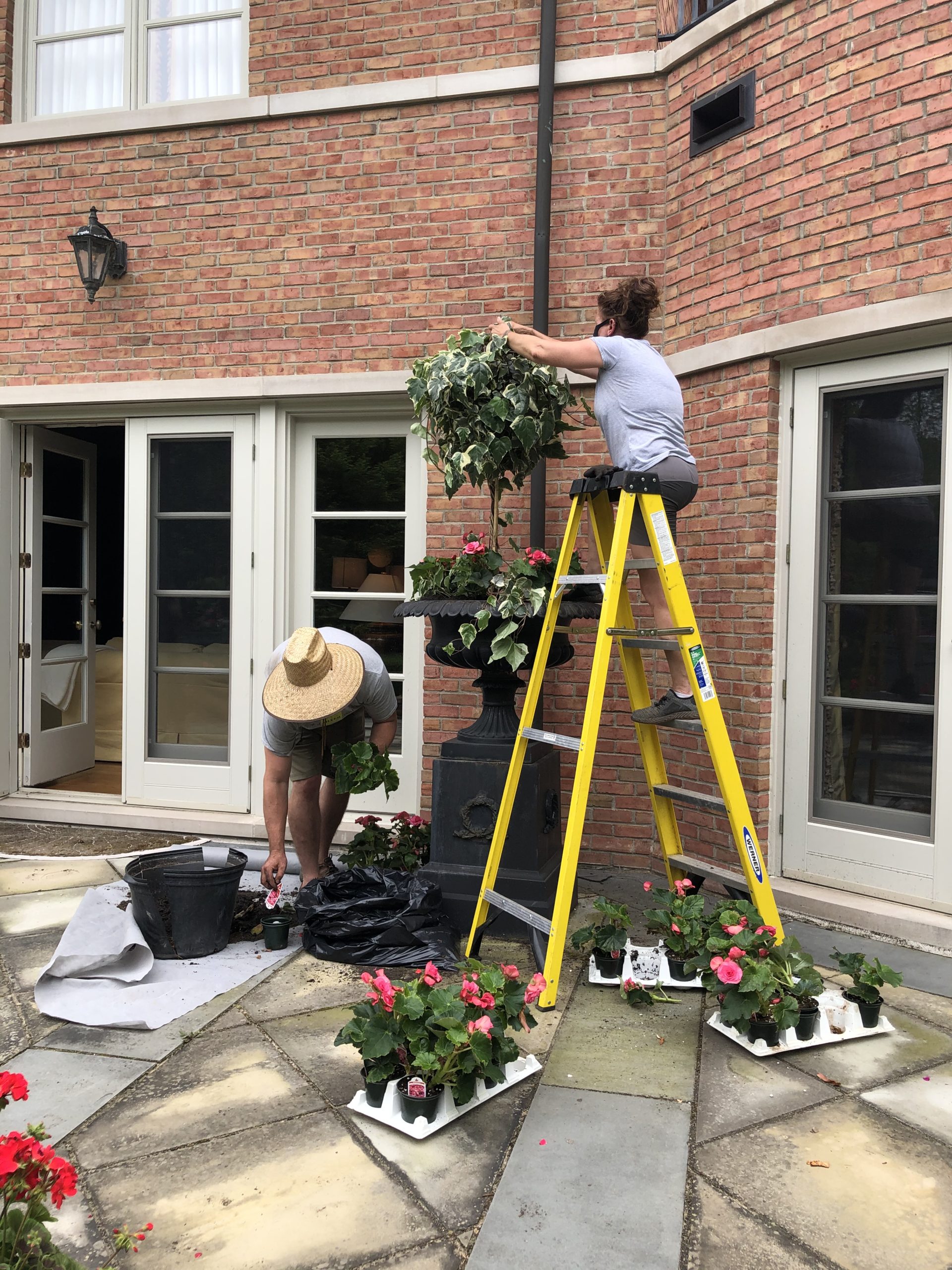 variegated Algerian ivy topiary under planted with pink solenia begonias
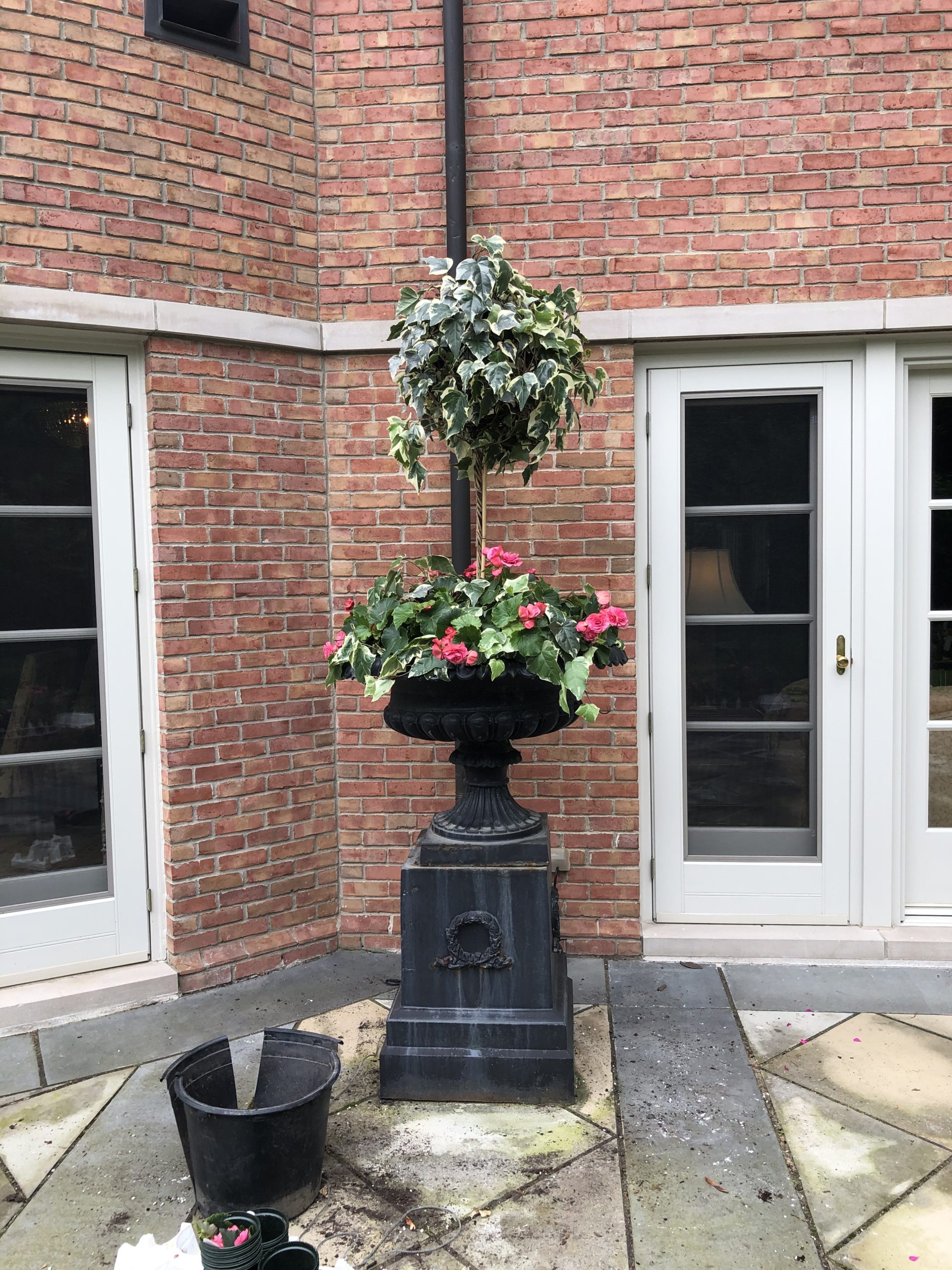 This planting was beautifully executed. The ivy at the base of the topiary has been integrated in to the planting of begonias.
 placing the plants
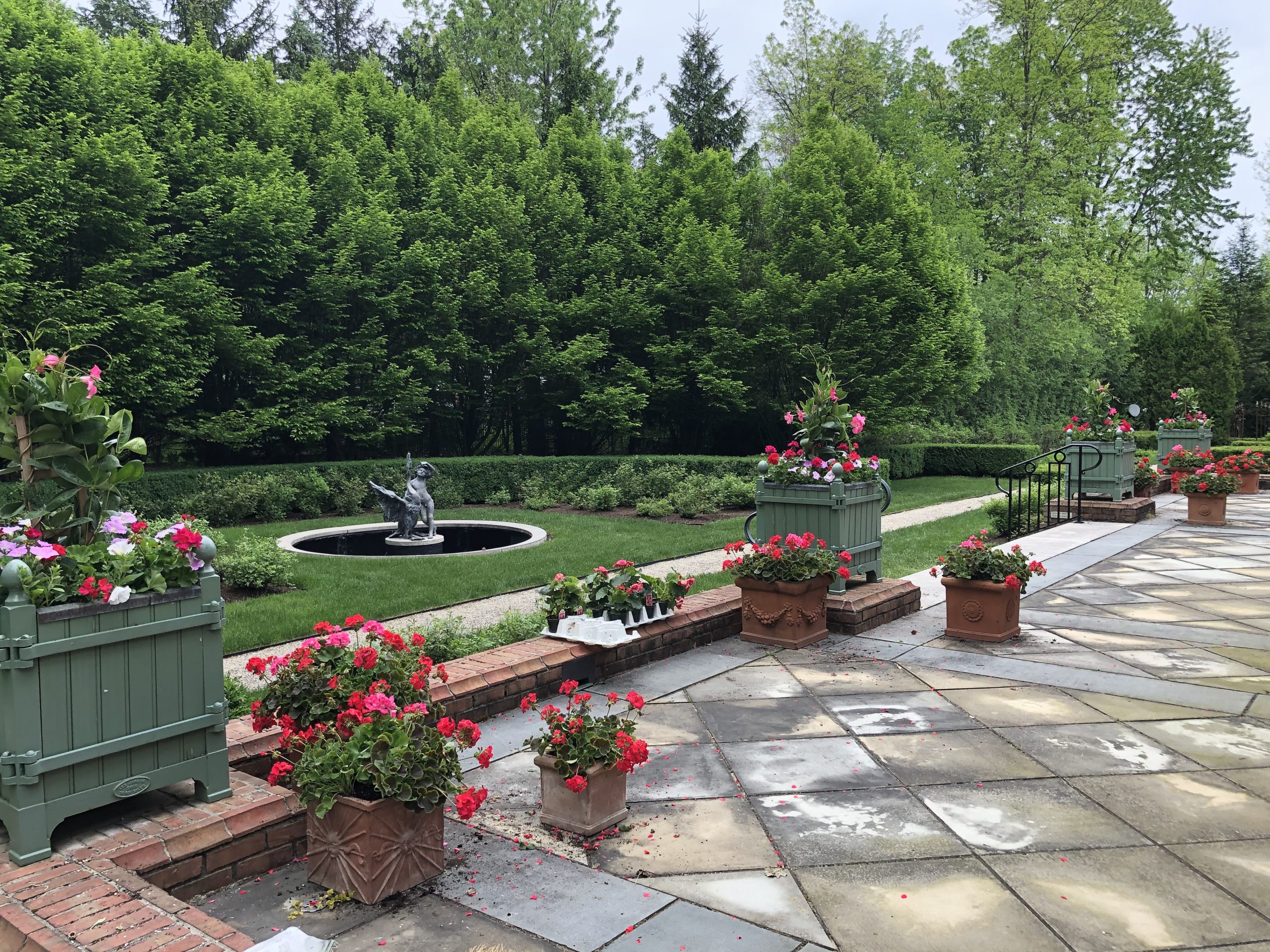 close to the finish
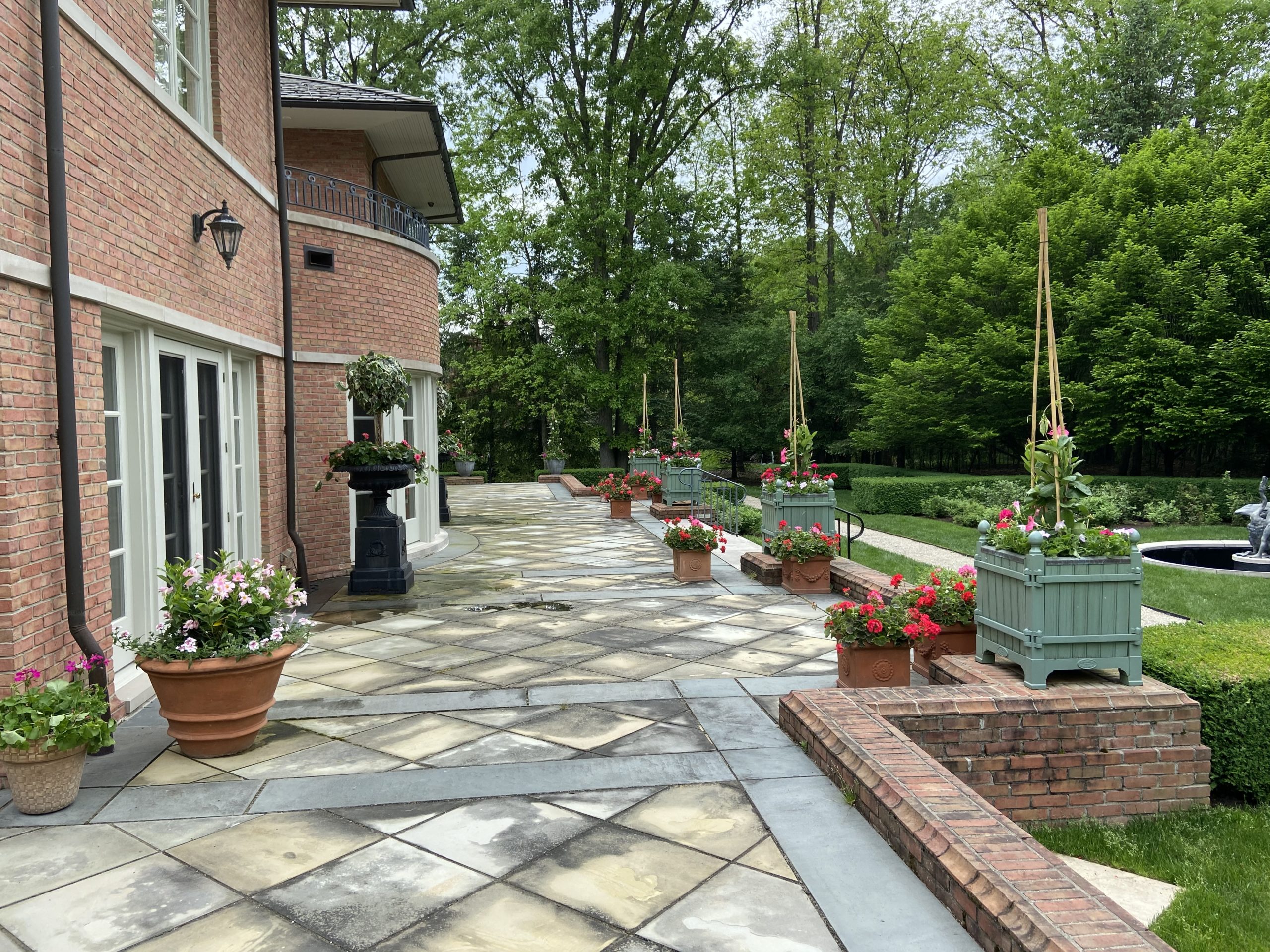 terrace planting
 planting
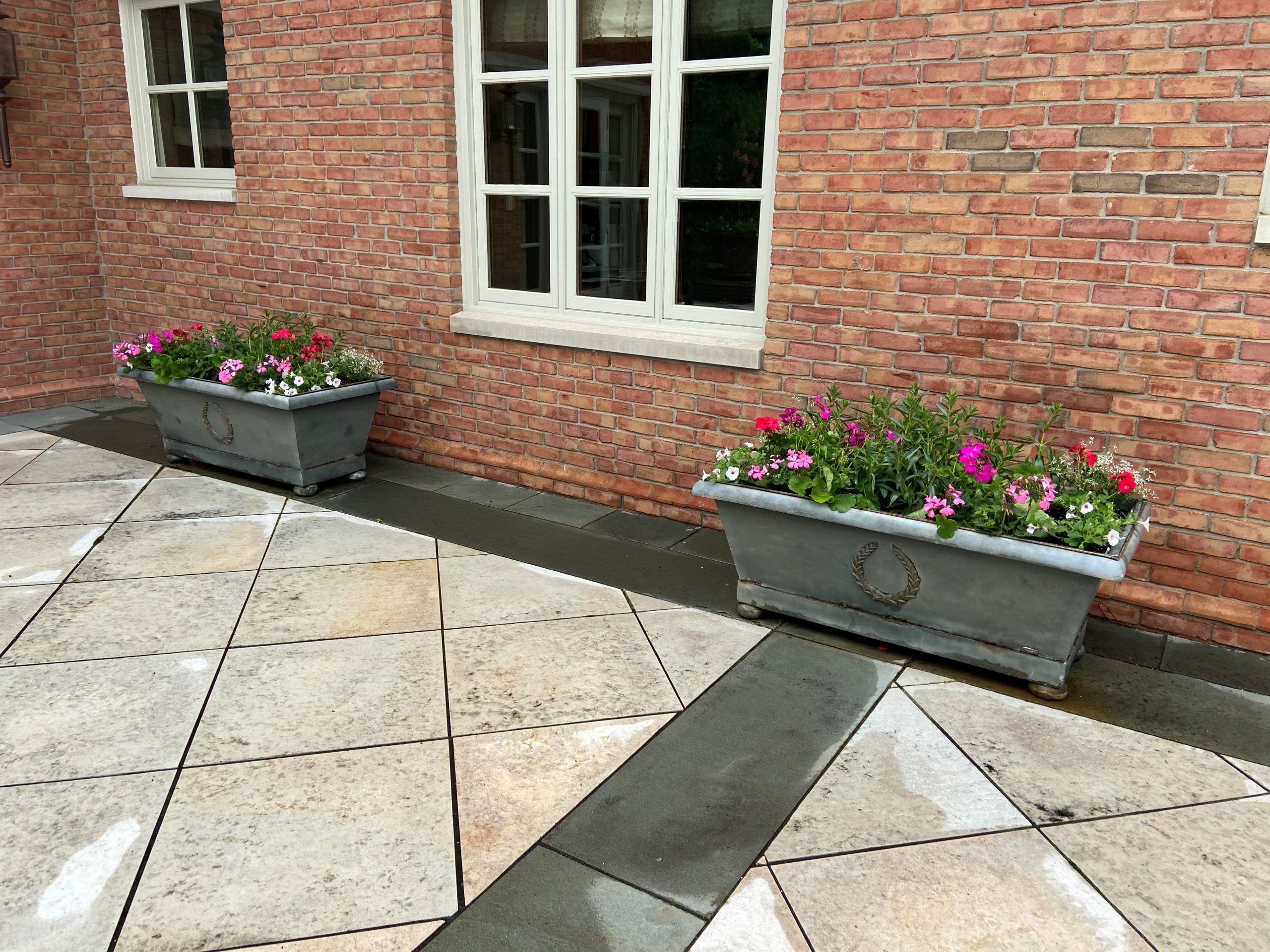
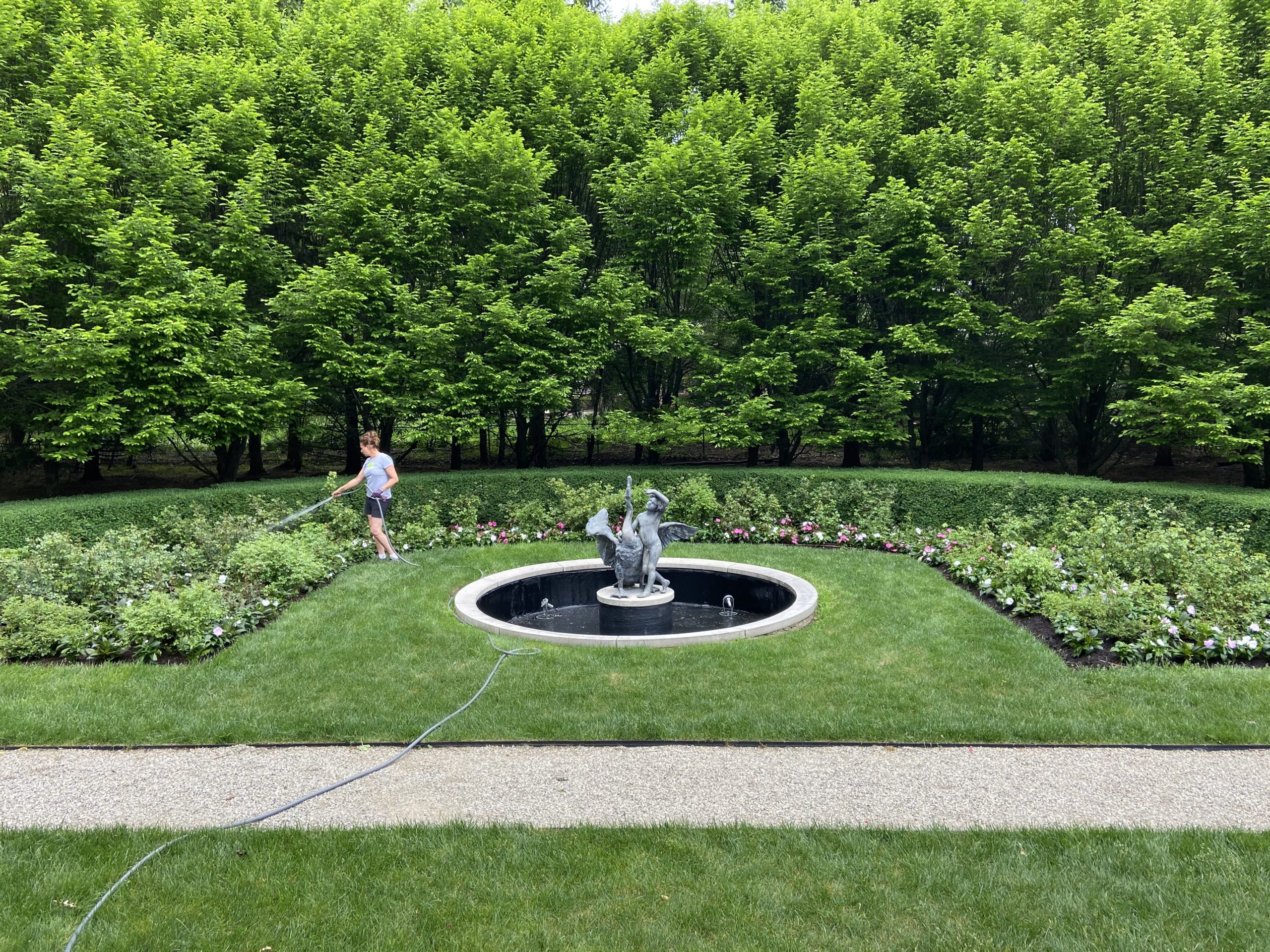 At day’s end, Birdie is watering. I have a theory that plants resent and are set back by the transplanting process. I think a good shower helps to wash some of that insult away.