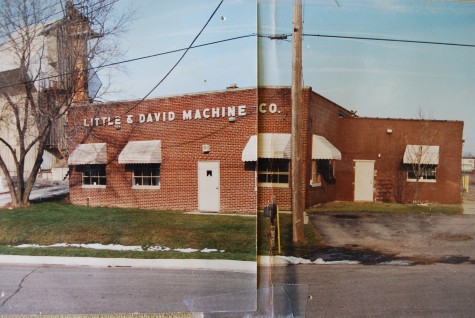
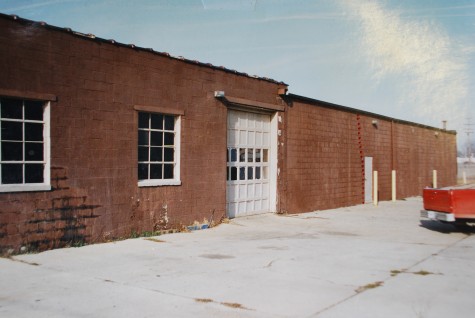
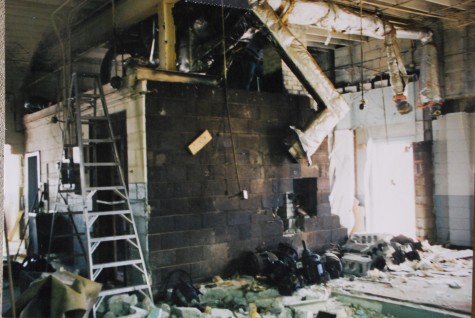
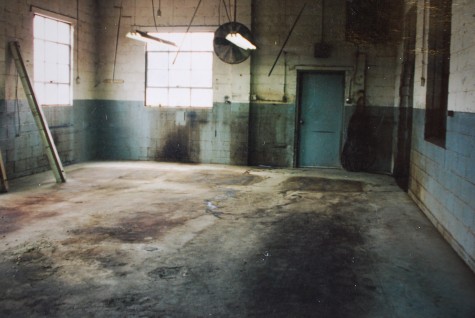
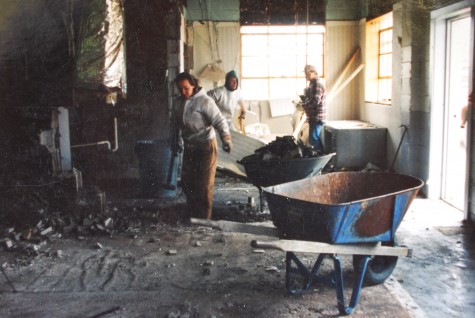
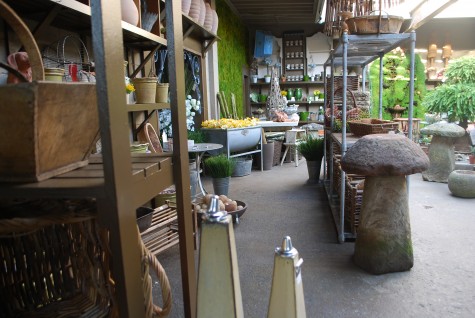
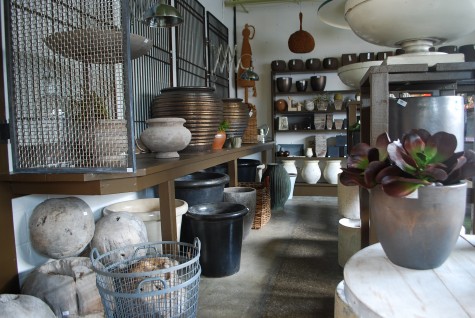
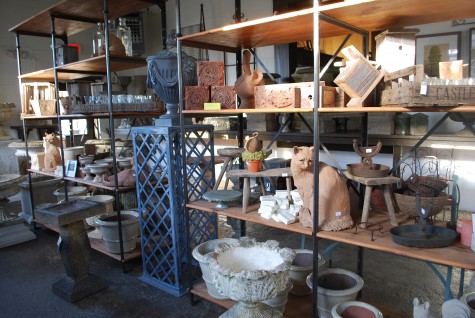
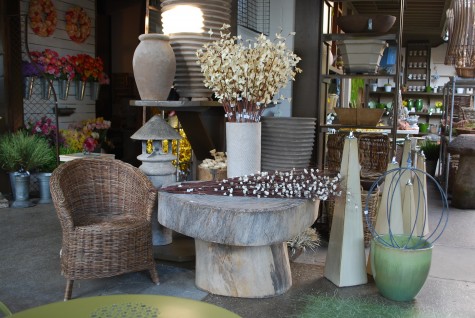
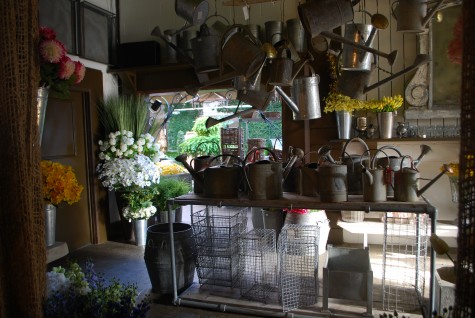
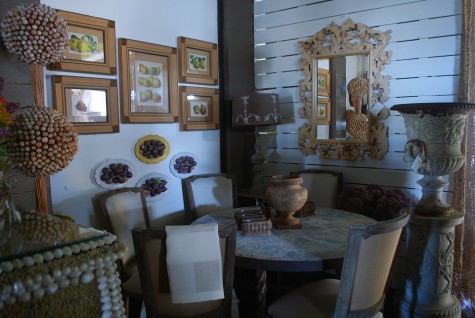
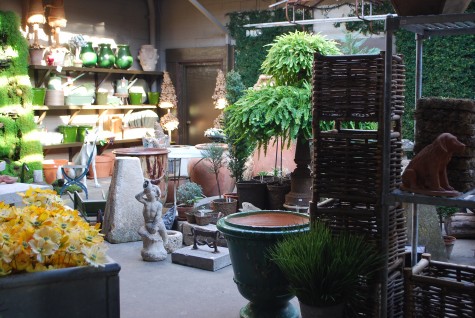
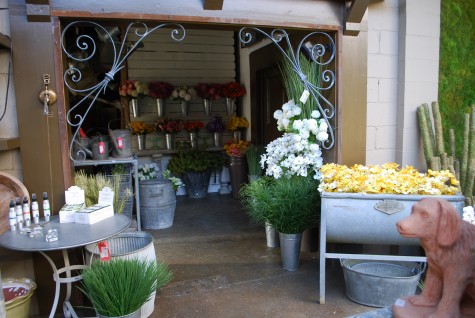
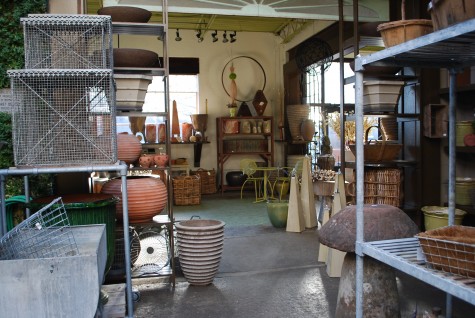
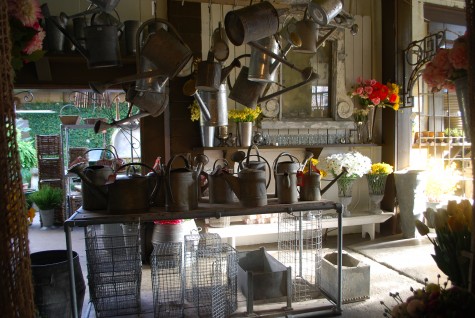
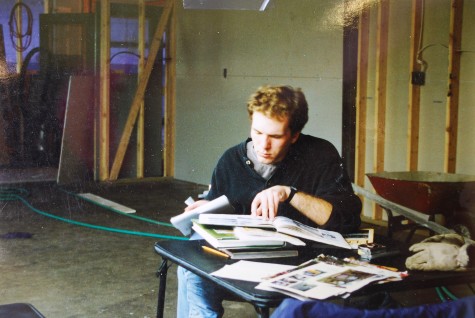
 Rob was instrumental in getting it all together. When he wasn’t shovelling out old asphalt tiles, old records and debris, he was putting together a trip to Europe to shop. Though he may seem very low key, he has a fire burning for anything garden related. That first trip to Europe, he was nervous. Not nervous to go, not nervous about not having regular hotel reservations. How could he make hotel reservations, when it was not clear where he would go? He was nervous he wouldn’t find anything to buy. I was nervous about the plane, and the big fluid travel situation, but I knew he would find great things. He has a superlative eye, and endless energy for what interests him.
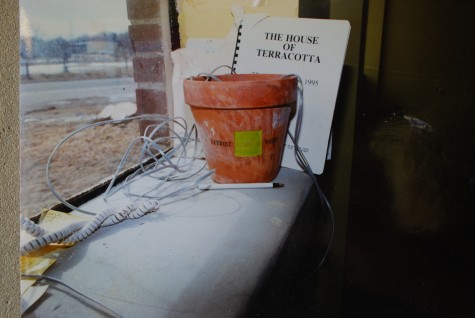 Since we would be bringing terra cotta from Italy, it only seemed appropriate that we find a way to put our logo on a terra cotta pot. A printing place that specialized in sandblasting patterns into glass made 25 of these pots for us-I still have one.
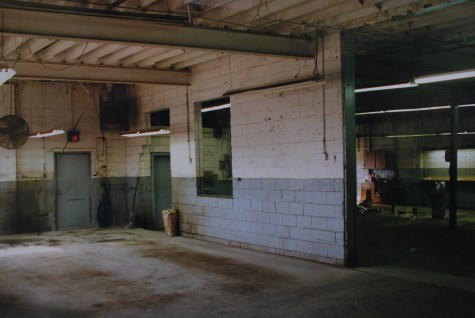
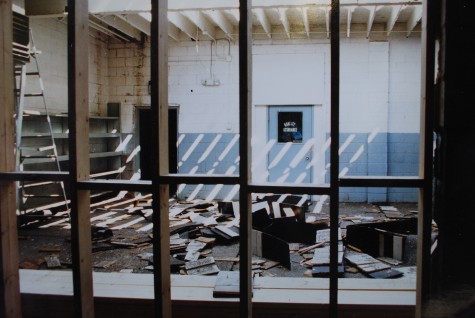
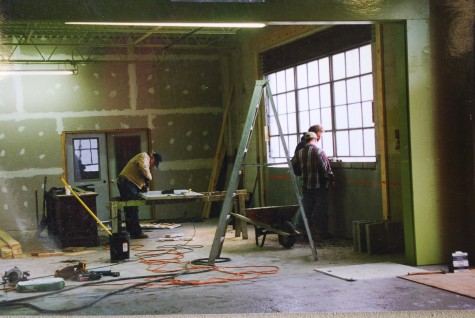 The finishing of the shop was well under way. Don Taylor supervised the installation of a new bank of windows, a new window sill, dry wall mudding; of course we painted for days. We learned first hand what the phrase brick and mortar means. In this room, the first floor painting on the concrete-a tangle of grape vines and grapes. I remember it all being very exciting, challenging, and loads of fun.
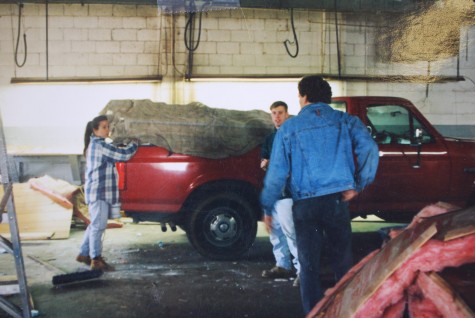
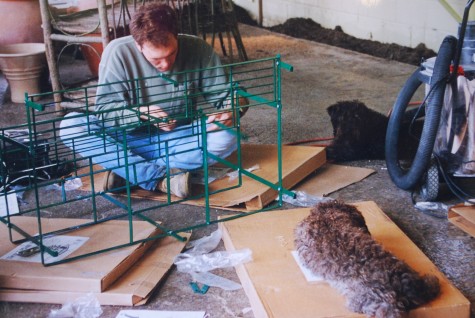 Some things that came in required assembly-Rob did that too. His schnauzers took to living on cardboard boxes as if they had done so their entire lives.
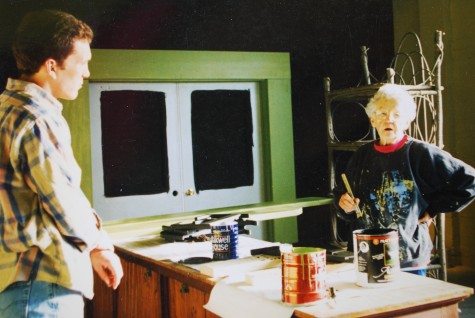 Ann Berg was Rob’s grandmother; he persuaded her to come for a visit, and help out. The plywood letters that spell out the name of the shop on our sign in front was carved in exterior plywood by Rob’s Aunt Esther and Uncle Ken. Rob sent them the logo, which they blew up by 300 percent, and used as a template. All of the letters, among a lot of other things, got painted by Ann. My Mom-doing this kind of thing was not her forte. But she did loan me 14,000.00 when I was about to run out of money. 3 years later when I had the money saved to pay her back, she waved me off.
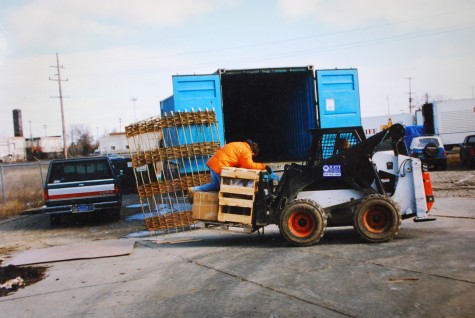 The day the first container arrived was a magical moment for all of us-but more so for Rob. Communications 15 years ago were not like they are now-I really did not have a very good idea of what was in that box. But even Rob had not seen everything he bought all together at once. Would there be lots of objects all singing different tunes,, or would there be a collection?
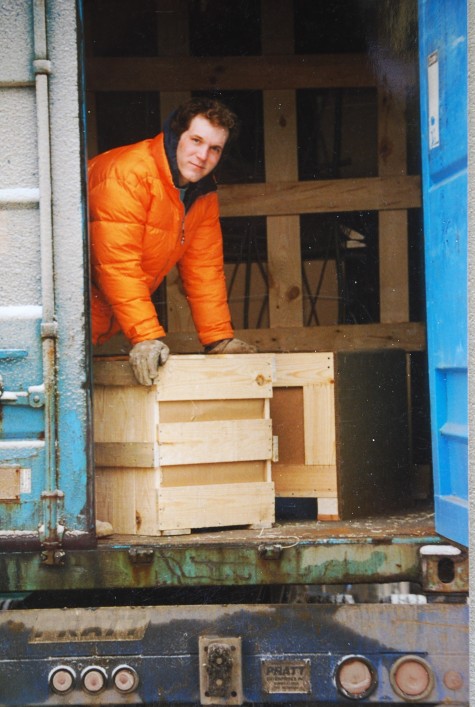 No one deserved that day more than Rob-he had worked so hard. In many ways, this 15th anniversary is really Rob’s day. I had every confidence that his voice would make the shop different than any other place devoted to gardens. I think this is still true today, and I am very appreciative of that. I am much more involved in the buying now, as I can instantly see objects in other places and other countries via his I-phone. But back then, he had to go it alone.
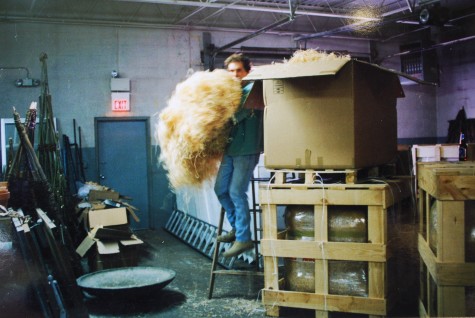 At one point the entire garage was awash in excelsior. Everything fragile was packed in those coarse wood shavings. We recycled every bit of it-over the following 5 years. Having in my possession, however briefly, what other people had made for the garden in places far away-everything that got unpacked felt like a gift.
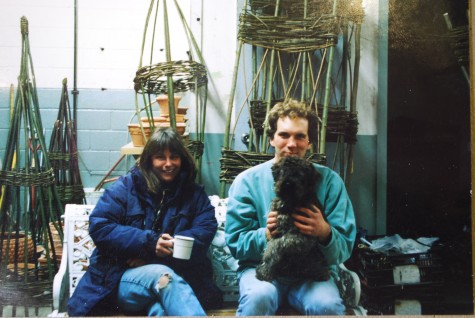 There would be many more containers to come. Each ocean going packing container is locked once it is fully packed. That lock can only be cut off once it is delivered to the person to whom it is sent. I have all of those container locks-this most recent one is number 43. But this first container unpacking was a perfect moment.
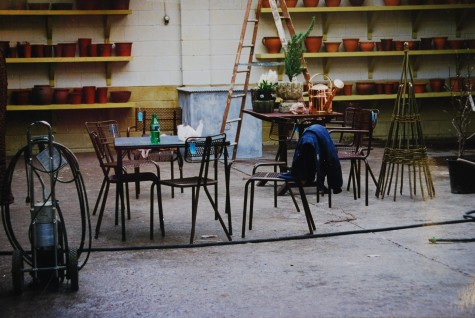
We were very close to putting away the paint sprayer, and sending out invitations to the opening.