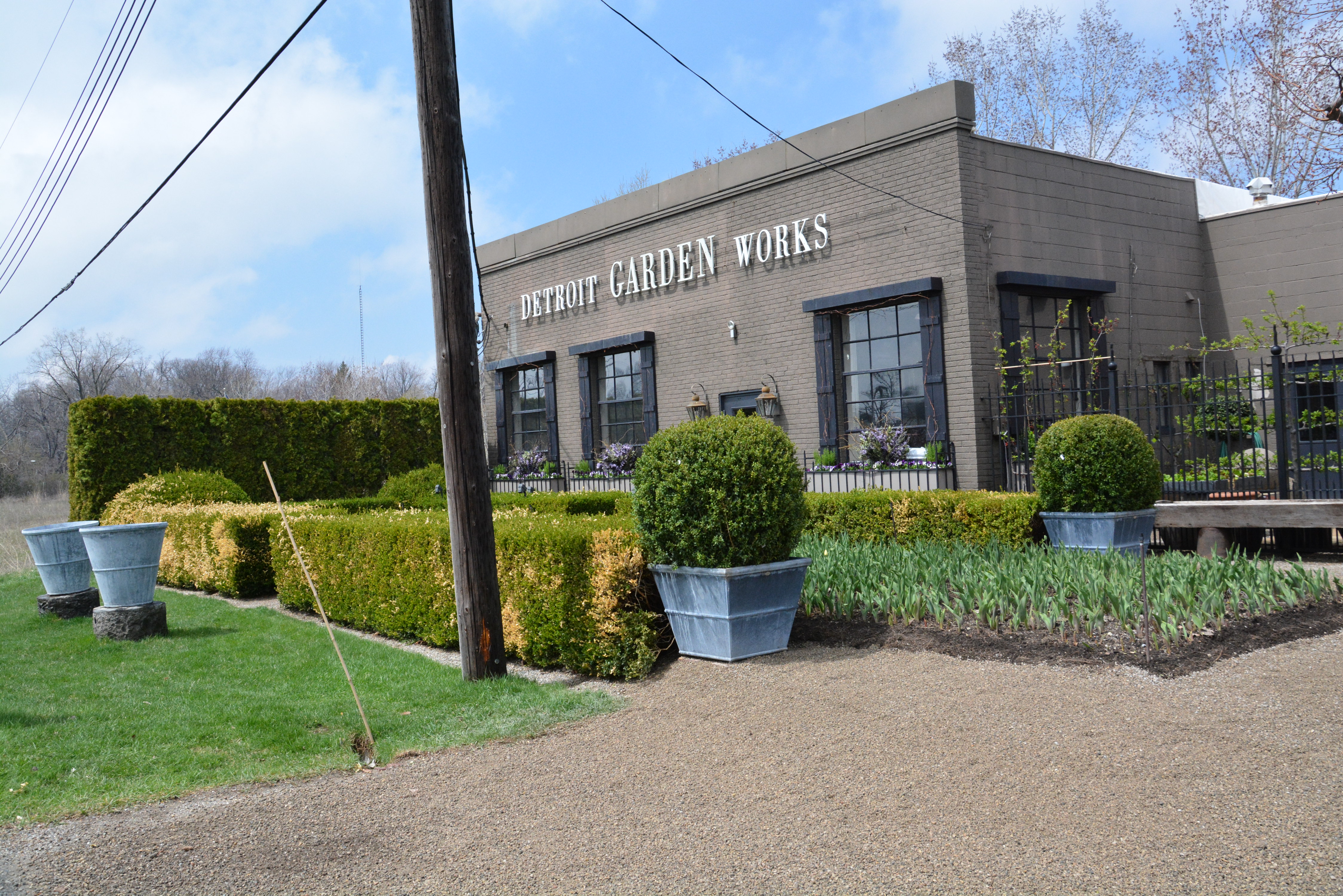
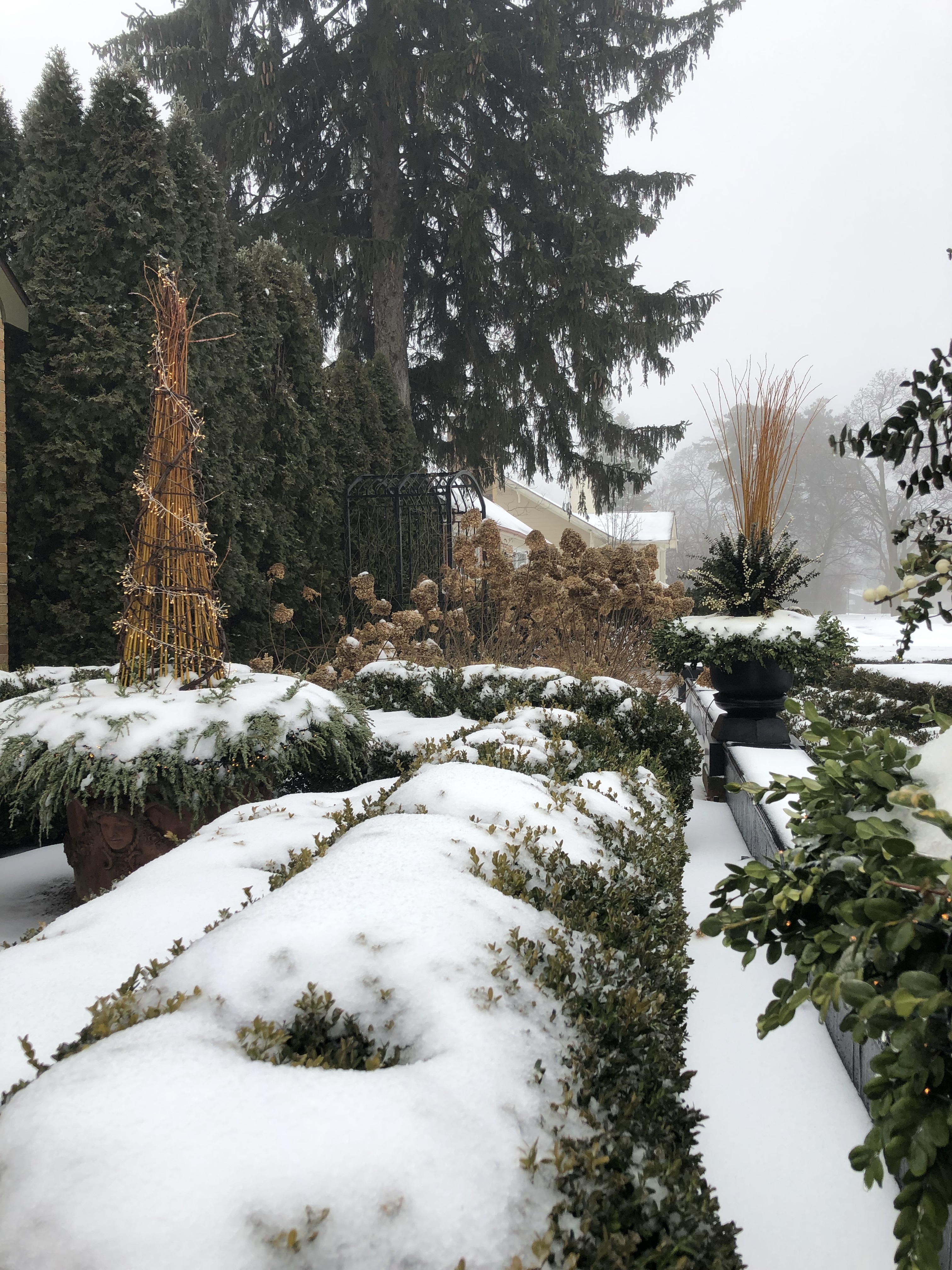
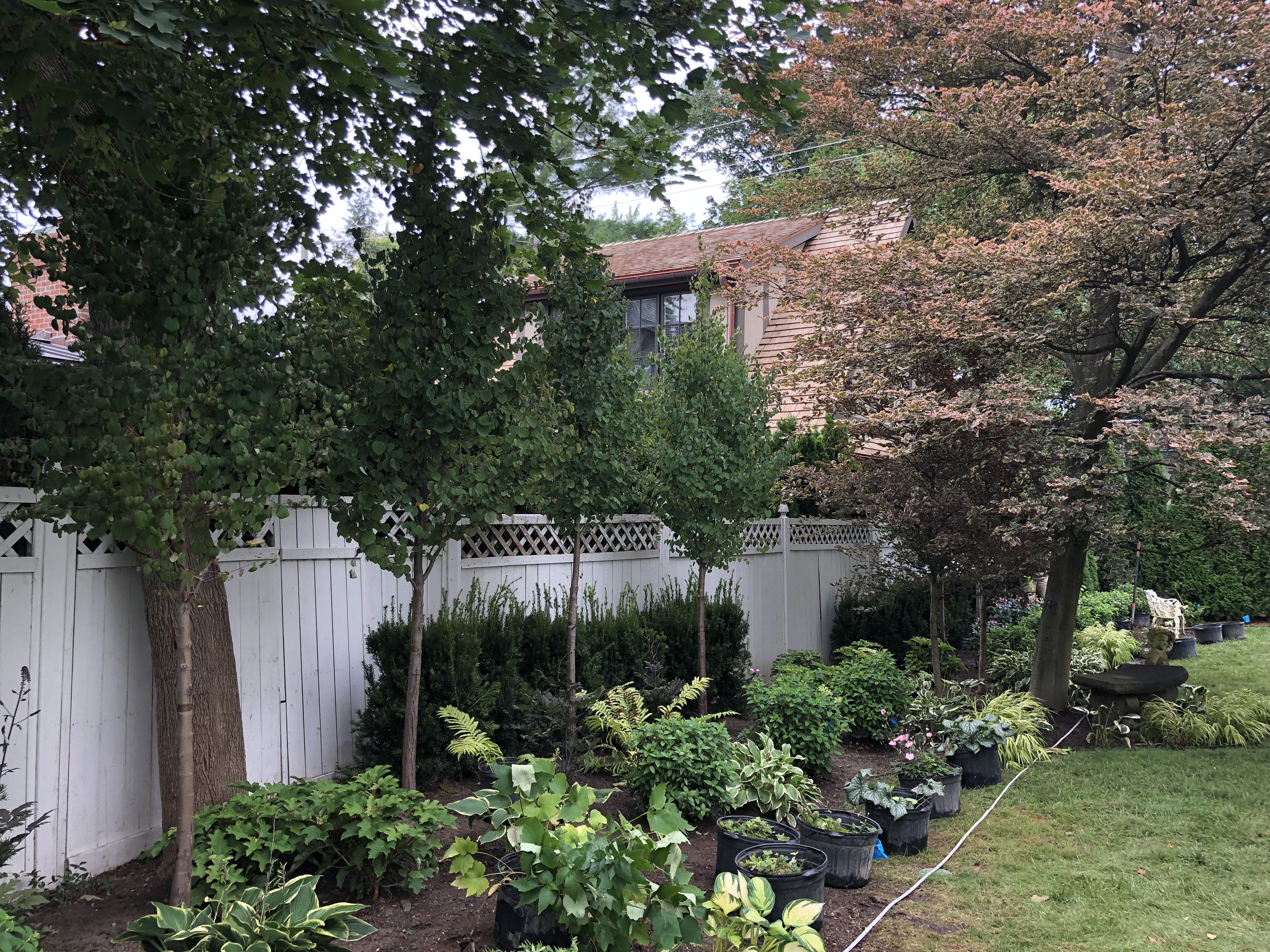
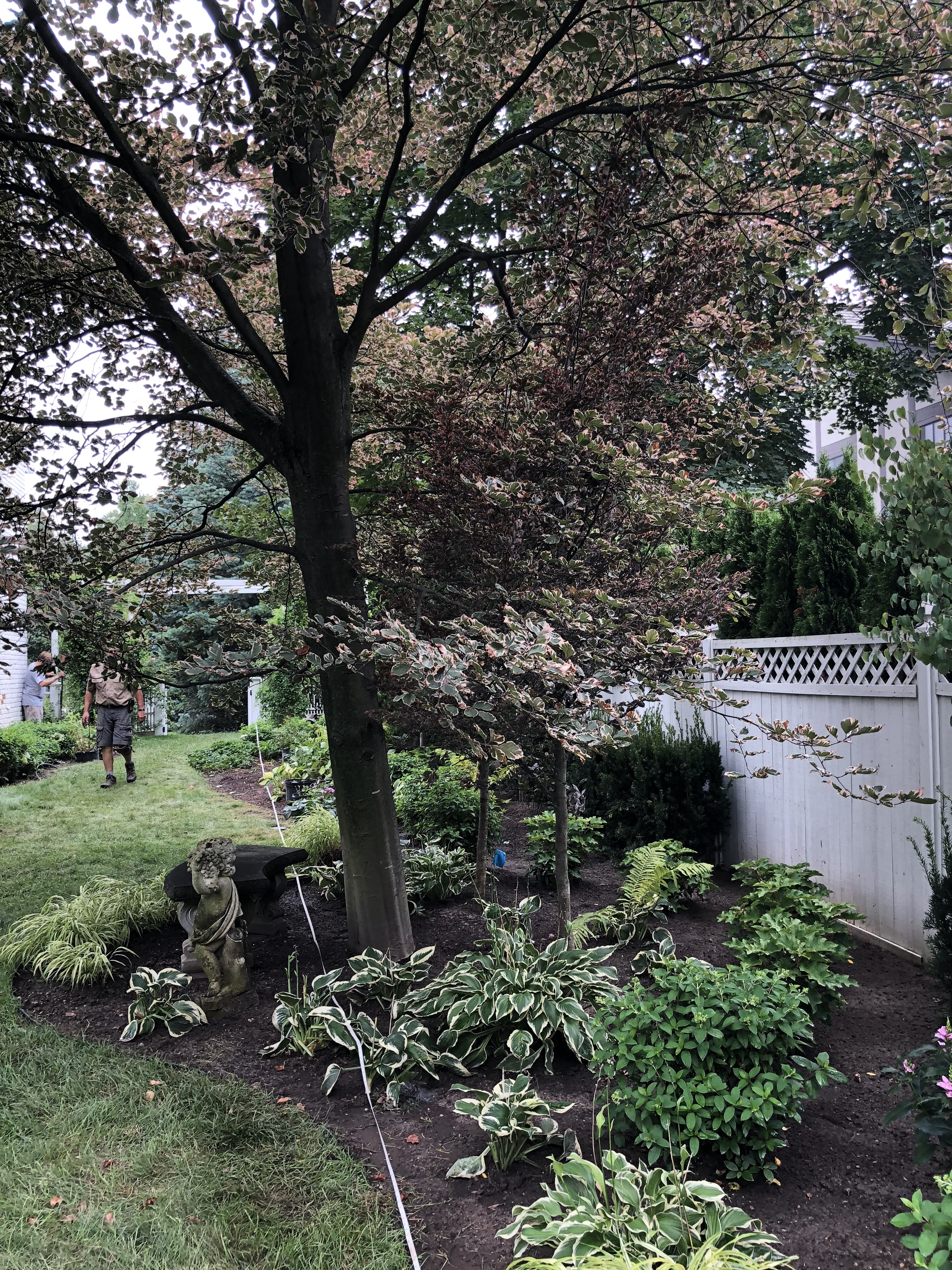
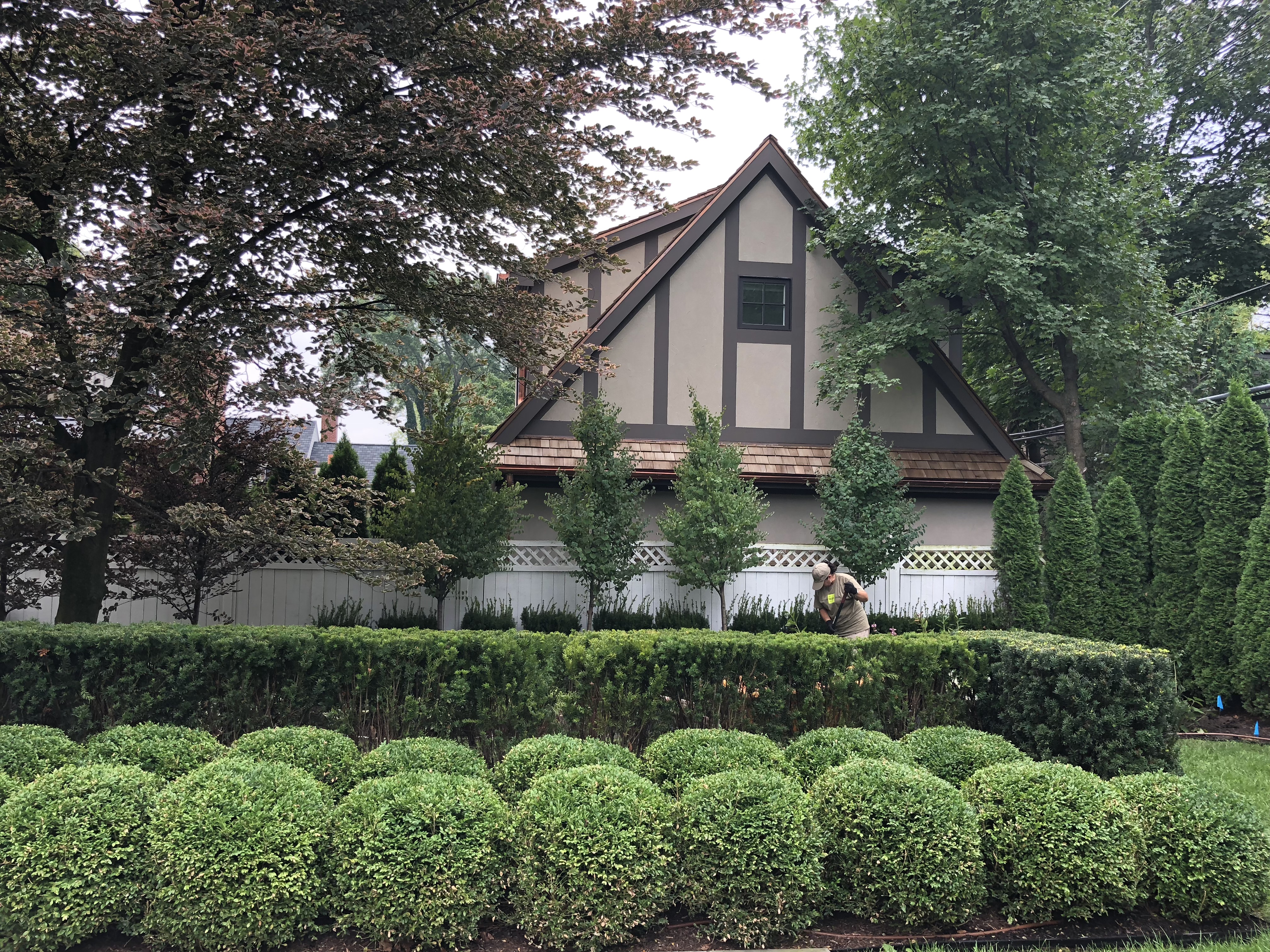
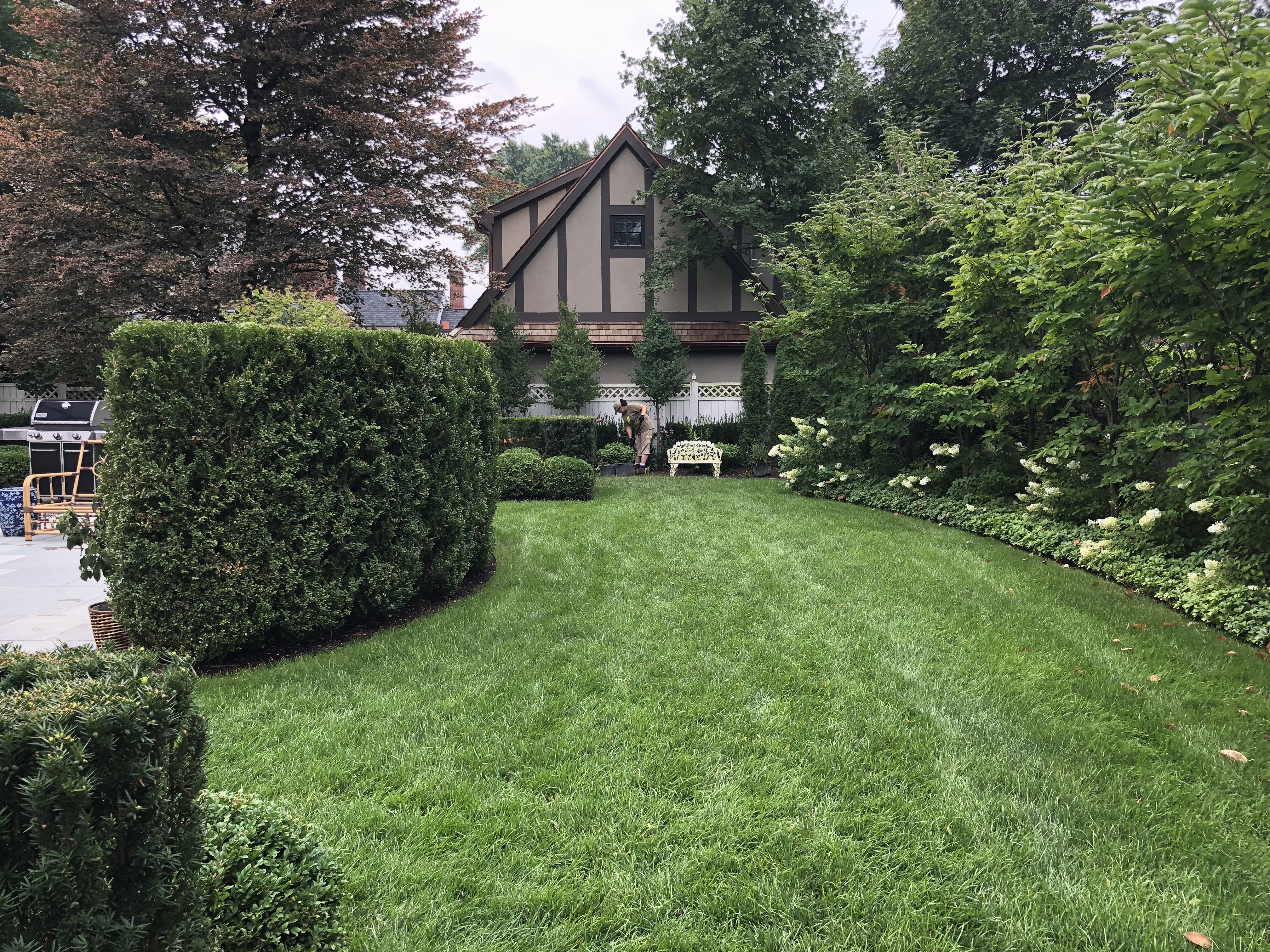
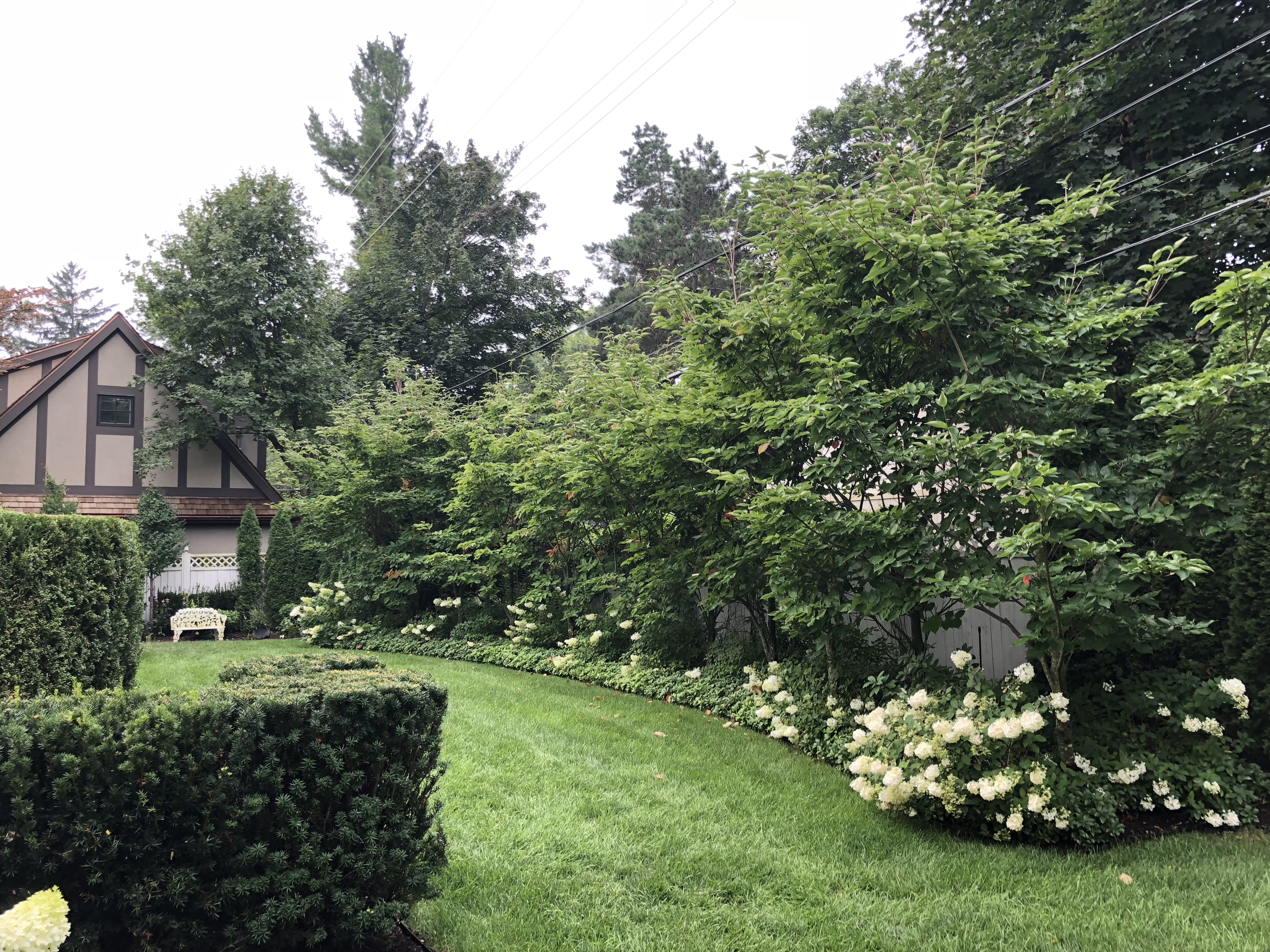
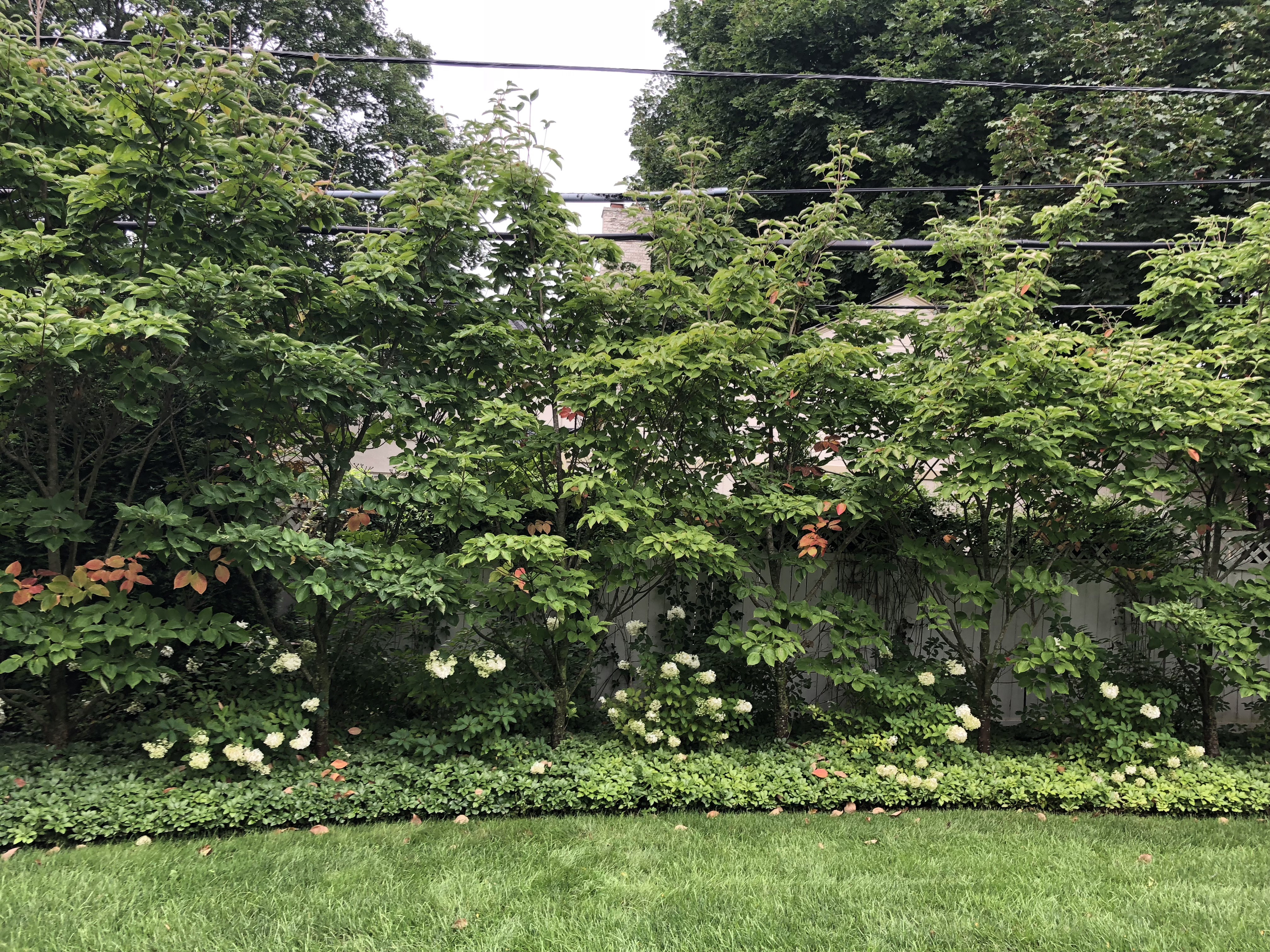
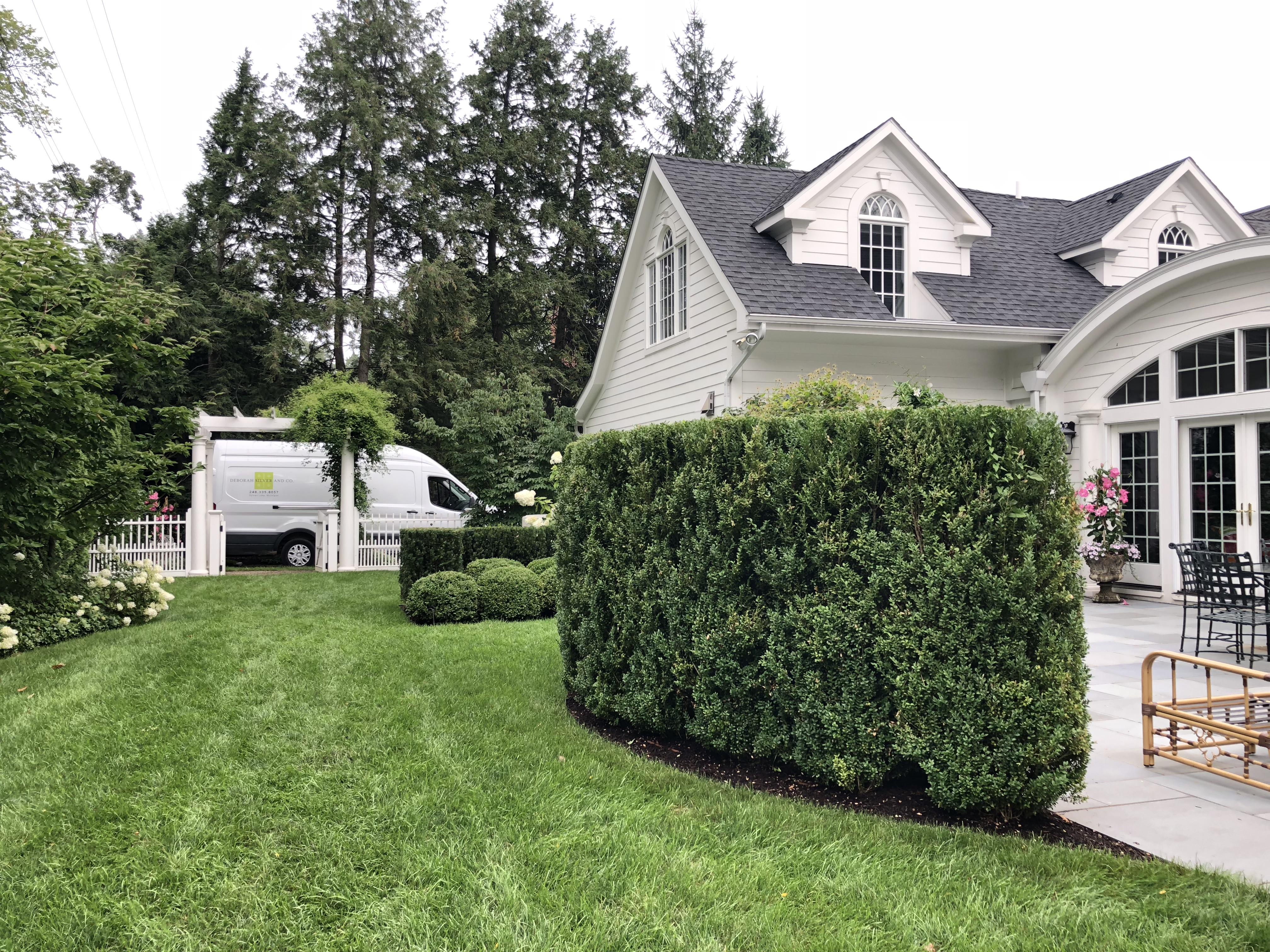
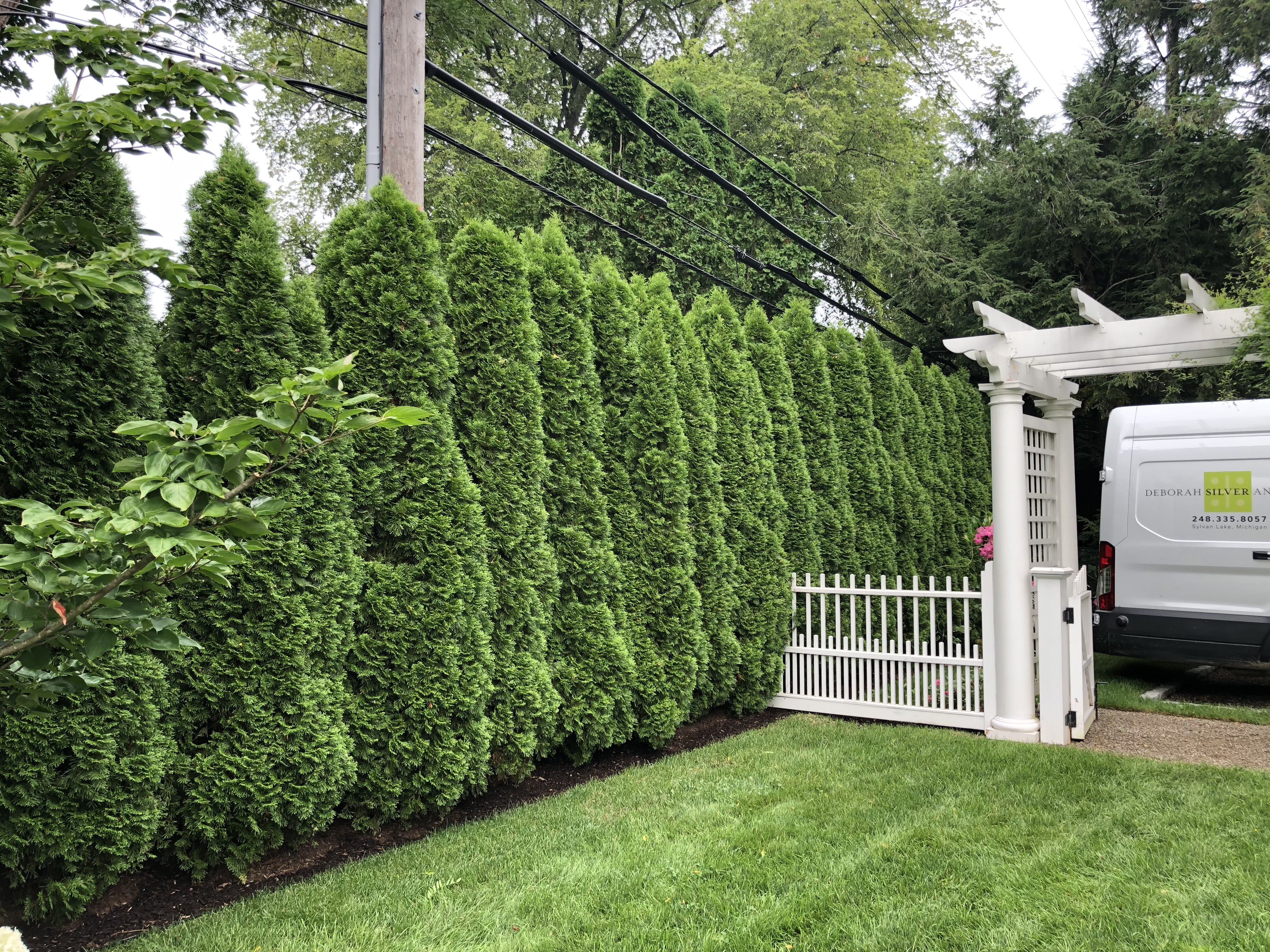
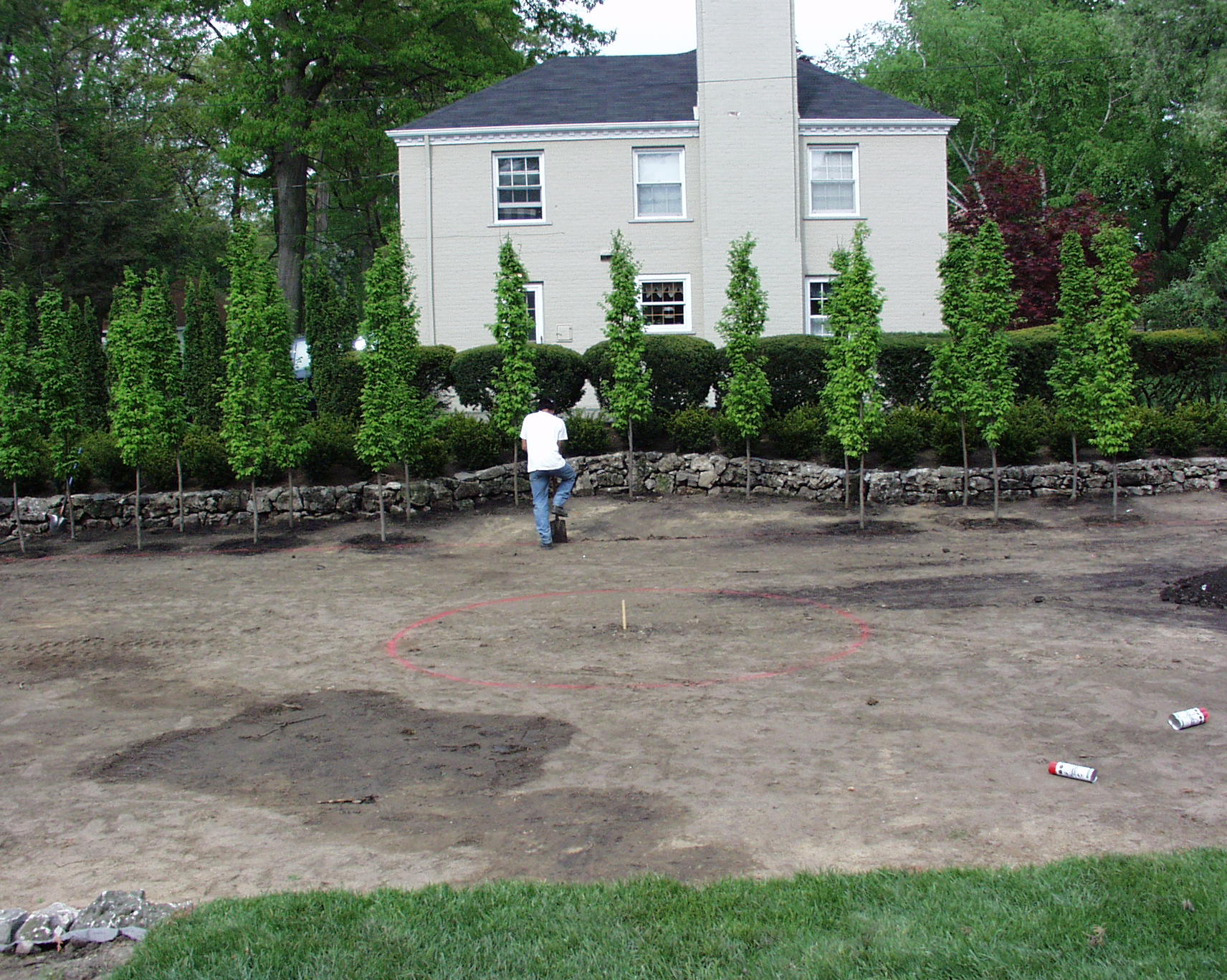
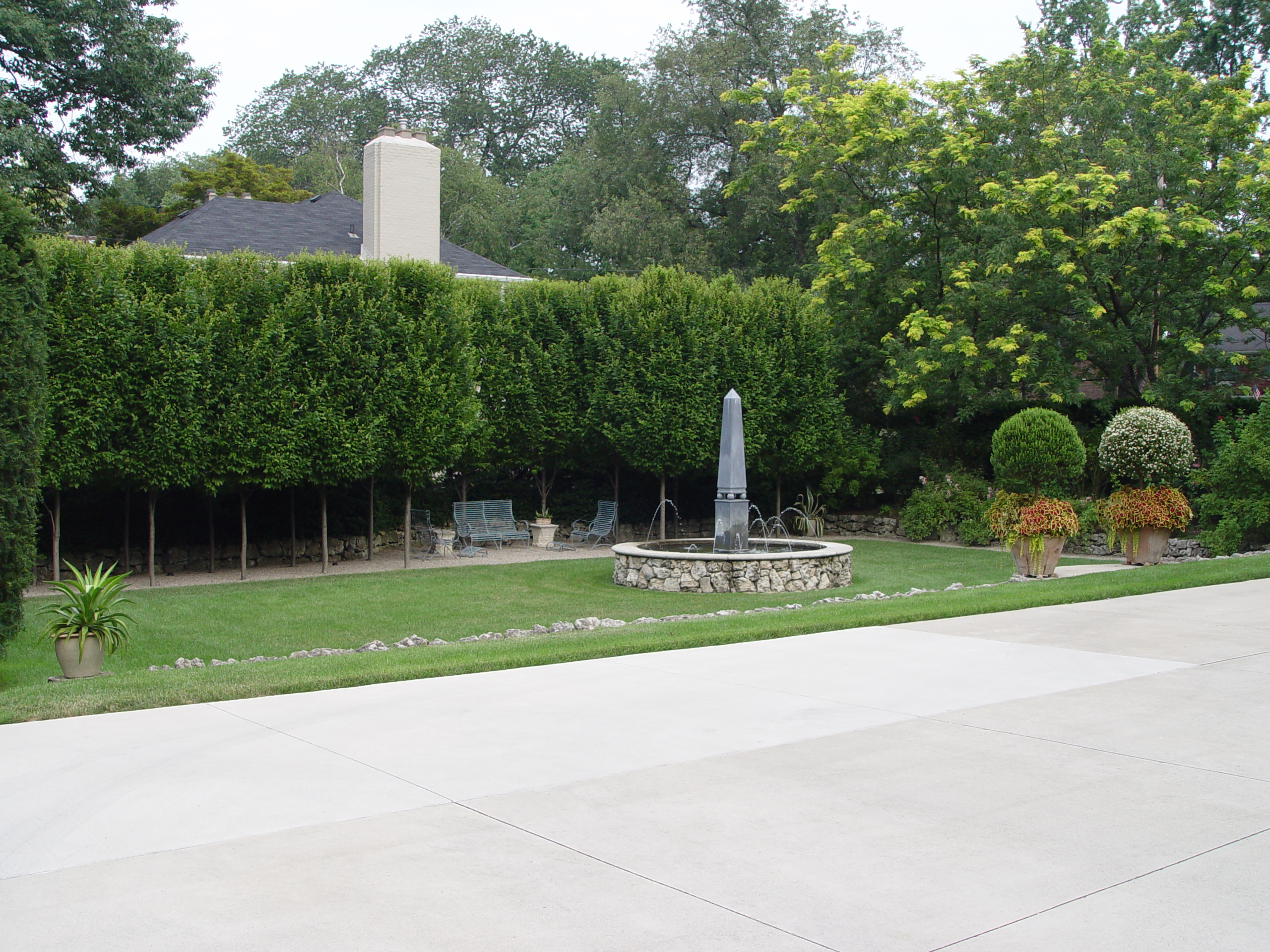
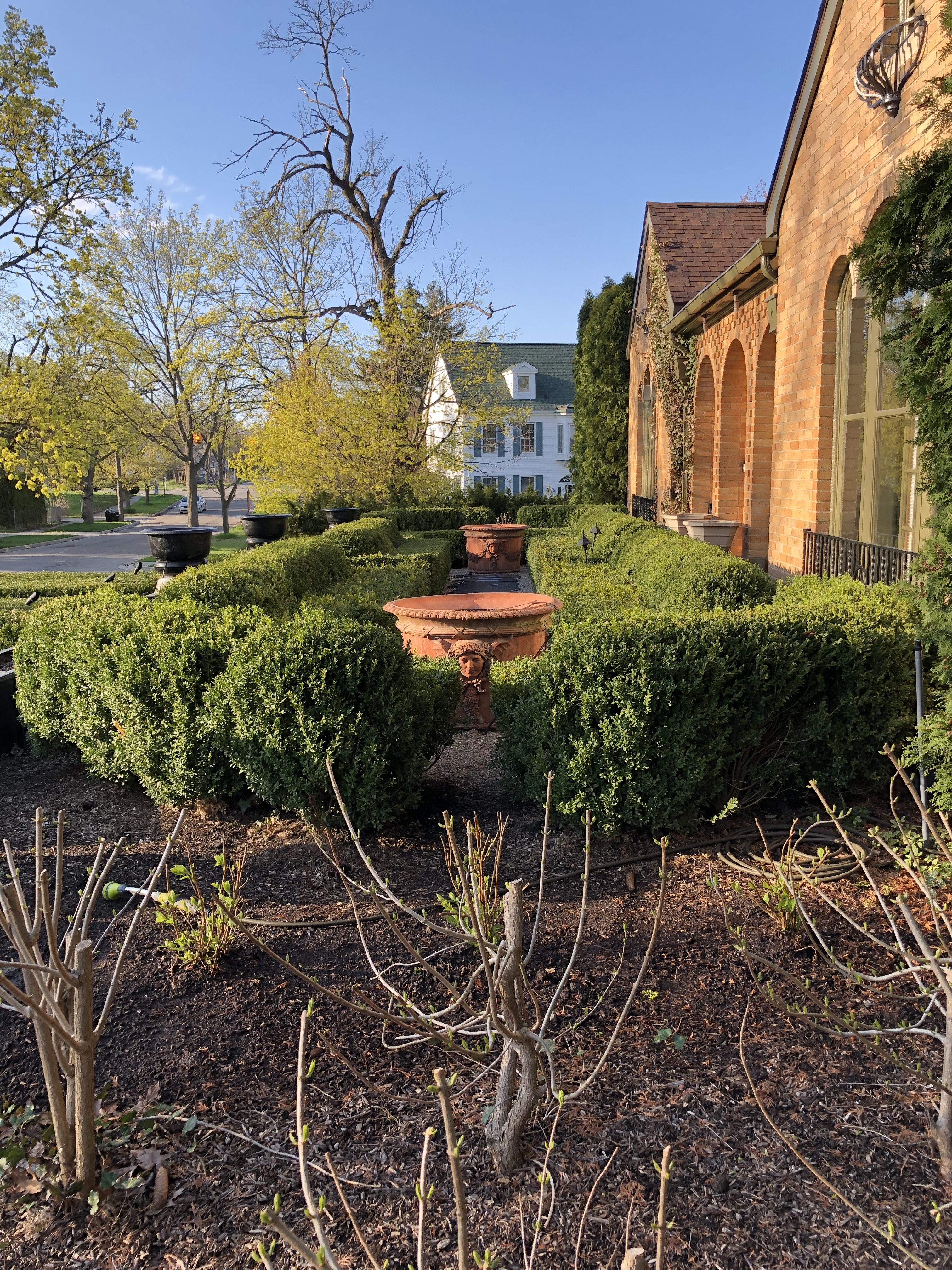
 Anyone familiar with my garden knows I am a fan of evergreen plants. That makes sense. I live in a gardening zone notorious for its lengthy off season. Not only are our winters long, but our early spring and late fall can also be cold and anything but green. So I grow yews, and arborvitae, and of course, boxwood. A landscape that has something to say all year round is a good landscape. I would say the signs of spring probably presented themselves seriously a week ago or so. The maples in the tree lawn are dusted with their chartreuse blooms. The grass began greening up. The hydrangeas in the foreground of the picture about are just beginning to leaf out. My large concrete pots are more visually important now than they will be at any other time during the season. They are beautiful, just so. unplanted. But the front yard landscape at this moment is really all about the boxwood. It is green and robust in much the same way it has been all winter.
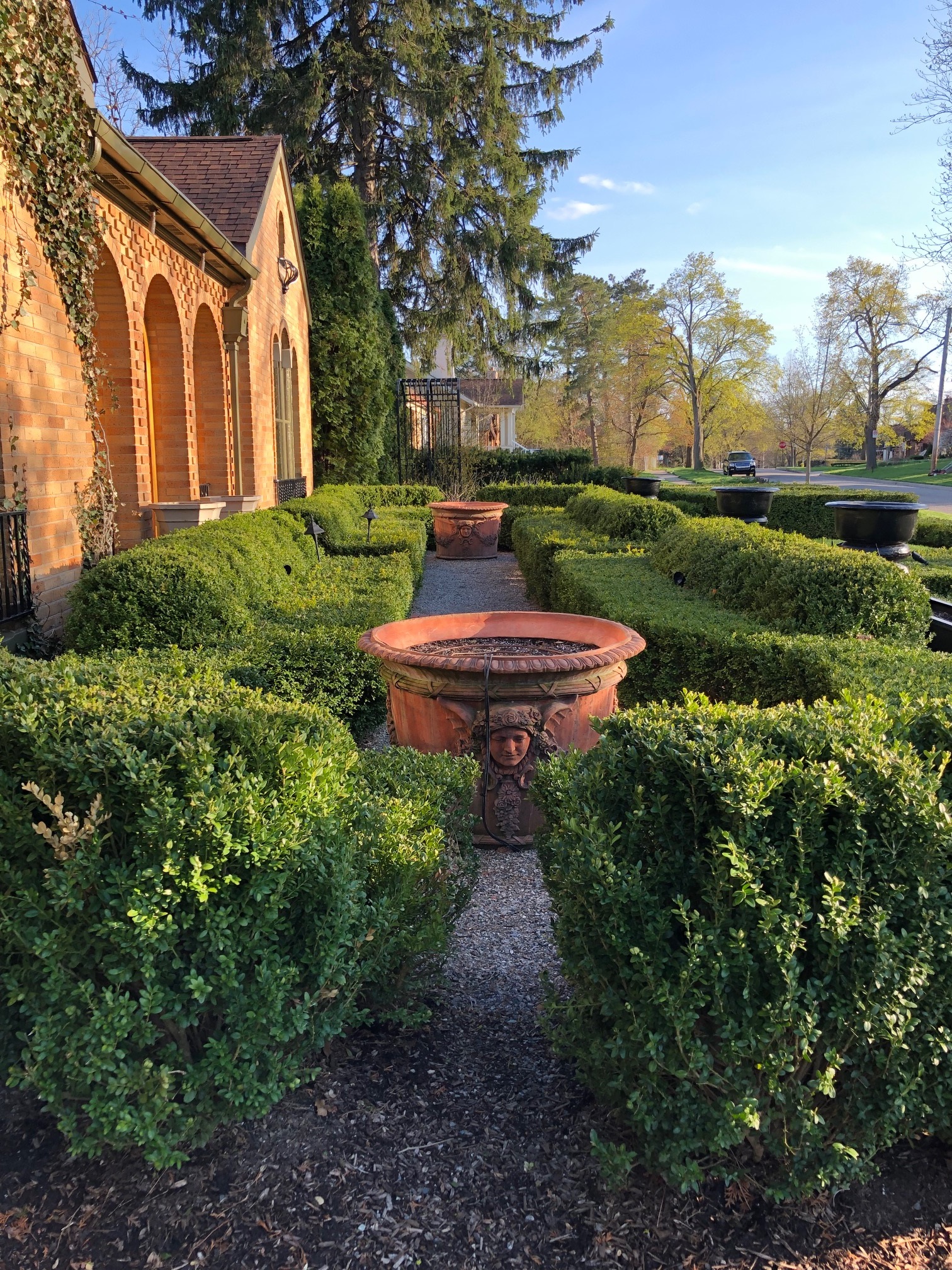 The boxwood is quick to shed its winter coloration, as are the arborvitae, yews, and the old spruce in the background of the above picture. I never tire of any of the evergreens, as the weather from one event to the next changes their appearance. The surfaces of the evergreens shimmering with rain drops in the spring is as beautiful as those same surfaces hatted by leaves in the fall, and snow in the winter. They are a crucial part of my landscape.
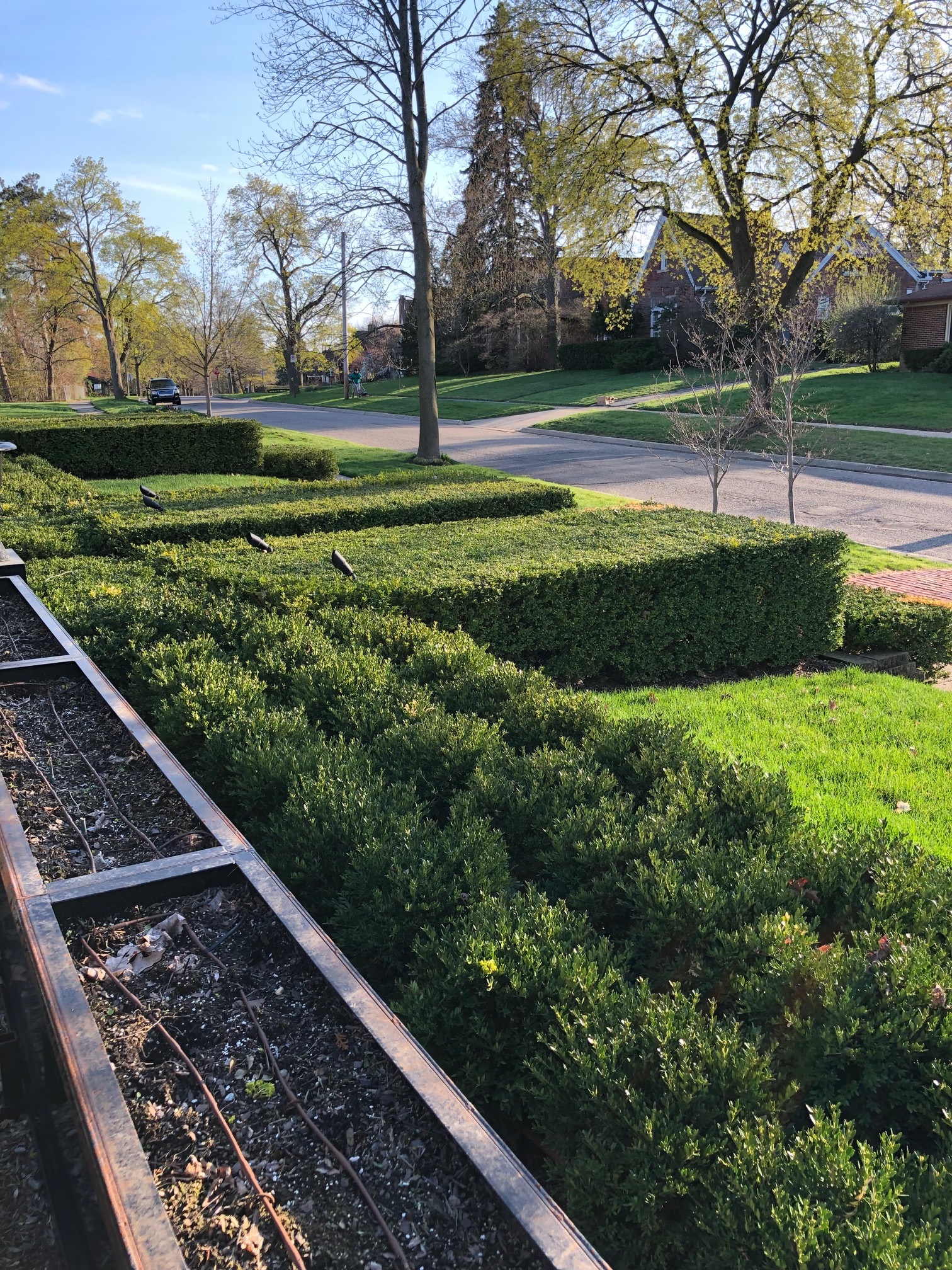 The role they play is never easier to see than it is now. I can walk between the pruned and leafless hydrangeas, and see what a prominent role they play in the landscape. And I can even more appreciate the longevity of that service. Most of my boxwood at least 15 years old.
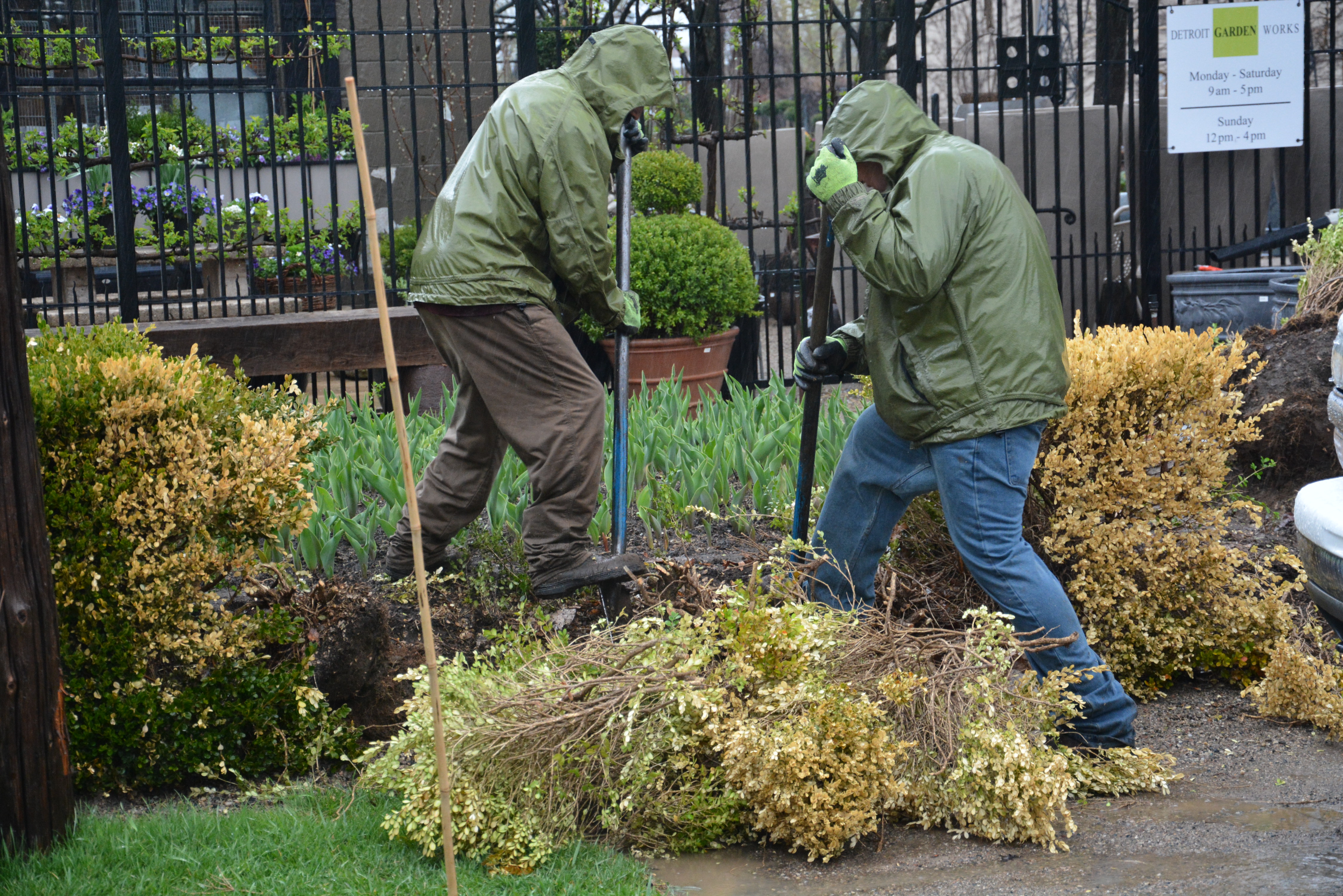
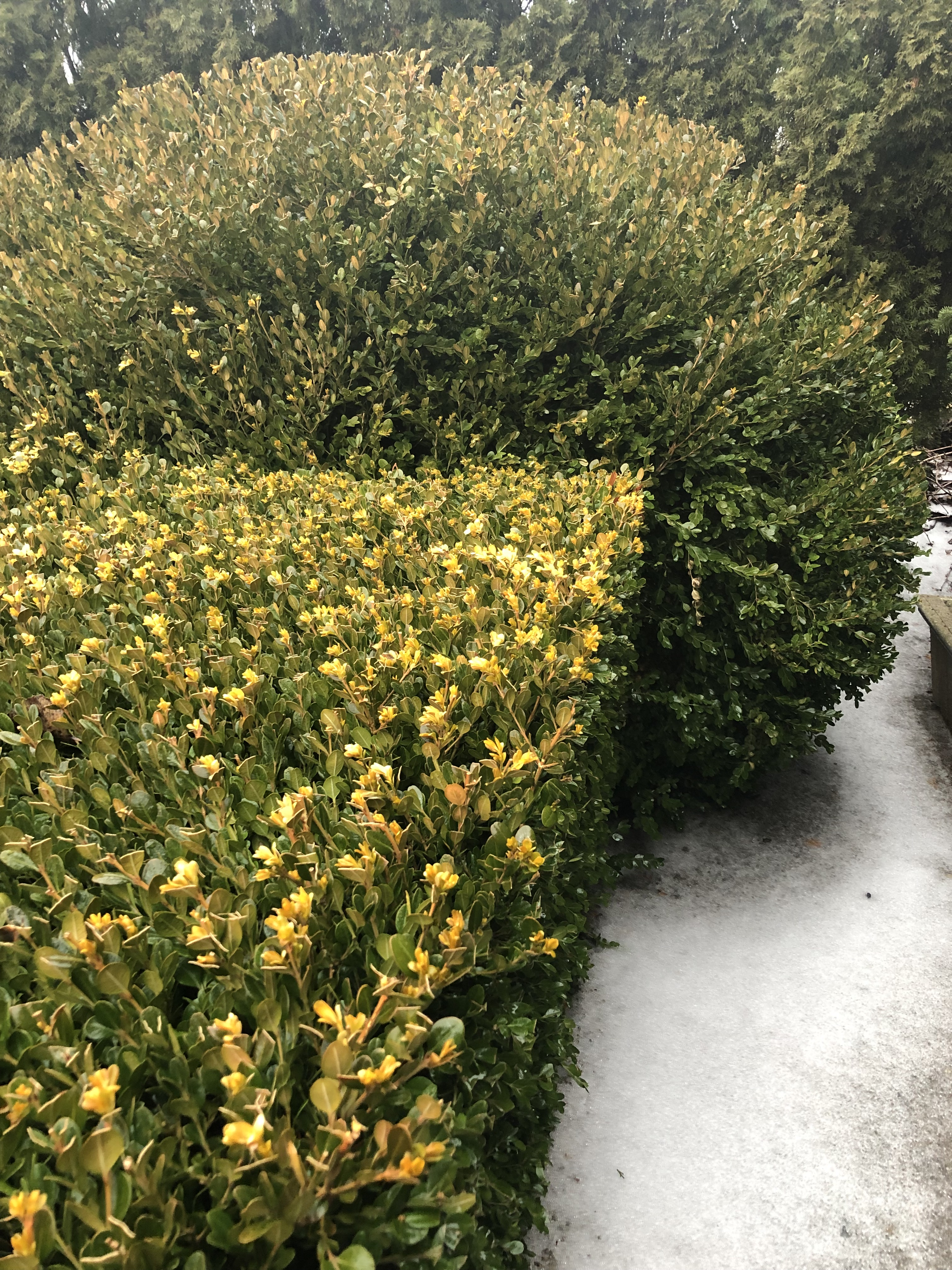
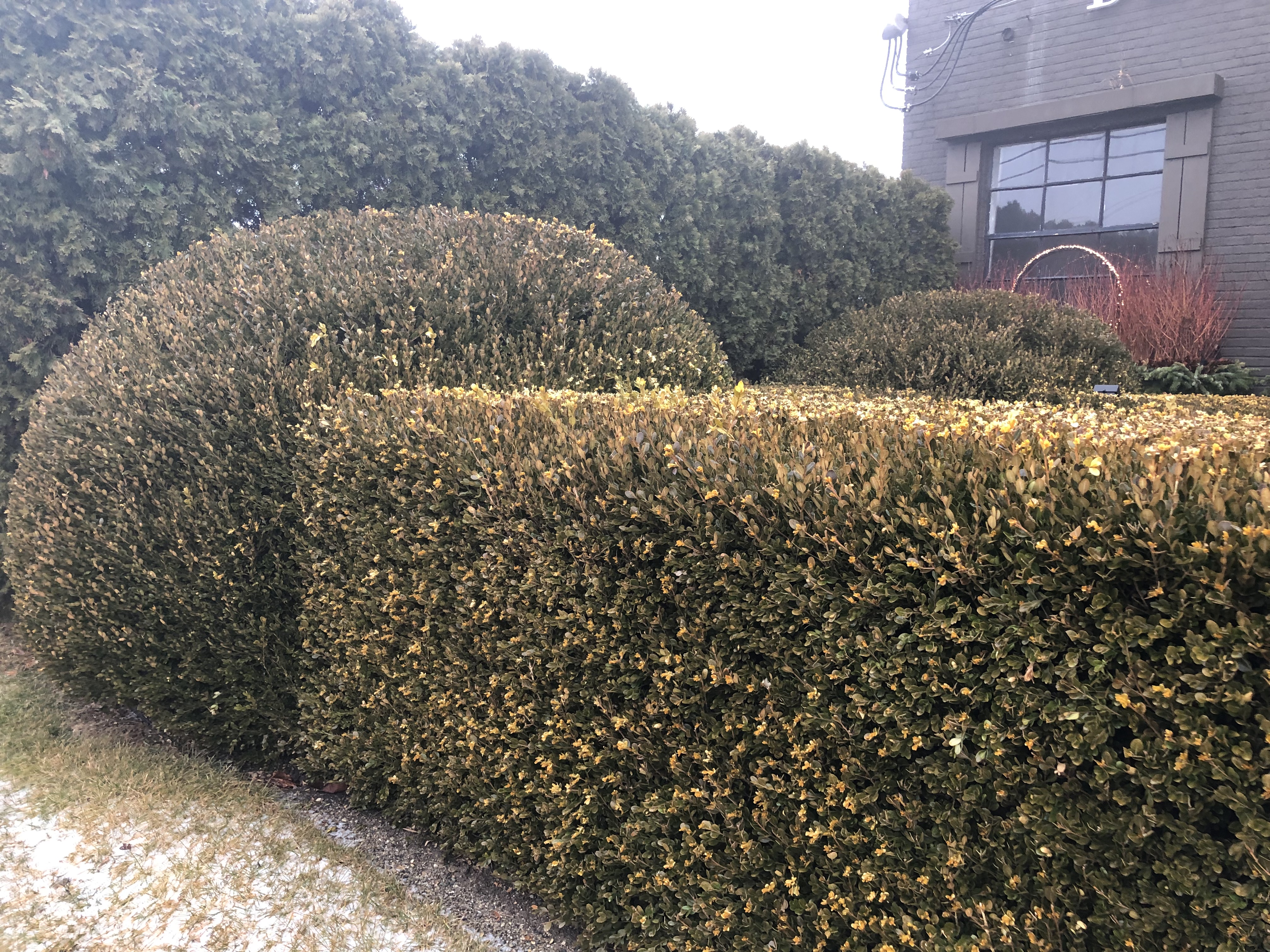
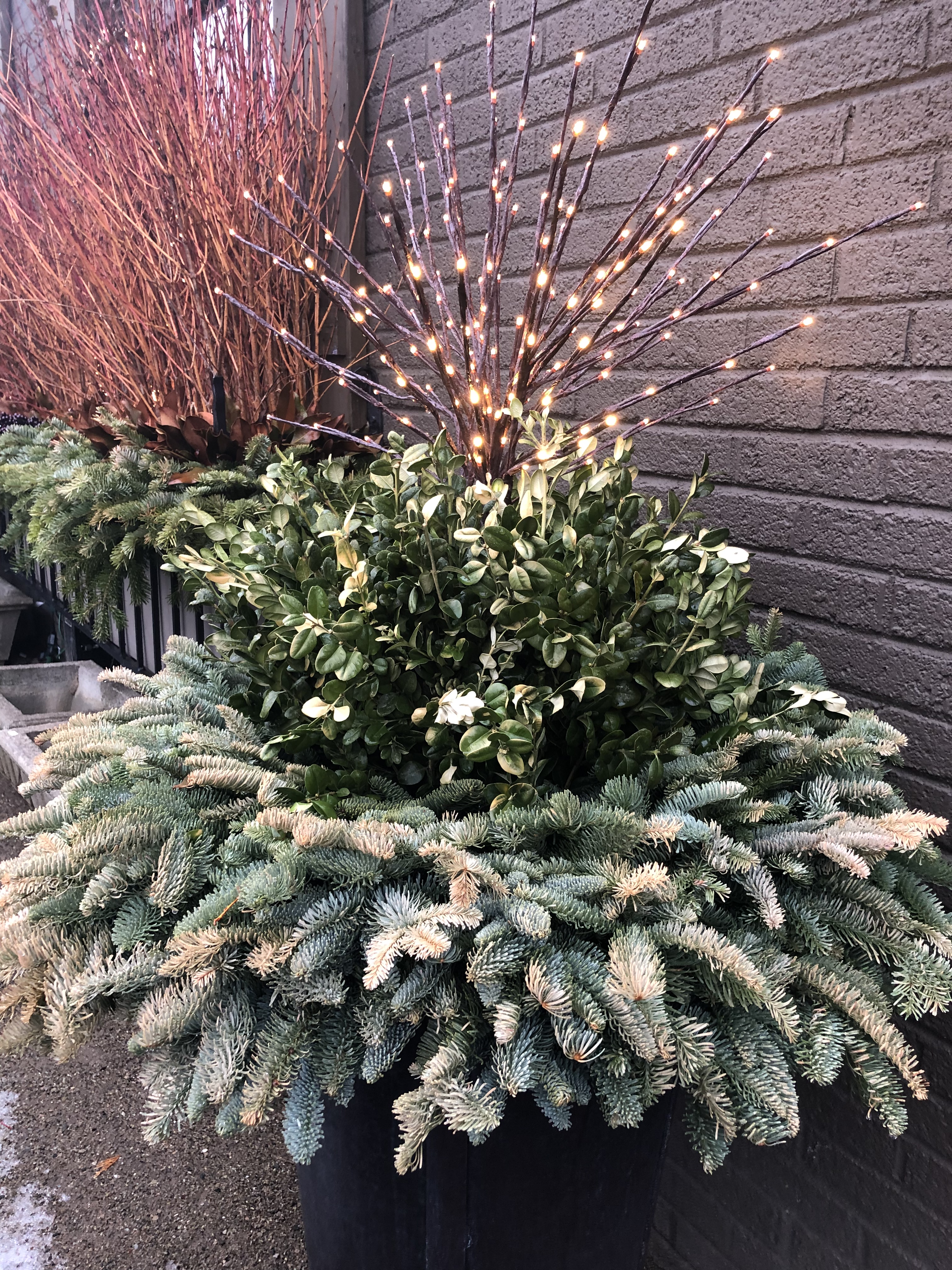
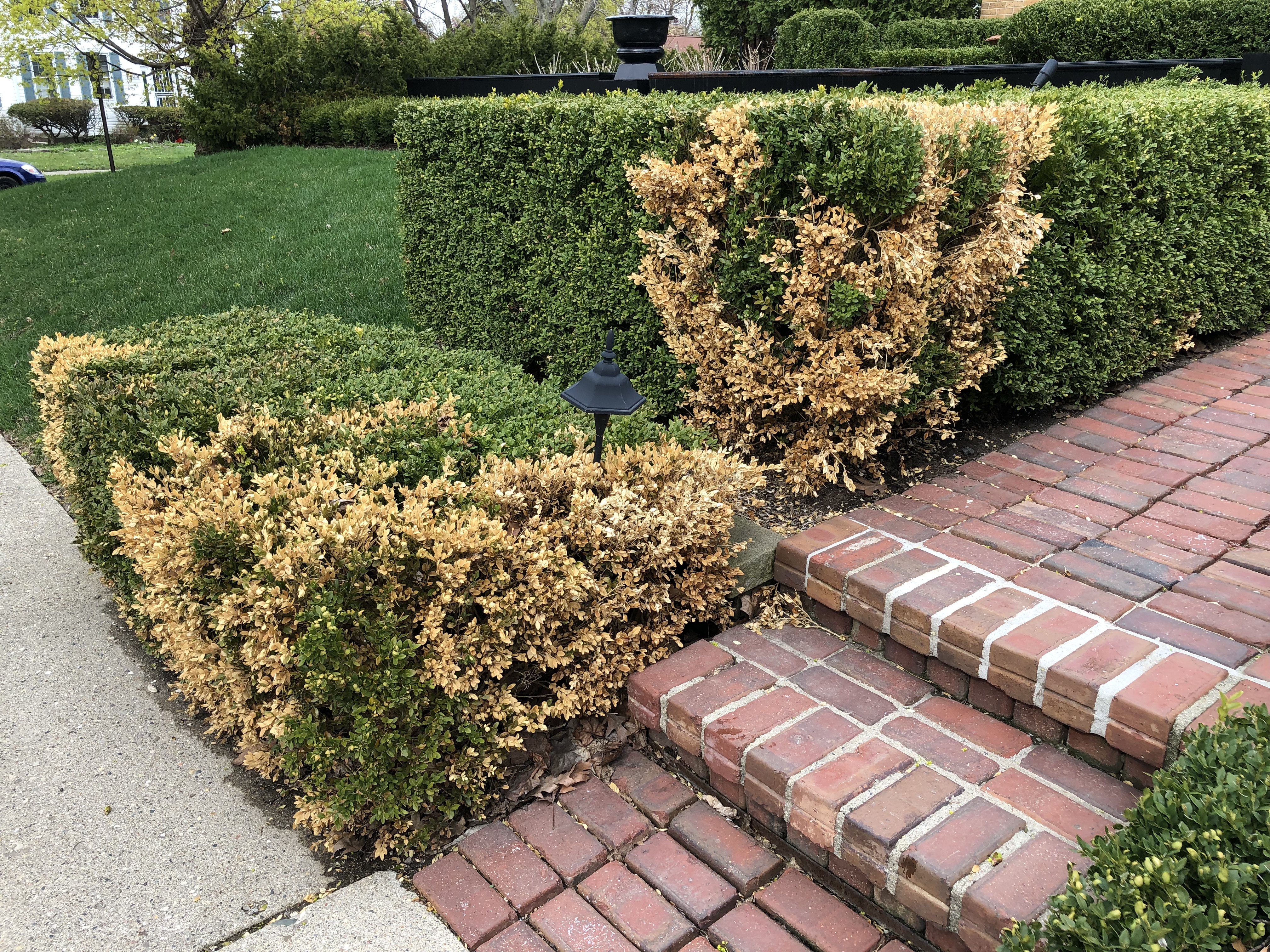 But cultivating evergreens in very cold climates comes with a price. The street side of my boxwood paints a different picture. Extremely cold and windy winters can damage them. It is important to water evergreens well before winter. Once the ground freezes, the roots will have no opportunity to absorb water again until spring. Needled evergreens present very little surface area to the elements. That structure helps them to naturally conserve moisture over the winter. Though boxwood leaves are small, they are much more broad and thin compared to evergreen needles. Extremely cold and windy weather can can quickly desiccate the leaves. If you have ever had a cut boxwood wreath on your front door for the holidays, you are aware of how incredibly long cut boxwood branches stay green. The same is true for cut evergreen boughs, or Christmas trees. This damage I am seeing now occurred months ago. The return of the warmer weather is revealing the result of terribly cold weather we had the end of January.
 The polar vortex which occurred in January of 2019 is again part of the conversation. The intense cold that gripped a significant portion of the northern midsection of the US set records for cold and wind chills in a number places. I do know what I was doing then. I stayed at home, and only let the dogs out for a few minutes at a time. It was the coldest recorded winter temperature event for Chicago in 25 years.
 From Wikipedia “In late January 2019, a severe cold wave caused by a weakened jet stream around the Arctic polar vortex[3] hit the Midwestern United States and Eastern Canada, killing at least 22 people.[1][2] It came after a winter storm brought up to 13 inches (33 cm) of snow in some regions from January 27–29, and brought the coldest temperatures in over 20 years to most locations in the affected region, including some all-time record lows.[1][4] In early February, the polar vortex moved west,[5] and became locked over Western Canada and the Western United States.[6] As a result, February 2019 was among the coldest and snowiest on record in these regions. In early March, the cold once again shifted east, breaking records in many areas.[7] In mid-March, the cold wave finally retreated, but combined with above-average temperatures, precipitation, and a deep snowpack, widespread flooding ensued in the Central US.” Yes, it was a vicious weather event.
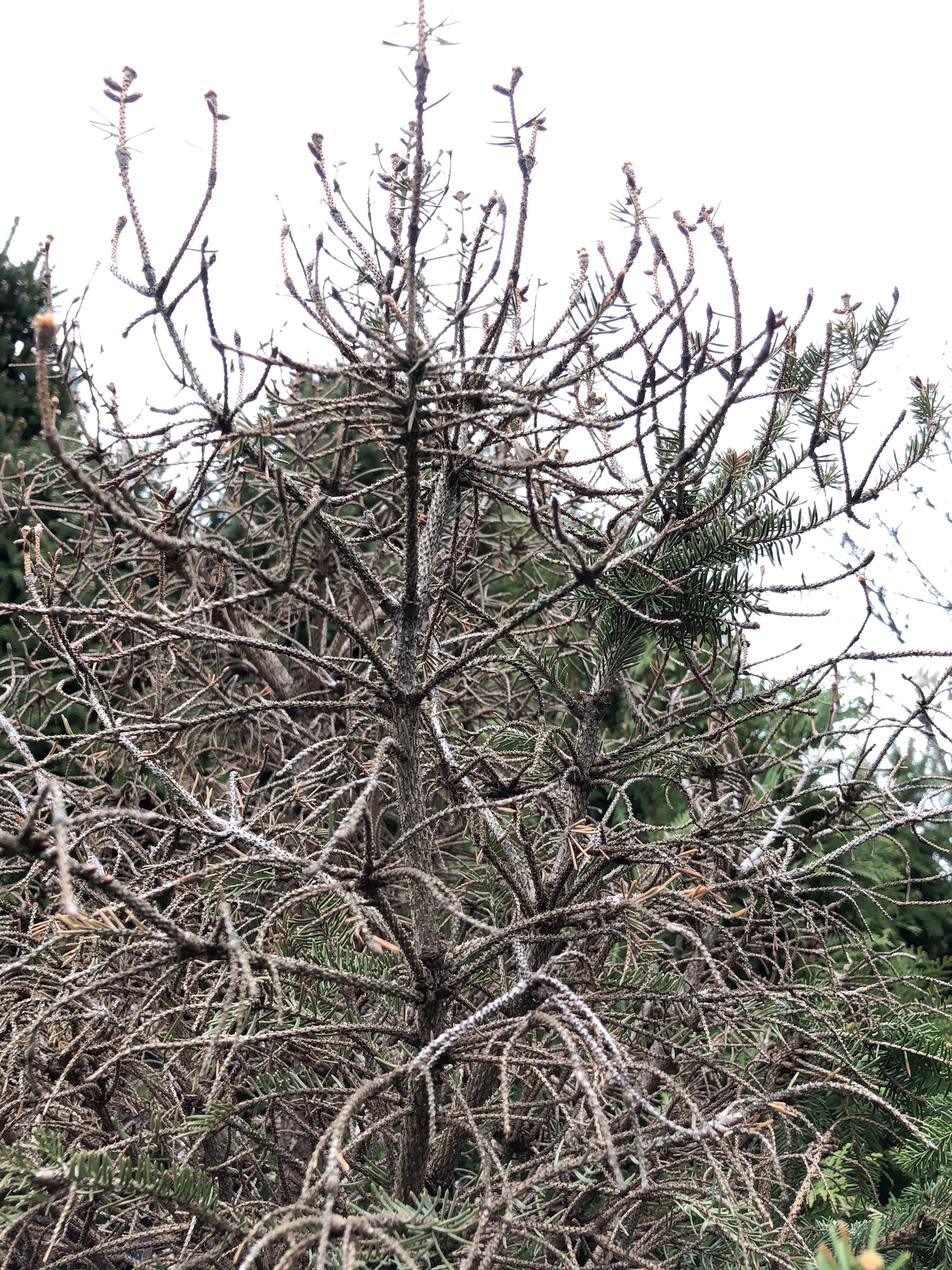
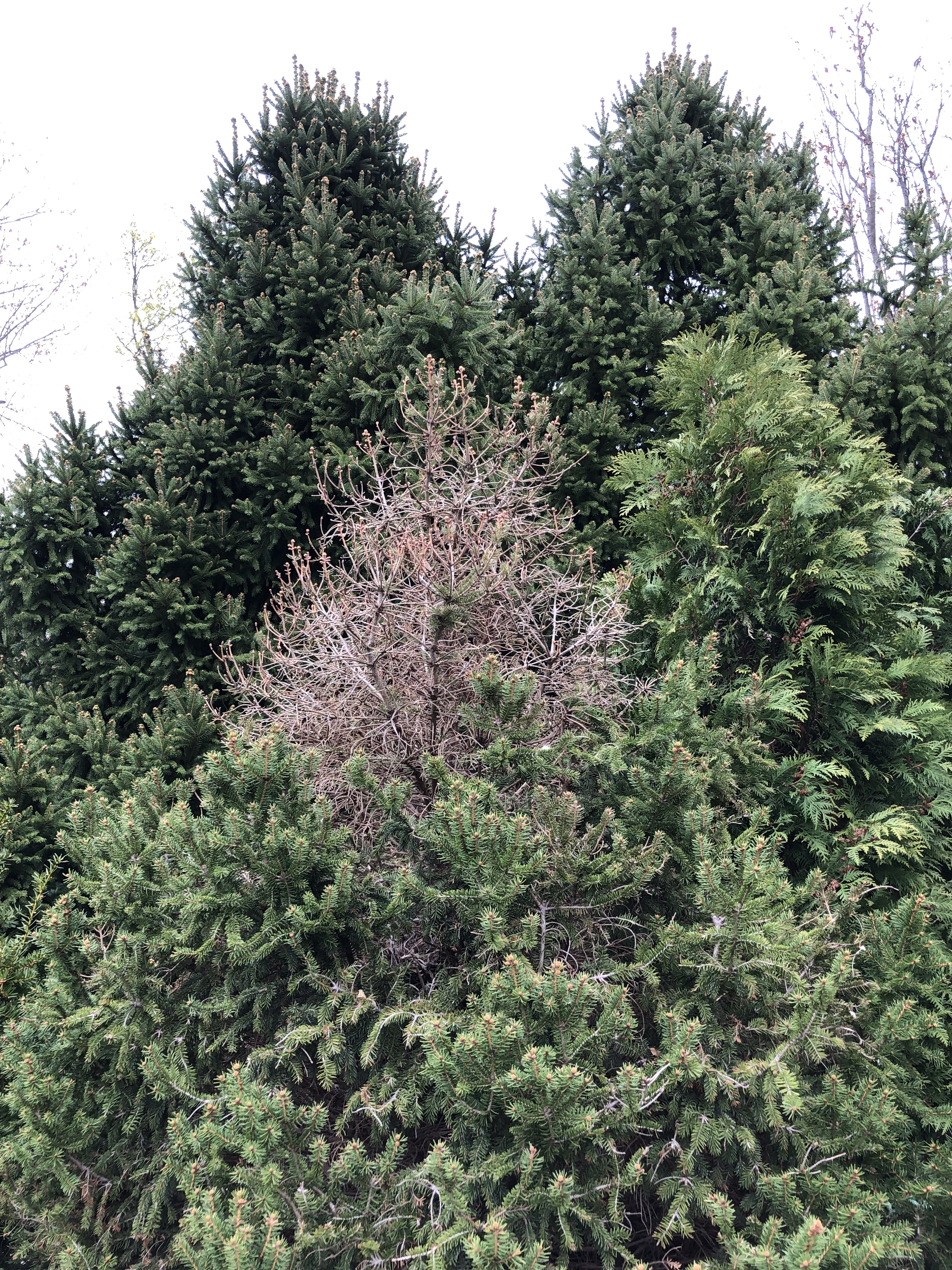 The impact of that extremely cold weather is beginning to be seen. I was faint with surprise when I saw the entire top of this picea mucrunata was dead. If you look up the phrase “top of my spruce is dead”, most articles cite winter winds and extreme cold first. I see no eveidence of disease or insect damage. Could the polar vortex be to blame?
 Of course the time to think about safeguarding evergreens from winter damage is in the fall. I have never seen damage on the boxwood cultivar “Winter Gem”. I plant it extensively now. I rarely plant “Green Velvet” anymore, which is the cultivar I have at home. Thankfully it rarely gets any damage, as I live in a neighborhood where the wind is broken by multiple buildings that surround my landscape, and the sun is tempered by large trees. I have never seen winter damage on boxwood that has been sprayed to the dripping point with VaporGard in the fall. A dry day when the daytime temperature is above 50 produces optimum coverage. Later in the fall, a windbreak of burlap can help. I would have never thought to protect my spruce, but maybe I should. A last bit about the boxwood. Given the extreme cold we have had in the past years, the price of boxwood has skyrocketed. Replacing my damaged boxwood will be very expensive. Hopefully I will remember this day come the fall.
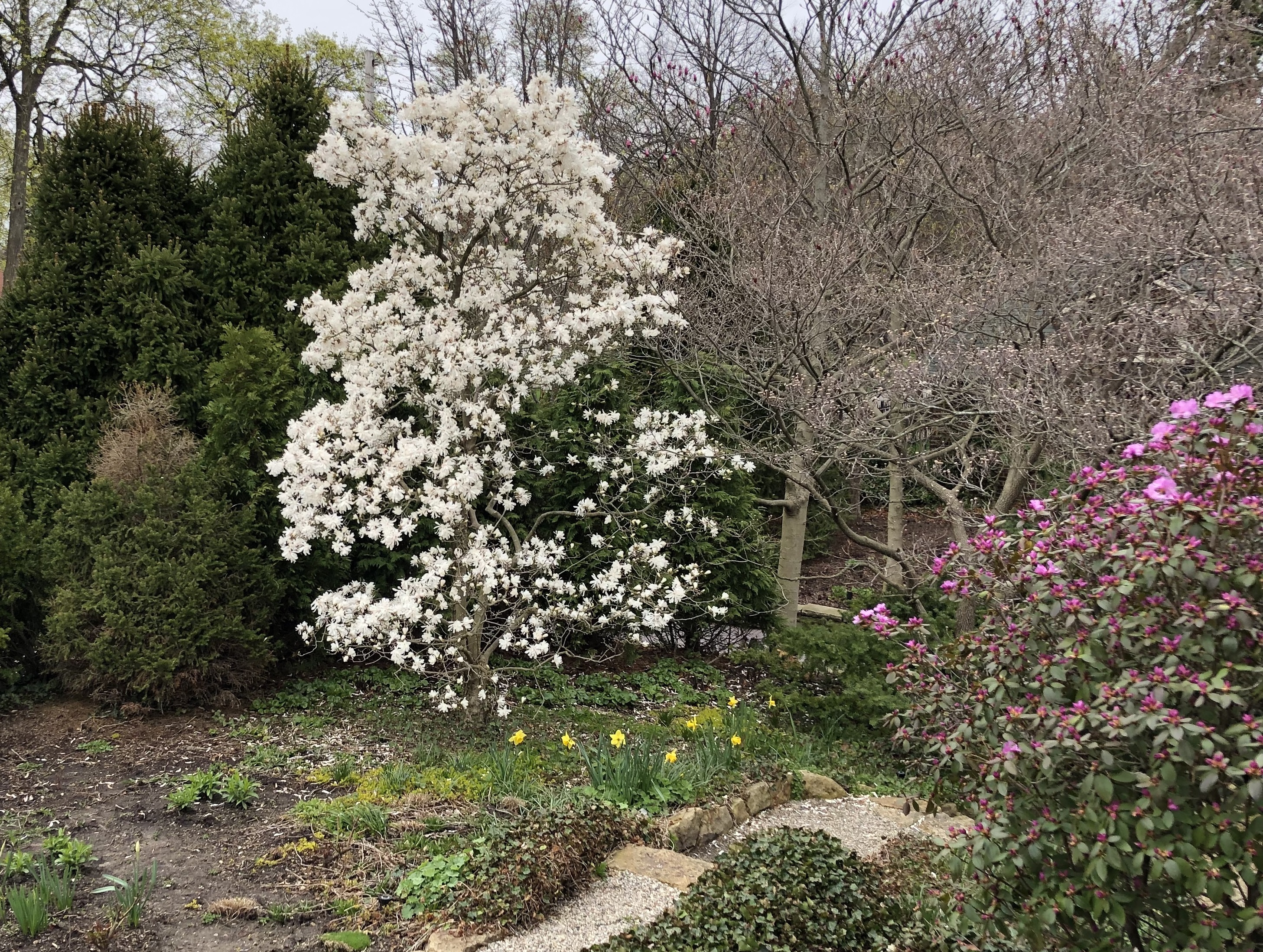
 On a positive note, the below freezing temperatures and snow forecast for this past weekend never materialized. I am pleased to report my magnolia stellata is still in full bloom.