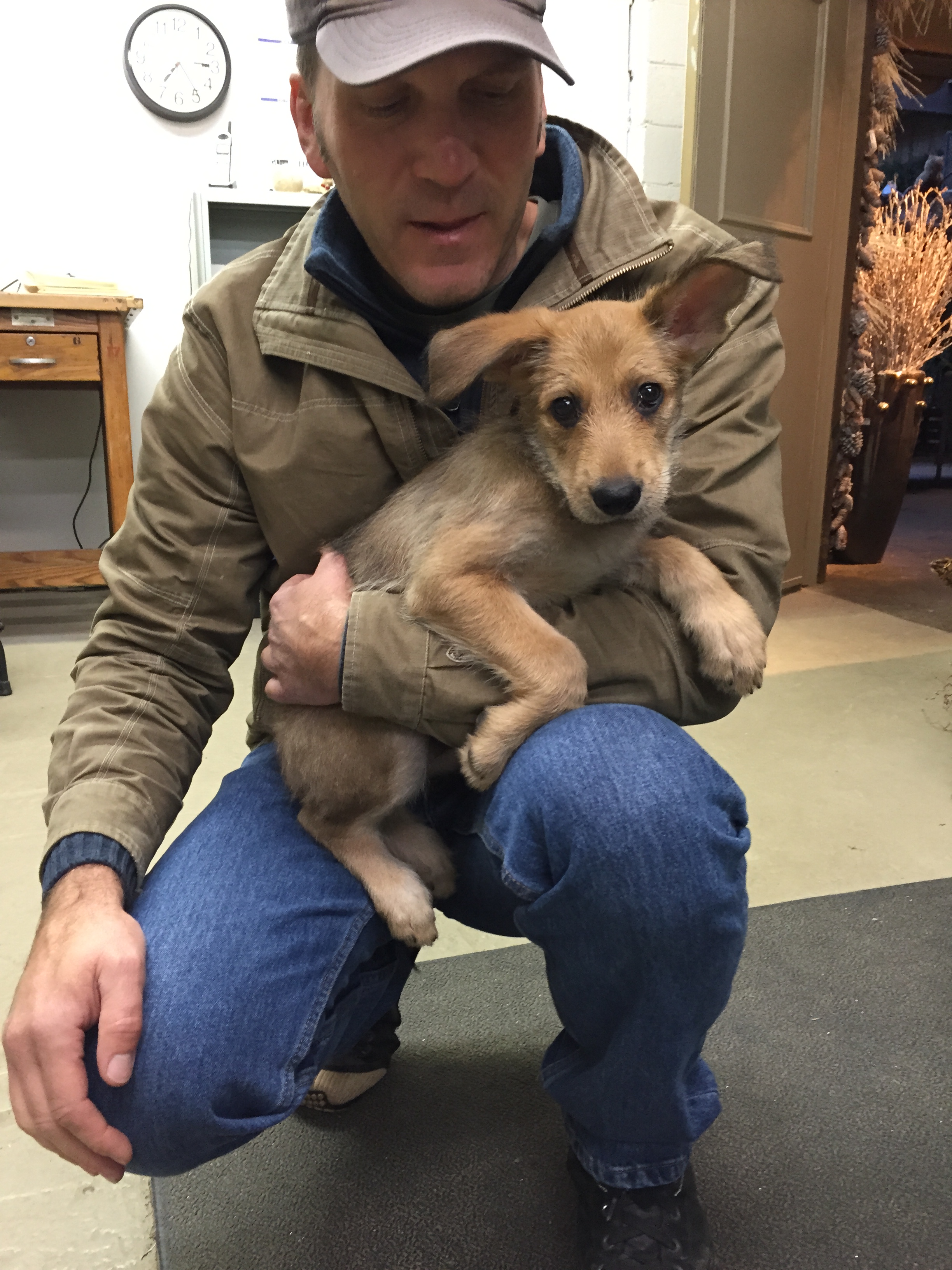
 Last November Rob drove to Roanoke Virginia to meet and pick up his intended-an 8 week old Berger Picard puppy. Berger Picard? Berger means shepherd in French; Picard refers to the Picardy region in France. One of the oldest of all the French herding dogs, the Berger Picard was almost driven to extinction by the devastation of two world wars. The Picardy region in France was especially hard hit.
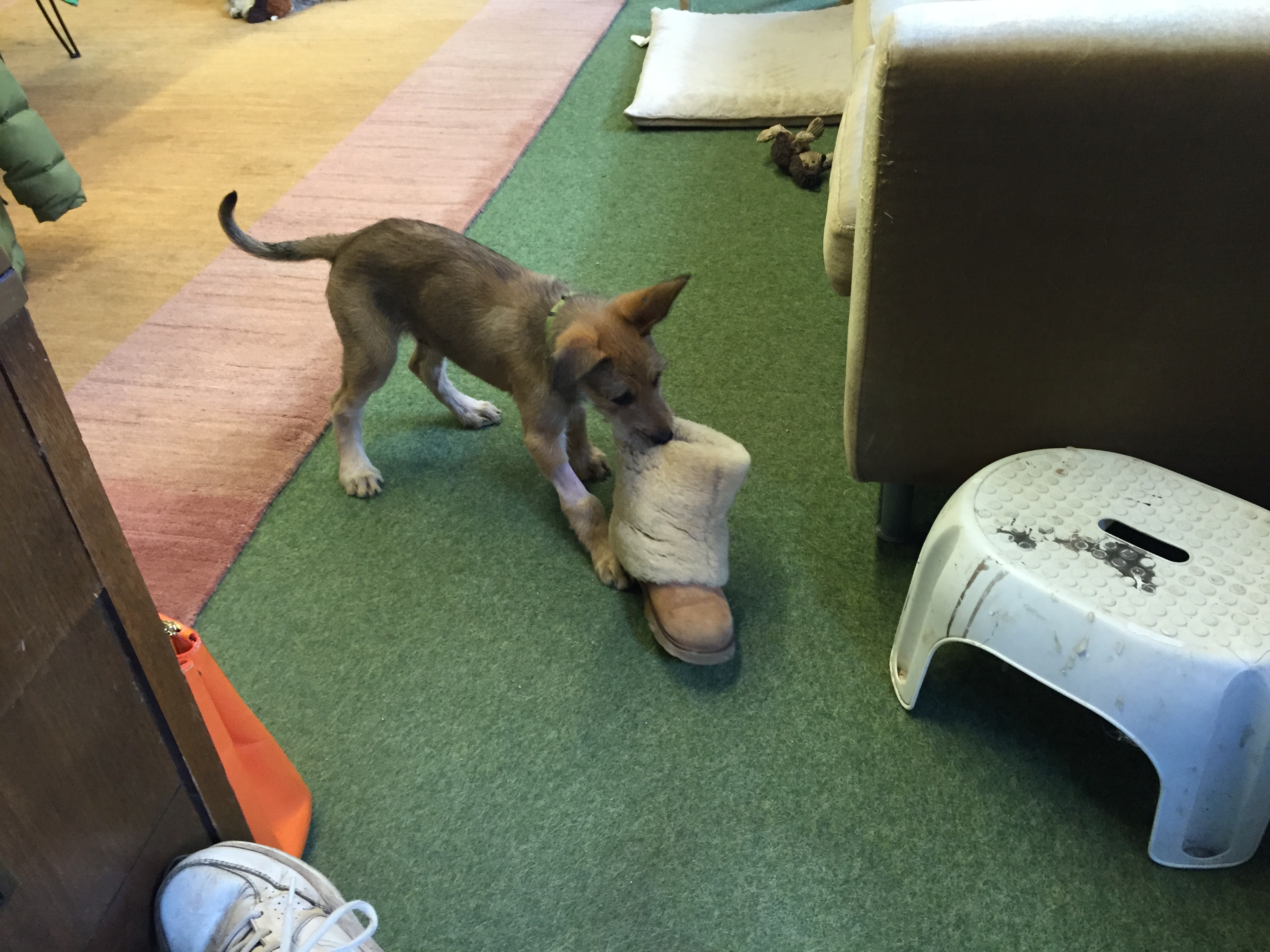
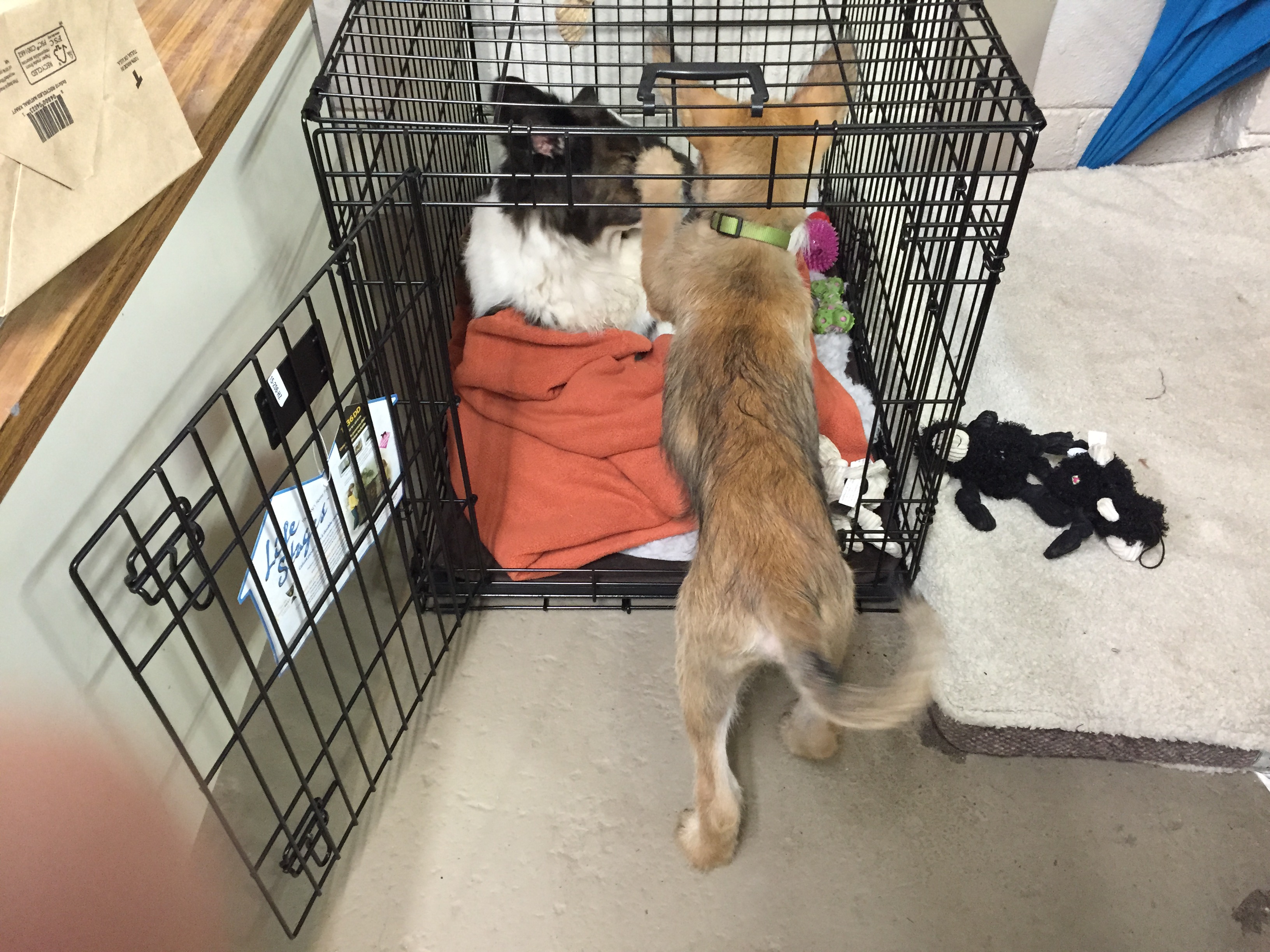 Devoted breeders, and the shepherds that needed their herding skills to tend their flocks kept the breed alive. They were virtually unknown in the United States until 2005. The film “Because of Winn Dixie” introduced this rare, rough and ready breed to Americans. From the Berger Picard Club of America, ” The 2005 release of the movie Because of Winn Dixie introduced America to the Picardy Shepherd. The movie producers wanted a dog that looked like a mixed breed, but needed several that looked alike so that production could continue smoothly, thus they decided on this rare purebred dog. It is this breed’s rustic tousled appearance that has fooled many people into thinking “Winn-Dixie” is just a mutt.” Just a week after his arrival, Milo was invading his crate space, and Gary was at home enough to scold him about it.
 The Berger Picard is still a very rare breed. There are reputed to be no more than 3500 of them, world wide. So how did Rob become acquainted? In July of 2015, the breed was admitted to the AKC. A regional dog show in our area featured a specialty meeting of a Berger Picard club that was graced by 14 of these dogs – all together, in one place. He was smitten. Some months later, the President of the Berger Picard Club of America had pups on the way; Rob spoke for one of them. Gary had not so much to do or say for his first few days, except to stick close to Rob. By day three, he was starting to feel at home.
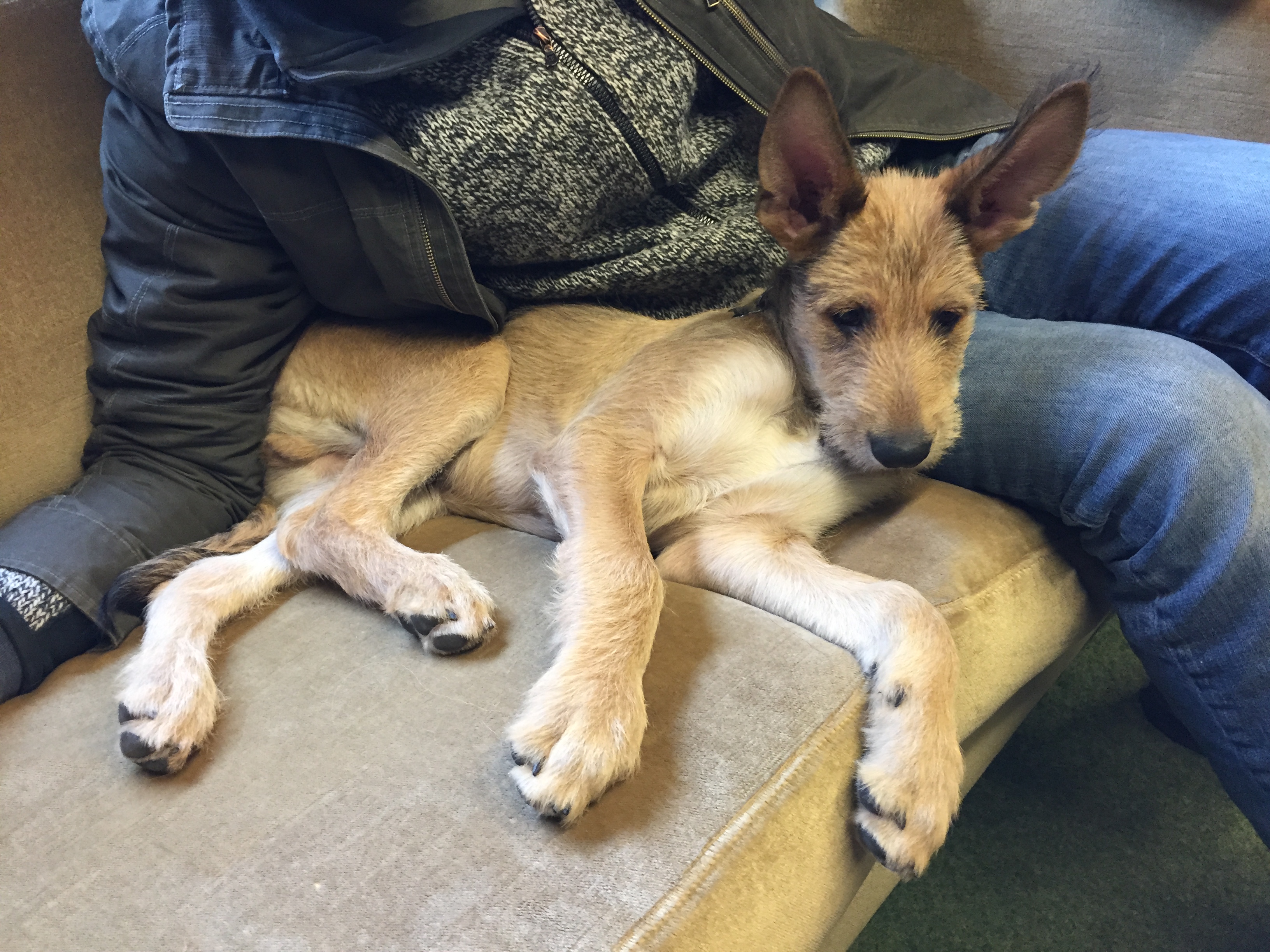 The breed is known for its giant ears, big feet, and energetic personality. They are herders, so they need regular exercise. But Gray would need to develop some people skills, as he would be coming to work every day. In his favor is an innate sense of humor. Not all dogs make good retail store dogs. My corgi Milo is an exception. He is too little and low to the ground to be a threat to anyone, and he is eminently sociable. He doesn’t jump on anyone. He has Welsh style manners, except for his enthusiastic barking when he is playing ball. We have people come to the shop all the time-just to check in on Milo. I like that.
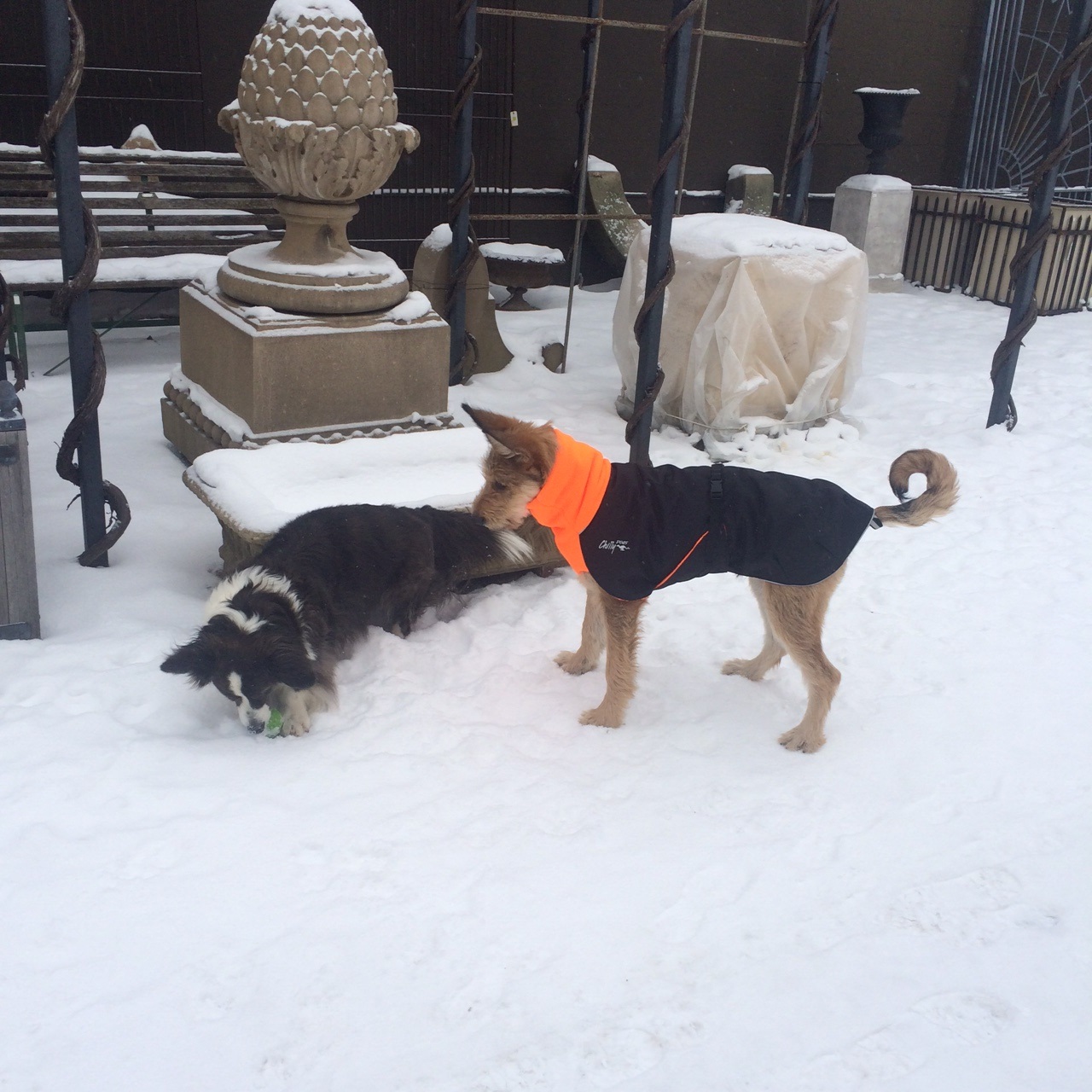 Gary grew by leaps and bounds over the winter. The corgis were outraged by the Berger Picard puppy invasion, but eventually they all made friends. That is a tribute to his easy going nature, as the corgis are 11 now, and have their routines. Rob’s efforts to expose him to other people and dogs meant regular trips to the dog park, puppy obedience school, and introductions to people who come to the shop.
 By late winter, you could watch him putting on weight and stature. It seemed like he went from 14 pounds to 50 overnight. That shaggy coat that is typical of the Bergers was beginning to come in – face first. He is intensely attached to Rob, and he has taken many of his behavioral cues from Rob, which is a good thing.
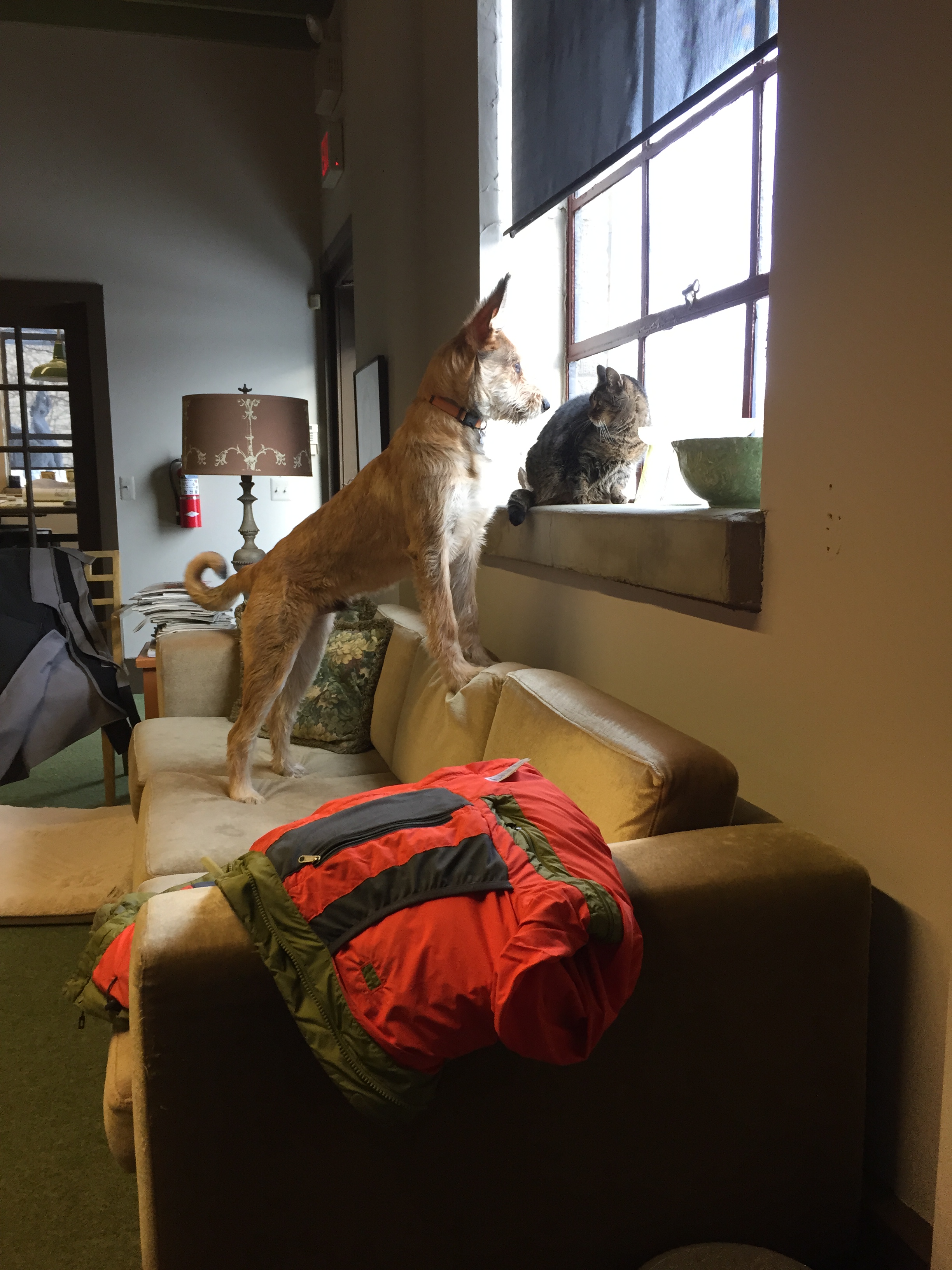 The day he met MCat, I made an effort to stay out of the mix. There was no need to interfere with their introduction. There was a lengthy stare down. Then, a truce. If you have never seen MCat, you are not alone. He spends the middle of his day snoozing in the pot of his choice. Early and late, he is an active member of the group.
 It has been fun watching these two fall for each other.
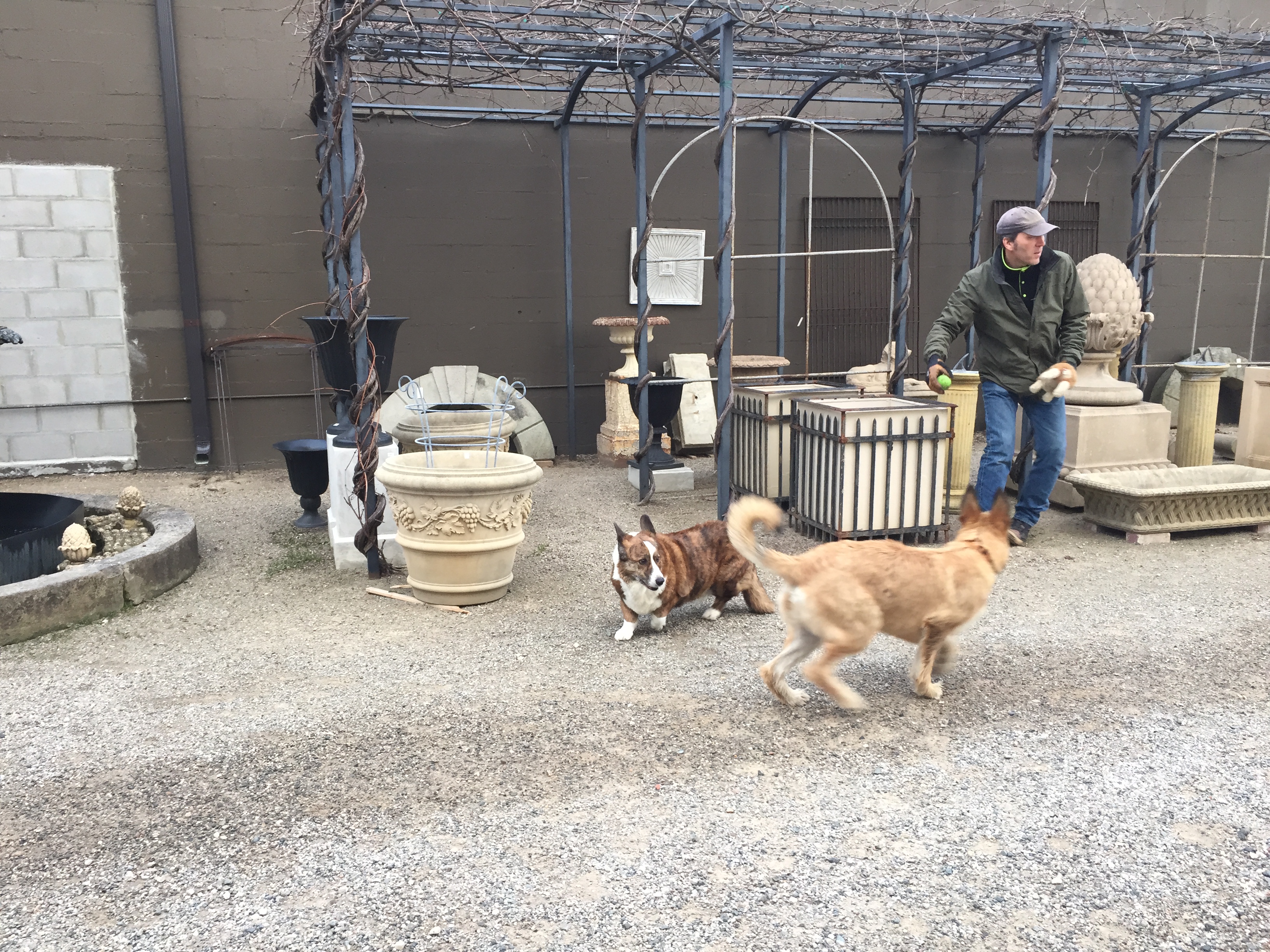 Both Corgis have been energized by the addition of a third dog. They do not seem to be in the least bit intimidated by his size. His good and graceful with my 11 year olds. In the morning before the shop opens, they all play ball-even Howard.
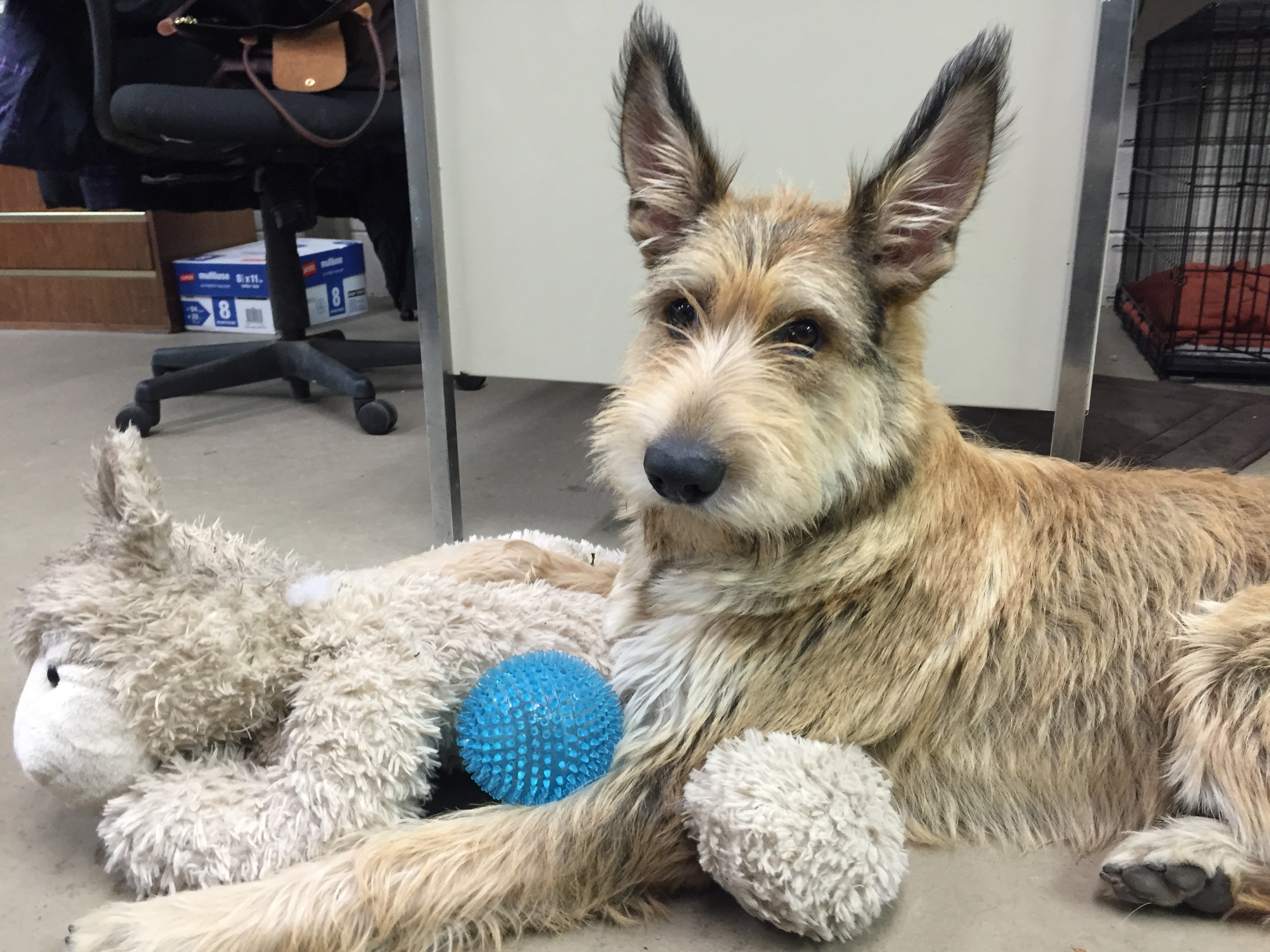 So why am I talking about Gary? He is a new member of our group. Gardeners coming in now after the winter hiatus want to meet him, and have questions about the breed. Should you come by, we will be happy to introduce you.
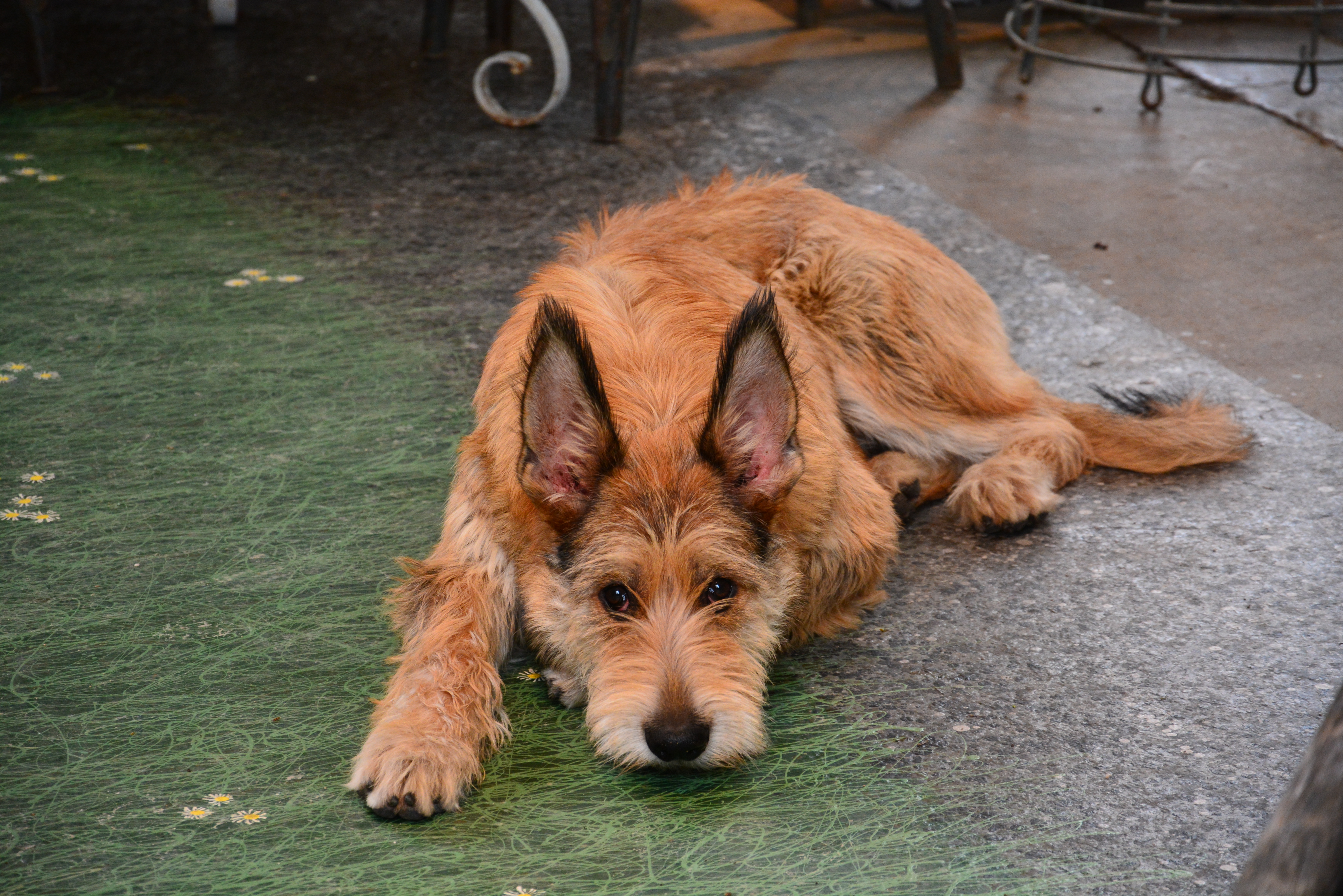 Despite being only 7 months old, he has his quiet moments. This is a good thing. The 3 large orange caution cones positioned at our entrance right now is part of his training to never breach those open gates, and leave the yard. He seems to be catching on to that idea fast.
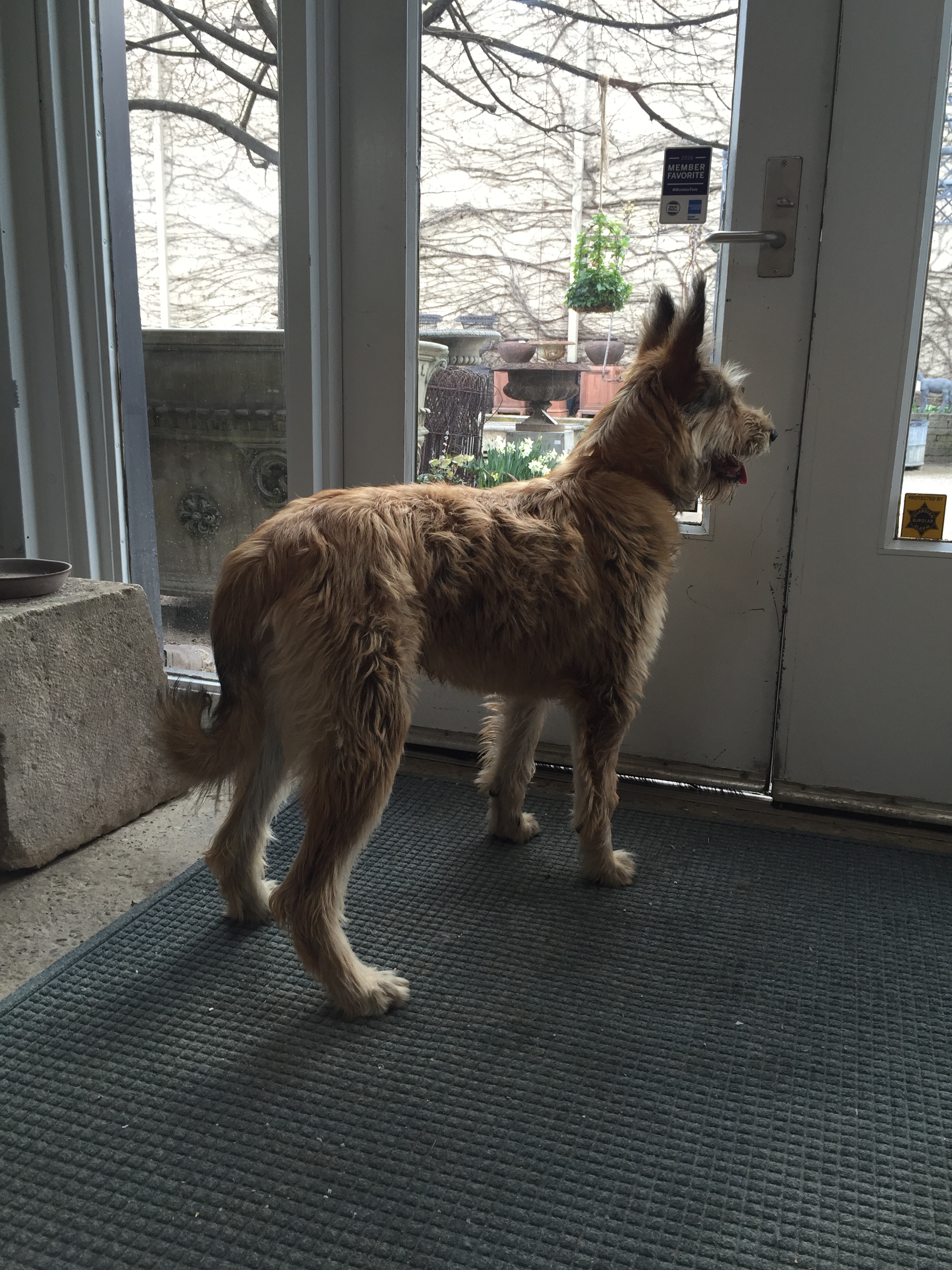 He has a warm and affectionate personality that matches his size.
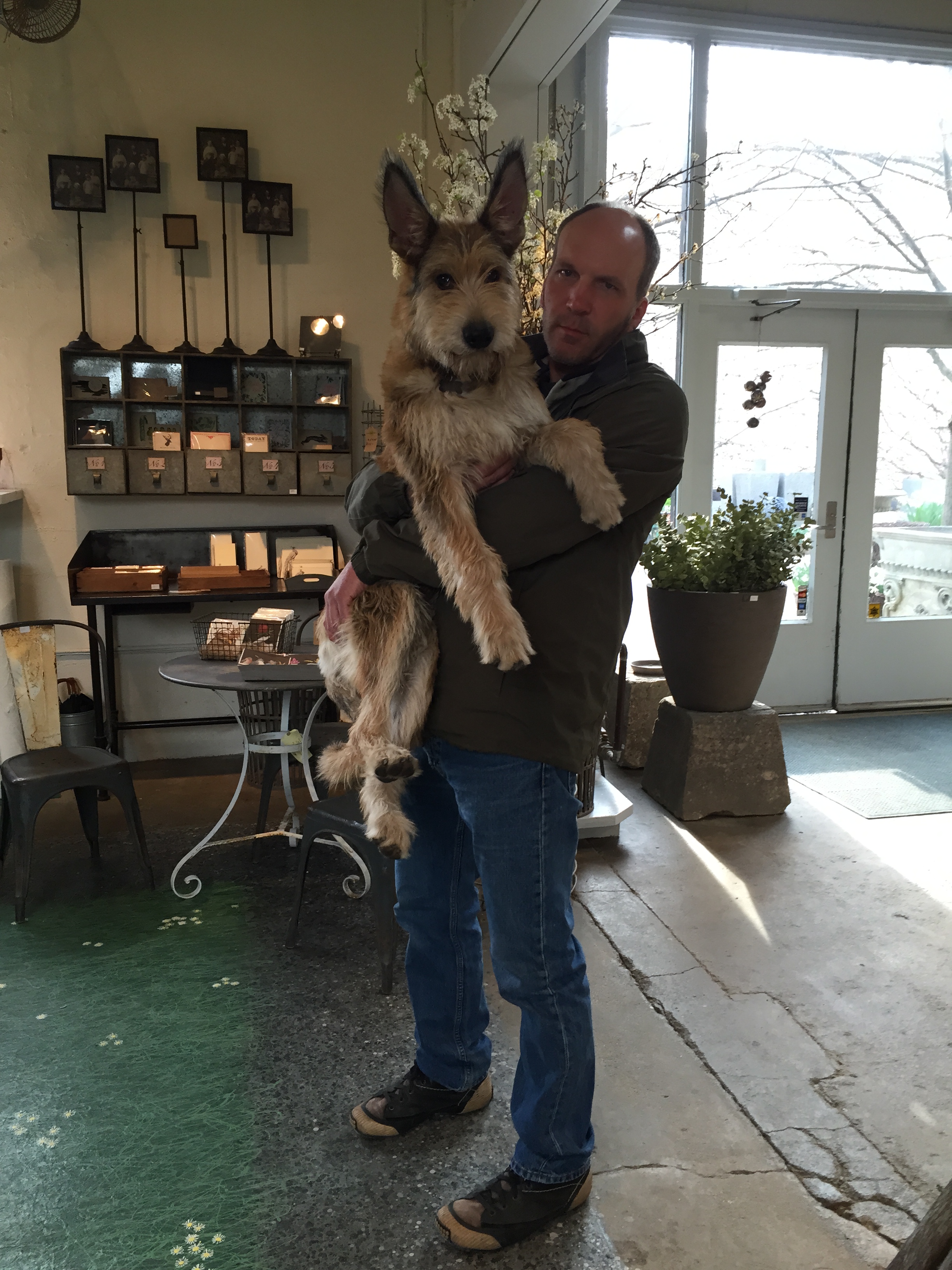 I don’t know how much longer Rob will be able to pick him up like this – ha. It is impossible to tell which one of them likes this relationship better.
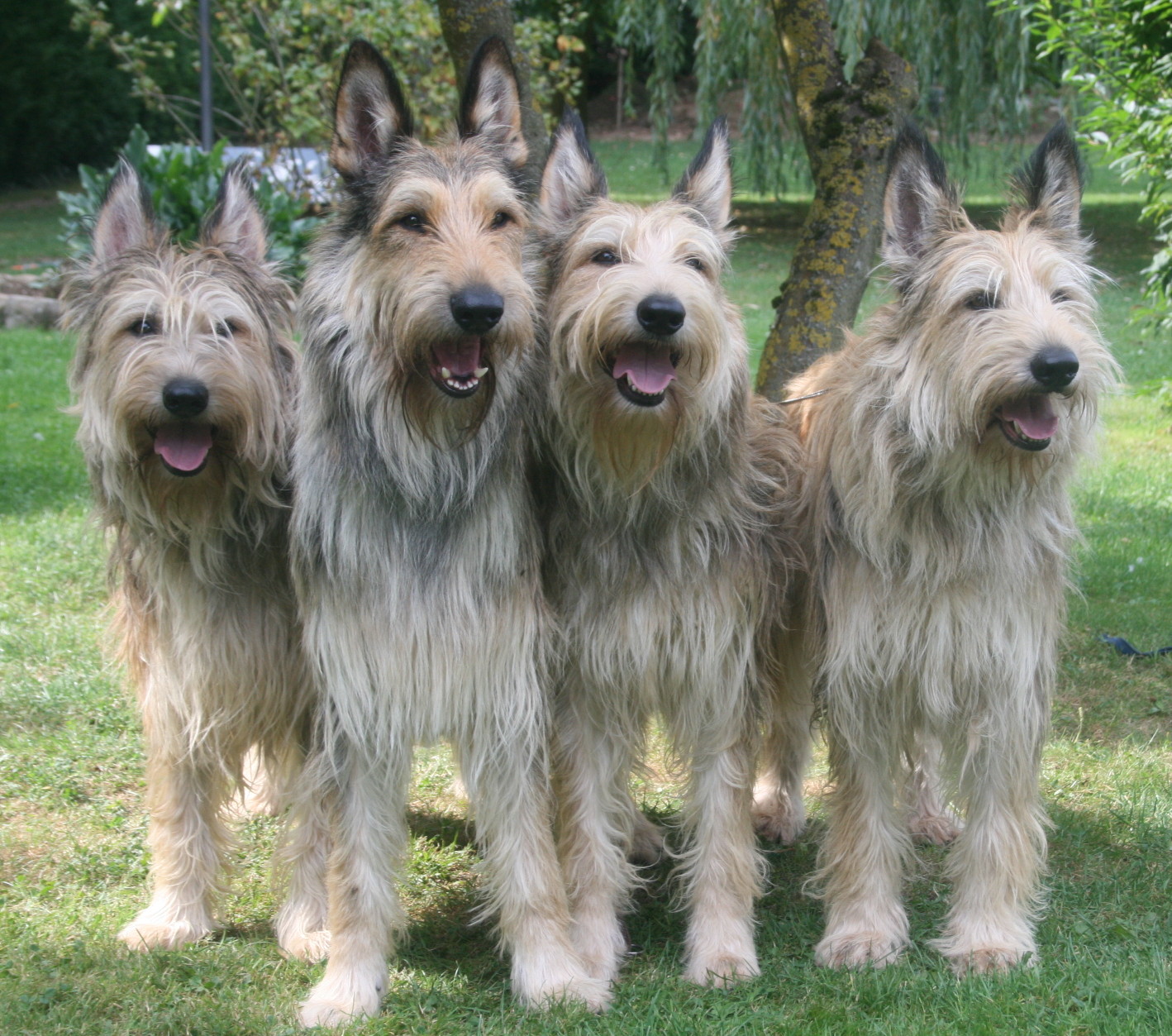 They make very handsome grown-ups, don’t they?