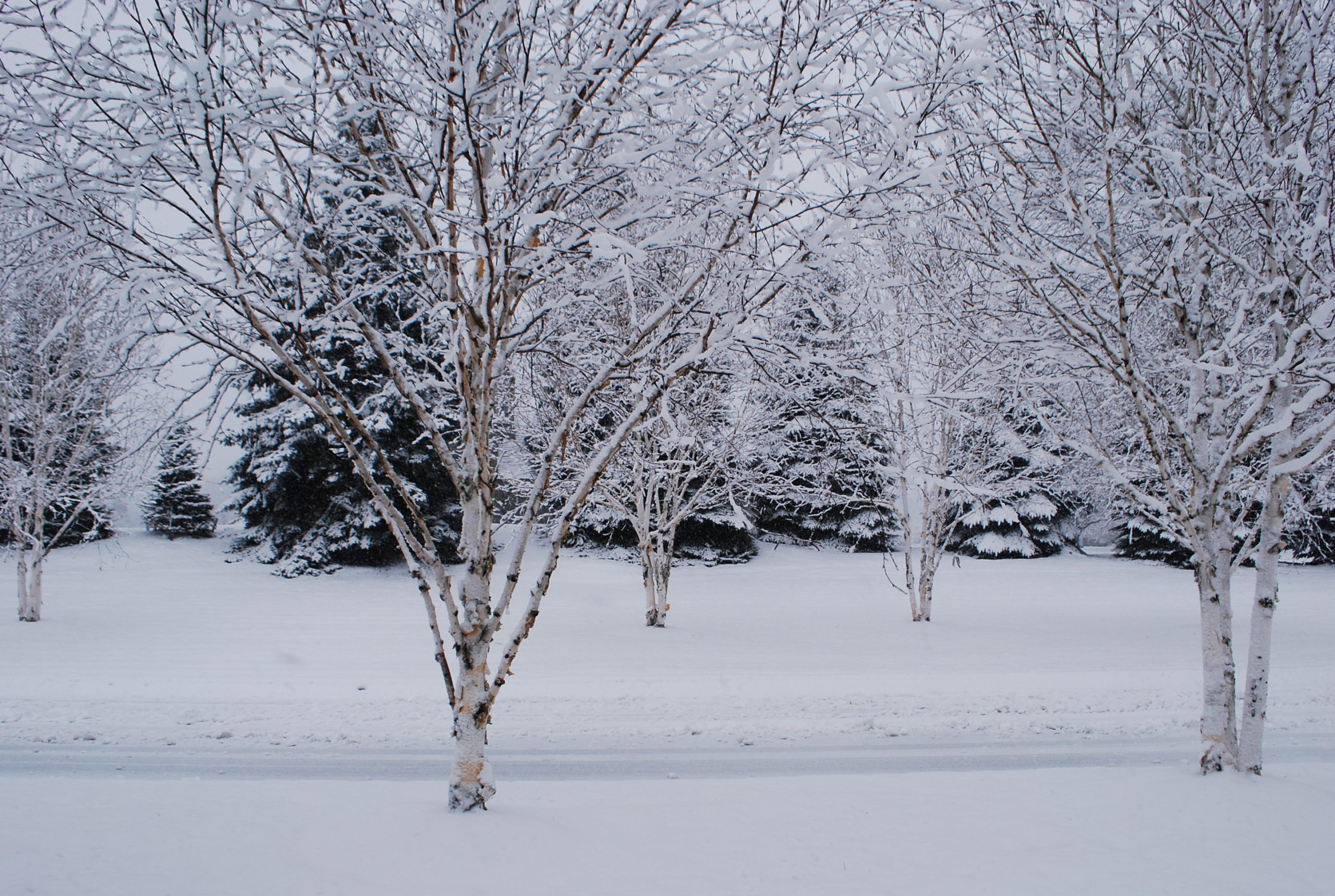
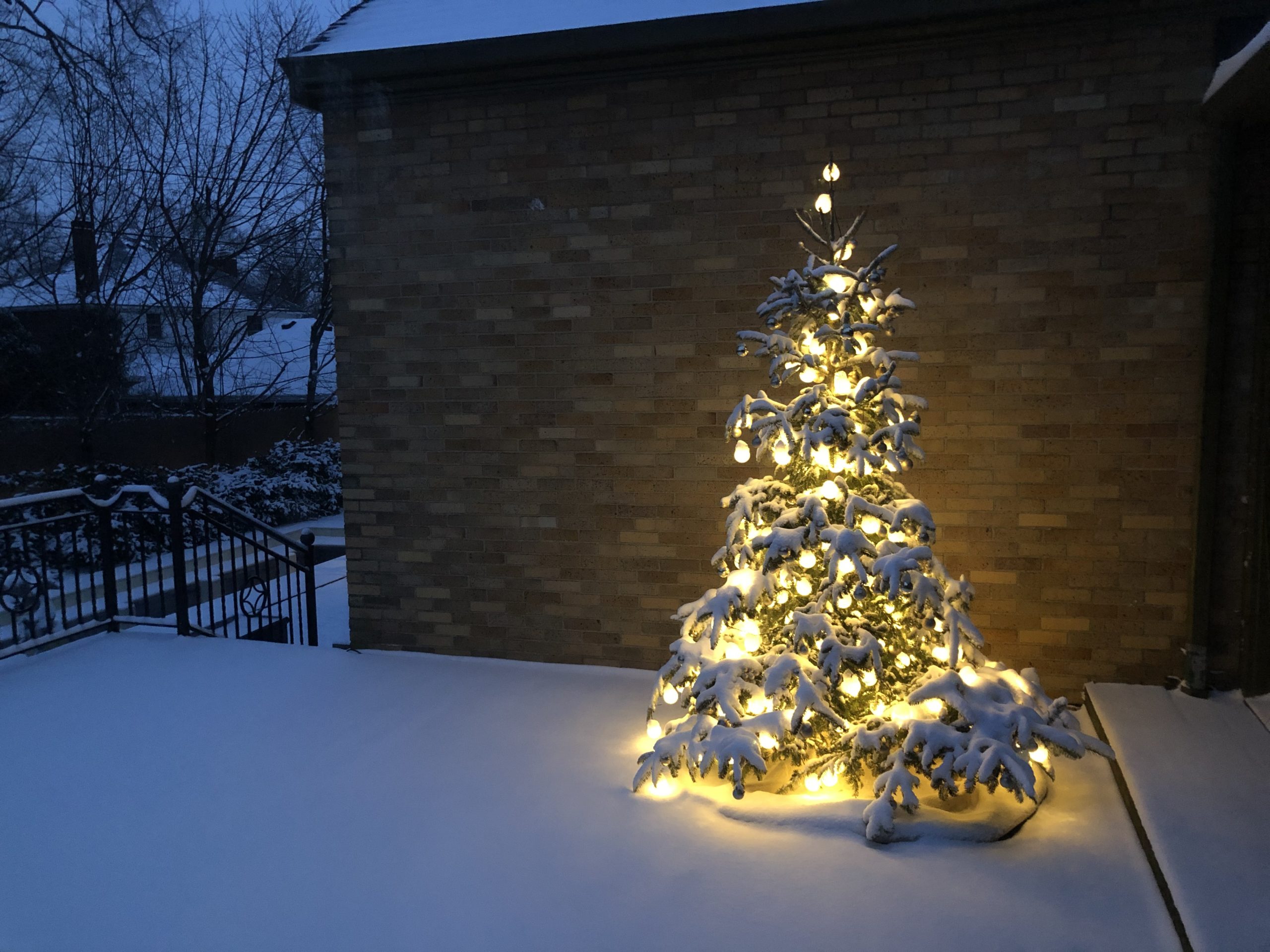
 By late January, winter has an immutable grip on my zone. It’s cold, but the cold is not the spirit breaker. Its the gray. All the imperceptibly different versions of gray. The massive and almost daily uni-cloud that covers the entire landscape from the sky on down. We have weeks and weeks of it yet to go. Michigan has an impressive number of cloudy winter days. That day after day gray, on top of the cold and wintry weather, is a serious damper for anyone who lives to be out of doors. Gray days and lengthy nights ask for a little intervention. Just in case you are asking why I still have a lighted tree on my deck January 21, this is the reason. That glow from the tree is warm and inviting. It banishes a bit of the gloom. And it casts what the winter has to offer in a positively beautiful light.
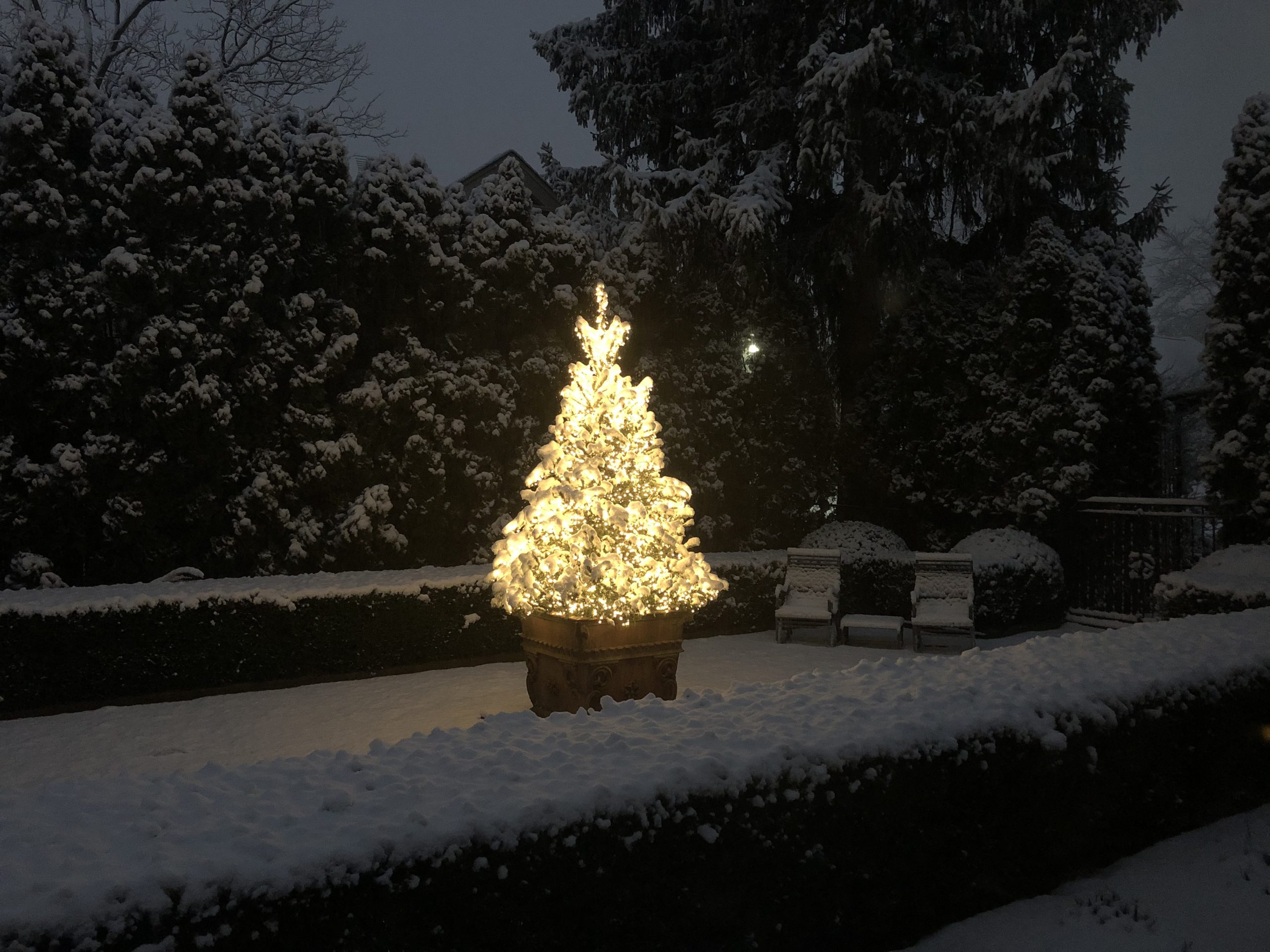 It is not too many for me – having two lighted trees. This one in my side yard illuminates the entire area. People often ask me what kind of lights I use. That doesn’t matter so much, although LED lights are certainly more economical to run. What really matters is using lights in sufficient quantity to provide the quality and extent of light you want. Though this is the south side, it is exceptionally dark in the winter. The surrounding arborvitae are every bit of 14 feet tall, and their foliage turns black/green in response to the cold. They are brooding and monolithic. The tree provides just enough light to bring this part of the landscape into a winter focus. On a gray day, the tree sparkles. I don’t visit this spot so often in the winter, but I see it from inside every day and every night. The light is an invitation to enjoy the landscape from afar. Its no secret that I believe lighting and winter containers are both essential elements of the winter landscape. How and when to provide it may be addressed in November and December, but what they provide is most welcome in January and February.
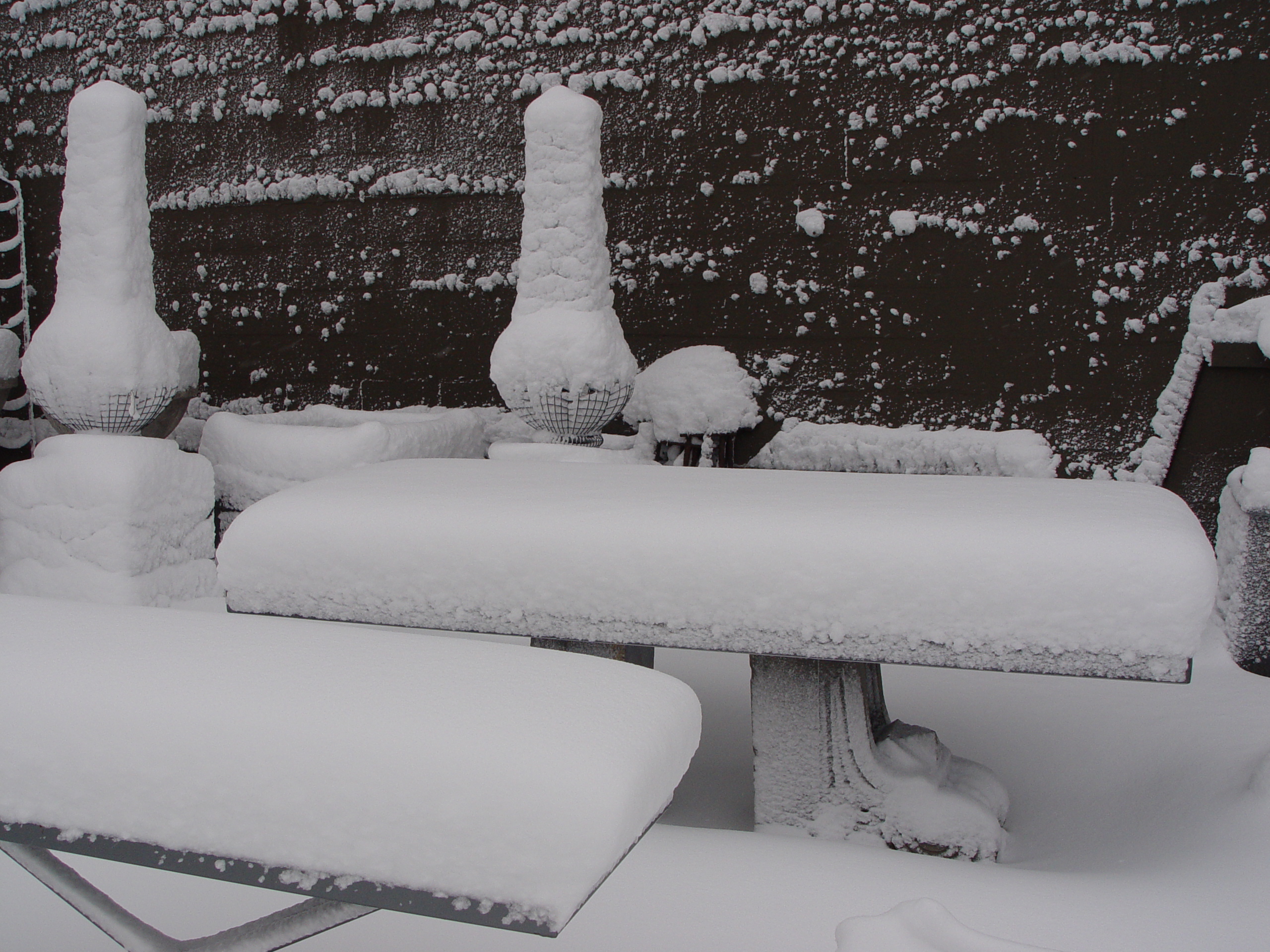
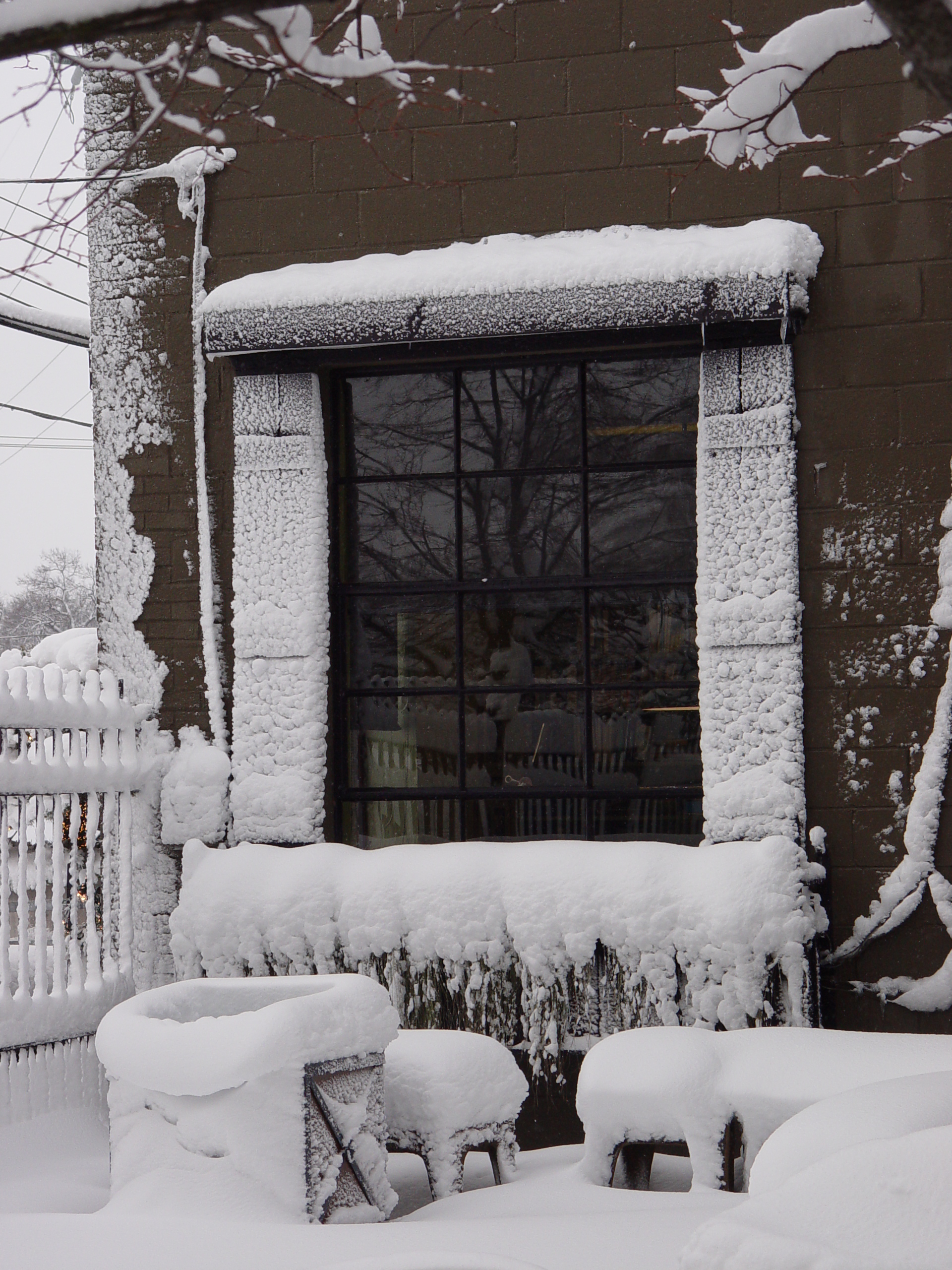
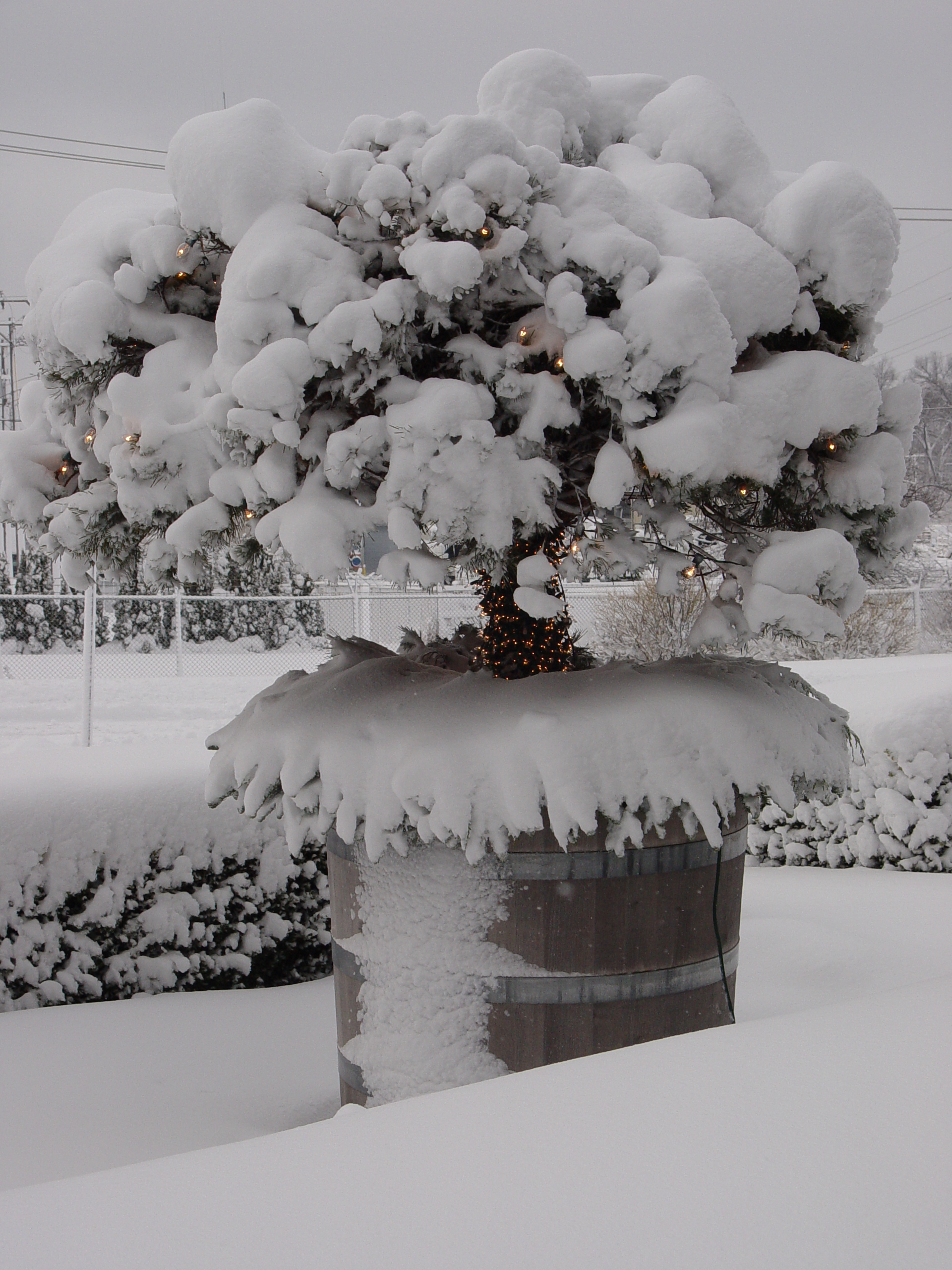
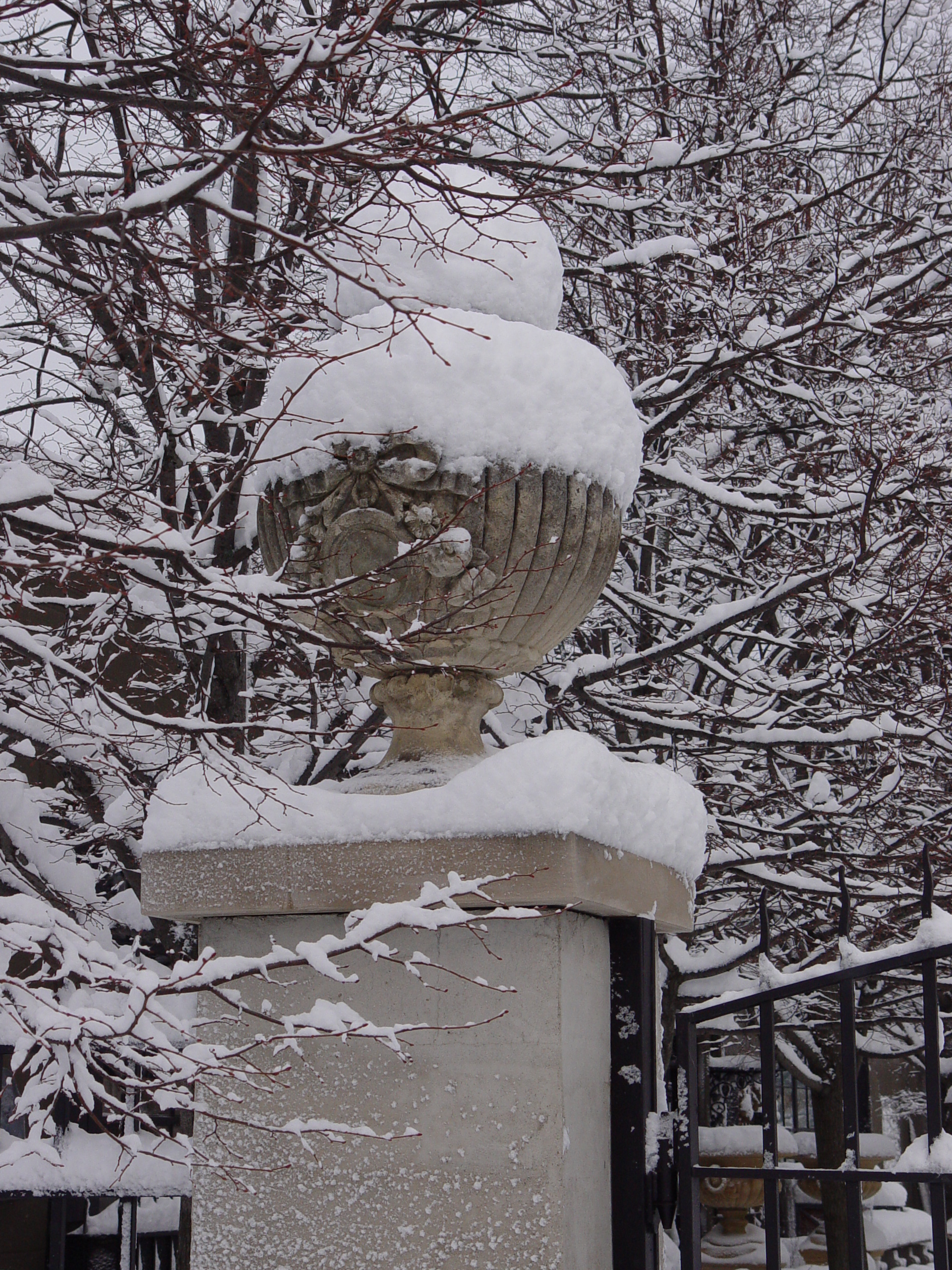
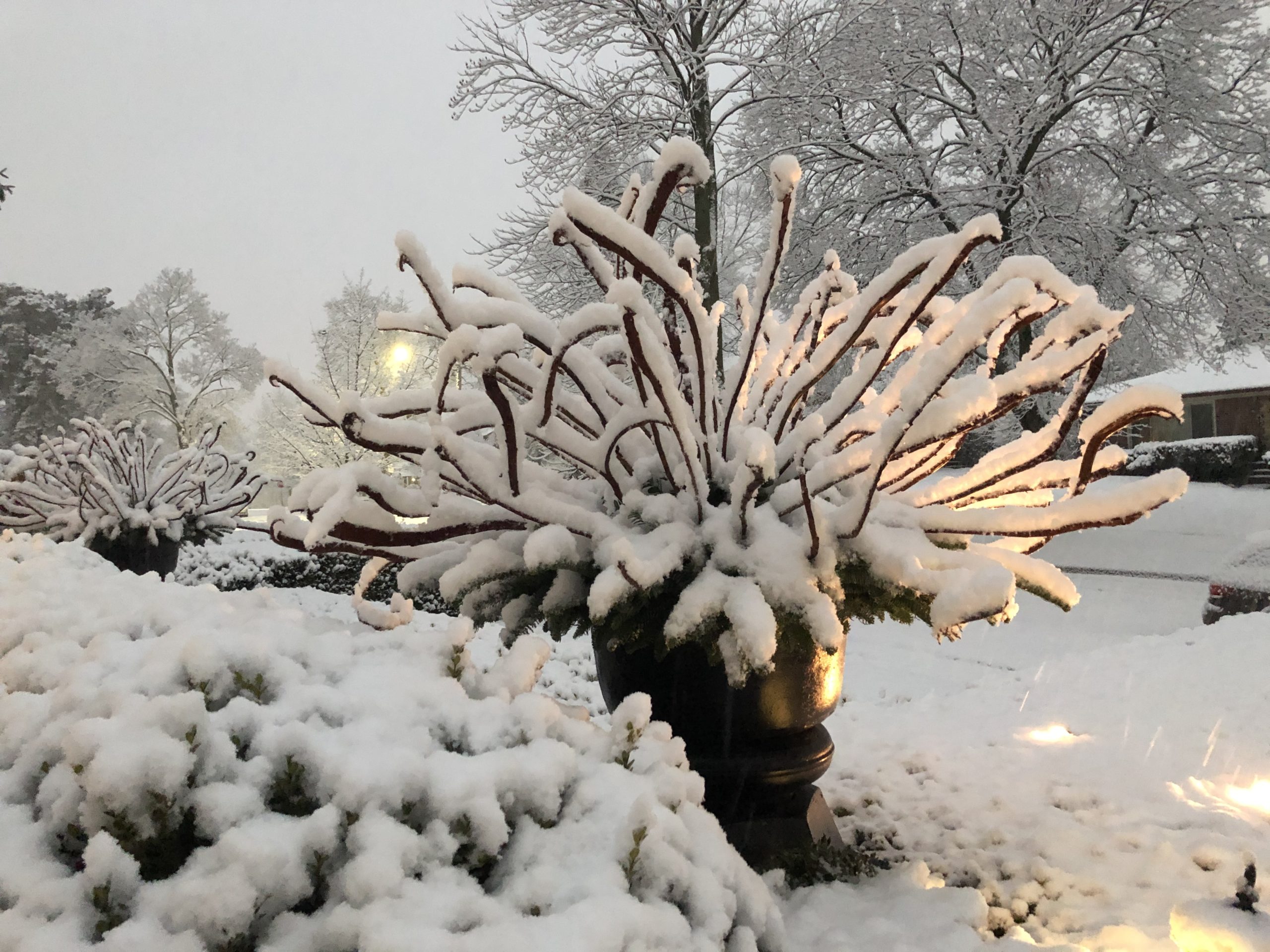
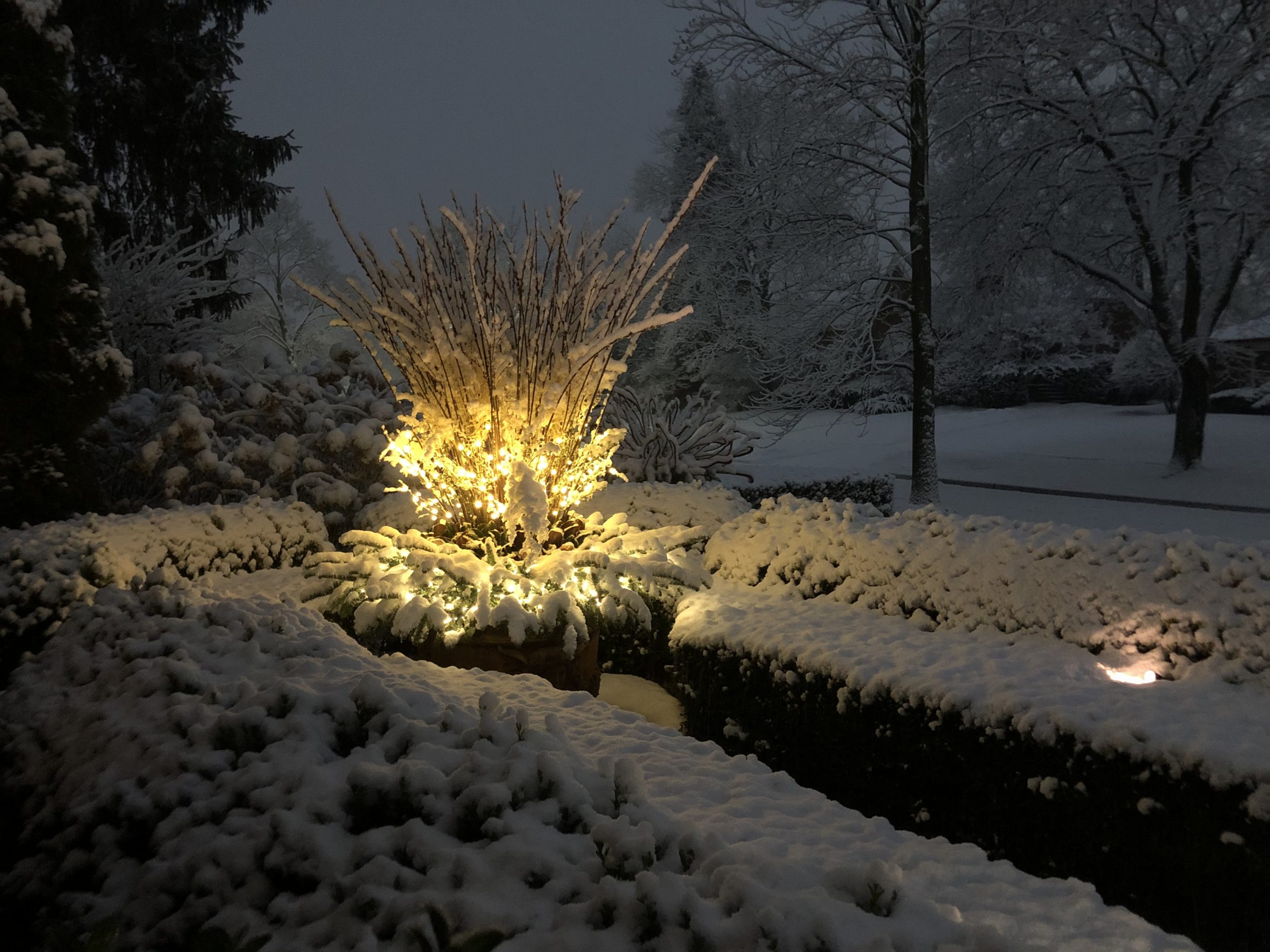 Lighted containers installed in the landscape in November and December are ready for the winter weather. Containers decorated for the holidays celebrate a specific event, but once those holiday elements are removed, a winter container is set to perform over the long haul. We will have wind, heavy snow and bitter cold along with the gray. Once in a blue moon, we have a snow unlike all others. The wet sticky snow falls slowly and vertically in windless and entirely quiet conditions. The total snow fall is but an inch or two or three. But it sticks to and steadily builds on every surface it touches. The quality of this kind of snow is such that it even sticks to vertical surfaces. I have never heard a weather news caster predict such an event, but air temperature and humidity play a crucial role. The science aside, it is a perfect moment in the winter landscape. No lighted winter container is ever more glorious than when clothed in snow like this.
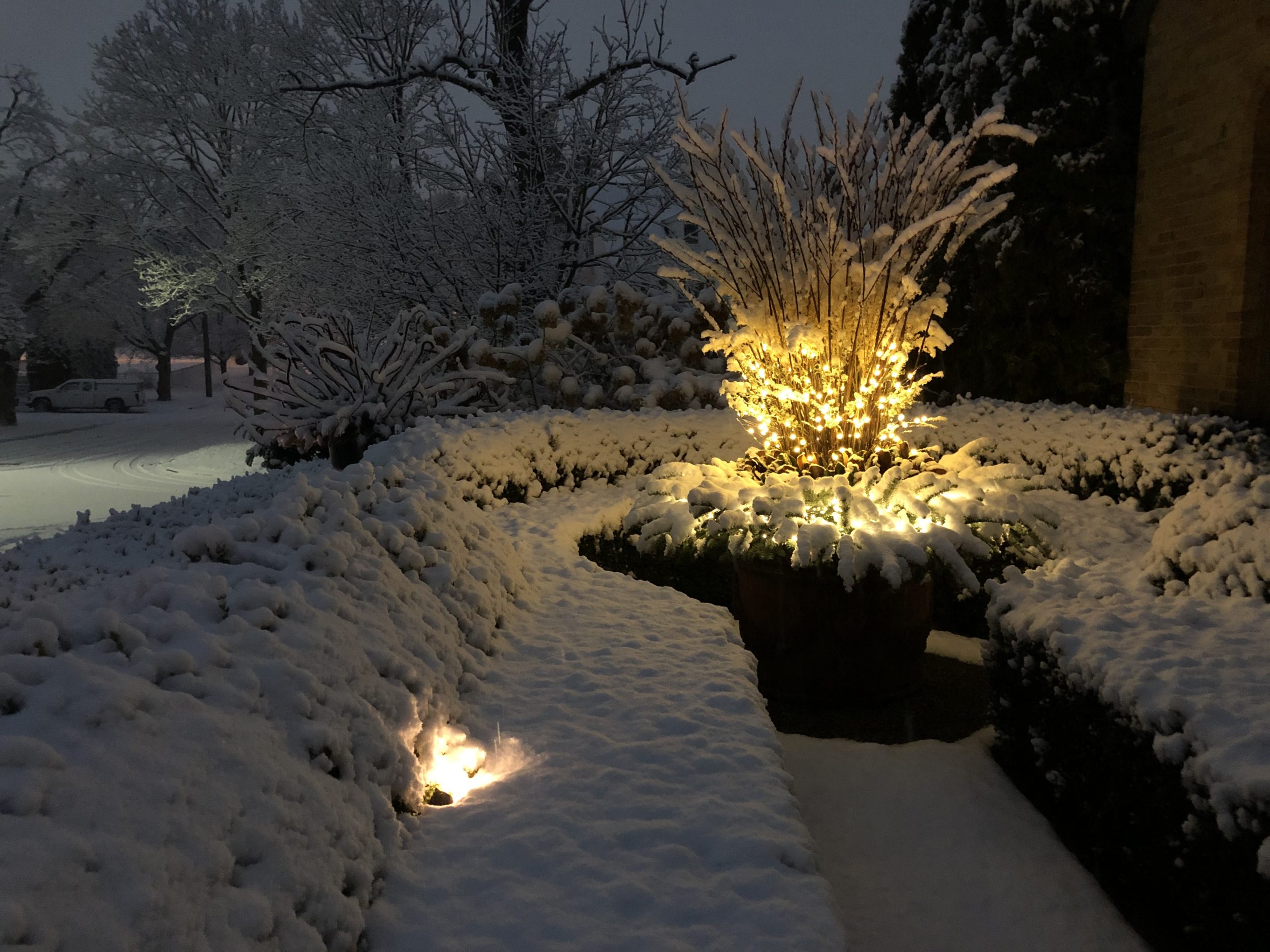 The same is true for the landscape. A good design is both revealed and invigorated by weather. It is a vital element in the landscape over which a gardener has no control. Some weather is entirely destructive, but there is always the opportunity to re imagine and rebuild. Whether it be rain or snow or fall leaves, or the drop of spent magnolia flower petals, a fresh coat of weather tells a story. In the above picture, the design elements of line, mass and texture are illustrated in a graphic way. The color of the light is in especially striking contrast to the somber surrounding landscape.
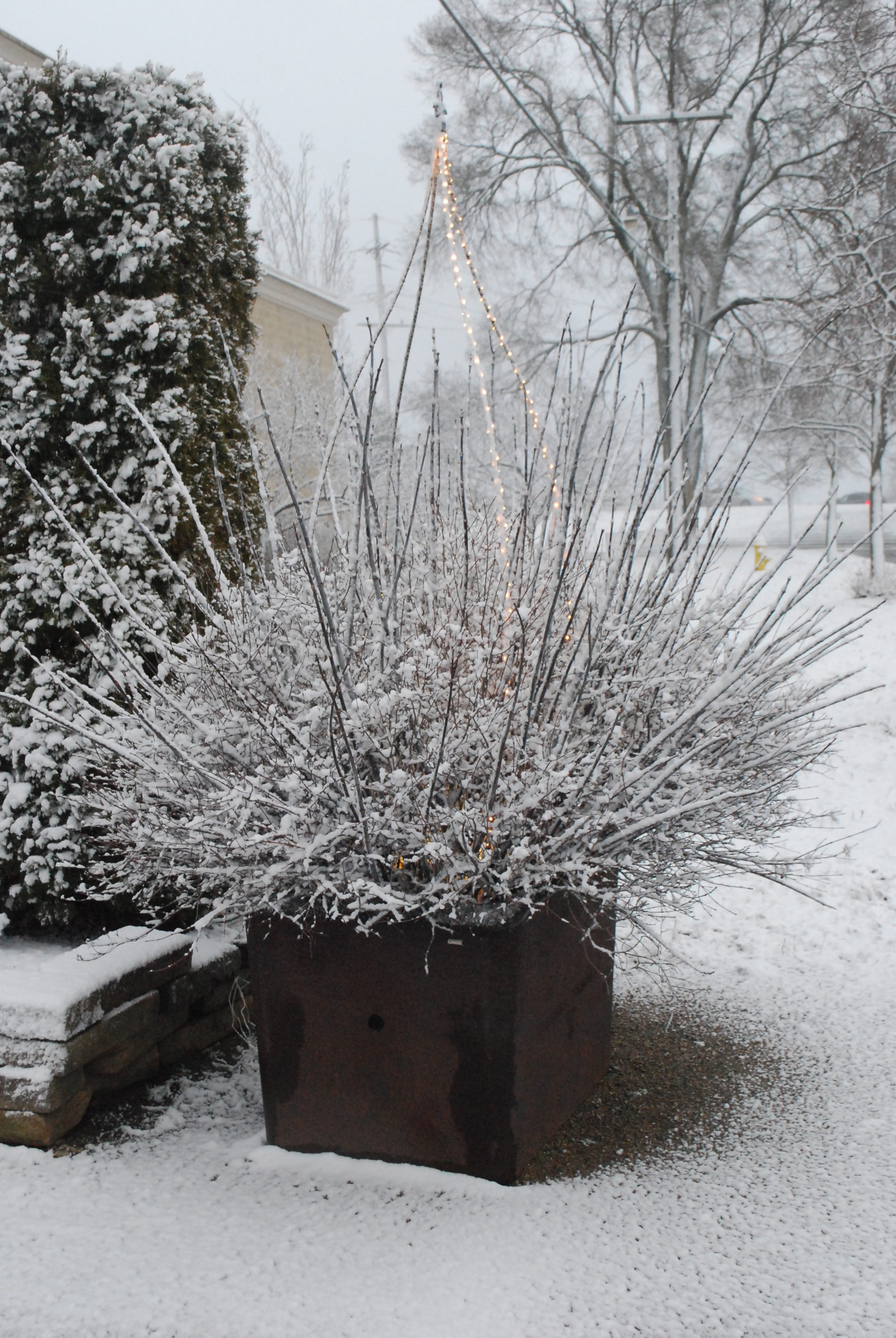
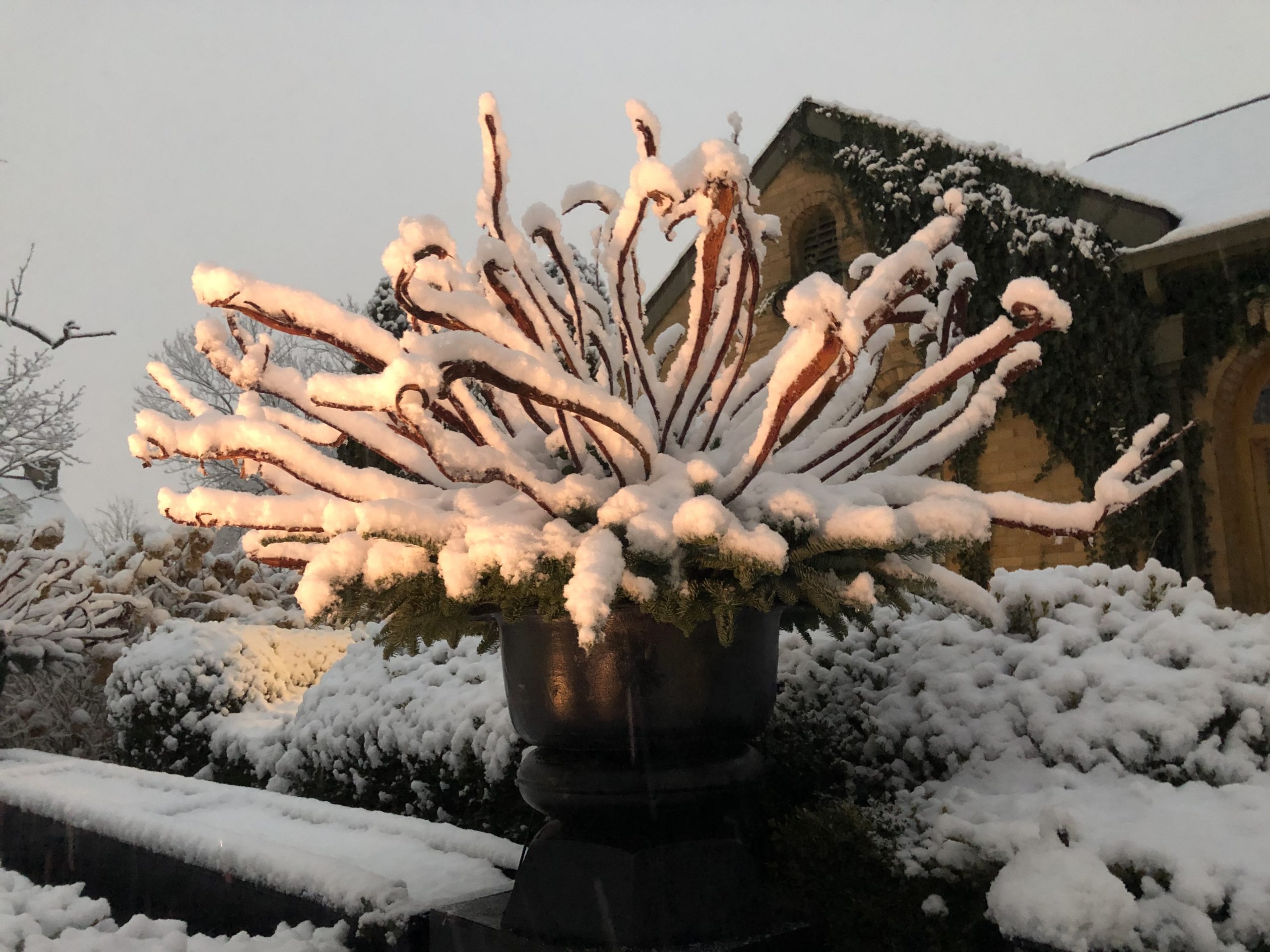
 Fantail willow branches sport an infinite variety of curving shapes. The snow, and a strategically placed spot light, feature not only their shapes, the the overall shape created by their placement.
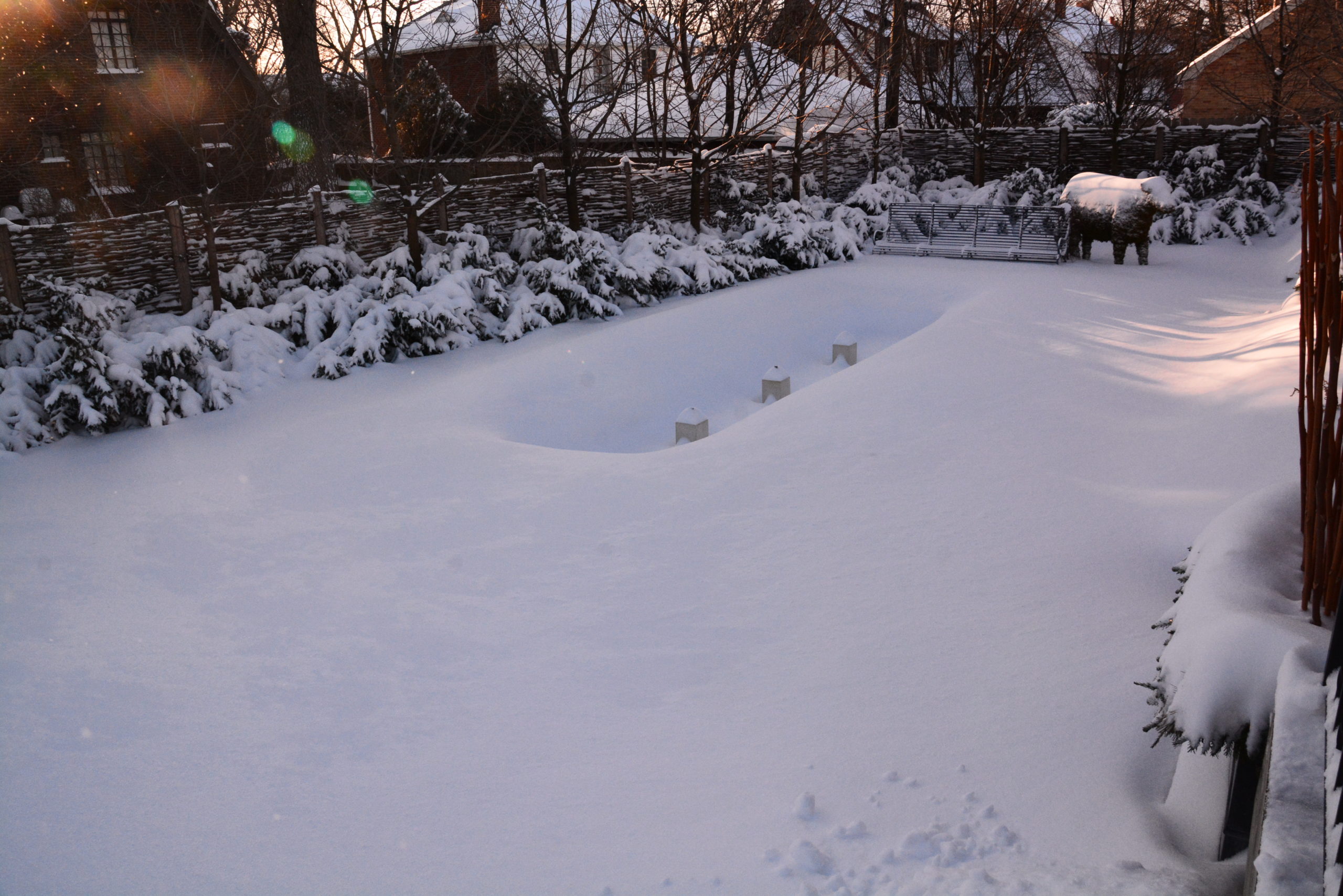
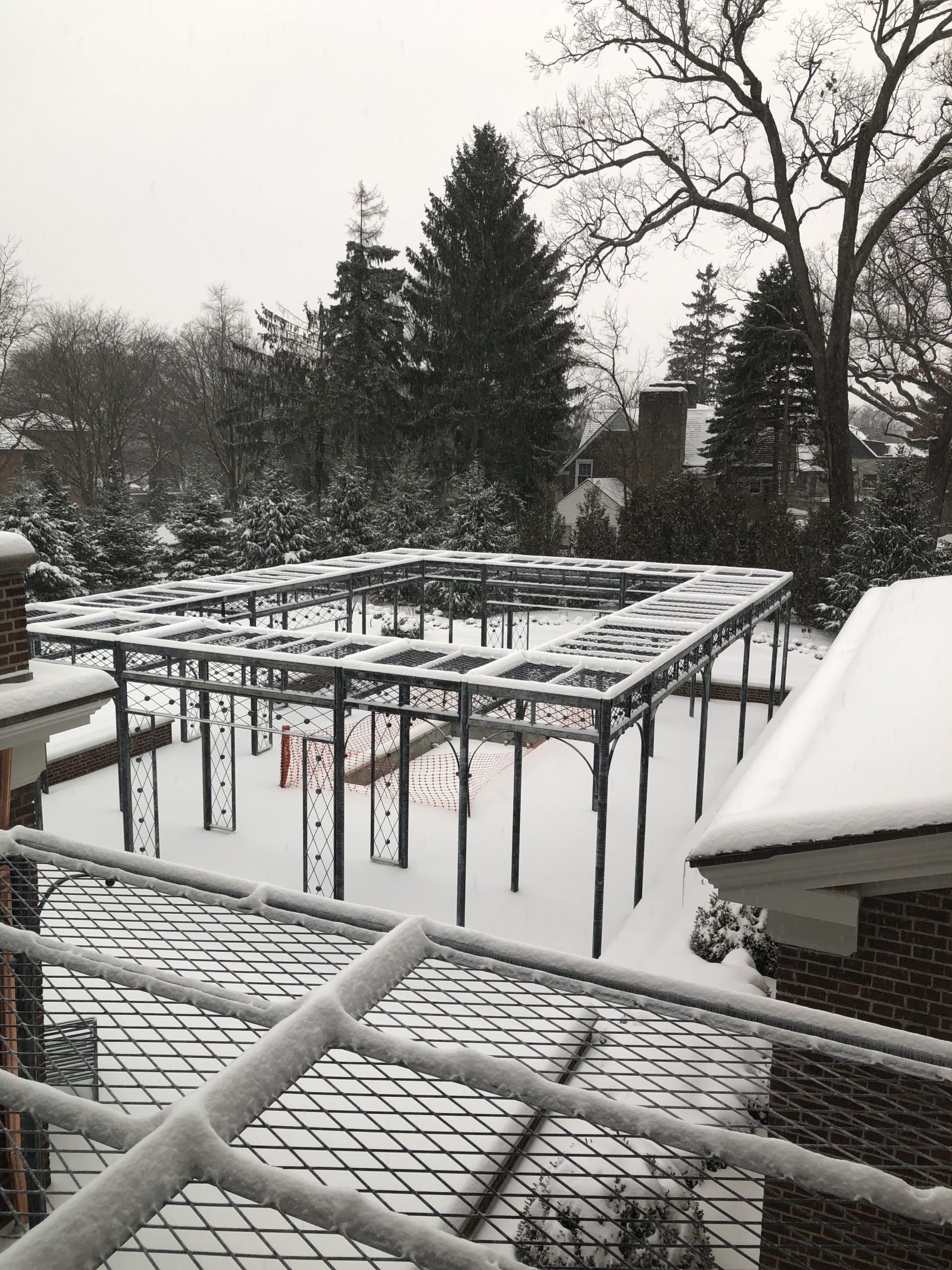
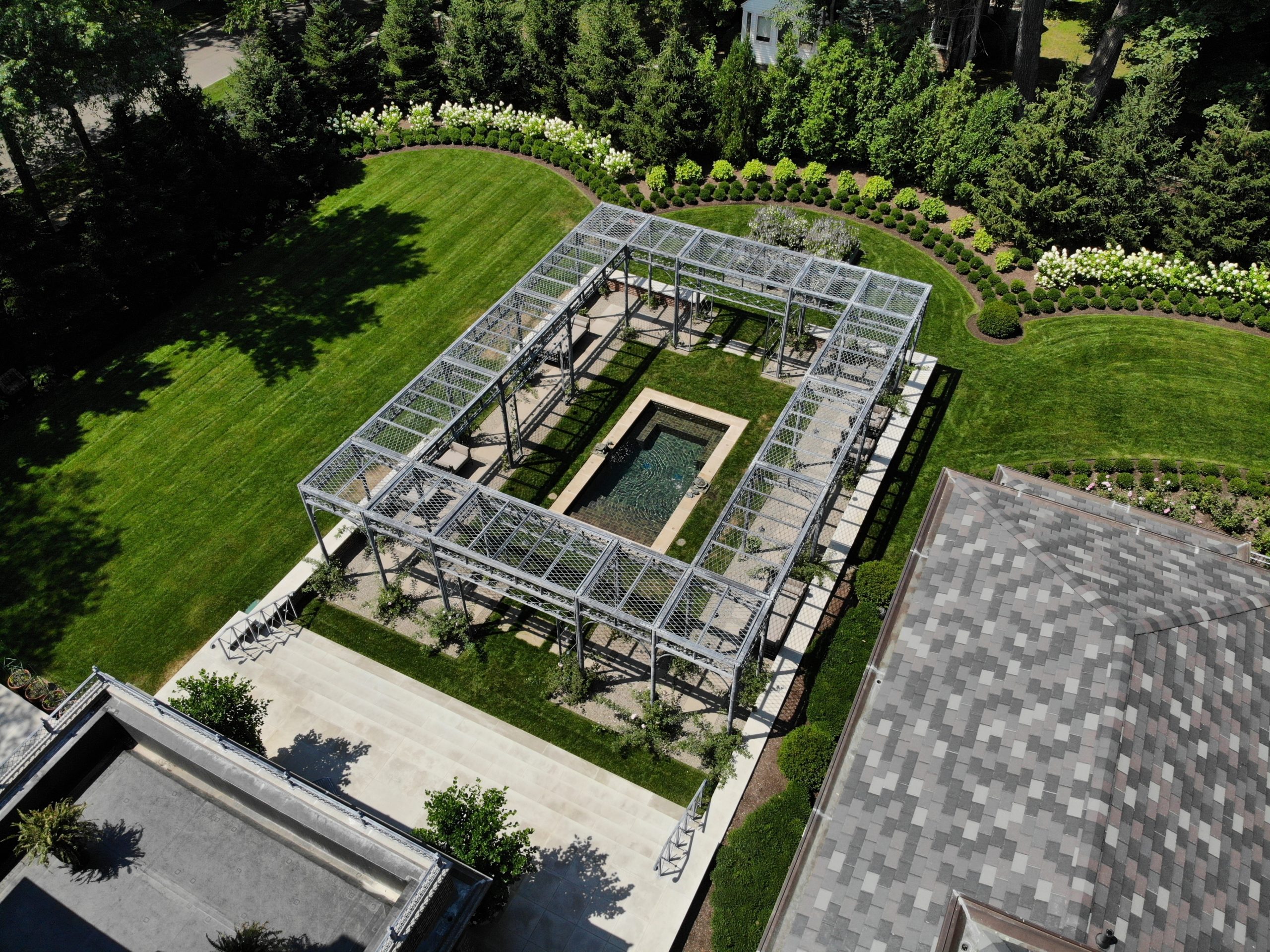
 To follow are too many pictures of my visit to the garden that day. I was outside at 6:45 am, and back indoors by 8:15.


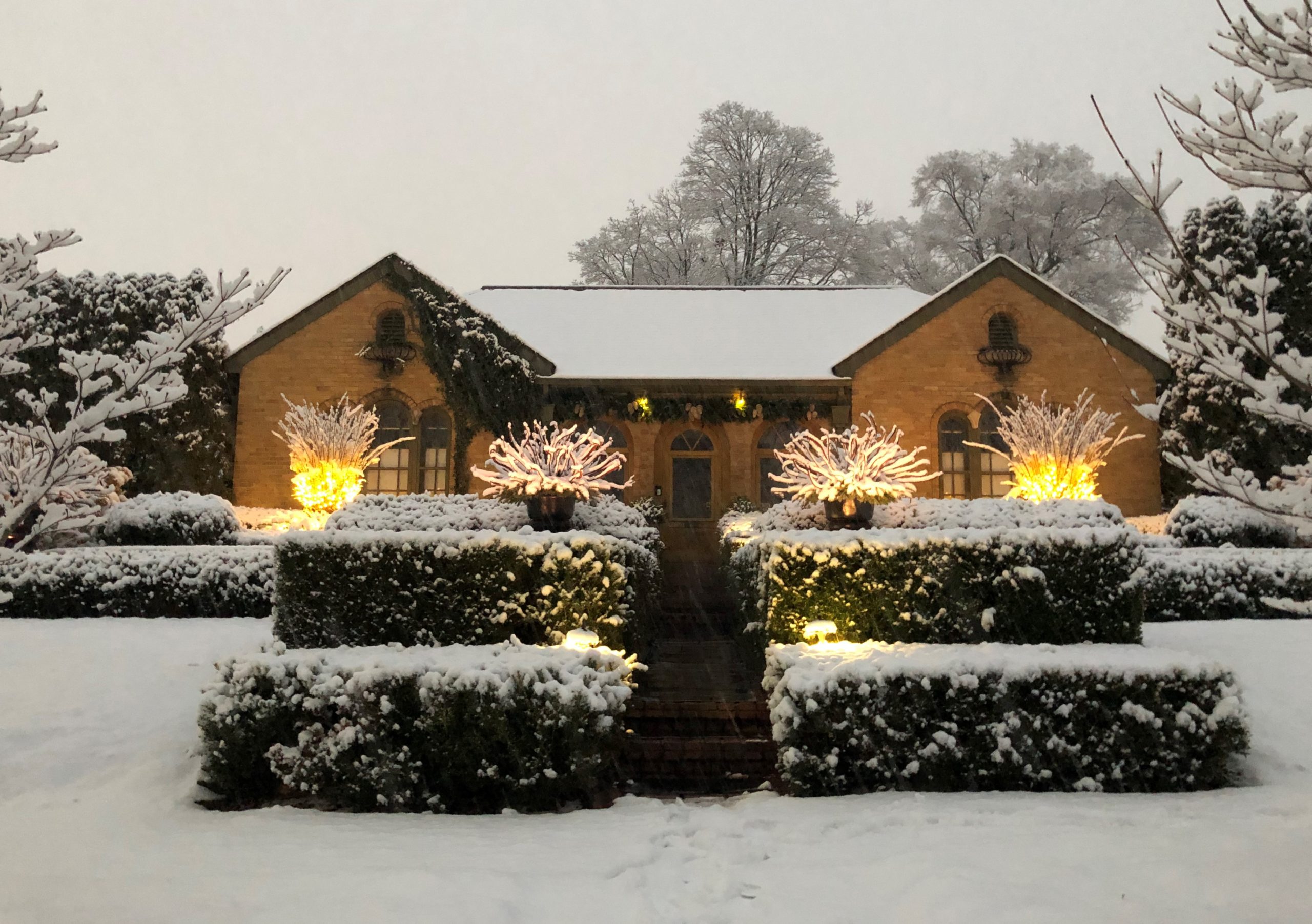
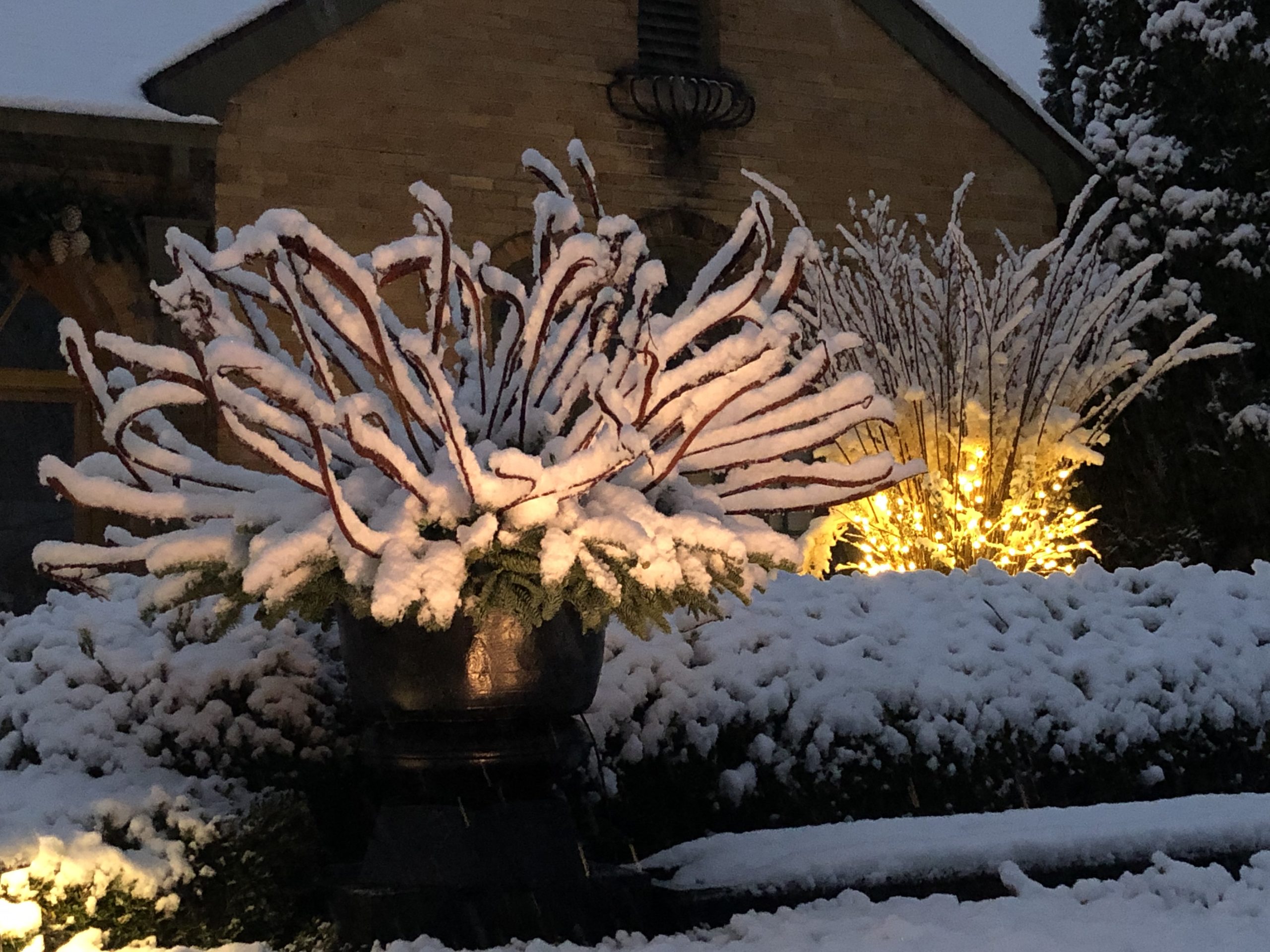

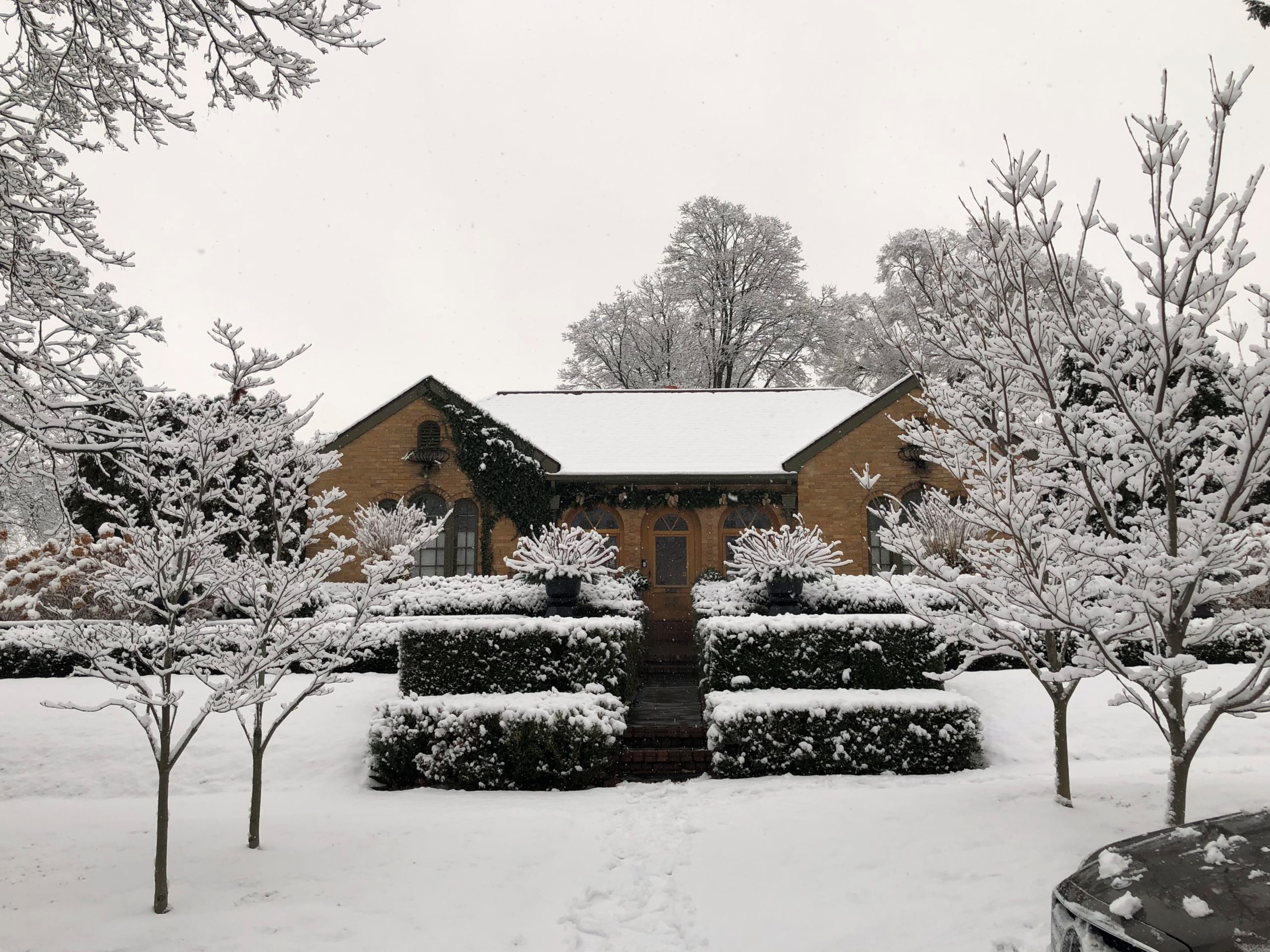


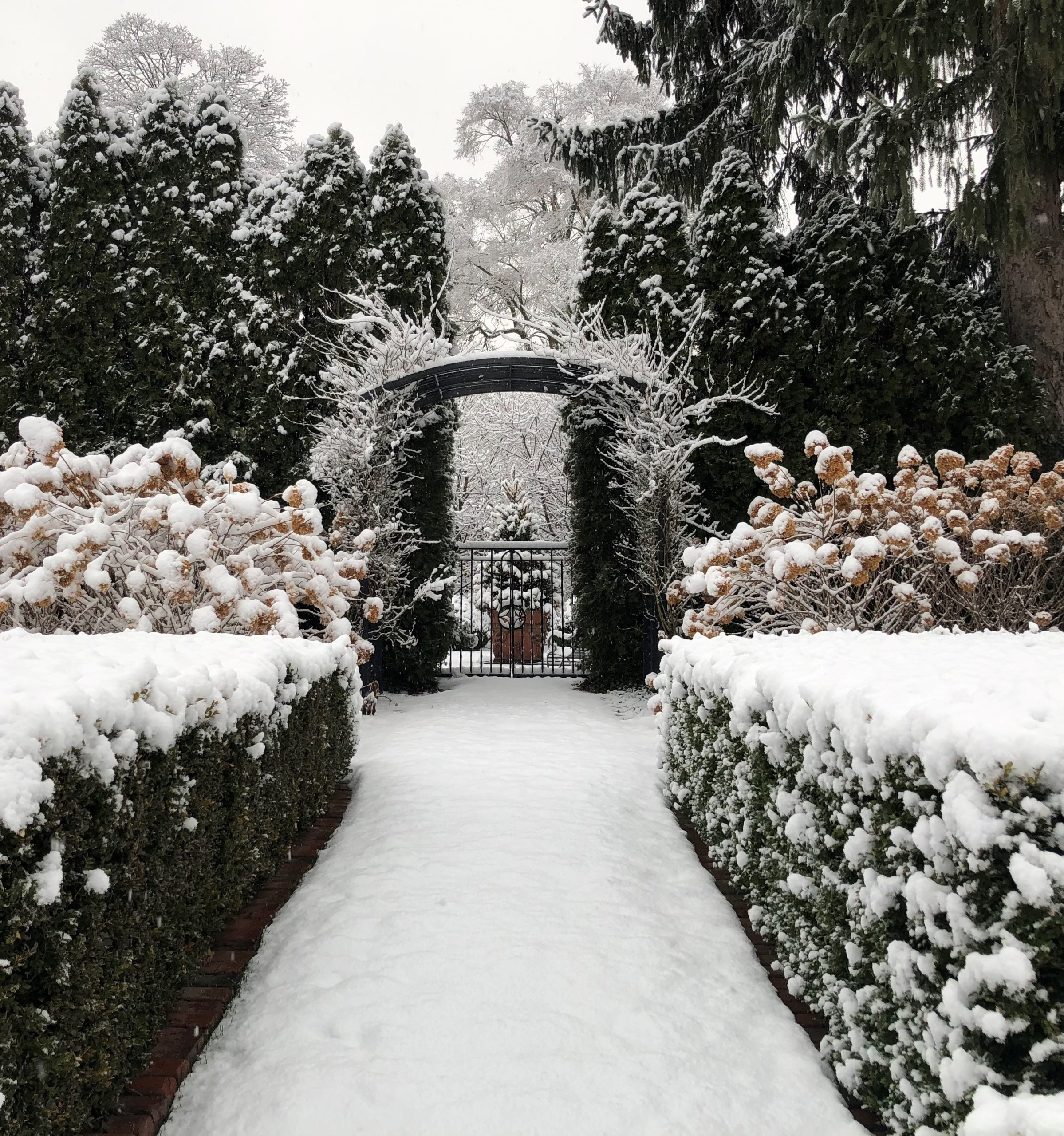 The towering maple in the far left background and the weeping Norway spruce in the right mid ground have probably been there better than 50 years. The arborvitae and foreground boxwood are about 20 years old. The Princeton Gold maples in the far background were planted in 2005. After that, the large container in the side yard. Next, the hydrangeas. The arbor and John Davis roses are probably only 4 or 5 years in. Did those climbing roses look at beautiful here as they did in full bloom? Oh yes. A lot of years came together in preparation for this perfect moment. It was indeed a very brief moment. This extraordinary snowfall melted away within a few hours. The relationship between nature, the landscape, age and the ephemeral keeps me designing.